Introduction
Acity cannot be considered sustainable unless it has the capacities and capabilities to reduce vulnerability and the impacts of disasters and can respond creatively to change (Otto-Zimmermann & Balbo, 2012). In the contemporary era, human communities—including cities—have generally been established and expanded in locations that remain vulnerable to various natural and human-induced hazards. Infrastructure development and the increasing interdependence and complexity of urban systems have further intensified this vulnerability. In this context, the vulnerability of a city’s important, sensitive, and critical infrastructure and assets, combined with the potential occurrence of various threats, may lead to the inefficiency of the urban system during a disaster. Consequently, it can intensify public dissatisfaction—thereby generating a social crisis—and disrupt urban functions under emergency conditions. From this perspective, although potential threats to and vulnerabilities of urban assets may initially appear to constitute serious obstacles to development, it can be argued that, if—prior to the occurrence of disasters—comprehensive disaster management and a futures-oriented approach are adopted, and the probable hazards facing a city are identified while its assets are assessed and classified in terms of vulnerability, threats and vulnerabilities can be recognized not only as constraints but also as a basis for identifying latent potentials and capacities arising from disasters as opportunities for development. Subsequently, strategies can be proposed to prevent threats, reduce vulnerability, mitigate adverse impacts, and capitalize on existing opportunities to pursue regional sustainable development objectives. In this regard, the United States National Water Resources Organization defines vulnerability as weaknesses in security that, in the face of specific threats, may interrupt or disrupt service delivery. Similarly, Australian emergency management authorities define vulnerability as the degree of susceptibility and resilience of a community and its environment to hazards. In other words, vulnerability refers to system or community’s propensity to sustain physical or non-physical damage as a result of any threat. Another definition describes vulnerability as a condition that makes individuals, systems, or the social fabric susceptible to, and adversely affected by, the consequences of a hazard. Such conditions may be physical, social, economic, environmental, or related to management processes (Mashhadi, 2015). Accordingly, in the specific context of urban issues, urban vulnerability refers to any weakness in an asset that enables a threat to damage or destroy that asset, lifeline, or infrastructure. Vulnerabilities may result from deficiencies in management, physical security, or operational procedures (Hellstrom, 2007; Givehchi, 2018). In fact, the consequences of attacks against infrastructure and assets by assumed threats are analyzed and evaluated based on the vulnerability level of the infrastructure in question (Jalali Farahani, 2013).
Problem statement
Although extensive research has examined urban risk assessment in relation to specific hazards—particularly natural hazards—less attention has been paid to studies in disaster management and passive defense that assess the vulnerability of urban assets to various human-induced disasters. Accordingly, developing an optimal framework for assessing the vulnerability of urban assets to human-induced disasters is an important issue in disaster management and passive defense and plays a significant role in urban planning.
In this context, the following issues constitute the main concerns of the present study:
1. How can the criteria for assessing the vulnerability of the physical assets of the infrastructure examined in this study be ranked?
2. What priorities are indicated by the vulnerability ranking of the physical assets of the target infrastructure in the study area?
3. Based on the vulnerability assessment of human-induced threats, how can the assets of the urban system under investigation be ranked?
Literature review
Kays et al. (2025) investigated flood-induced damage propagation and cascading failures in interdependent transportation and stormwater networks to identify asset vulnerabilities. Their study employed the SEFR model and two-dimensional flood simulation data generated with HEC-RAS (Kays et al., 2025).
Çal and Ciravoğlu (2025) developed an indicator-based framework for identifying building vulnerability indicators in response to sea-level rise and flooding in coastal urban areas. Their framework interprets the key vulnerability factors in relation to architectural design decisions. The research adopted a mixed methodology comprising a literature review and the Delphi method, with participation from 18 experts in architecture, urban planning, and civil engineering (Çal & Ciravoğlu, 2025).
In their systematic review entitled ''cascading failures in urban infrastructure systems: a comprehensive review of disaster-chain mechanisms'', Lu et al. (2025) proposed an integrated framework for understanding interdependencies, data-related challenges, and methodological limitations. By combining expert-based approaches, Bayesian networks, complex networks, numerical simulation, scenario simulation, and remote sensing, the study analyzed the vulnerability of urban engineering systems to cascading effects arising from natural hazards, including earthquakes, floods, fires, frost, and land subsidence (Lu et al., 2025).
Carbonelli et al. (2024) introduced a novel method, the building risk assessment method (BRAM), to analyze the risk posed to structures by explosive and unconventional terrorist attacks, including chemical, biological, radiological, and nuclear (CBRNe) threats. The method is based on the quantitative and qualitative assessment of three key components: threat (T), vulnerability (V), and exposure (E) (Carbonelli et al., 2024).
Liu et al. (2024) proposed an integrated method for assessing urban-area risks from chemical leakage incidents within the integrated urban risk assessment (IURA) framework. This framework combines chemical-hazard simulation using Areal Locations of Hazardous Atmospheres (ALOHA) with social-vulnerability assessment based on GC-TOPSIS (Liu et al., 2024).
Guan et al. (2022) developed a method for assessing the risk of industrial-accident consequences and human vulnerability in urban areas and tested it in a small city in China (Guan et al., 2022). Boakye et al. (2022), by examining various natural and human-induced hazards and their effects on assets, emphasized the importance of evaluating the consequences of past disasters and forecasting their potential future impacts (Boakye et al., 2022). In his book: The role of critical infrastructure protection in national security, Lewis (2020) introduced the principles of infrastructure protection and applied the risk analysis and management for critical asset protection (RAMCAP) and mission-based risk assessment (MBRA) methods to assess and analyze risks arising from natural and human-induced threats (Lewis, 2020). Fabbri and Wood (2019) introduced and evaluated an accident-damage analysis module to assess the consequences of industrial accidents under different scenarios (Fabbri & Wood, 2019). Using a scenario-analysis approach, Kulba et al. (2017) identified critical assets, emergency situations, and management strategies for reducing human-induced hazards (Kulba et al., 2017). Lee et al. (2010) developed a five-stage program for assessing security vulnerability to chemical terrorism. The program includes asset identification, threat assessment, vulnerability analysis, risk assessment, and countermeasure development (Lee et al., 2010).
In Iran, numerous studies have assessed threats to and vulnerabilities of critical infrastructure, particularly water-supply systems. These studies include those conducted by Kazemi and Golestaneh (2014), Mashhadi and Aminivarki (2015), Modiri et al. (2016), Taghinejad and Zonemat Kermani (2016), Roodbari et al. (2017), Bakhshi Shadmehri et al. (2020), Feizi et al. (2020), Sheikhal i et al. (2020), and Omidvar and Vajdani Nozar (2021). Using methods, such as RAMCAP, AHP, ANP, HAZOP, SPSS, and risk matrices, these studies have focused on identifying threats, assessing vulnerabilities, and analyzing potential consequences. However, Fadaei’s (2023) comprehensive review of 86 studies conducted between 2014 and 2023 on threats to and vulnerabilities of drinking-water supply systems in Iran indicates that, despite the identification of various emerging threats, comprehensive studies assessing the feasibility of threats, vulnerabilities, and their associated consequences remain insufficient (Fadaei, 2023).
Synthesis of the literature and the research gap
An analysis of the literature and the research gap, based on a review of international and Iranian studies, indicates that the assessment of threats to and vulnerabilities of critical infrastructure—particularly water infrastructure and dependent systems—has generally been conducted through four principal approaches:
1. Numerical modeling and simulation, including methods, such as Susceptible-Exposed-Flooded-Recovered (SEFR), Hydrologic Engineering Center's River Analysis System (HEC-RAS), and ALOHA. These approaches have been used primarily in international studies and to analyze natural phenomena, such as floods, earthquakes, and chemical leaks.
2. Indicator-based frameworks and hybrid methods, including RAMCAP, MBRA, BRAM, and IURA. These approaches integrate quantitative and qualitative data and facilitate multidimensional analysis of threats, vulnerability, and consequences.
3. Analytical and expert-based methods, including AHP, ANP, HAZOP, and the Delphi method. These methods have been used mainly to prioritize threats in specific environments.
4. Systematic and analytical review studies have been conducted to classify threats, identify vulnerability patterns, and develop general conceptual frameworks.
International studies have examined a notable diversity of hazards, including both natural and human-induced hazards, and have made extensive use of advanced simulation and scenario-modeling techniques. These studies have frequently addressed the integrated assessment of the three components of risk—threat, vulnerability, and consequences—and have also considered interdependencies among infrastructure systems.
In contrast, although Iranian studies have actively addressed threat identification and vulnerability assessment in urban water systems, they present several limiting features:
● Geographical and scale limitations: Most studies have been confined to a single city or a specific infrastructure component, such as a reservoir or dam.
● Absence of comprehensive and integrated assessment: Most studies examine only one or two risk components, and they do not adequately incorporate complete relationship among threat, vulnerability, and consequences.
● Limited use of simulation and scenario-based data: Most studies have relied on survey-based methods and statistical analyses, while model-based data have been used to a lesser extent.
● Shortage of locally adapted frameworks: Many studies have merely adopted international methods, such as RAMCAP or CARVER, with limited adaptation to local conditions and contextual characteristics.
Therefore, the principal research gap is the lack of a comprehensive, integrated, and locally adapted framework for ranking the vulnerability of urban physical assets to human-induced disasters. Such a framework should consider threat the characteristics, asset vulnerability, functional significance, and the potential consequences of disruption within the urban system.
Methods
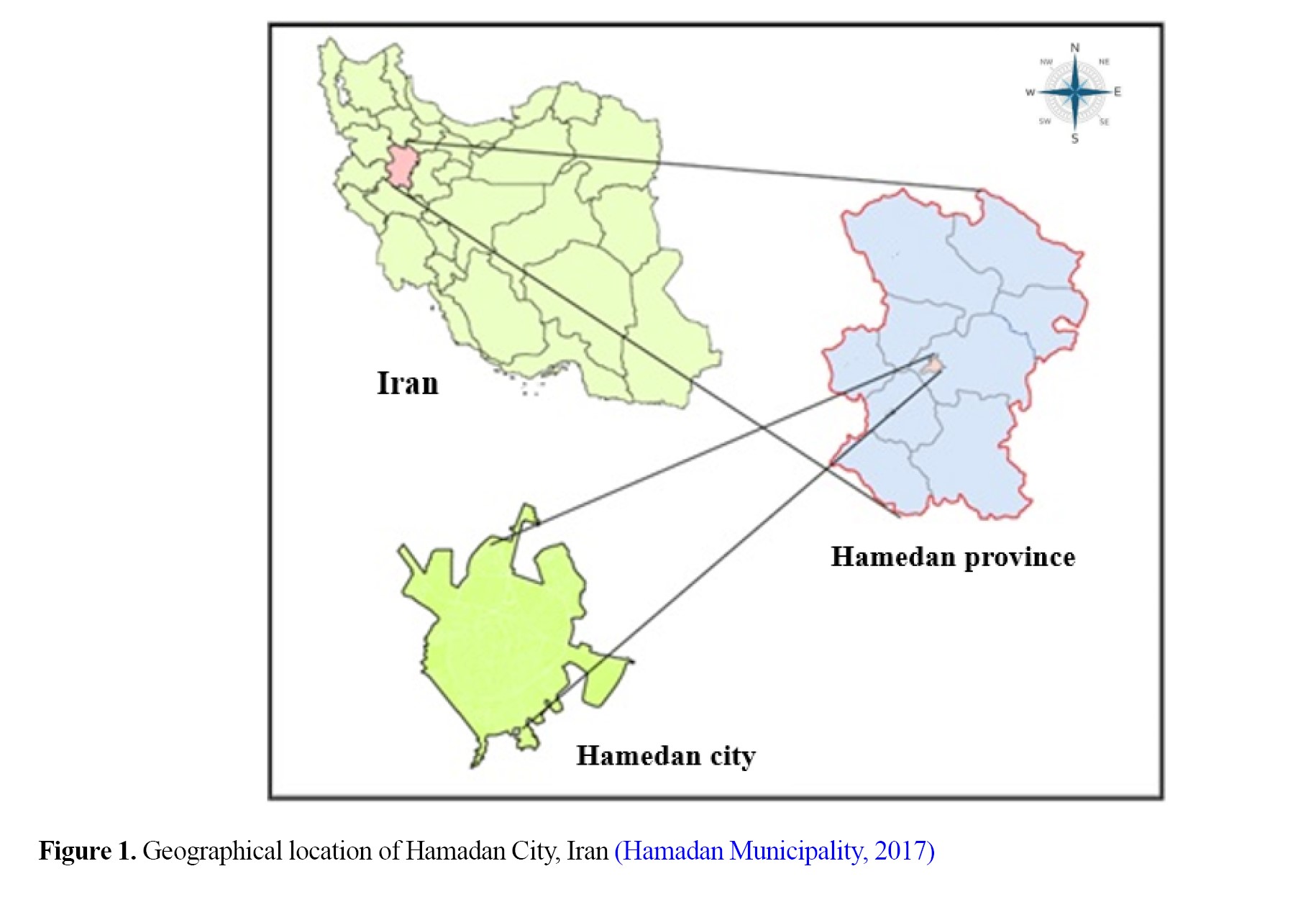
Hamadan, a cold, mountainous city, in Western Iran with covering an area of approximately 72 km² and a population of 554,406, is the capital of Hamadan Province. The city center is situated at 48°51′ east longitude and 34°79′ north latitude, on the slopes of Mount Alvand. The city’s elevation varies from approximately 1,750 to 2,100 meters above sea level across different areas, making it one of the highest-elevation urban areas in the country (
Figure 1).
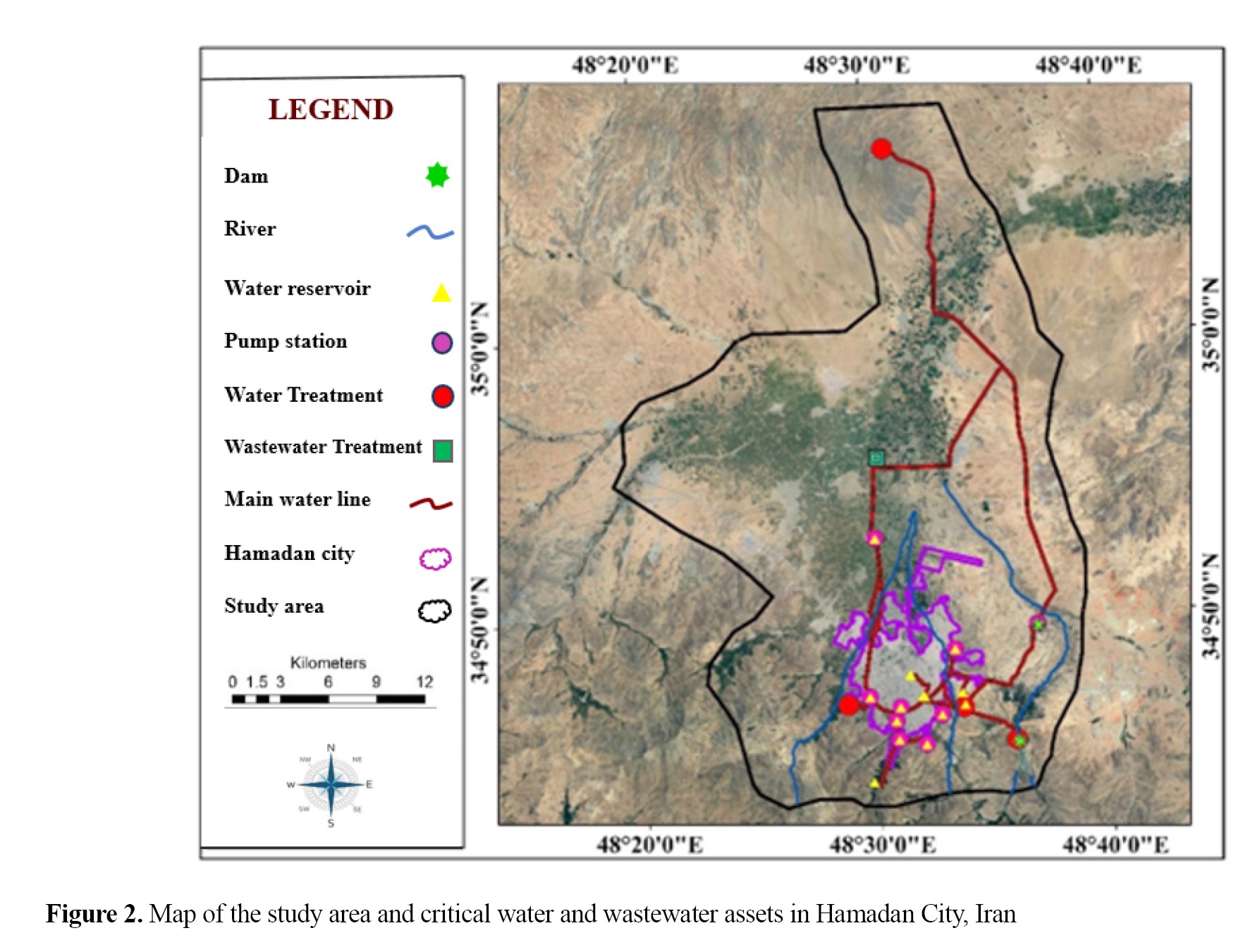
The critical assets examined in this study comprise the city’s water and wastewater infrastructure, which supplies drinking water and collects urban wastewater. The water and wastewater infrastructure includes water-supply sources; four water-treatment plants; 18 primary ground-level and elevated storage reservoirs; 12 water-pumping stations; approximately 200 km of primary water-transmission pipelines; 93 km of secondary water-transmission pipelines; more than 1,000 km of water-distribution networks; 260 km of wastewater-collection networks; 37 km of wastewater-transmission pipelines; and one wastewater-treatment plant (
Table 1 and
Figure 2).
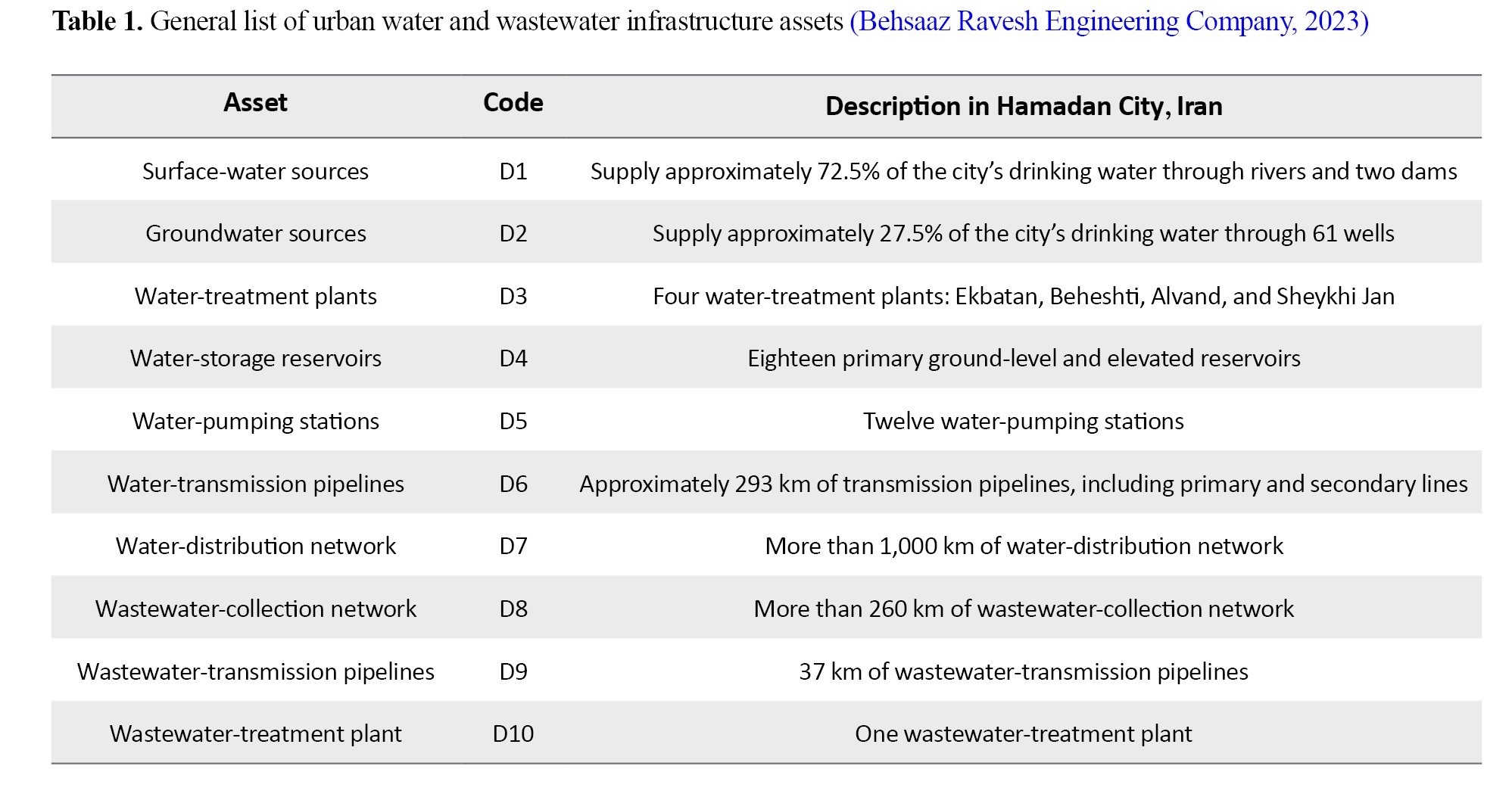
The city’s drinking-water demand is approximately 1,800 L/s. Of this amount, approximately 72.5% is supplied by surface-water sources through two storage dams, while less than 27.5% comes from groundwater sources through 61 wells.
In this study, the vulnerability of Hamadan’s water and wastewater assets to human-induced disasters was assessed using information from documentary sources and interviews with subject-matter experts. First, the spatial-location map of the assets under investigation was developed using Google Earth Pro, as shown in
Figure 2. Following the definition of assessment criteria and development of the questionnaire, expert opinions were synthesized. The criteria were weighted, asset vulnerability was assessed, and the assets were ranked using the simultaneous evaluation of criteria and alternatives (SECA) decision-making method in the LINGO software environment. Finally, ArcGIS was used to prepare vulnerability-zoning maps for the assets.
In multi-criteria decision-making (MCDM) methods, such as SECA, the optimal number of experts for weighting criteria and ranking alternatives depends on the problem’s complexity and the selected method. Vaidya and Kumar (2006) stated that, depending on criteria complexity, a panel of 3 to 10 experts may be sufficient. Skulmoski et al. (2007) considered 7 to 12 experts appropriate for moderately complex problems involving 5 to 8 criteria. Overall, recent studies suggest that the optimal number of experts generally ranges from 5 to 20 individuals (Taherdoost, 2023; Sotoudeh-Anvari, 2023).
For questionnaire-based data collection, this study recruited 20 experts from a target population comprising faculty members, specialists, technical experts, and managers in urban planning, urban design, urban management, disaster management, passive defense, and water and wastewater services. The results of the questionnaire reliability and validity analyses are as follows:
● To determine questionnaire reliability, Cronbach’s α was calculated as 0.837, indicating good internal consistency. This suggests that the six criteria are internally coherent and demonstrate high measurement reliability.
● To assess data adequacy for factor analysis, the Kaiser-Meyer-Olkin (KMO) value was calculated as 0.812, indicating excellent sampling adequacy. In addition, the significance of Bartlett’s test of sphericity (P<0.001) indicates that correlations among the variables were suitable for factor analysis.
● All criteria demonstrated very good factor loadings, exceeding 0.70, on a single factor. This result indicates satisfactory construct validity and shows that all six criteria strongly measure a single, unidimensional construct: overall vulnerability. This finding is fully consistent with the theoretical structure of the questionnaire, in which all criteria are considered components of the same phenomenon, namely vulnerability.
Moreover, the criteria used to assess the vulnerability of urban water and wastewater physical assets to human-induced disasters were derived from the doctoral dissertation entitled ''A framework for assessing consequences affecting urban assets under scenario-based human-induced disasters: the case of Hamadan City''. After their initial identification and selection through a review of the theoretical foundations and related literature, the criteria were finalized using the fuzzy Delphi method, as follows:
● Inherent weakness (V1): This criterion refers to the intrinsic susceptibility of an infrastructure component or asset to damage, destruction, or functional disruption when exposed to hazards or threats. Inherent weakness is conceptually the opposite of structural strength.
● Safety and security weakness (V2): This criterion reflects inadequate consideration of safety principles in the construction and commissioning of an asset, as well as insufficient attention to its appropriate protection and security.
● Location (V3): Locating an asset in high-risk areas or near high-risk assets can increase its vulnerability, even when the asset has adequate structural strength. Such conditions may also increase the likelihood of damage propagation and impacts on other assets.
● System complexity (V4): Complexity refers to the characteristics used to describe infrastructure and assets, including their form, configuration, topology, and architecture. The more complex these characteristics are, and the greater the interconnections among system components, the more vulnerable the infrastructure or asset is likely to be.
● System interdependency (V5): System interdependency refers to the relationships and mutual effects among the performance or failure of the primary and secondary components of an infrastructure or asset, as well as its relationships with other infrastructures and assets. This criterion encompasses both internal and external interdependencies. Greater interdependency increases as asset’s complexity and vulnerability and may cause failures to propagate across other components and assets. System interdependencies may be functional, physical, geographical, logical—particularly dependence on human-resource performance—or informational. The modernization of society, characterized by interconnections and mutual influences among various assets, is a principal driver of system interdependency. These interdependencies, in turn, generate infrastructure and asset complexity, which constitutes a major source of vulnerability, consequences, and risk when disasters occur.
● Redundancy (V6): Redundancy refers to provisions embedded in infrastructure and assets that support continued operation or compensate for failure when disruptions or damage occur (Vajdani Nozar, 2025).
The principal difference between the SECA method used in this study and other comparable methods is that, in many conventional ranking approaches, criterion weights are first calculated using a separate weighting method and then introduced into the ranking model as inputs. In SECA, however, criterion weighting and alternative ranking are performed simultaneously. This characteristic can improve the coherence and precision of the assessment results. Furthermore, SECA accommodates both qualitative and quantitative criteria, which enhances its flexibility in addressing complex decision-making problems (Keshavarz-Ghorabaee et al., 2018).
The steps of the SECA method are presented below.
Formation of the decision framework
The first step in multi-criteria decision-making methods is to construct the decision framework. The decision framework is a row–column matrix in which the columns represent the decision criteria and the rows represent the alternatives to be ranked. Each cell of the matrix contains the evaluation of an alternative with respect to a particular criterion.
Normalization of the decision framework
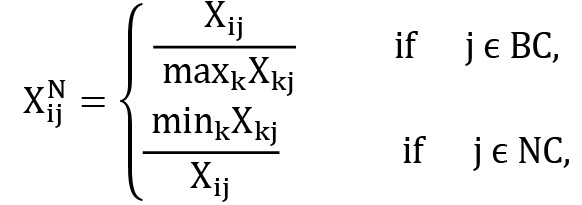
In this stage,
Equation 1 is used to normalize beneficial criteria, whereas
Equation 2 is used for cost criteria. In these equations, i denotes the row and j denotes the column of the decision framework. The BC includes beneficial or positive criteria, while NC includes cost or negative criteria:
1&2.
 Formulation of the optimization model
Suppose that
Vj=[XijN]n×1 represents the vector associated with the j-th criterion. The standard deviation of each vector, σj, indicates the internal variability of the information contained in that vector. To obtain the inter-criteria information in the decision framework, the correlation between every pair of vectors must be calculated. In this context, rjl denotes the correlation between the j-th and l-th criterion vectors. The overall value of πj represents the degree of conflict between the j-th criterion and the other criteria and is calculated using
Equation 3:
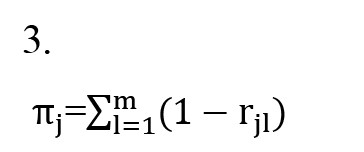
An increase in the variability of a criterion vector, σj, and an increase in the degree of divergence between criterion j and the other criteria, πj, indicate a greater importance—or weight—for that criterion. Accordingly, the normalized values of σj and πj are defined as reference points for determining the criterion weights. These values are calculated using
Equations 4 and 5:
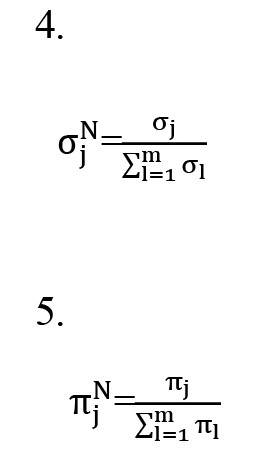
Based on the above explanation, the following multi-objective optimization model is formulated:
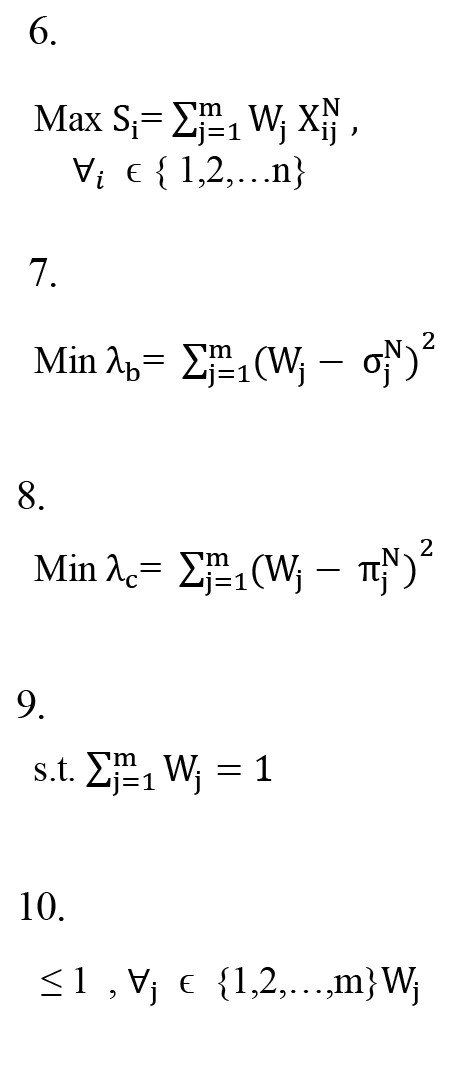
 Equation 6
 maximizes the overall performance of each alternative.
Equations 7 and 8 minimize the deviations of the criterion weights from their reference points based on standard deviation and correlation, respectively.
Equation 9 ensures that the sum of the criterion weights is equal to one.
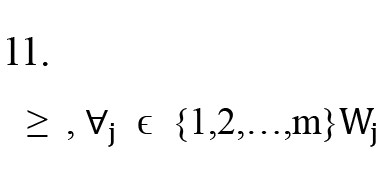
Equations 10 and
11 constrain the criterion weights to the interval between εvarepsilonε and 1. Here, εvarepsilonε is considered a small positive parameter representing the lower bound of the criterion weights. The above multi-objective model can be transformed into a single-objective model. According to
Equation 12, the minimum overall performance score of the alternatives is maximized. Since deviations from the reference points must be minimized, they are subtracted from the objective function using the coefficient βbetaβ. This coefficient represents the importance assigned to achieving the reference points for the criterion weights.
Equation 13 defines a lower bound for the overall performance score of each alternative, Si.
Equation 14 calculates the weighted sum of the normalized decision-matrix entries.
Equations 15 and 16 calculate the total squared deviations of the criterion weights from the reference points based on the standard deviation and correlation measures, respectively.
Equation 17 specifies that the sum of the weights must equal one, while
Equations 18 and 19 constrain the resulting weights to the interval from 0 to 1, that is, to be greater than zero as well.:
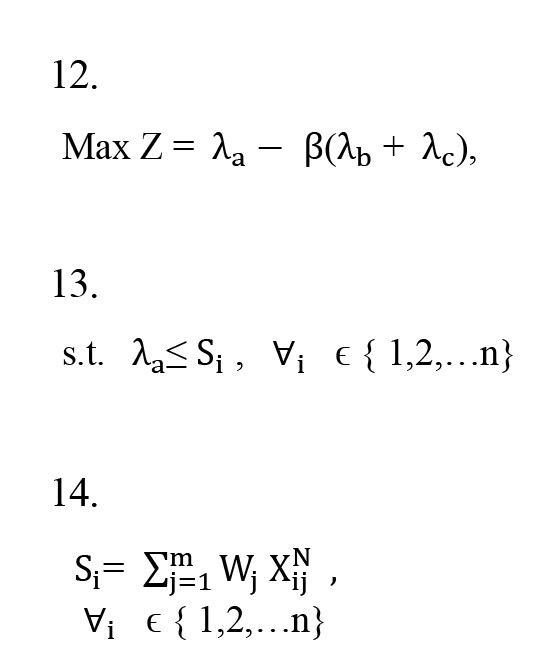
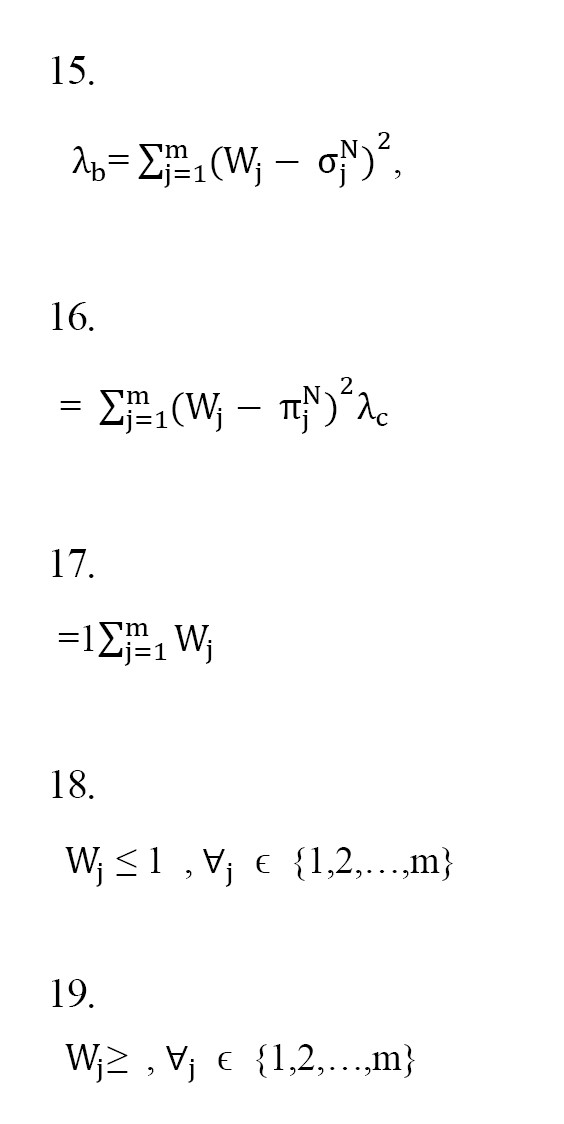
Definition of the variables in
Equations 12, 13, 14,
15, 16, 17, 18, and 19.
The definitions of the variables used in
Equations 12, 13, 14,
15, 16, 17, 18, and 19 are presented below:
λa: minimum score of each alternative
λb: total deviation of each criterion weight from the normalized standard deviation
λc: total deviation of each criterion weight from the normalized correlation
β: subtraction coefficient from the overall objective function
Wj: weight of criterion
XijN: normalized entry in row i and column j of the initial decision matrix
Si: score of each alternative
m: number of criteria
ε: small positive parameter
rjl: correlation between the j-th and l-th vectors
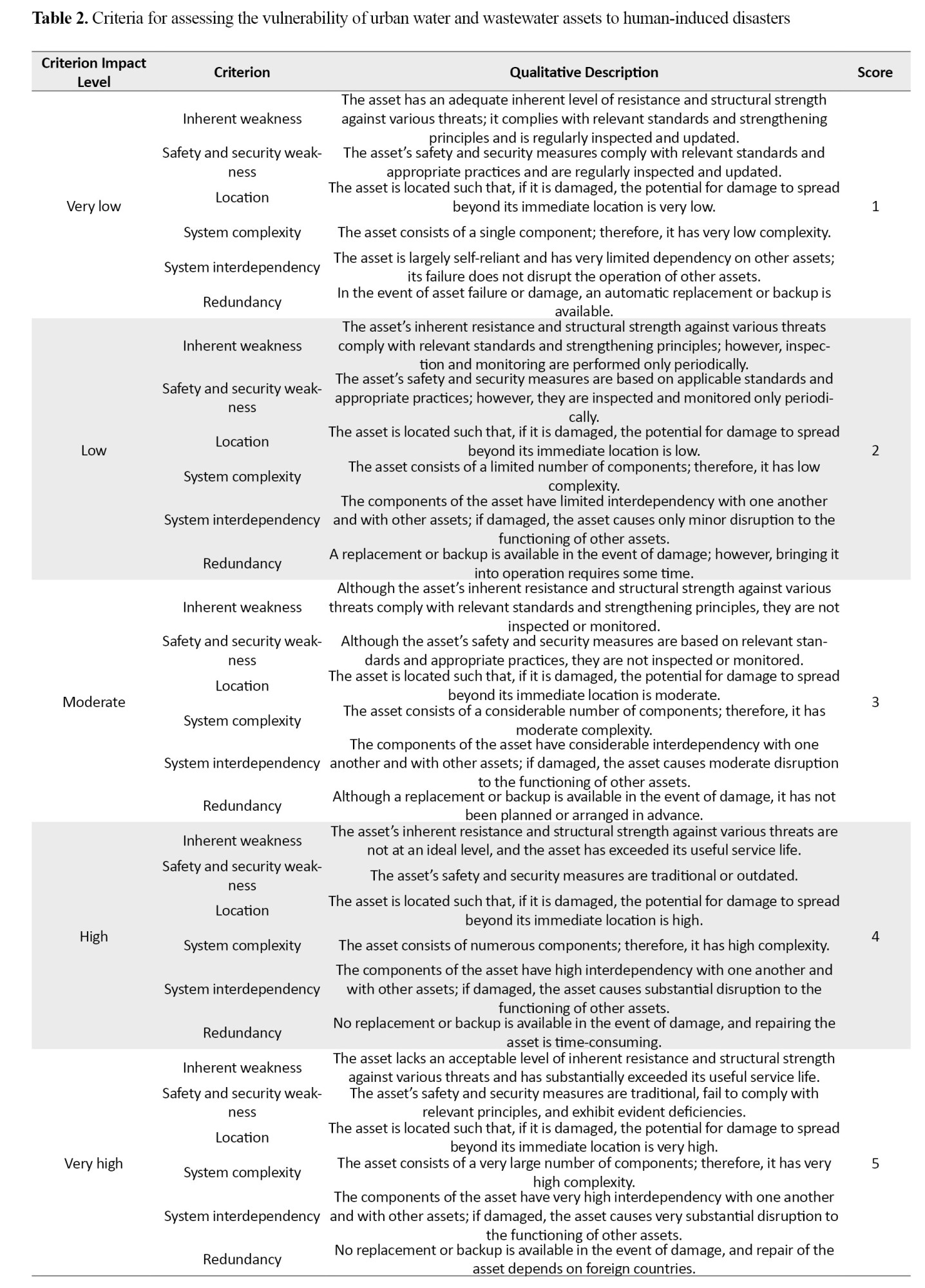
It should be noted that, in this study, expert judgments were used to analyze the criteria related to the vulnerability assessment of urban water and wastewater assets in response to human-induced disasters and to prepare the data. Accordingly, based on the qualitative description of each criterion, a five-point scale from 1 to 5 was employed, as shown in
Table 2.
After designing and distributing the questionnaire to the experts, the required data were collected. The responses were then aggregated using the arithmetic mean and used in the SECA analysis. In addition, the vulnerability levels (V) of the assets in response to human-induced disasters were defined and applied in the assessment based on expert opinions as follows:
Low level: 1≤V≤2
Moderate level: 2
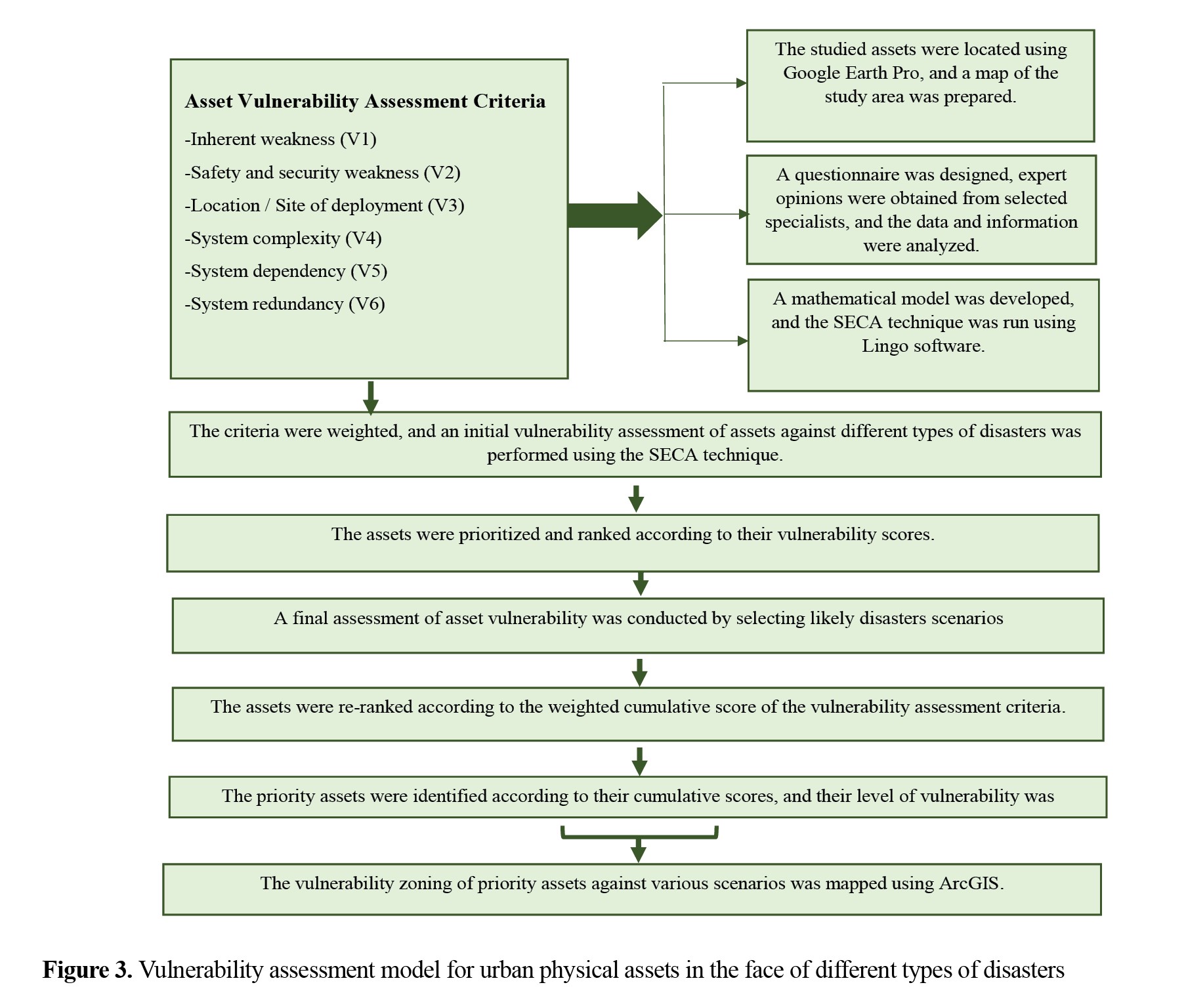
High level: 3 Critical level: 4 Moreover, since one of the aims of the research is to present a model that, in addition to achieving its practical objective, can also be generalized to similar studies in other regions, the assessment model used in this study was developed by adapting and synthesizing existing research and previous studies, some of which were also reviewed in this work, as shown in Figure 3.
Results
Considering the comprehensive list of urban water and wastewater system assets in Table 2 and their identification and spatial distribution within the study area (Figure 2), the asset vulnerability criteria were weighted. These criteria included inherent weakness, safety and security weakness, location, complexity, system dependency, and redundancy. Subsequently, the assets were classified according to their vulnerability to human-made disasters using the SECA method and LINGO software. To this end, a decision matrix comprising 10 assets and 6 criteria was initially developed based on expert judgments and the synthesized information collected. In this matrix, the rows represent the ten assessed assets, whereas the columns correspond to the six vulnerability criteria.
Thereafter, following the SECA method equations, the decision matrix was normalized, the values of πj were calculated, and the normalized values of σj and πj were determined. Tables 3, 4, 5, and 6 present the results of these procedures.
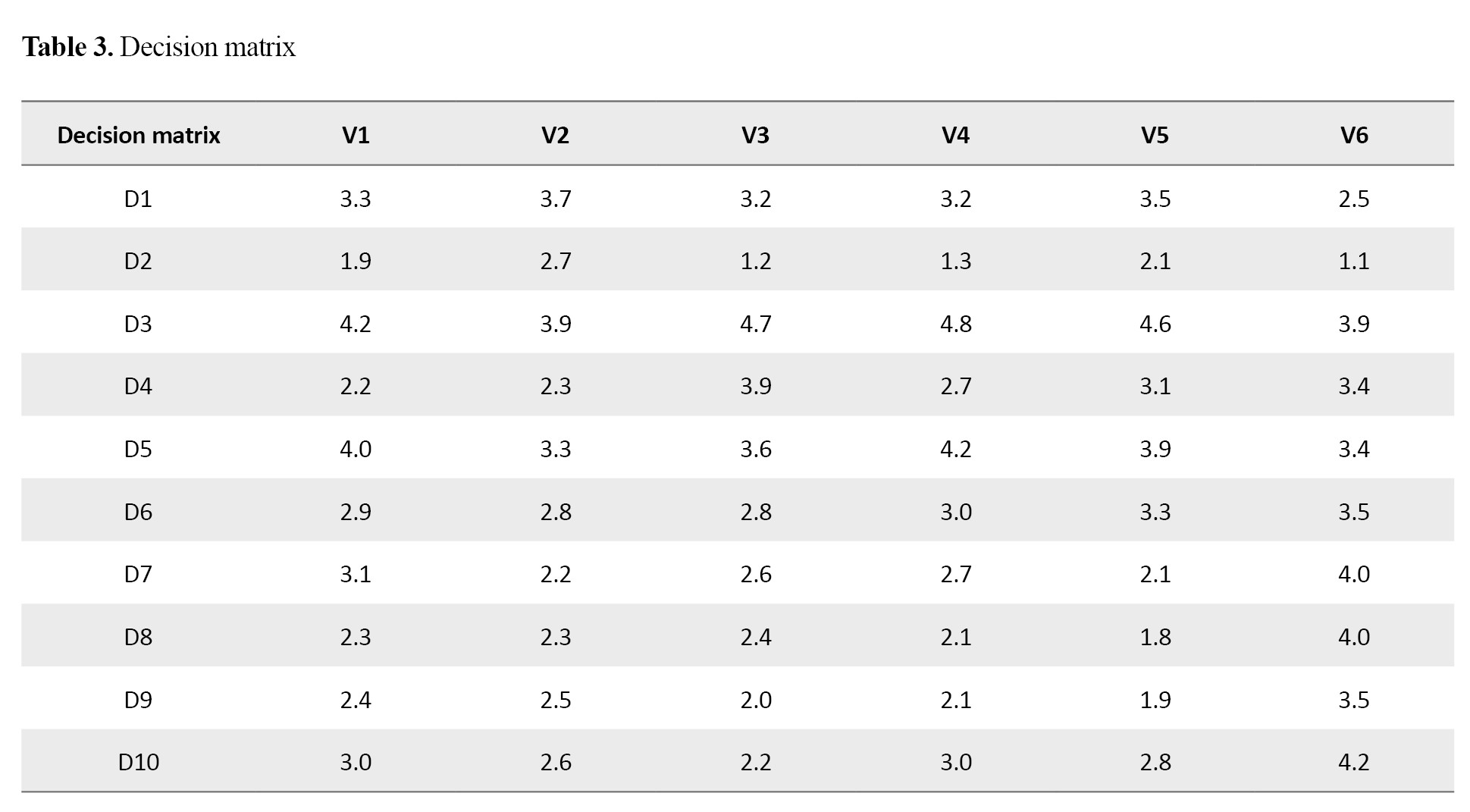
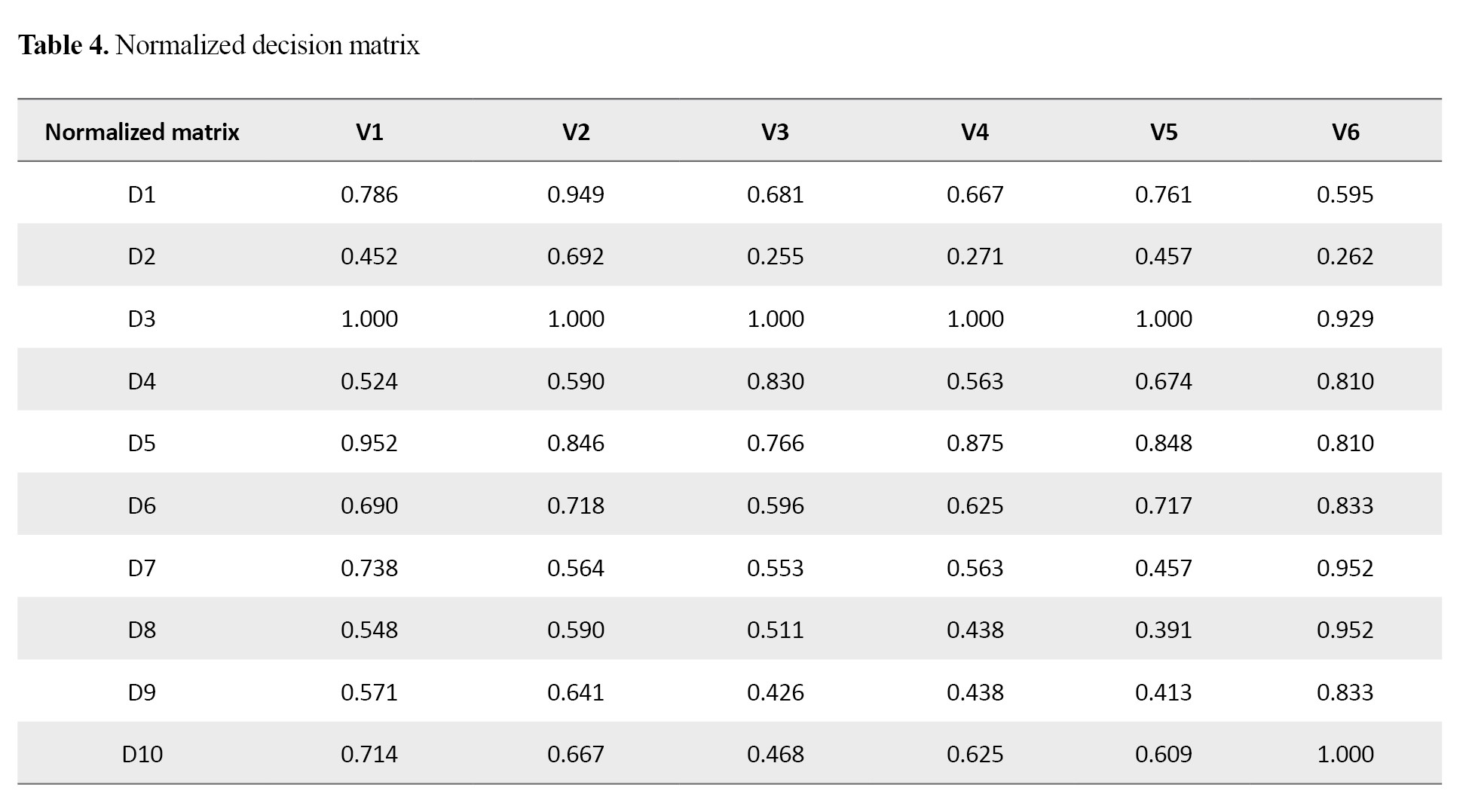
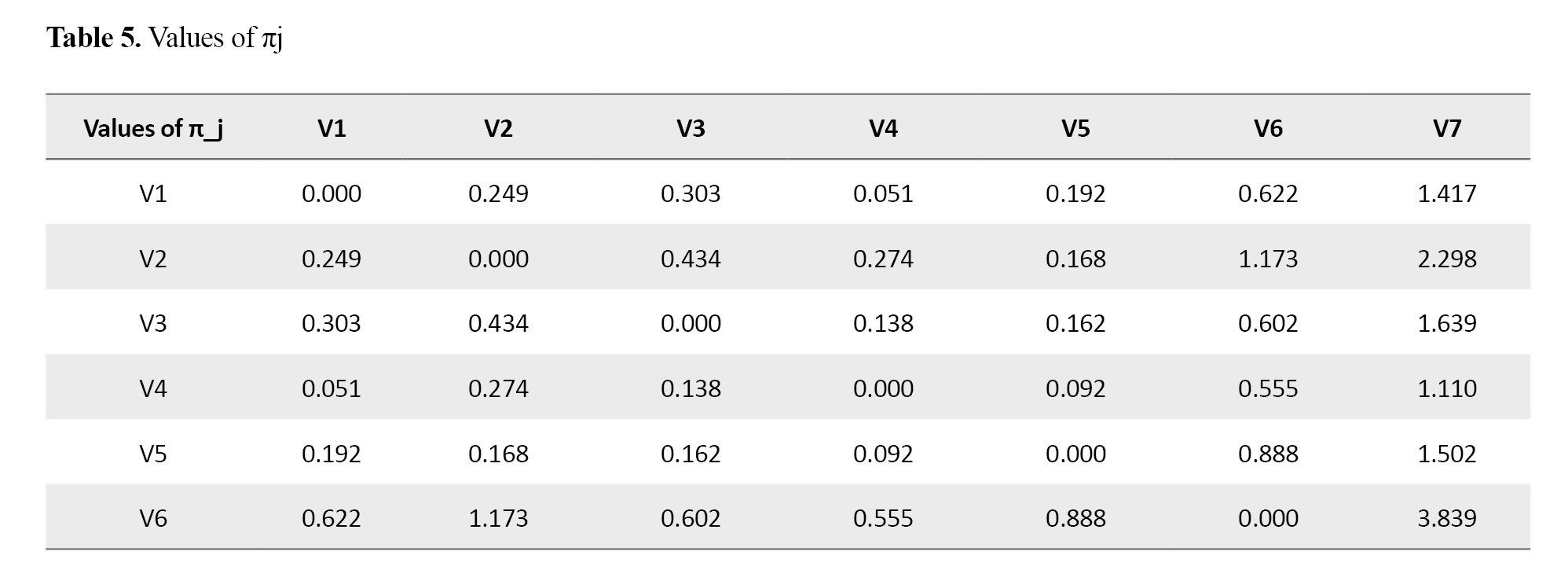
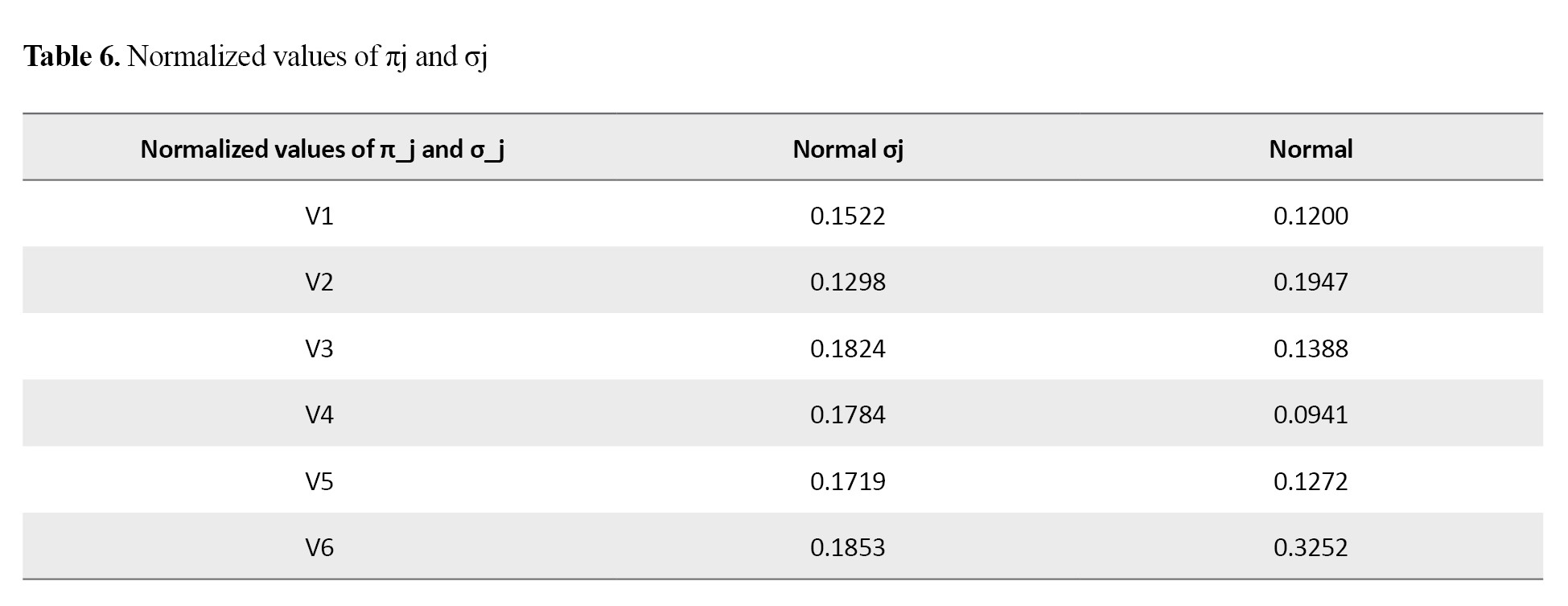
Subsequently, a nonlinear optimization model was formulated based on the optimization framework specified in Equations 12, 13, 14, 15, 16, 17, 18, and 19, and solved using LINGO software. In this model, the optimization procedure was performed for β values ranging from 0.1 to 7. For each run, the weights of the criteria and the scores assigned to each intentional human-made disaster threat were estimated. Tables 7 and 8 present the estimated criterion weights and threat scores for different values of β.
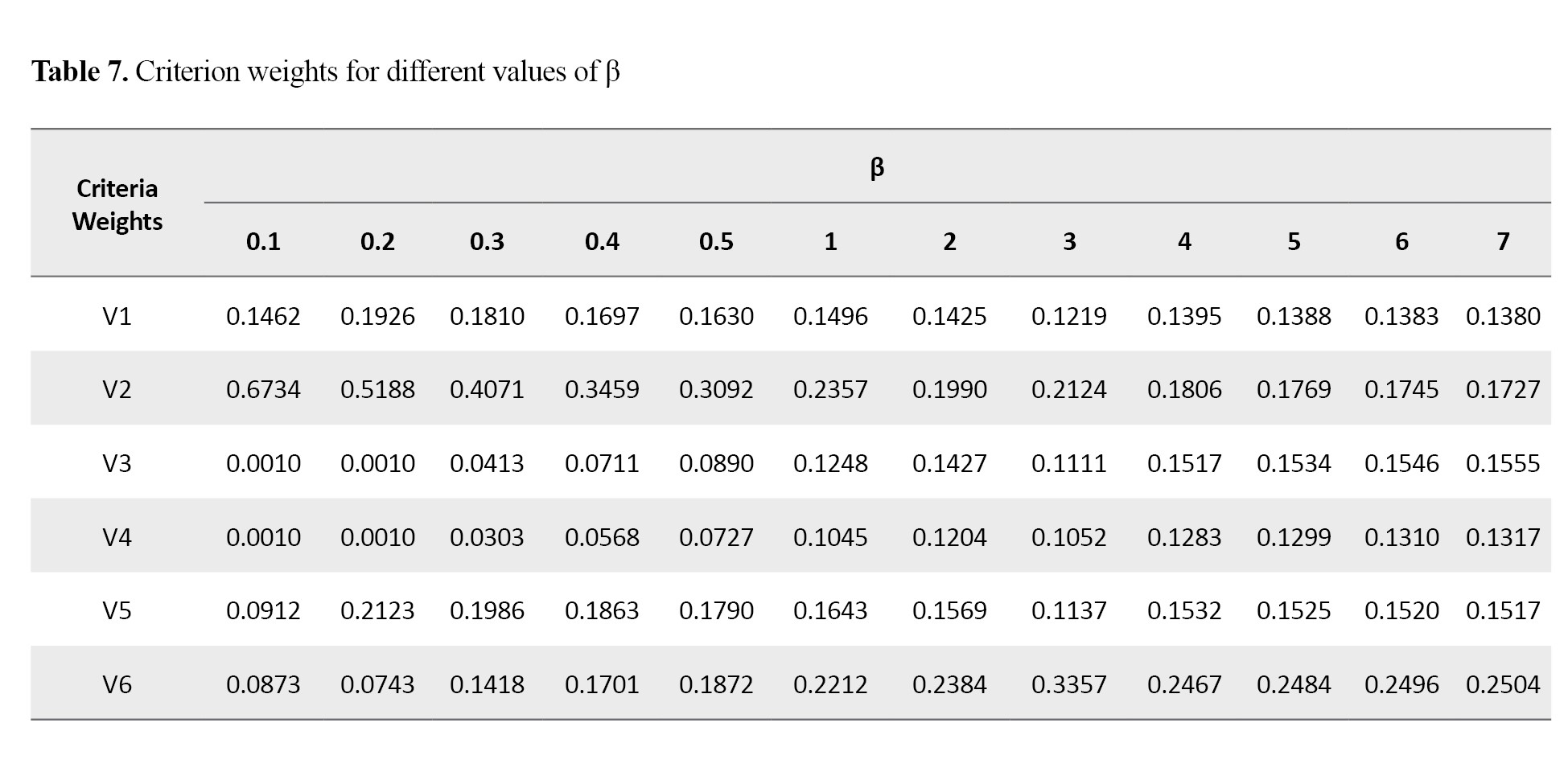
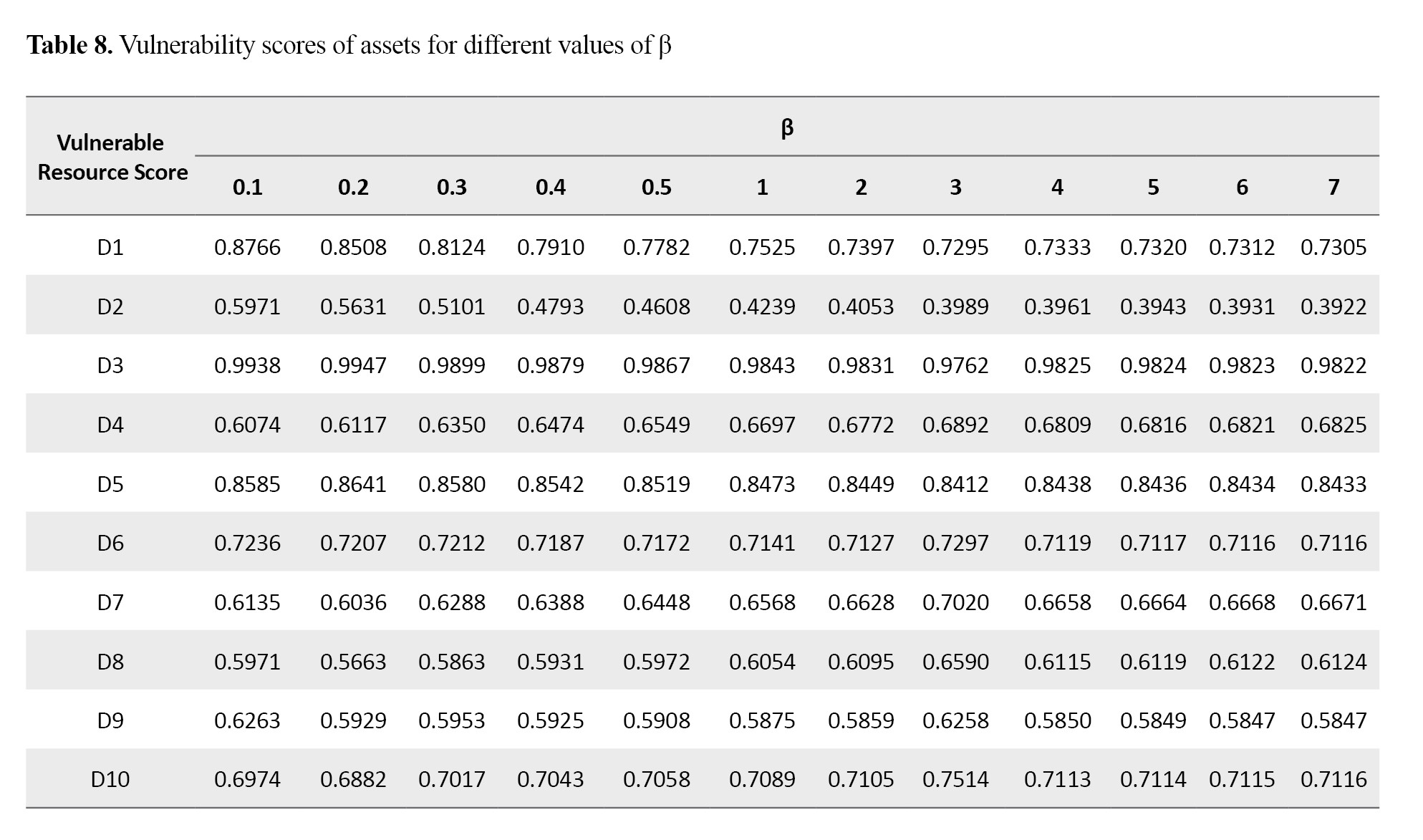
Figures 4 and 5 show these results.
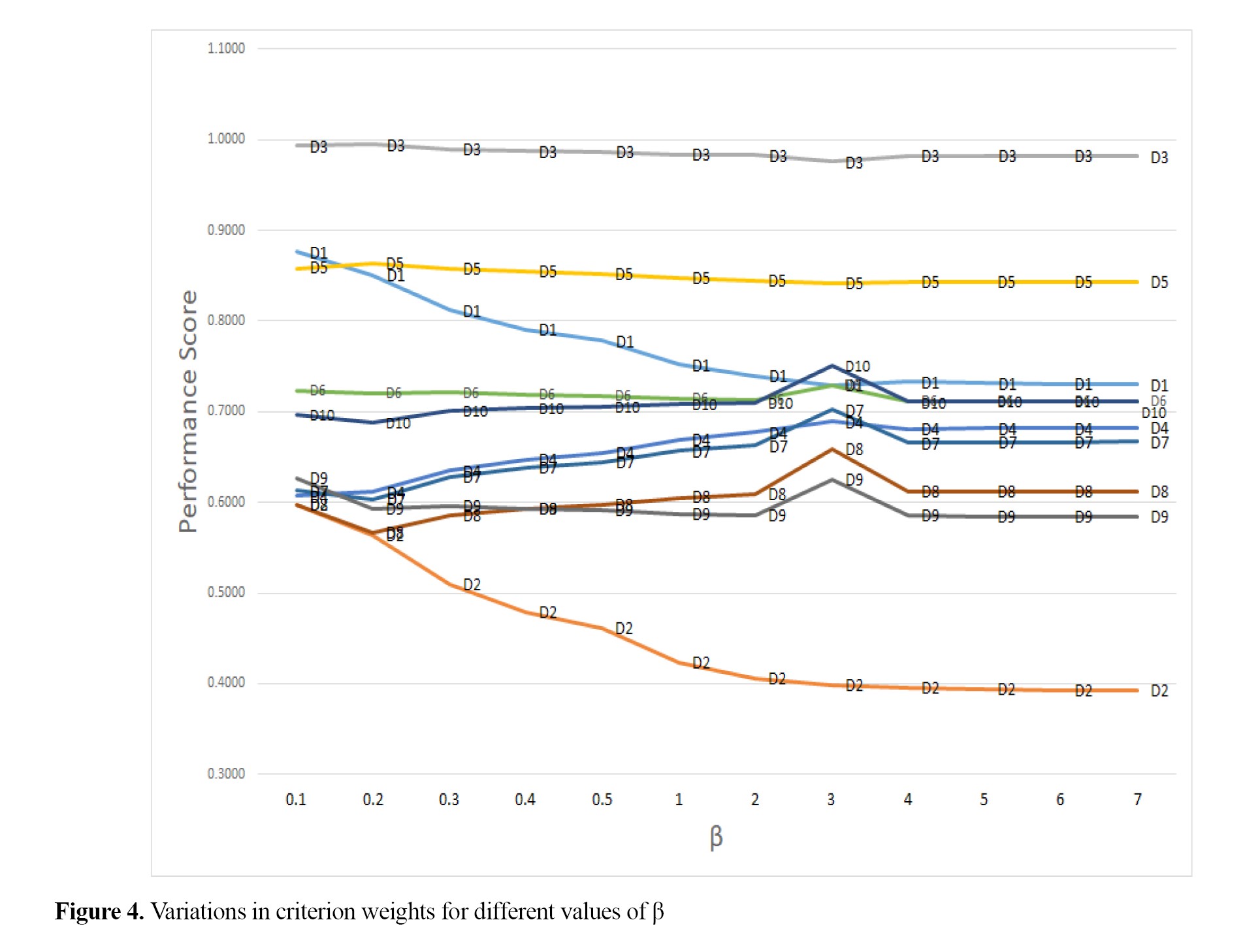
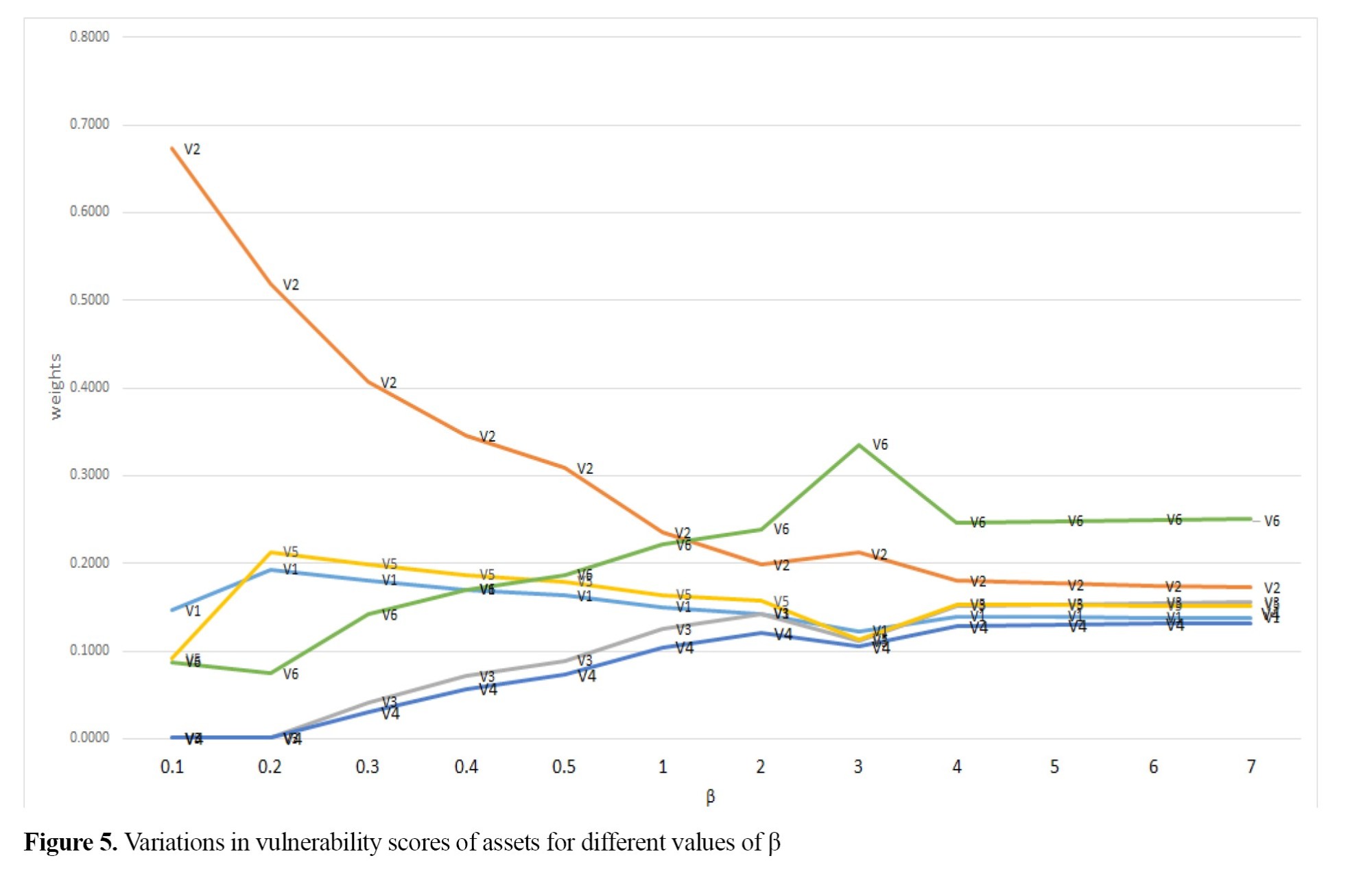
As indicated by both the tables and figures, the results converge at values of β>4, with only negligible subsequent variations. Therefore, β=4 was considered the convergence value, at which the criterion weights and asset vulnerability scores stablize the problem under investigation. Accordingly, the final criterion weights and the asset vulnerability scores were estimated at β=4. Tables 9 and 10 present the corresponding results, and Figures 6 and 7 graphically show the results.
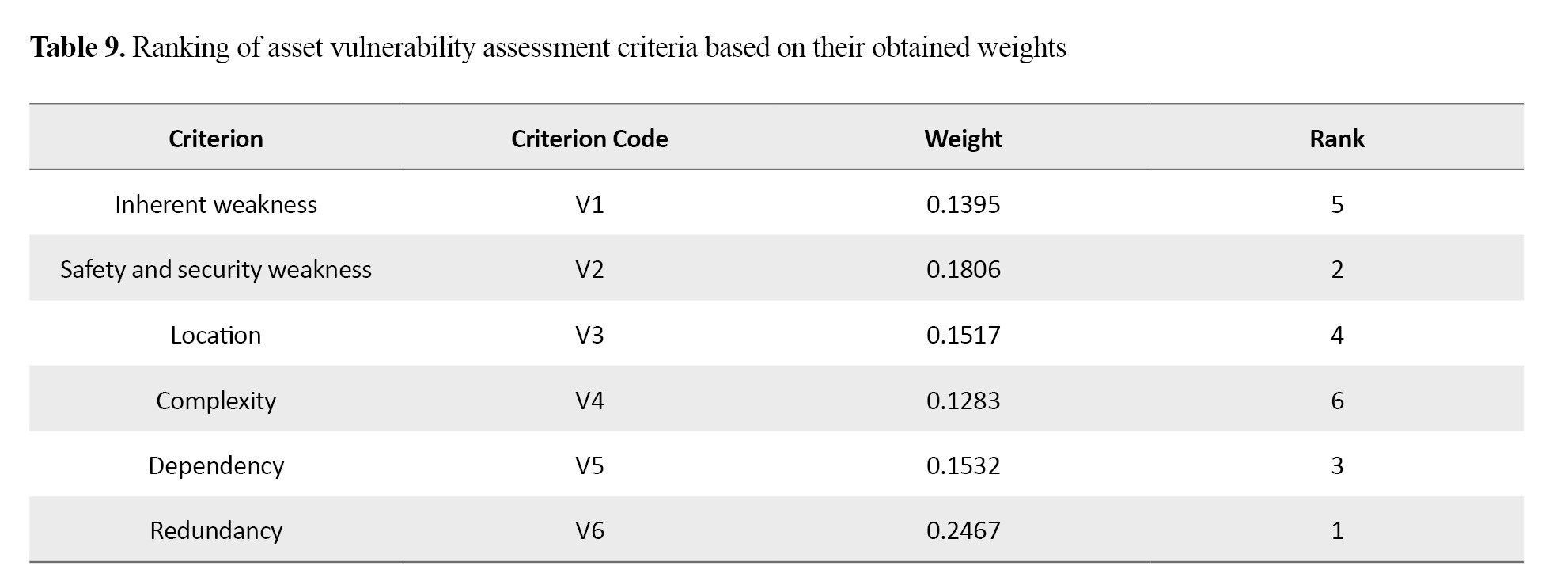
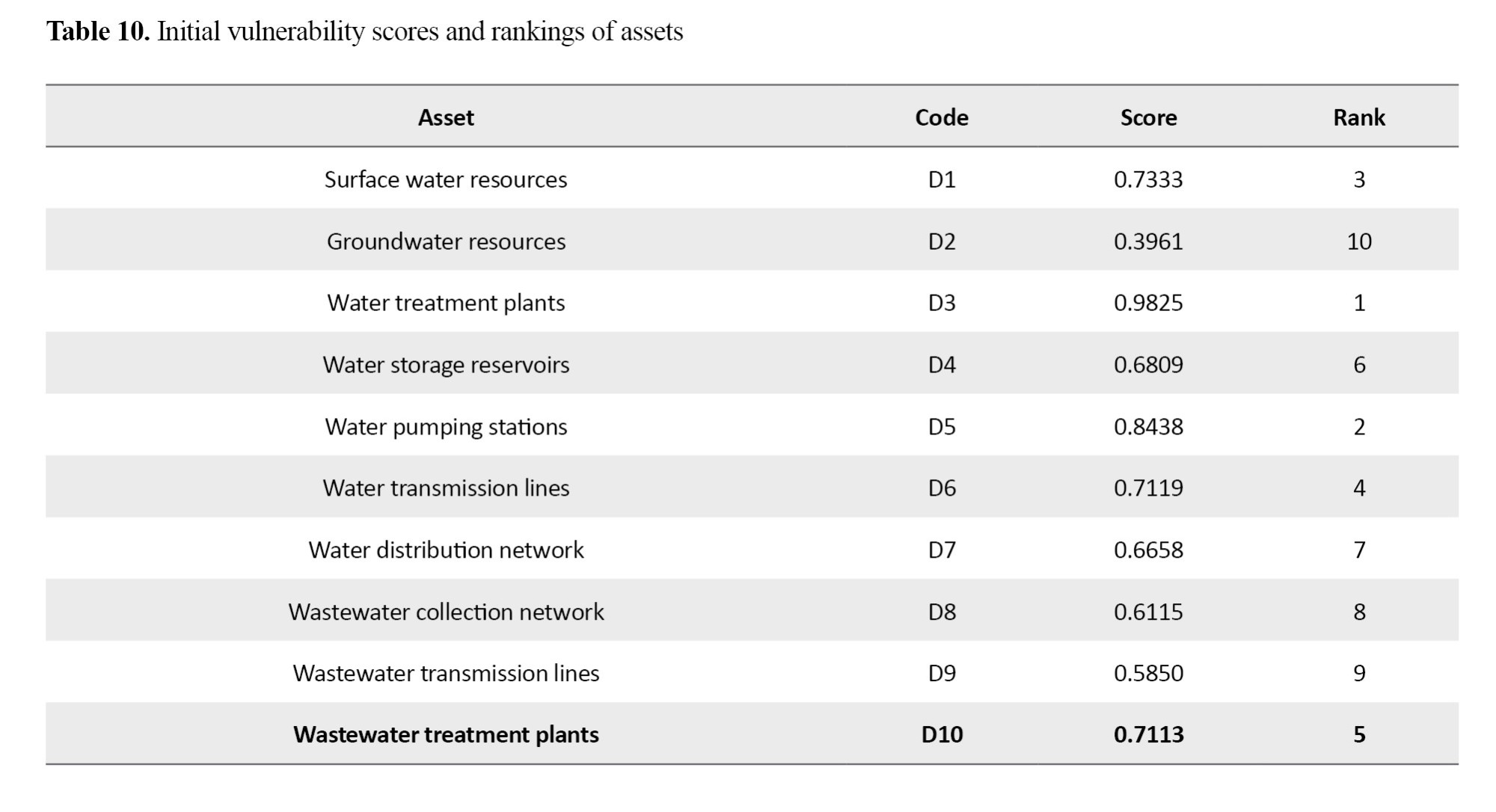
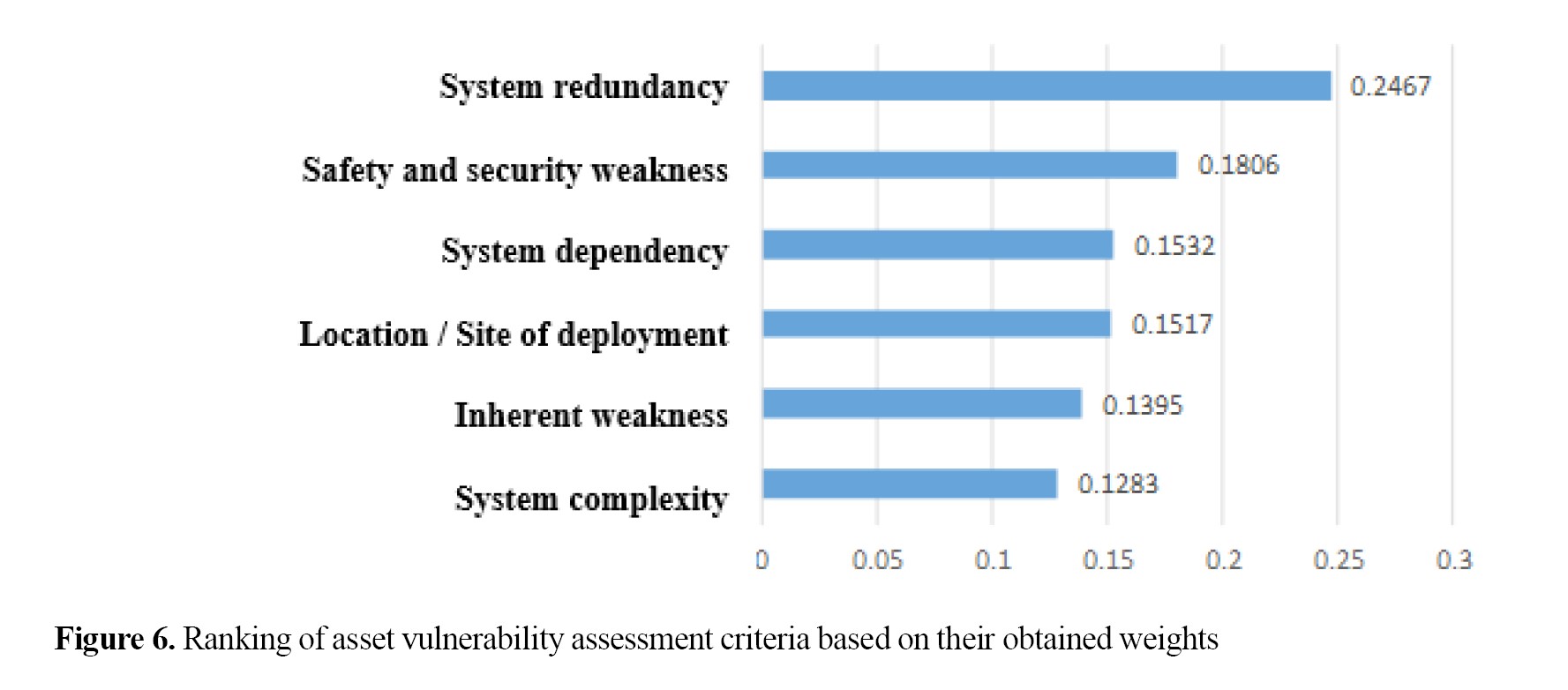
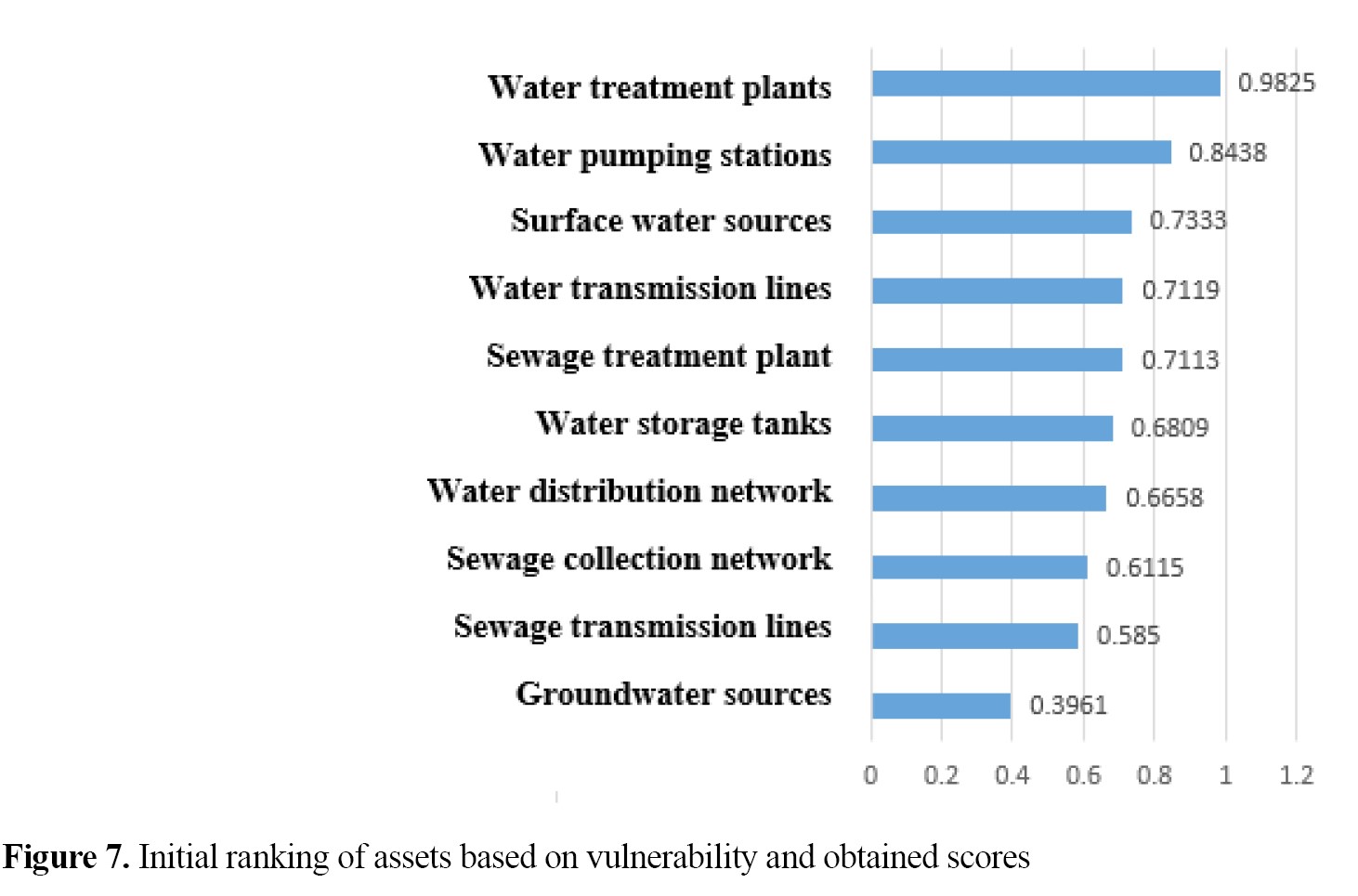
Among the evaluation criteria, redundancy received the highest priority, with a weight of 0.2467. Safety and security weaknesses and dependency ranked second and third, respectively. With regard to the assessed assets, water treatment plants ranked first in vulnerability, followed by water pumping stations in second place and surface water resources in third place.
Discussion
Finally, in line with the study’s main objective, the final vulnerability assessment of Hamedan City’s water and wastewater assets against human-made disasters was conducted under three plausible scenarios: explosion, industrial hazards, and environmental pollution. By incorporating the weighting coefficients of the assessment criteria and obtaining updated expert judgments, the results were derived as presented in Tables 11, 12, and 13. These findings were then implemented in the GIS environment, and the spatial vulnerability zoning maps of Hamedan’s urban water and wastewater assets were produced, as shown in Figures 8, 9, and 10.
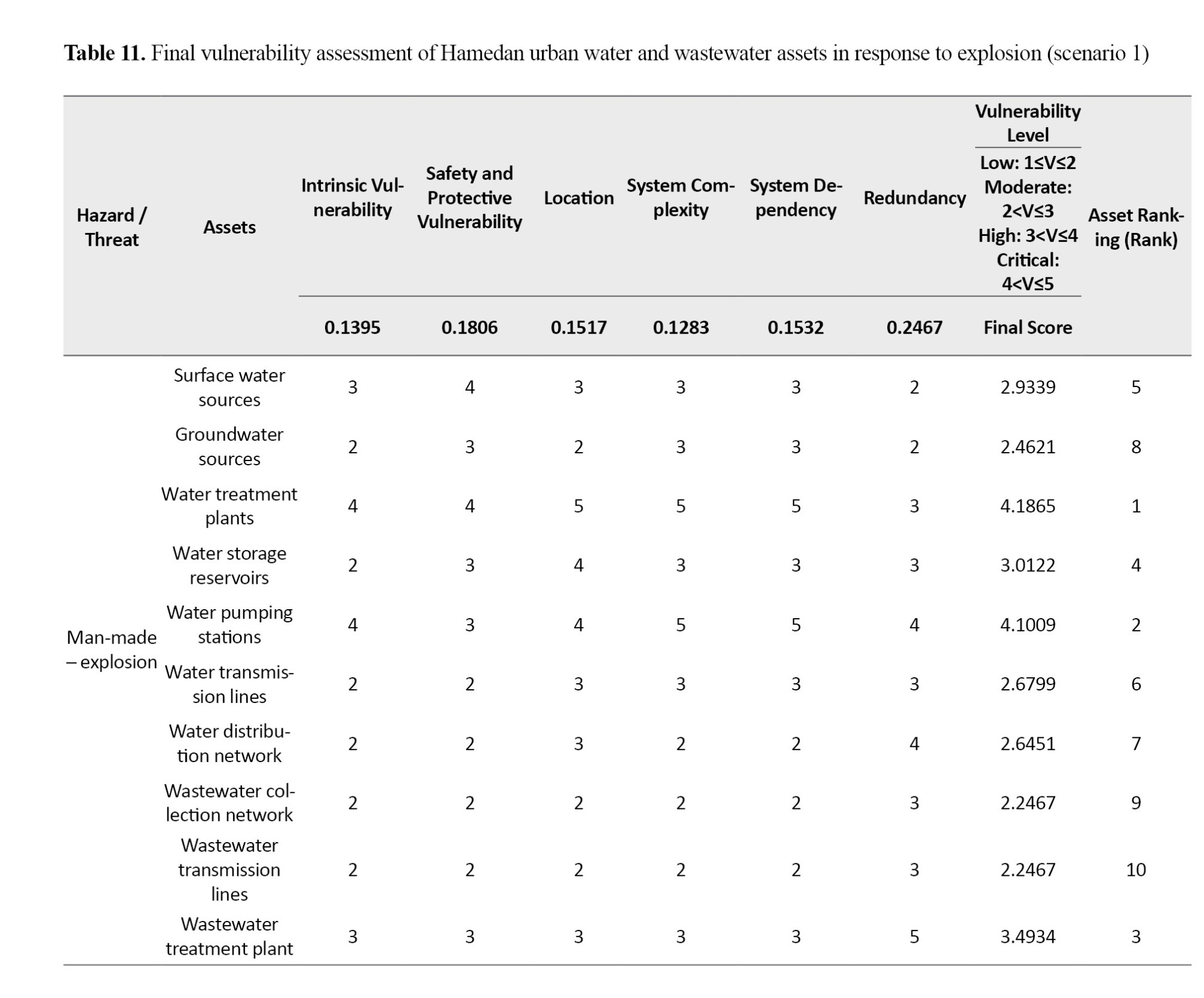
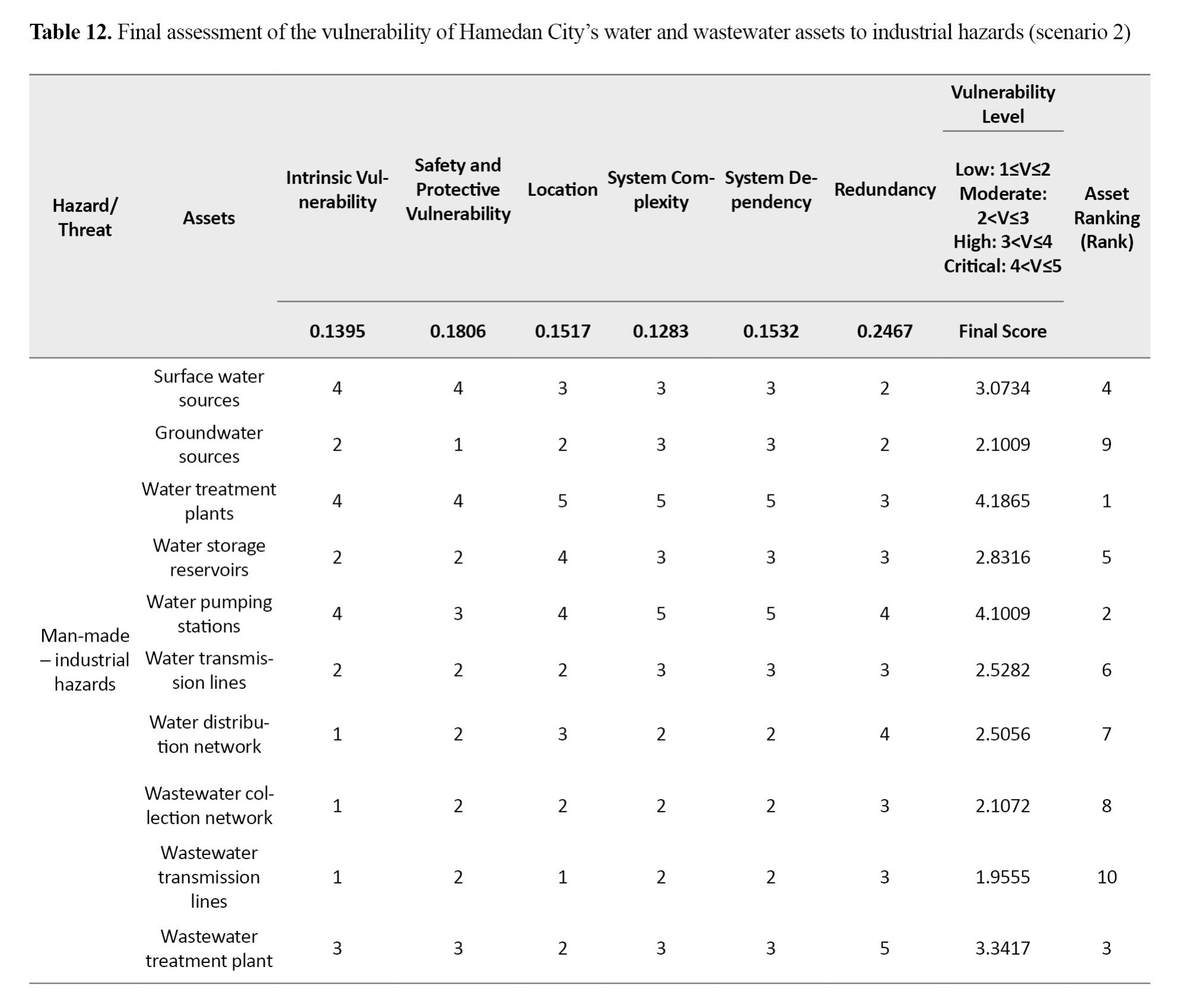
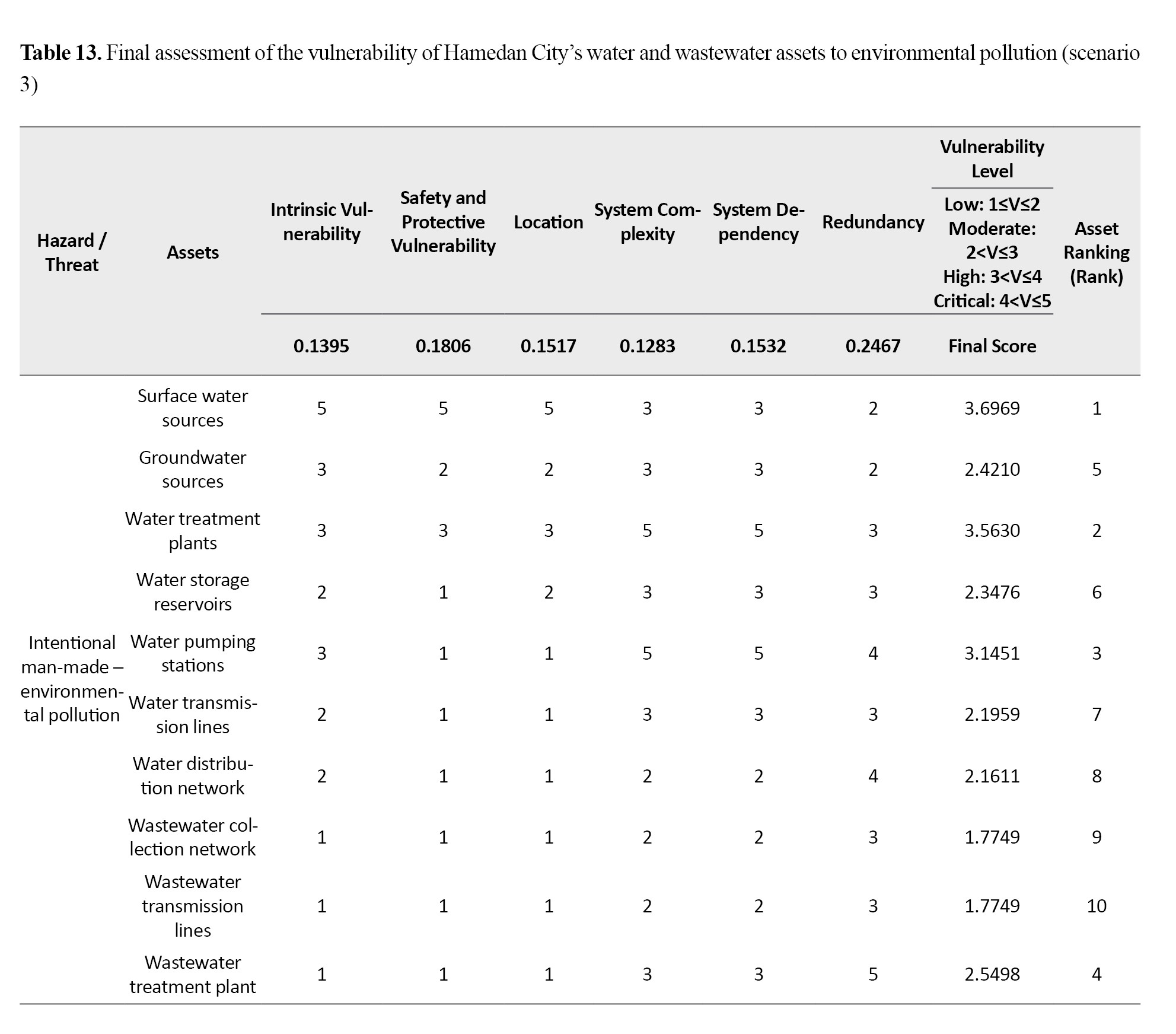
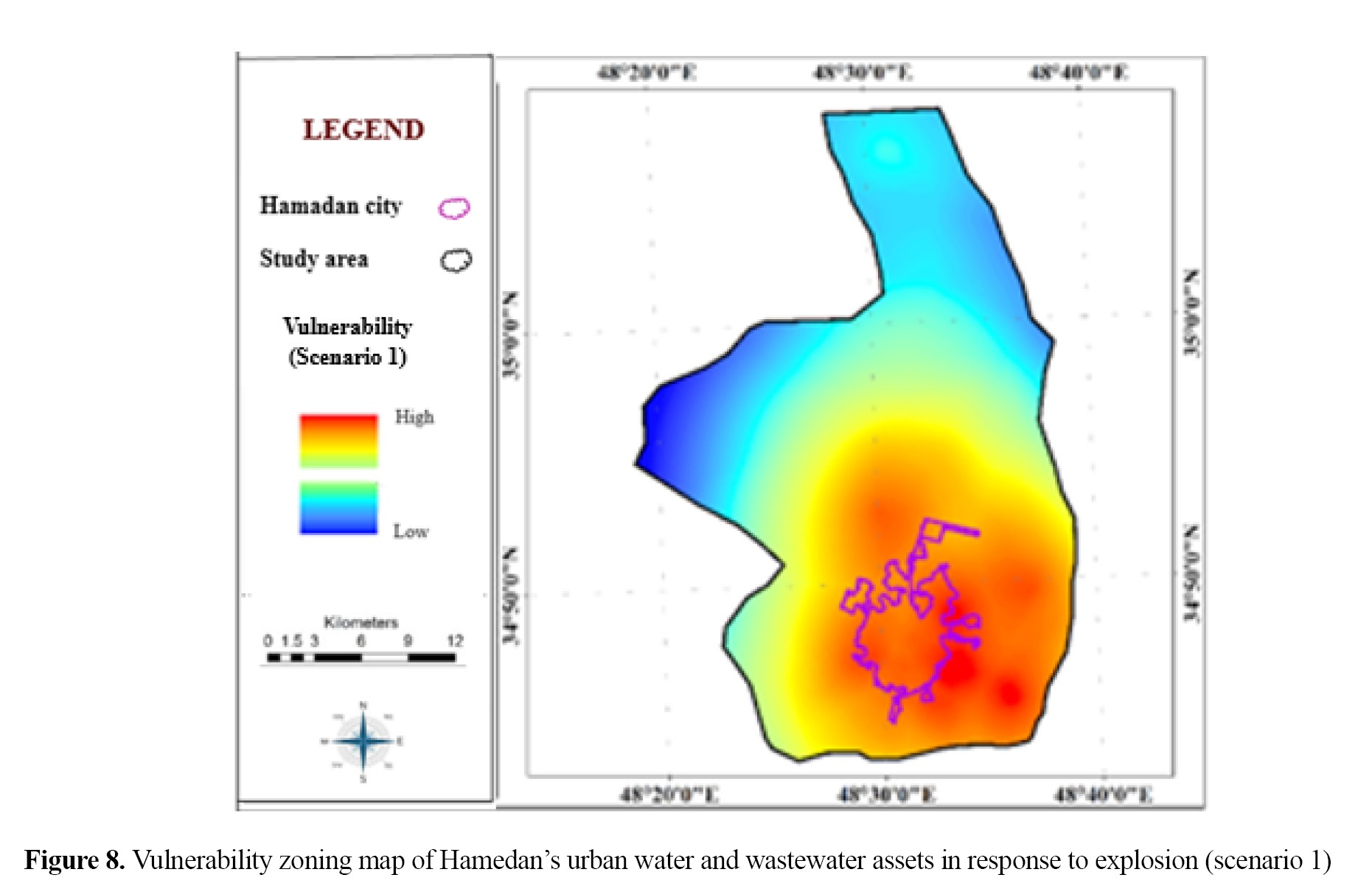
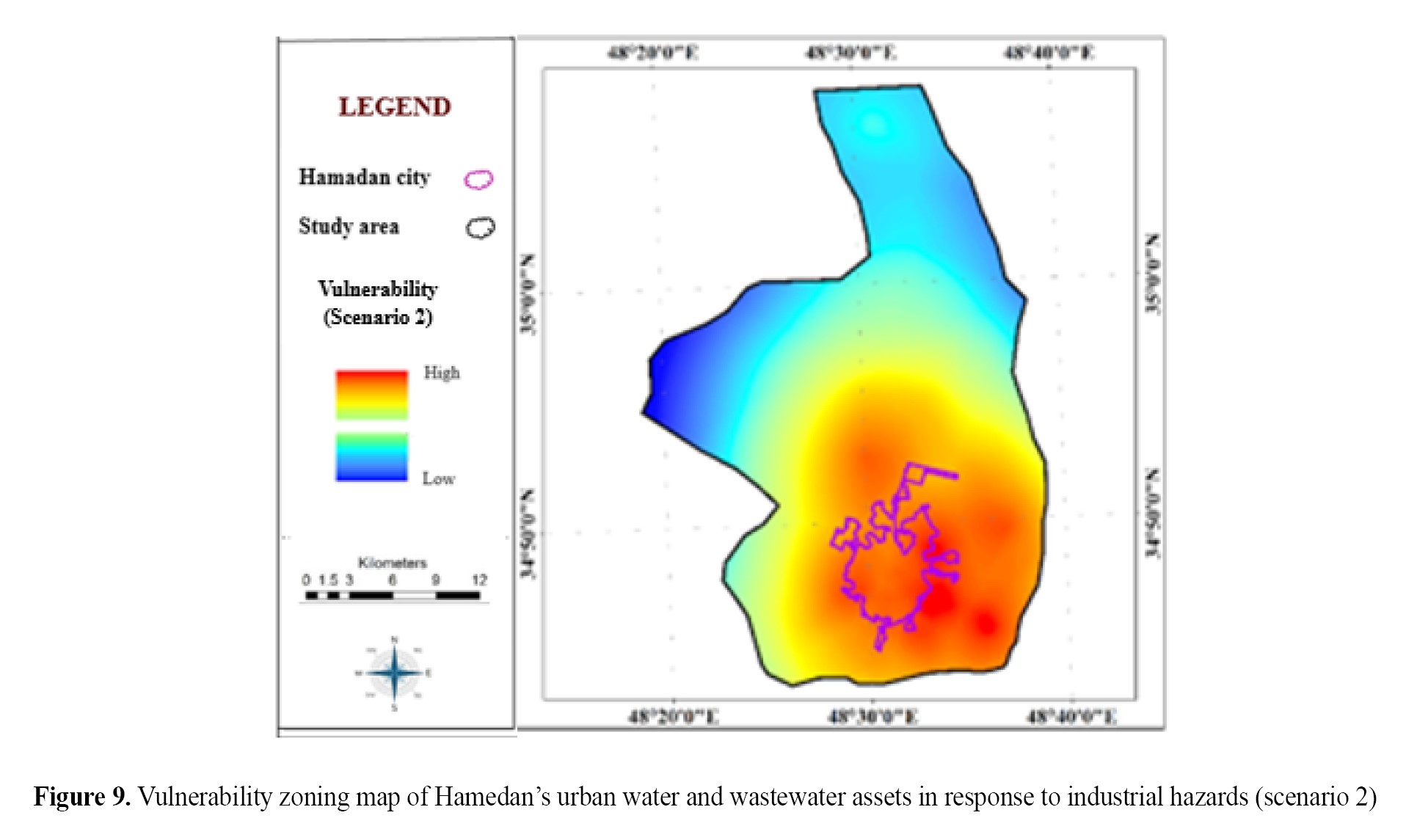
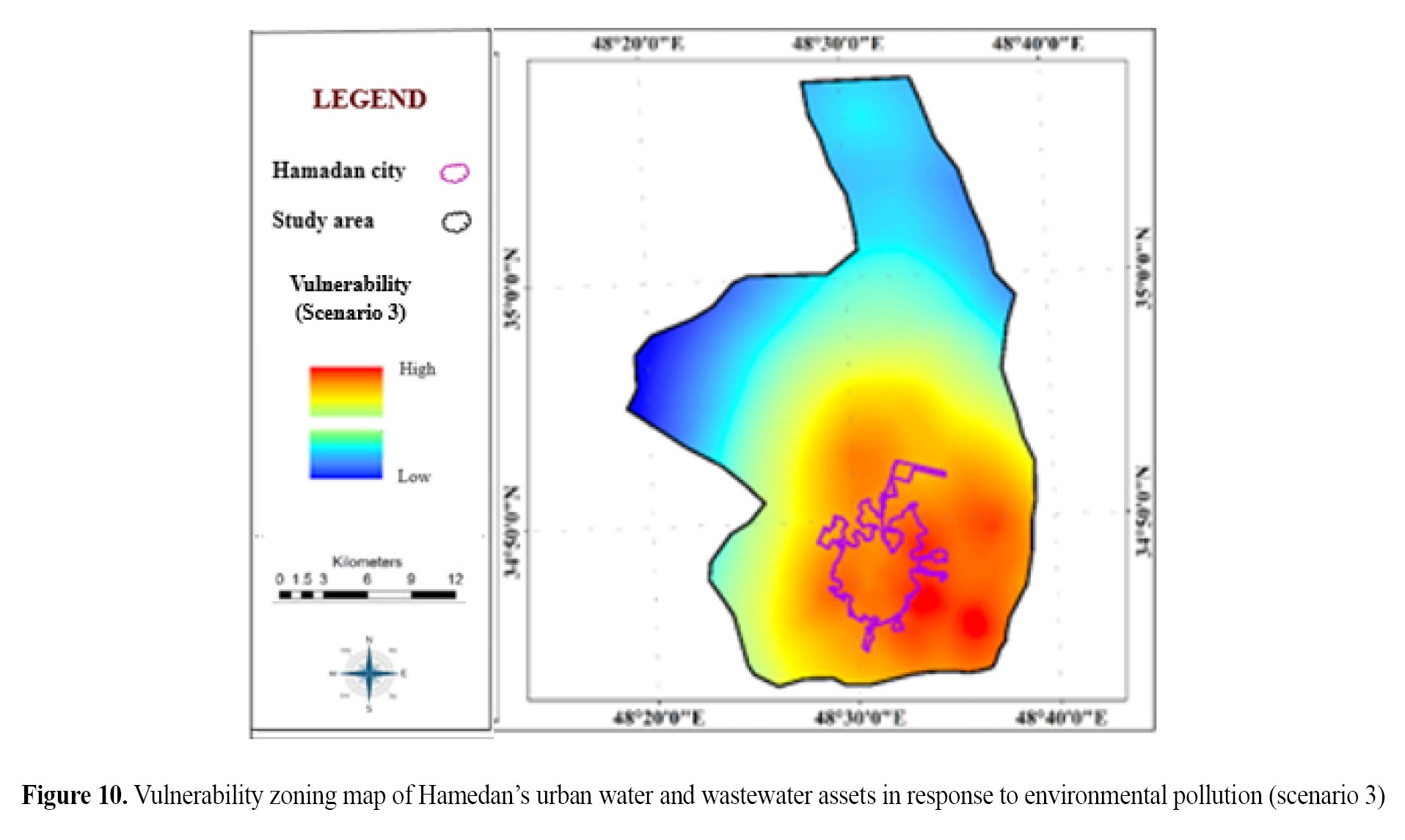
The results indicate that, for explosion (Scenario 1) and industrial hazards (scenario 2), the city’s water treatment plants ranked first, with a score of 4.1865, and, according to the defined vulnerability levels, fell within the critical category. In the case of environmental pollution (scenario 3), however, the surface water resources ranked first with a score of 3.6969 and were classified within the high vulnerability level, indicating the need for safety measures and vulnerability-reduction actions.
Conclusion
In this study, the vulnerability of the water and wastewater assets of Hamedan City—one of the most important cities in western Iran—to human-made disasters was assessed using an optimization-model-based approach. The results of the preliminary vulnerability assessment of the physical assets of the water and wastewater system, conducted using the integrated simultaneous evaluation of criteria and alternatives (SECA)– geographic information system method, indicated that, among the vulnerability assessment criteria, system redundancy, with a weight of 0.2467, safety and security weakness, with a weight of 0.1806, and system dependency, with a weight of 0.1532, ranked first to third, respectively. Among the physical assets, water treatment plants, water pumping stations, and surface water resources ranked first to third in terms of vulnerability, respectively.
To validate the proposed operational model, the vulnerability of Hamedan’s water and wastewater assets was reassessed under three plausible scenarios: explosion, industrial hazards, and environmental pollution. The results showed that the city’s water treatment plants, with a score of 4.1865, constituted the highest-priority asset and ranked first under both the explosion scenario (scenario 1) and the industrial hazards scenario (scenario 2). under the environmental pollution scenario (scenario 3), surface water resources, with a score of 3.6969, were identified as the highest-priority asset and ranked first.
The consistency of these findings with the preliminary assessment results, as well as with field observations and findings from other available studies, demonstrates the accuracy and validity of the model applied in this research.
Furthermore, based on the implementation of the model in Hamedan City, the main innovations of the proposed model are as follows:
1. Identification of context-specific vulnerability assessment criteria and their weighting through a multistage screening process based on expert judgments.
2. Application of the simultaneous evaluation of criteria and alternatives (SECA) method as an indigenous Iranian method for assessing the vulnerability of assets to disasters.
3. Development of a new structure and process for scenario formulation.
Ethical Considerations
Compliance with ethical guidelines
In this study, all ethical principles were observed. No experiments on human or animal samples were conducted. Therefore, no ethical approval code was needed.
Funding
This article was extracted from a doctoral dissertation in Disaster Engineering at the University of Tehran. This research did not receive any specific grant from funding agencies in the public, commercial, or not-for-profit sectors.
Authors' contributions
Conceptualization, methodology, investigation, data collection, and formal analysis, and initial draft preparation: Ali Vejdani Nozar; review and editing: Saeed Givehchi and Bahram Malekmohammadi; Supervision and project administration: Saeed Givehchi; Final approval: All authors.
Conflicts of interest
The authors declared no conflict of interest.
Acknowledgments
The authors thank all experts who participated in this study for providing valuable information and insights.
References
Bakhshy,F., Zarghani, S. H., & Kharazmi, O. A. (2020). [Analysis of Vulnerable Elements of the Cities Water Infrastructure against Terrorist Threats (Persian)]. Geopolitics Quarterly, 16(2), 32-57. [Link]
Behsaz Ravesh Engineering Company. (2023). [Operational plan for water and wastewater emergencies in Hamedan (Persian)]. Tehran:Behsaz Ravesh Engineering Company.
Boakye, J., Murphy, C., Gardoni, P., & Kumar, R. (2022). Which consequences matter in risk analysis and disaster assessment? International Journal of Disaster Risk Reduction, 71, 102740. [DOI:10.1016/j.ijdrr.2021.102740]
Carbonelli, M., Quaranta, R., Gaudio, P., Di Giovanni, D., Xerri, G. P., & Malizia, A., et al. (2024). Building risk assessment methodology for explosive and non-conventional terrorist attacks. The European Physical Journal Plus, 139, 669. [DOI:10.1140/epjp/s13360-024-05422-6]
Çal, I., & Ciravoglu, A. (2025). Determining vulnerability indicators of buildings for sea-level rise and floods in urban coastal areas. Sustainability, 17(1), 27. [DOI:10.3390/su17010027]
Fadaei, A. (2023). Study of Contaminants in Iranian Drinking Water and their Health Outcomes: A Review. Pollution, 9(4), 1450-1474. [DOI:10.22059/POLL.2023.356999.1839]
Fabbri, L., & Wood, M. P. (2019). Accident Damage Analysis Module (ADAM): Novel European Commission tool for consequence assessment-Scientific evaluation of performance. Process Safety and Environmental Protection, 129, 249-263. [DOI:10.1016/j.psep.2019.07.007]
Feyzi, E., Naghavi, M., & Fakhraei, H.(2020). [Risk Assessment of Hydroelectric Concrete Dams Using Combined FEMA and RAMCAP Method with Passive Defense Approach, Case Study: Leero Concrete Dam (Persian)]. Passive Defense, 11(2), 83-94. [Link]
Givehchi, S. (2018). [A methodology for identifying, ranking, and assessing threats and hazards in the field of infrastructure (Persian)]. Tehran: University of Tehran. [Link]
Guan, W., Liu, Q., & Dong, C. (2022). Risk assessment method for industrial accident consequences and human vulnerability in urban areas. Journal of Loss Prevention in the Process Industries, 76, 104745. [DOI:10.1016/j.jlp.2022.104745]
Hamadan Municipality. (2017). [Hamadan comprehensive urban plan: Base map of the plan (Persian)]. Hamadan: Hamadan Municipality.
Hellstrom, T. (2007). Critical infrastructure and systemic vulnerability: Towards a planning framework. Safety Science, 45(3), 415-430. [DOI:10.1016/j.ssci.2006.07.007]
Jalali Farahani, G. (2012). [Methods and models for estimating threats in passive defense ( Persian) ].Tehran: Imam Hossein University Press.[Link]
Kays, H. M. I., Sadri, A. M., Muraleetharan, K. K., Harvey, P. S., & Miller, G. A. (2025). Modeling flood propagation and cascading failures in interdependent transportation and stormwater networks. International Journal of Critical Infrastructure Protection, (48), 100741. [DOI:10.1016/j.ijcip.2025.100741]
Kazemi Balgeshiri, M. J., & Golestaneh, M. (2014). [A study of passive defense in water storage tanks and their transmission lines (Persian)]. Passive Defense Quarterly, 5(4), 19–50. [Link]
Keshavarz-Ghorabaee, M., Amiri, M., Zavadskas, E. K., Turskis, Z., & Antucheviciene, J. (2018). Simultaneous evaluation of criteria and alternatives (SECA) for multi-criteria decision-making. Informatica, 29(2), 265-280. [DOI:10.15388/Informatica.2018.167]
Kulba, V., Bakhtadze, N., Zaikin, O., Shelkov, A., & Chernov, I. (2017). Scenario analysis of management processes in the prevention and the elimination of consequences of man-made disasters. Procedia Computer Science, 112, 2066-2075. [DOI:10.1016/j.procs.2017.08.247]
Lee, Y., Kim, J., Kim, J., Kim, J., & Moon, I. (2010). Development of a risk assessment program for chemical terrorism. Korean Journal of Chemical Engineering, 27(2), 399-408. [DOI:10.1007/s11814-010-0094-x]
Lewis, T. G. (2015). Critical infrastructure protection in homeland security : Defending a networked nation. Hoboken, New Jersey : Wiley. [Link]
Liu, J., Tan, L., & Ma, Y. (2024). An integrated risk assessment method for urban areas due to chemical leakage accidents. Reliability Engineering & System Safety, 247, 110091. [DOI:10.1016/j.ress.2024.110091]
Lu, Z., Yan, D., Jiang, H., Xue, H., & Xu, Z. D. (2025). Cascading failures in urban infrastructure systems: A comprehensive review of disaster chain mechanisms. Journal of Infrastructure Intelligence and Resilience, 4(3), 100157. [DOI:10.1016/j.iintel.2025.100157]
Mashhadi, H., & Amini Varki, S. (2015). [Developing and presenting a model for threat assessment, vulnerability assessment, and risk analysis of critical infrastructures with an emphasis on passive defense (Persian)]. Journal of Emergency Management, 4(7), 69-85. [Link]
Modiri, M., Ahadnejad, M., & Hosseini, S. A. (2017). [Risk management in human-made crises with a passive defense approach: A case study of Tehran Metropolis (Persian)]. Journal of Urban Research and Planning, 7(27),163-182. [Link]
Omidvar, B., & Vejdani Nozar, A. (2021). [Qualitative risk assessment of critical water infrastructure: A case study of a city’s water supply system (Persian)]. Paper presented at 12th International Congress on Civil Engineering, Mashhad, Iran.
Otto-Zimmermann, K., & Balbo, A. (2012). The global adaptation community expands its scope. In K. Otto-Zimmermann (Eds), Resilient cities 2 (pp. 3-8). Dordrecht: Springer. [DOI:10.1007/978-94-007-4223-9_1]
Roudbari, S., Nekouei, M. A., & Taherkhani, R. (2017). [Assessment of the vulnerability of water supply system components (Persian)]. Journal of Engineering and Construction Management, 1(2), 32–36. [Link]
Sheykhali, M., & Emamzadeh, S. S. (2020). [The study of risk management of water and wastewater facilities using combined method Ahp and Ramcap (Persian)]. Sharif Journal of Civil Engineering, 36.2(2.2), 81-91. [DOI:10.24200/j30.2019.52458.2473]
Skulmoski, G. J., Hartman, F. T., & Krahn, J. (2007). The Delphi Method for Graduate Research. Journal of Information Technology Education: Research, 6, 1-21. [DOI:10.28945/199]
Sotoudeh-Anvari, A. (2023). Root Assessment Method (RAM): A novel multi-criteria decision making method and its applications in sustainability challenges. Journal of Cleaner Production, 423, 138695. [DOI:10.1016/j.jclepro.2023.138695]
Taherdoost, H., & Madanchian, M. (2023). Multi-criteria decision making (MCDM) methods and concepts. Encyclopedia, 3(1), 77-87. [DOI:10.3390/encyclopedia3010006]
Taghinejad, A., & Zonnemat-Kermani, M. (2016). [Using the RAMCAP approach to assess the vulnerability of dams and water transmission lines to natural hazards and weapon-related threats (Persian]. Paper presented at: The National Conference on Passive Defense and Sustainable Development, Tehran, Iran, 15 October, 2016. [Link]
Vaidya, O. S., & Kumar, S. (2006). Analytic hierarchy process: An overview of applications. European Journal of Operational Research, 169(1), 1-29. [DOI:10.1016/j.ejor.2004.04.028]
Vejdani Nozar, A. (2025). [A model for assessing the impacts on urban assets under scenario-based human-made disasters: A case study of Hamedan (Persian)] [PhD dissertation]. Tehran: University of Tehran.