Introduction
In recent decades, the escalation of greenhouse gas emissions has significantly intensified the frequency and severity of natural hazards, including flash floods, extreme heatwaves, and catastrophic wildfires (Chen et al., 2021). These phenomena have placed unprecedented pressure on global populations. In 2018, approximately 17.2 million people were displaced from their homes due to natural disasters (Fuller, 2020). The economic repercussions are equally profound; global annual losses attributed to natural hazards are estimated at approximately $250 billion (Modgil et al., 2020). For developing nations, these costs are disproportionately high, exacerbating systemic poverty and creating fertile ground for corruption-driven vulnerabilities (Sepúlveda et al., 2021). Furthermore, such disasters can destabilize capital markets, triggering volatility that disrupts global financial order (Kong et al., 2021).
Beyond economic and social displacement, natural hazards represent one of the most lethal collective threats to humanity. For instance, Cyclone Idai in 2019 claimed 1,300 lives and displaced 1.5 million people (Chikodzi & Khumalo, 2021). Similarly, the 2018 Sulawesi earthquake and Indonesian tsunami resulted in over 4,300 fatalities and rendered 165,000 people homeless (Sassa & Takagawa, 2019). In 2015, the Nepal earthquake inflicted $10 billion in damages and disrupted the lives of 100,000 residents (Shakya et al., 2022). Furthermore, in 2018, the Philippines faced widespread disaster impact affecting 6.5 million people, highlighting the critical necessity of robust emergency response services (Edwards et al., 2021).
While human capability to prevent or predict natural hazards remains limited, societies can significantly mitigate the subsequent loss of life and property through effective post-disaster management (Aranson & Storrier, 2017). The coordinated efforts of governments, humanitarian organizations, public and private sectors, and local communities during and after an event are pivotal to reducing disaster impacts (Al-Menji et al., 2021). When these interventions meet high qualitative standards, they become a primary mechanism for minimizing mortality and economic loss (Paliyaguru & Amarathunga, 2008). Consequently, there is an urgent demand for quality management (QM) within the domain of disaster relief. In this context, QM is defined as the degree to which pre-established disaster management objectives are achieved (Bahrain et al., 2009). Key performance indicators (KPIs) for QM in disaster scenarios include the operational safety of rescue teams, the protection of vulnerable populations, victim satisfaction with relief services, and the technical precision of executing personnel (Sakurai & Moriyama, 2019).
International evidence suggests that nations integrating QM frameworks into their emergency response systems achieve significantly lower casualty rates and higher operational efficacy. For example, applying QM principles to humanitarian supply chains following the 2010 Haiti earthquake demonstrated that process standardization and quality control significantly enhanced the speed and effectiveness of relief operations, thereby reducing secondary damages (Sassa & Takagawa, 2019).
In contrast to these global advancements, Iran faces a unique and severe risk profile. According to the 2004 United Nations Development Programme report, Iran has historically recorded some of the highest annual earthquake mortality rates globally, categorizing it as one of the world’s 15 most disaster-prone nations. With 36 identified hazard types out of the 46 globally recognized natural disasters, Iran remains highly susceptible to complex multi-hazard environments (Khanke & Hosseini, 2017). Despite this high frequency of occurrence and the resulting devastating impacts on life, property, and psychological security, there is a conspicuous absence of a cohesive, systemic framework for Quality Management within Iran’s relief and rehabilitation processes. The lack of a structured QM approach leads to inter-agency fragmentation, service delays, diminished operational effectiveness, and public dissatisfaction. While many nations leverage standardized QM frameworks to bolster post-crisis speed, precision, and safety, Iran still lacks a localized, functional model tailored to its specific socio-technical landscape.
Therefore, this research aimed to design a conceptual and operational framework for implementing QM during natural disasters. By doing so, this study seeks to provide a foundational step toward enhancing the performance of relief agencies, mitigating multi-dimensional vulnerabilities, and improving public trust in post-disaster services. This research is significant not only for its potential national implementation but also as a strategic decision-making basis for crisis management organizations.
Literature review
In recent decades, QM in the context of natural disasters has emerged as a critical frontier in international crisis management studies. A growing body of global research has sought to enhance post-disaster service quality by employing diverse methodologies aimed at increasing organizational agility, operational efficiency, and the overall effectiveness of relief efforts. The following studies represent some of the most important research conducted in this field.
Suresh et al. (2016), in their study, examined agility in post-disaster service delivery in India and stated that to achieve greater agility in post-disaster operations, it is necessary to train multi-skilled personnel and facilitate effective collaboration between public and government sectors through appropriate culture-building. They argued that by achieving agility in service delivery to the affected population, higher service quality can be attained, and the satisfaction of the victims can be further enhanced. Mansourian et al. (2006), in their research, investigated the effects of high-quality information availability during natural disasters and asserted that proper information management is one of the most critical aspects of effective disaster management, which enables the improvement of service quality. They state in their study that the greater the transparency and accessibility of information regarding available resources, access to roads and service routes, required supplies, and responsiveness to the affected population, the more the quality of the services provided will improve. Madu and Kuei (2014) proposed a framework that enables government organizations to enhance the quality of their services in the context of natural disaster-induced incidents. In their study, they introduced a systematic approach derived from Lean Six Sigma, through which government agencies can implement more sustainable relief practices for dealing with natural disasters and deliver higher-quality services. Lake et al. (2012) focused on the application of quality management across all dimensions of natural disaster victim identification and stated that quality management can become a crucial and effective tool for improving the acquisition, identification, and classification of the resulting data. In their research, they stated that the proper implementation of quality management within forensic medicine organizations to effectively cope with natural disasters requires improving the skills of individual members, adhering to the chain of command and hierarchy, maintaining the boundaries of individual and organizational knowledge and expertise, and providing appropriate training. Ezeasor et al. (2018), in their study, developed a comprehensive global framework aimed at unifying the international community’s efforts to enhance service quality in high-severity mass-casualty incidents. The proposed framework presents quality management as a core principle for improving service delivery and emphasizes the necessity of addressing its various dimensions when responding to natural disasters. Among the key components highlighted in this framework are the establishment of a shared information infrastructure, the formulation of a classified executive system, and the preparation of annual analytical reports for monitoring and continuous performance improvement of relief organizations. Yulianto et al. (2021) investigated the social response and coping mechanisms of the 2018 earthquake victims in Indonesia, finding that the on-site availability of essentials, prior experience, and enhanced cohesion among service-providing entities significantly increase the potential for improving service quality. Taghizadeh-Hesary et al. (2021) examined the impact of quality on long-term post-disaster planning. By analyzing data from 14 Asian and Pacific countries, they developed a model to simulate improved future service delivery trajectories and evaluate their role in curbing post-disaster corruption and rent-seeking. Mudgil et al. (2020) conducted a systematic review of studies in the field of quality management during natural disaster responses. Analyzing literature indexed in the Scopus database from 2009 to 2018, they identified and categorized key concepts, definitions, frameworks, and organizational hierarchies relevant to this domain. Furthermore, this study investigated the enabling factors and challenges associated with implementing quality management under crisis conditions, offering recommendations to enhance organizational performance during natural disaster responses. Huang et al. (2025) addressed the research gap in providing a comprehensive framework for managing data challenges in natural disaster risk management through emerging technologies. They introduced a novel data governance-based conceptual framework that categorizes three primary challenges—insufficient data, poor data quality, and limited application—across the objective and subjective dimensions of disaster risk management, demonstrating the role of technologies in systematically resolving these issues by incorporating case studies. Yang et al. (2024) proposed a digital technology-driven smart command approach to enhance rural emergency management in China, aiming to integrate early warning systems, decision-making, and rescue operations. By combining archival research, field investigations, and data analytics, their study demonstrated that implementing this smart model yields three key outcomes: enabling the digital integration of disaster elements, improving response efficiency through time and resource optimization, and ultimately promoting sustainable rural development by mitigating human and economic casualties. Despite the extensive body of research conducted on quality management in natural disasters, most previous studies have either adopted broad, conceptual approaches or confined their focus to specific elements such as technology, data, agility, or inter-organizational communications. A structured, localized framework capable of systematically establishing quality management within a national context—with specific emphasis on the particular conditions of countries like Iran—is noticeably absent in many of these studies. Moreover, the simultaneous integration of hybrid methods, namely interpretive structural modeling (ISM) and structural equation modeling (SEM), for designing and validating conceptual frameworks in the field of natural disasters has received limited attention. Consequently, the present study aims to bridge this theoretical and empirical gap by proposing a structural model for implementing quality management in natural disaster response, thereby providing an operational tool for policymakers and national executive bodies.
Theoretical foundations
This section introduces the tools and frameworks that contribute to the effective implementation of quality management in the face of natural disasters. These tools, derived directly from the literature review, play a crucial role in enhancing the effectiveness of disaster response.
Policy framework
The policy framework addresses the systematic and effective management of crises resulting from natural disasters. The primary objective of this framework is to establish a clear procedure for actions such as saving lives, managing human remains, preventing the spread of residential fires, and addressing similar challenges. Furthermore, this framework emphasizes the importance of managing emergency equipment, as the proper allocation of resources can significantly improve service quality and ensure rapid access to critical services (Masiyakurima et al., 2020). On the other hand, the policy framework plays a key role in facilitating coordination between local and international agencies, thereby creating the necessary conditions to better leverage public and organizational capacities within the relief process (Stenseke & Larigauderie, 2018).
Commitments of involved organizations
In the aftermath of natural disasters, conducting multidisciplinary activities in full coordination to foster synergy is recognized as a fundamental principle (Lassa et al., 2019). Within this context, identifying the key organizations capable of delivering optimal assistance to affected populations becomes increasingly critical. Meanwhile, emerging community-based local teams—which serve as a vital pillar of relief efforts capable of reinforcing governmental teams—also require a comprehensive structure and a systematic relief plan. Each stakeholder involved in disaster response must assume a distinct role and commit to its complete execution without encroaching upon the responsibilities of others (Matsuoka & González-Rocha, 2020).
Transparency and information sharing
Rapid information sharing across multi-network structures and maintaining transparency in data dissemination ensure successful post-disaster crisis resolution (Khan et al., 2019). The division of labor, delineation of organizational roles, establishment of standards, and definition of protocols and expected performance can all be shared across operational resources, leading to improved time management and preventing task duplication or operational interference (Hayes & Kelly, 2018). When sufficient disaster-related data is available, operational simulation becomes feasible, significantly enhancing the effectiveness of service delivery (Wagner & Agrawal, 2014). Furthermore, Djeumessi and Mbongo (2022) examined the role of social connectivity and the internet in mitigating disaster-induced vulnerabilities in Africa, demonstrating that expanding mobile phone penetration and internet access substantially increases information-sharing capacity during natural disasters.
Public-private partnership
Municipalities and local jurisdictions can enhance their adaptive capacity to cope with post-disaster crises through urban spatial resilience (Meerow & Newel, 2019). This enables more effective and rapid service delivery by leveraging urban infrastructure and resources, while simultaneously facilitating better coordination with the public sector (Waluszewski et al., 2019). Furthermore, the private sector can actively engage by delivering specialized training across diverse crisis scenarios (Kruhlov et al., 2019). Such training programs ensure that early emergency response actions are effectively implemented pending the arrival of specialized external relief teams (David Swanson & Smith, 2013). In the post-disaster phase, these partnerships can also contribute to monitoring reconstruction standardization, conducting community capacity-building, and ensuring the routine maintenance of critical equipment. Additionally, establishing cross-sector teams in this domain can foster trust among community members seeking to assist their peers (Altun & Güldiken, 2019). Moreover, interdisciplinary teams formed before or during natural disasters can systematically assess the impact and efficacy of proposed strategies, thereby helping to reduce systemic complexity (Lahiri et al., 2021).
Governmental support
During the onset of a natural disaster, governments bear the primary responsibility for service delivery (Kusumasari et al., 2010); inadequate disaster response can erode governance legitimacy and institutional trust among disaster-affected populations (Samad et al., 2025). Governmental support interventions in the immediate aftermath of a disaster—such as targeted tax subsidies/relief for affected individuals, rapid and adequate distribution of essential relief items, deployment of trained and specialized human resources, and the facilitation of logistical accessibility—serve as vital initial drivers that can alleviate post-disaster distress and minimize public dissatisfaction (Carlin et al., 2014).
Strategic planning
Strategic planning plays a pivotal role in effective disaster management and disaster risk reduction (DRR), encompassing the allocation of responsibilities among diverse actors across the crisis management lifecycle (Seraphin, 2019). This strategic framework also involves formulating effective communication protocols and selecting agile and resilient suppliers capable of rapid mobilization during emergencies (Hersperger et al., 2019, Hersperger et al., 2019). A core component of strategic planning is the anticipation and formulation of pre- and post-disaster response protocols. These interventions include the rehabilitation of critical physical infrastructure and local communication networks, optimal transportation routing, emergency evacuation planning, and the rapid provision of relief services (Sabouhi et al., 2019). Overall, strategic planning in disaster management encompasses a comprehensive spectrum of operational measures: designing resilient supply chains, establishing strategic linkages to fulfill demand across diversified distribution channels, ensuring operational readiness for disaster scenarios, sizing relief workforce capacity, making optimal vehicle routing decisions, and developing long-term strategies for post-disaster reconstruction and community empowerment. Within this trajectory, developing robust and flexible software and hardware infrastructures for future resilience serves as a foundational pillar (Abdul et al., 2024).
Continuous improvement
Operational execution during natural disasters demands continuous monitoring, evaluation, and adaptation to drive performance enhancement through a systematic feedback cycle. Aimed at identifying operational bottlenecks and optimizing relief processes, this monitoring cycle plays a pivotal role in boosting the overall effectiveness of interventions (Tang et al., 2019). Implementing a continuous improvement system not only upgrades operational capabilities and service delivery conditions, but also fosters the long-term socio-economic and institutional recovery of disaster-affected regions (Larsen & Foropon, 2018). In this context, continuous improvement in natural disaster management encompasses key dimensions such as ongoing performance assessment, enhancement of decision-making quality, balancing resource supply and demand, and measuring and elevating victim satisfaction levels. Collectively, these components contribute significantly to more effective post-disaster reconstruction and resilient, sustainable crisis response (Rebta et al., 2018).
Relief speed and safety assurance
The speed of the initial response to natural disasters is contingent upon the pre-disaster readiness level and the operational viability of preparedness plans (Platt, 2017). Enhancing response velocity is largely facilitated by streamlining information flows and establishing rapid data-sharing mechanisms (Dong et al., 2021). Prompt access to critical information alongside timely decision-making can significantly mitigate casualties and losses, reinforce infrastructure safety, and ensure the effective protection of natural resources (Kumbhar et al., 2016). In this domain, the concept of safety encompasses the secure evacuation and transport of the injured, the preservation of vital resources, and the rapid rehabilitation of damaged infrastructure networks (Yahyaei & Bozorgi-Amiri, 2019).
Access to financial resources
Securing immediate financial resources, particularly in the initial phases following a disaster onset, plays an essential role in delivering effective emergency services. A primary challenge lies in providing affordable and socially acceptable access to financial mechanisms for affected local communities (Siwedza & Shava, 2020). In this regard, robust financial planning and the pre-allocation of emergency contingency funds at national and regional levels are of paramount importance; governments must proactively incorporate disaster risk financing into their fiscal policies to ensure rapid, agile, and effective crisis response (Warner et al., 2003).
Materials and Methods
In terms of objective, this study is classified as applied research, as it aims to address a practical problem within crisis management organizations. In terms of data collection method, the present study employs a descriptive-survey design, the procedural steps of which are illustrated in
Figure 1.
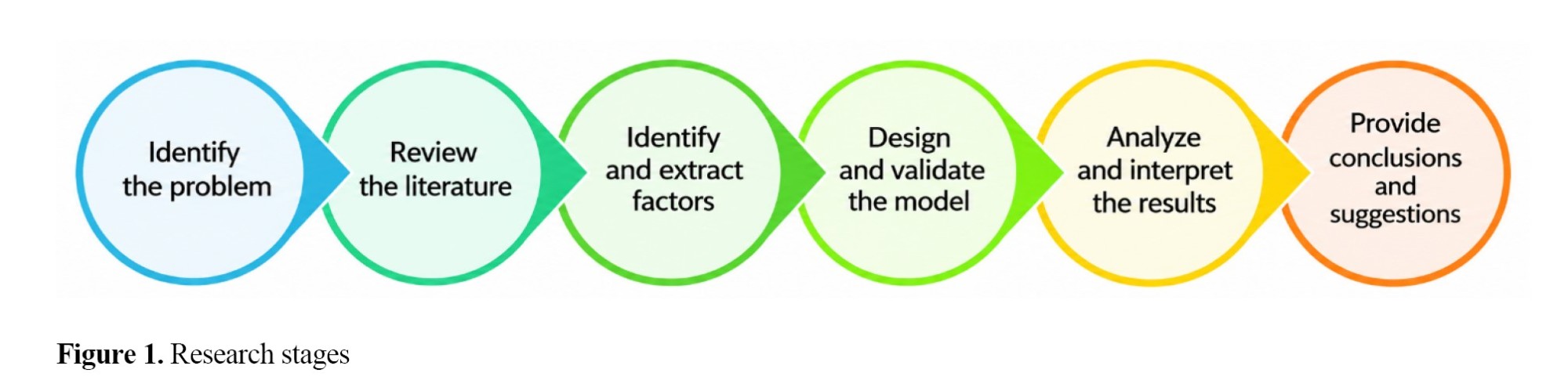
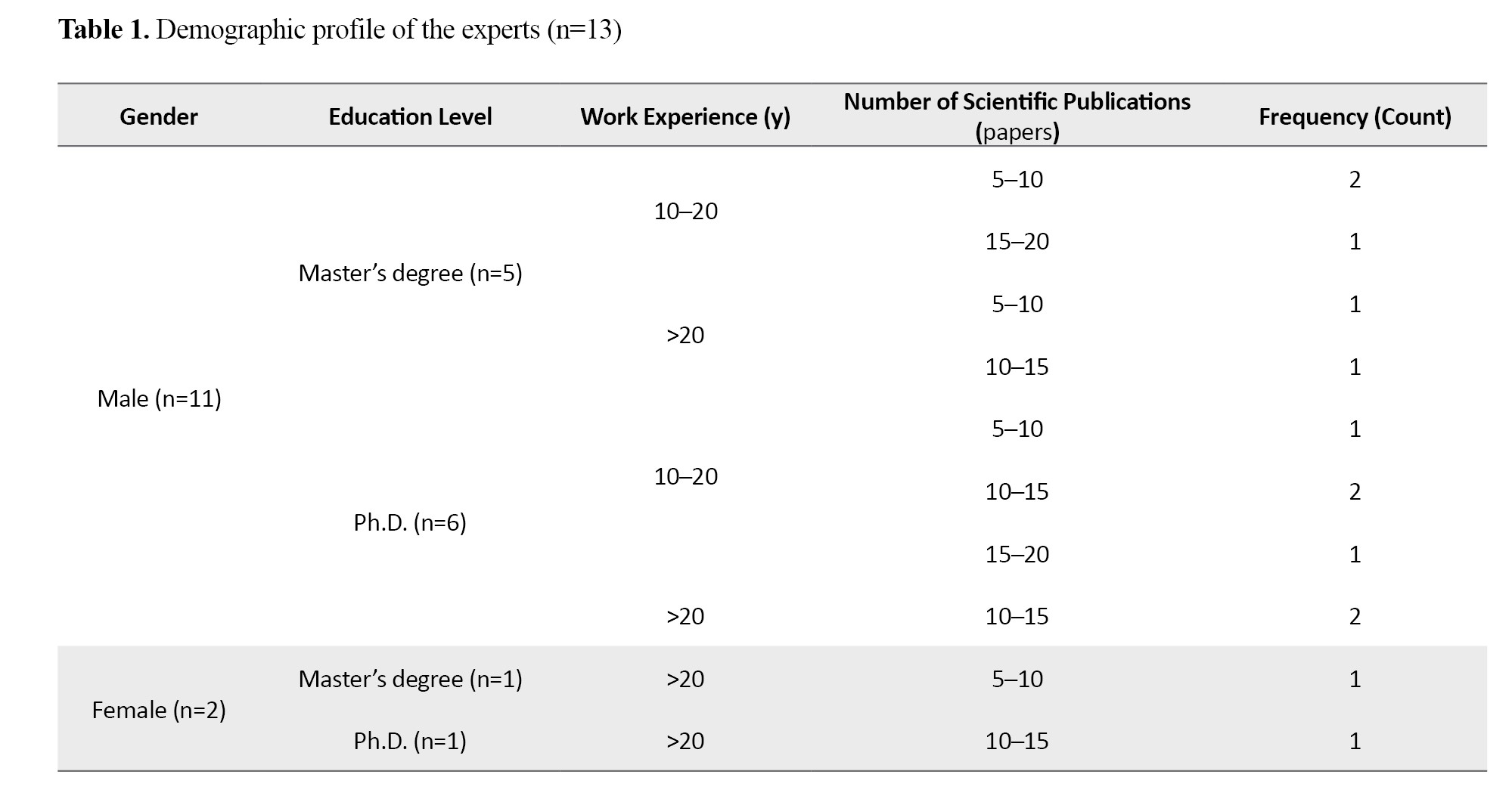
In the first step, by reviewing the theoretical literature, the factors influencing the implementation of quality management in natural disasters were identified. Following the identification of these factors, a pairwise comparison questionnaire was designed to enable the experts to determine the nature and direction of the relationships among the factors. The statistical population of the study comprised all experts from the National Disaster Management Organization. Using the snowball sampling method, 13 specialists in this field were identified and selected. Given that in the ISM technique a panel of 8 to 15 experts is considered sufficient (Saffari Darbarzi et al., 2021), the sample size in this study is deemed acceptable. These individuals possessed substantial research and executive backgrounds in disaster management, along with a minimum of 10 years of relevant professional experience.
Table 1 presents the demographic profile and characteristics of these experts.
The validity of the research questionnaire was confirmed by academic experts through content validity. Following the completion of the pairwise comparison questionnaires, the ISM technique was employed to design the quality management framework for natural disasters. First introduced by Warfield in 1973 (Naderi Beni et al., 2017), this technique is an interactive learning process that provides a graphical representation of the interrelationships among variables by simplifying and mapping complex connections among system elements. The ISM methodology substantially helps establish order within the complex interactions among components of a system. Interpretive Structural Modeling identifies the internal relationships among variables and analyzes the driving and dependence power of one variable over others. Furthermore, it enables the prioritization and multi-level partitioning of system elements, thereby significantly assisting decision-makers and managers in executing the designed model effectively. The instrument utilized at this stage was a pairwise comparison questionnaire comprising the nine final identified factors. The respondents, consisting of the 13 panel experts, were asked to conduct pairwise evaluations to determine the nature and direction of the relationships among the factors (i.e., no relationship, a one-way directional relationship, or a mutual/reciprocal relationship). The procedural steps of the Interpretive Structural Modeling technique are outlined as follows (Malekinejad et al., 2020):
Development of the structural self-interaction matrix
The interrelationships among the factors influencing quality management in natural disasters are established using this matrix. To construct the structural self-interaction matrix (SSIM), four conventional symbols are utilized to represent the direction of the relationship between factors iii and jjj (
Equation 1, 2, 3, 4):
1. V: Factor I will lead to j.
2. A: Factor j will lead to i.
3. X: Factors i and j will lead to influence each other mutually (bidirectional relationship).
4. O: Factors i and j are unrelated (no relationship).
Construction of the initial reachability matrix
This matrix is derived from the SSIM using the following substitution rules (
Equation 5, 6, 7, 8):
5. If the entry (i,j) in the SSIM is assigned V, the corresponding entry (i,j) in the reachability matrix becomes 1, and the entry (j,i) becomes 0.
6. If the entry (i,j) in the SSIM is assigned A, the corresponding entry (i,j) in the reachability matrix becomes 0, and the entry (j,i) becomes 1.
7. If the entry (i,j) in the SSIM is assigned X, both entries (i,j) and (j,i) in the reachability matrix become 1.
8. If the entry (i,j) in the SSIM is assigned O, both entries (i,j) and (j,i) in the reachability matrix become 0.
Formulation of the final reachability matrix
To account for contextual transitivity among elements, the initial reachability matrix must be checked for consistency. Transitivity is a fundamental assumption in ISM stating that if variable A leads to variable B and variable B leads to variable C, then variable A inherently leads to variable C. For this purpose, the initial matrix is raised to successive powers k+1 using Boolean algebraic rules until a steady-state condition is achieved (
Equation 9). Consequently, certain zero entries are converted to ones, denoted as (1*), indicating an indirect, transitive contextual relationship between the respective factors.
9. (Mk=Mk+1)
Determining the level of factors
After finding the reachability set (outputs), the antecedent set (inputs), and their intersection (common elements) for each factor, the factors are leveled.
● The reachability set includes the factor itself and any factor that has a 1 in its row.
● The antecedent set includes the factor itself and any factor that has a 1 in its column.
● The intersection set consists of the common elements between these two sets.
Factors where the reachability set and the intersection set are the same are placed at Level 1. By removing these factors and repeating this step for the remaining ones, the levels of all factors are determined.
Construction of the interpretive structural modeling-based structural model
Based on the finalized level partitions and the final reachability matrix, the structural model (directed graph or diagraph) is generated. This model illustrates the hierarchical stratification of the factors and clearly delineates the directional paths and causal linkages through which they influence one another.
Using the ISM technique, an appropriate structure was developed for deploying quality management in the face of natural disasters. In the next step, SEM using SmartPLS 3 software was employed to assess the fit of the proposed structure. In the second generation of structural equation modeling, the sample size should be between 5 and 15 times the number of questionnaire items (Talaei et al., 2022). Accordingly, a questionnaire was designed in which respondents evaluated the importance of each identified indicator for measuring different dimensions using a 5-point Likert scale. Based on the number of items, the minimum required sample size was estimated at 150 participants. The respondents included managers and personnel of the National Disaster Management Organization across Iran. In coordination with the National Disaster Management Organization, the questionnaires were distributed electronically via email. A total of 268 questionnaires were sent out, resulting in 161 valid responses, which were subsequently analyzed using SmartPLS 3 software.
In the subsequent step of the study, the micmac technique was utilized to analyze the behavior of factors in terms of their influence and dependence (driving power and dependence power). This analysis identifies the behavioral characteristics of the factors based on their mutual influence and dependency. Consequently, the identified factors were categorized into four general clusters, which facilitates more accurate decision-making for managers in the effective implementation of quality management (Malekinezhad et al., 2022).
Results
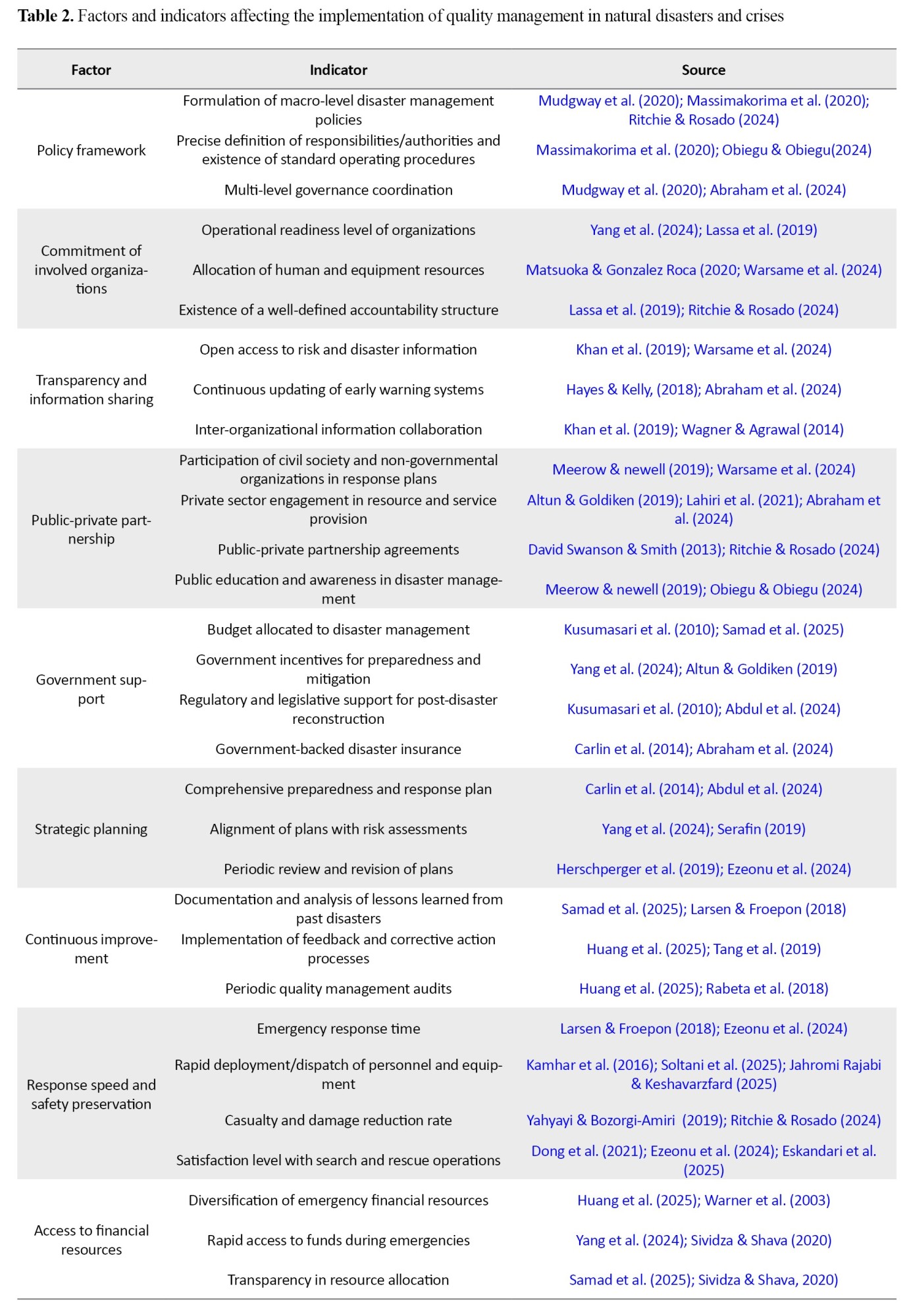
In accordance with the steps outlined in the methodology section, the factors influencing the implementation of the quality management system in unexpected incidents and disasters were initially identified through a comprehensive literature review.
Table 2 presents the results of this phase.
In the subsequent step, and in accordance with the stages outlined in the methodology section, the nine identified factors were presented to a panel of 13 experts to evaluate the interrelationships among the dimensions. Based on the ISM technique, the SSIM was developed in the initial stage utilizing the experts’ insights. This matrix, which reflects the consensus of the expert panel, is presented in
Table 3.
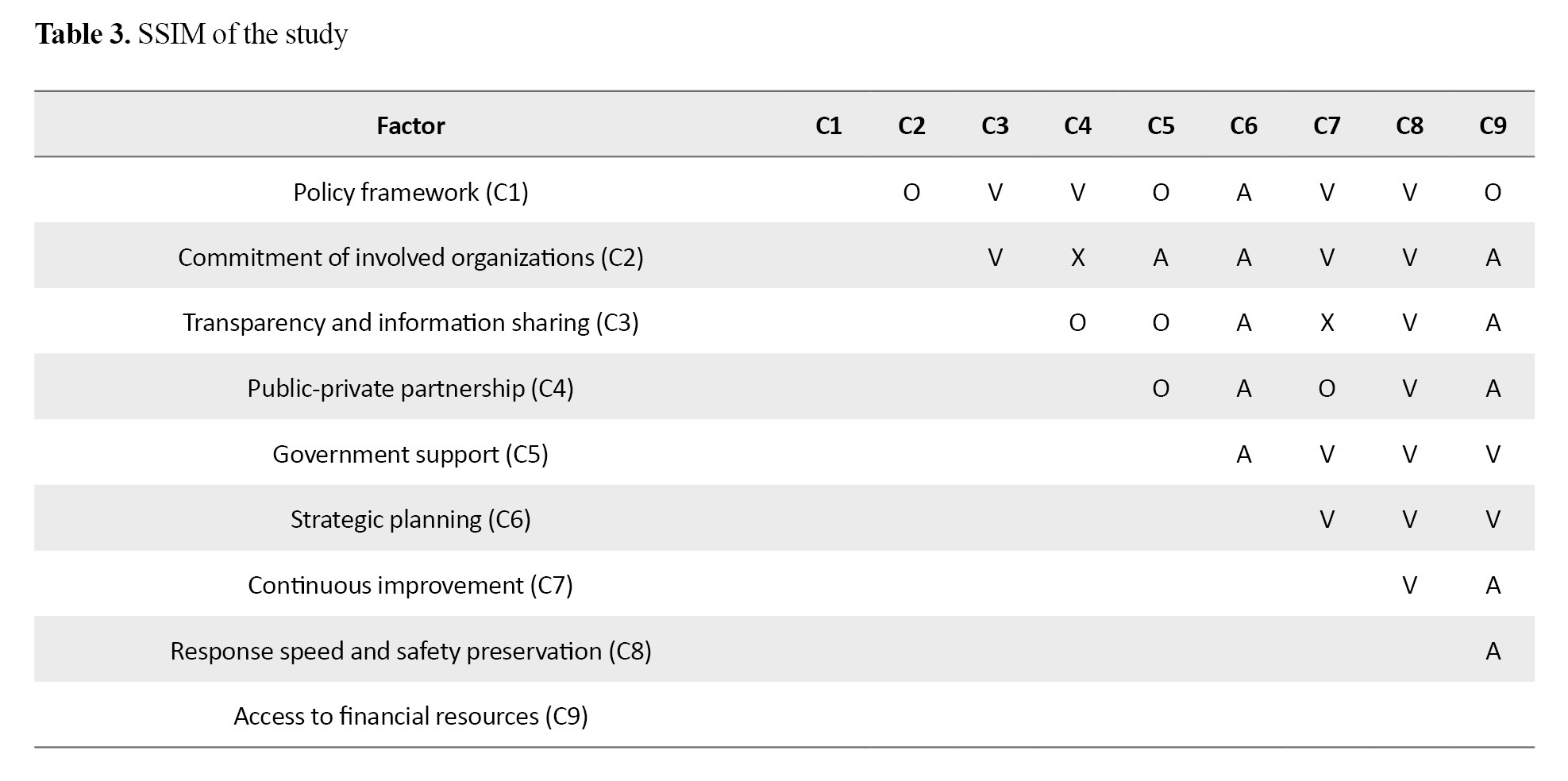
To construct this matrix, the experts were asked to specify the pairwise relationships between the factors using four standard symbols—V, A, X, and O—to comprehensively determine the mutual influence.
In this study, the initial reachability matrix was first derived from the SSIM, followed by the formulation of the final reachability matrix. To determine the hierarchical levels of the dimensions, it was necessary—in line with the research methodology—to identify the reachability sets, antecedent sets, and intersection sets; the results of this stage are presented in
Table 4.
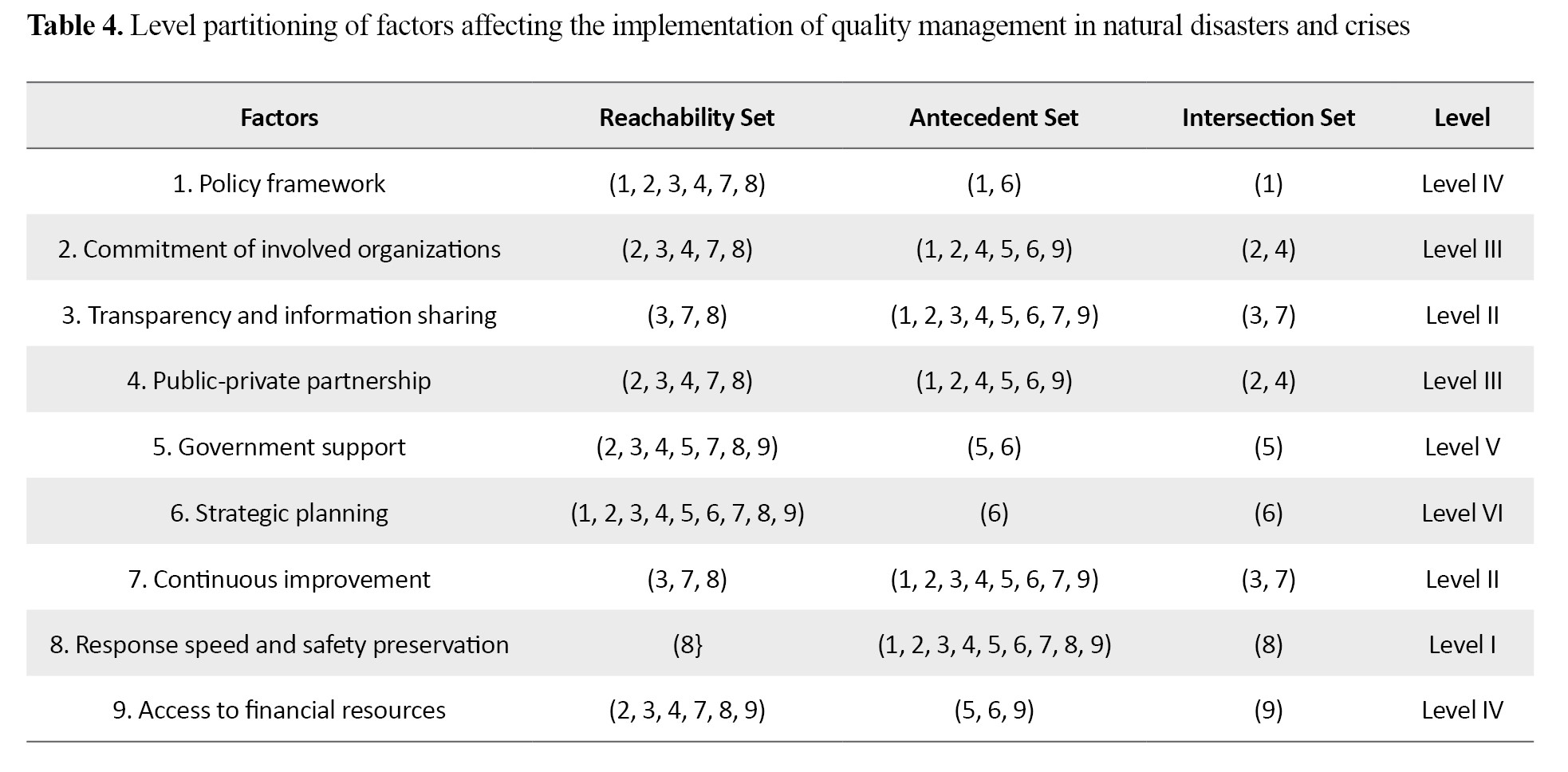
The reachability set examines the relationships along the rows of the matrix, whereas the antecedent set investigates the connections across the columns. It is worth noting that “relationships” here refer to both direct and indirect linkages between components that ultimately complement one another. On the other hand, the intersection set represents mutual, bidirectional relationships present in both the reachability and antecedent sets, thereby demonstrating reciprocal interactions among the factors. These sets provide the foundation for the level partitioning of the factors. In this process, the intersection between the reachability set and the intersection set is evaluated first, and an appropriate level is subsequently assigned to each variable. Once a level is allocated, the corresponding variable is removed from all reachability, antecedent, and intersection sets, and this iterative procedure continues until the hierarchical levels of all variables are fully determined.
Based on
Table 4, the conceptual framework for deploying quality management in natural disasters was developed, as illustrated in
Figure 2.
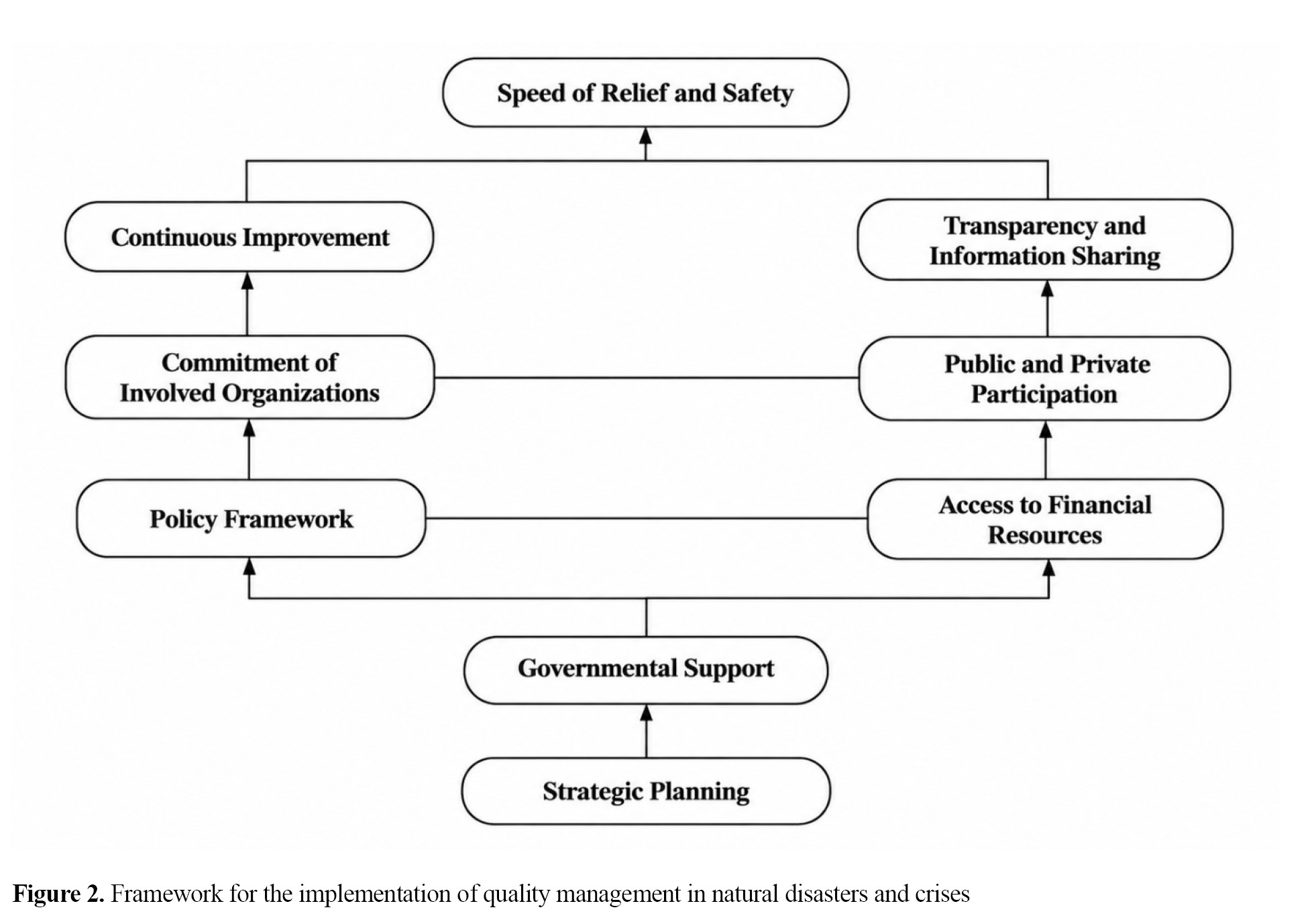
The structural model developed in this study, as illustrated in
Figure 2, was entered into SmartPLS 3 software for statistical model fit evaluation and empirically tested using data collected from 161 questionnaire respondents.
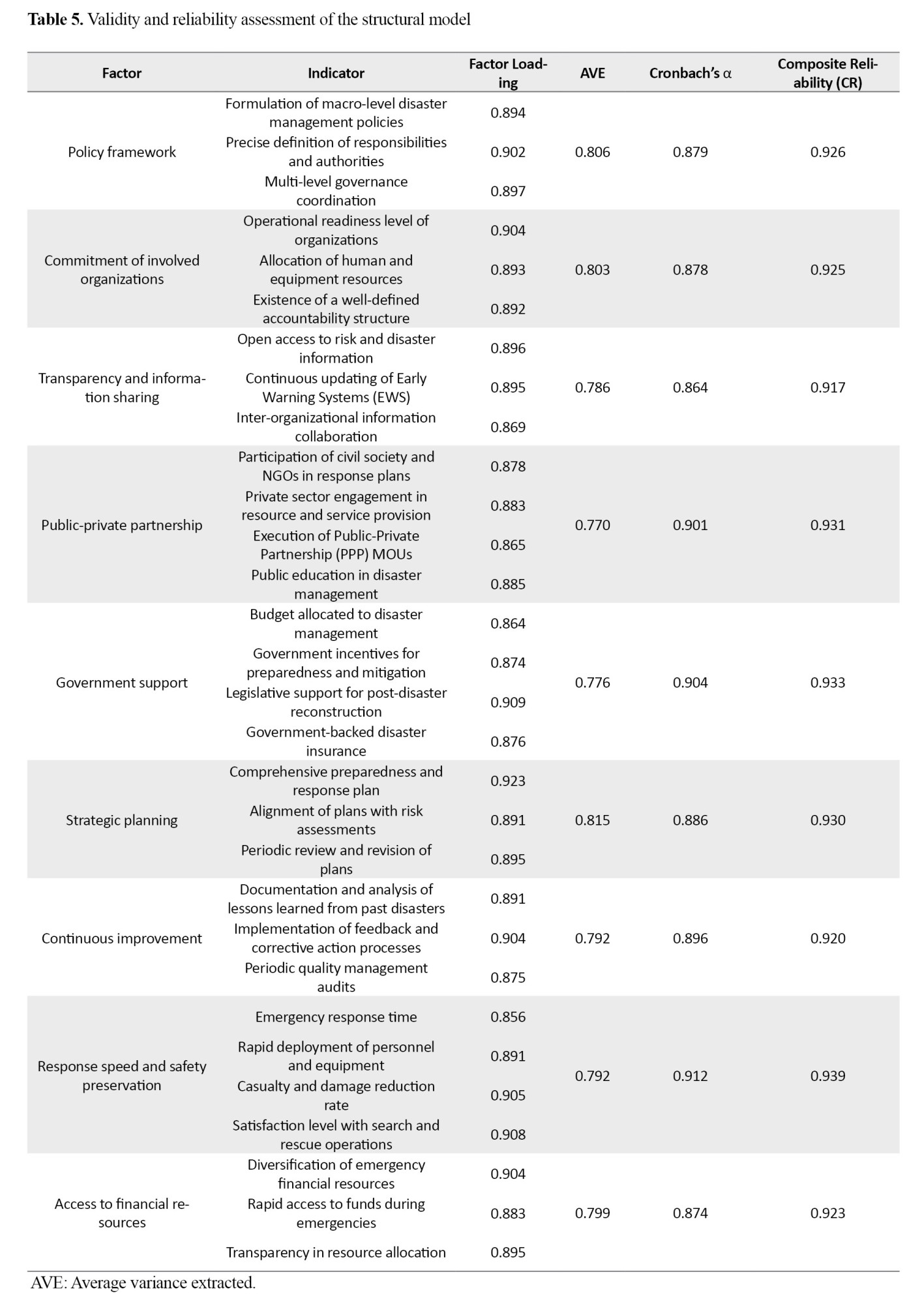
Table 4 presents the validity and reliability metrics obtained for each construct in the model.
To assess validity in this study, convergent validity was employed. Convergent validity refers to the degree of correlation among items measuring a specific construct and was evaluated using two criteria: outer loading coefficients and average variance extracted (AVE). The acceptable threshold values for these two criteria were set at 0.4 and 0.5, respectively (Mohammadfam et al., 2018).
To assess reliability, Cronbach’s alpha and composite reliability (CR) were utilized. Cronbach’s alpha reflects the internal consistency among a construct and its associated indicators, with an acceptable threshold set at 0.7. Additionally, Composite Reliability measures the construct reliability considering the intercorrelations among indicators; a CR value exceeding 0.7 for each construct indicates satisfactory internal consistency and model reliability (Soltanzadeh et al., 2019).
Based on the data presented in
Table 5 and the explanations provided prior to it, the validity and reliability of the research questionnaire were confirmed.
Subsequently, the structural fit of the model was evaluated using the Q² and R² criteria for the dependent variables. The Q² criterion determines the model’s predictive relevance. Models with appropriate structural fit should be capable of predicting the indicators associated with endogenous constructs. To assess the predictive power of the model regarding endogenous constructs, three threshold values of 0.02, 0.15, and 0.35 have been introduced (Batooli et al., 2025). The R² criterion is used to assess the link between the measurement model and the structural model in structural equation modeling, representing the effect of an exogenous variable on an endogenous variable. This criterion is calculated only for endogenous constructs, and it is considered zero for exogenous constructs. Three threshold values—0.19, 0.33, and 0.67—have been introduced as weak, moderate, and strong criteria, respectively; thus, higher R² values for endogenous constructs indicate a better model fit (Soltanzadeh et al., 2023).
Based on the findings presented in
Table 6, all Q2 values of the model fall within the strong range, indicating substantial predictive relevance for the model.
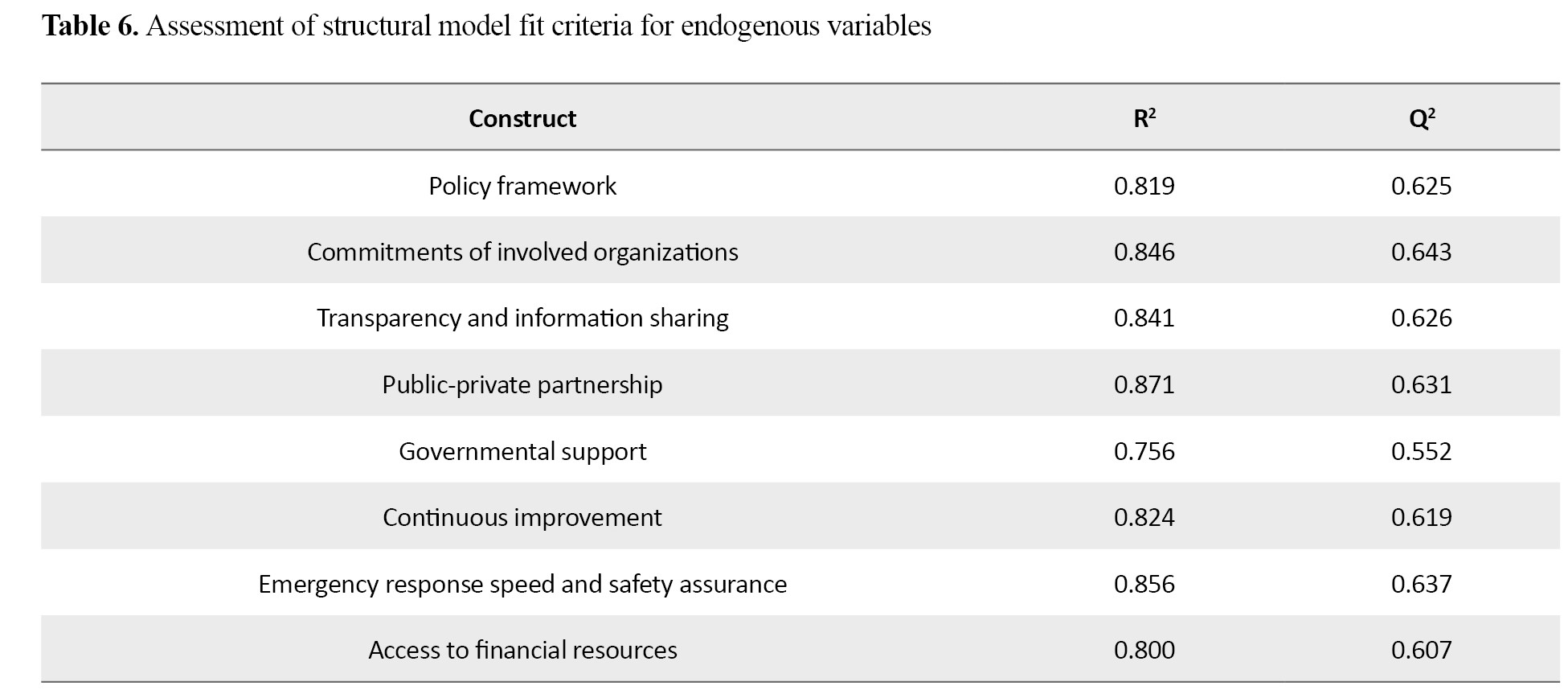
Furthermore, the R2 values demonstrate a strong explanatory power across the endogenous constructs. The global model fit was evaluated using the standardized root mean square residual (SRMR) index. This index ranges from 0 to 1, where lower values represent better model fit. In other words, higher factor loadings and regression coefficients bring the SRMR value closer to zero. The established threshold for this index is 0.08 (8%); an SRMR value of 0.08 or lower indicates acceptable model fit, whereas values exceeding this cut-off point reflect poorer fit (Platt, 2018). In this study, the SRMR was calculated as 0.038 for the saturated model and 0.079 for the estimated model, both confirming a satisfactory and acceptable overall fit for the research model. To establish statistical significance, the t values for all structural paths must exceed the critical threshold of 1.96 at the 95% confidence level (Malekinejad & et al, 2020). In this study, all obtained t values for the hypothesized relationships surpassed this threshold, confirming significant relationships among the research dimensions.
Table 7 presents the path coefficients (β), t values, and effect sizes of these relationships.
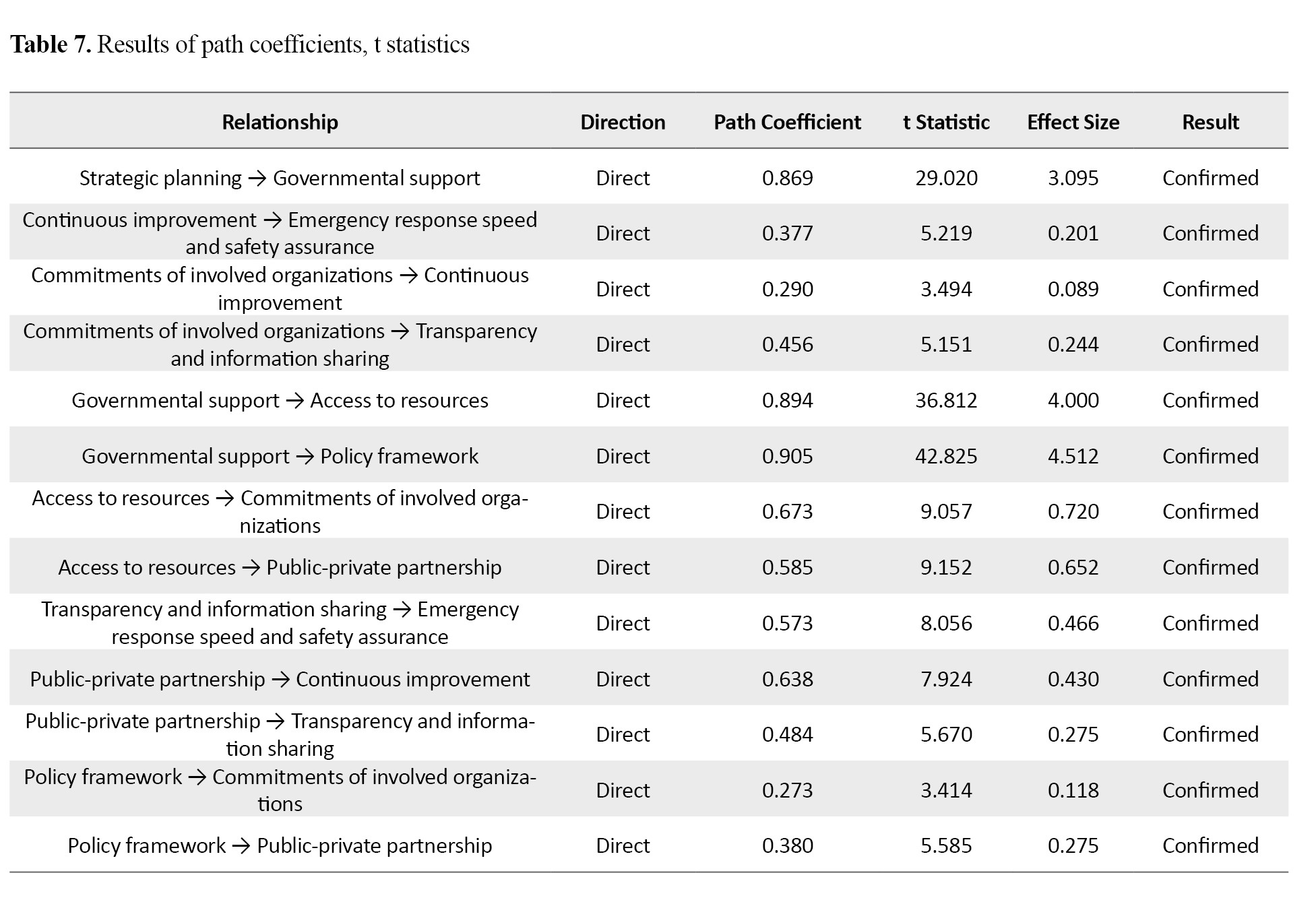 Figure 3
 illustrates the fitted conceptual model of the study, displaying the path coefficients, t statistics, and factor loadings.
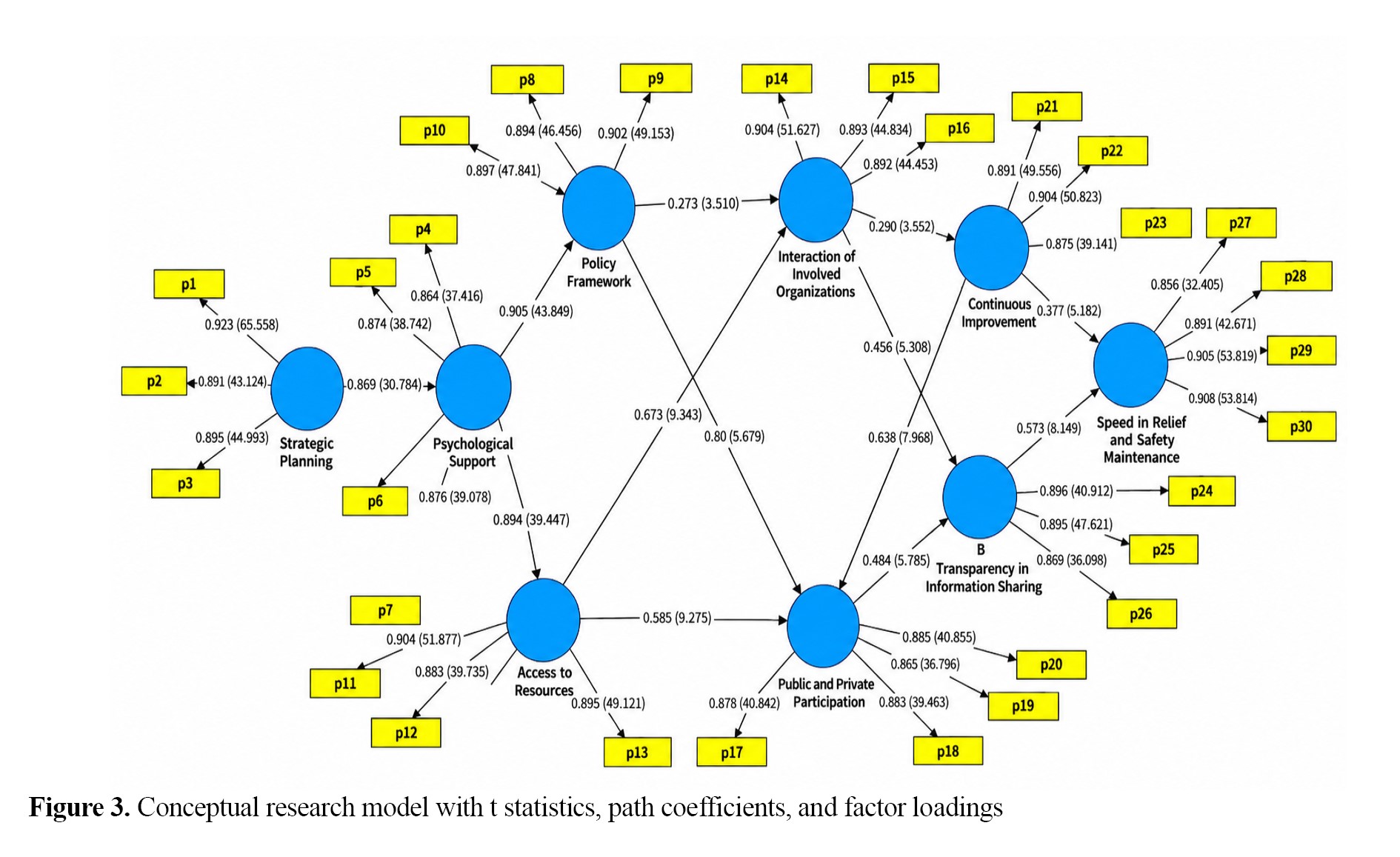
The values inside the parentheses represent the t statistics, while the values outside the parentheses denote the path coefficients.
Following the validation and structural fit assessment of the proposed model, a detailed analysis of the resulting structure becomes feasible. Accordingly, using the data from
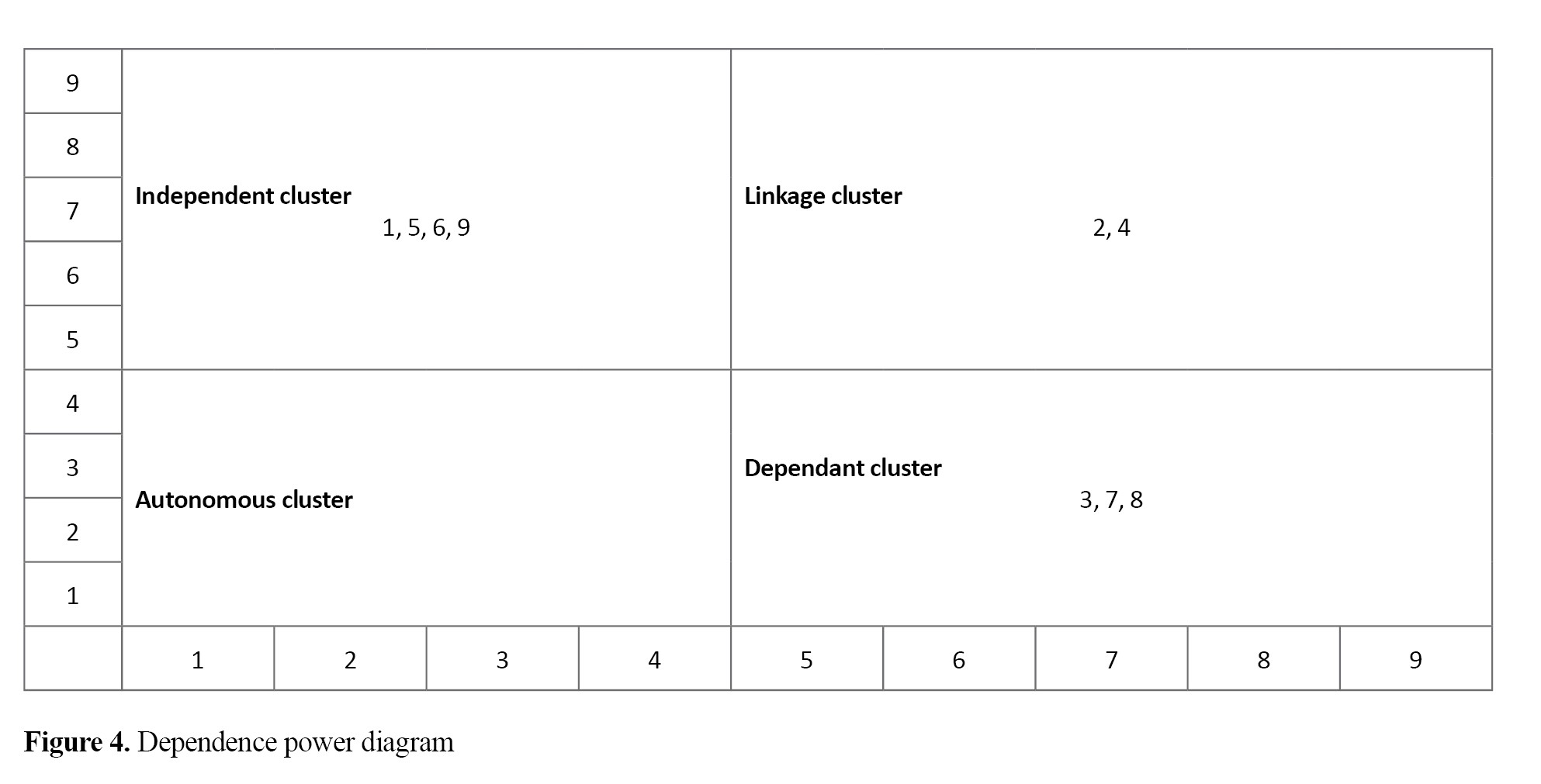
Table 3, the driving power and dependence power of each identified factor were determined. Driving power reflects the extent to which a factor influences other components, whereas dependence power indicates the degree to which it is influenced by other factors. Given the nine identified factors, the maximum possible value for both driving and dependence power is 9; that is, each factor can influence or be influenced by up to nine factors within the system.
Figure 4 shows the micmac matrix for the research factors, where driving power is plotted along the vertical axis (Y-axis) and dependence power along the horizontal axis (X-axis).
Based on the results obtained from the MICMAC analysis, the identified factors are classified into four primary clusters:
Independent cluster (drivers): Factors 1 (policy framework), 5 (governmental support), 6 (Strategic planning), and 9 (access to financial resources) fall into this quadrant. These factors exhibit high driving power and low dependence power, meaning they exert the most substantial influence on other components while remaining relatively unaffected themselves.
1. Dependent cluster: Factors 3 (transparency and information sharing), 7 (continuous improvement), and 8 (emergency response speed and safety assurance) are located in this quadrant. These factors are primarily influenced by other variables and possess limited influence within the system.
2. Linkage cluster: Factors 2 (commitments of involved organizations) and 4 (public-private partnership) are positioned in this quadrant. These factors play a mediating role and are characterized by simultaneously high driving and dependence powers.
3. Autonomous cluster: Notably, the autonomous cluster—which typically encompasses factors with both low driving and dependence powers—remained empty in this study.
4. This distribution indicates that the established structural framework demonstrates strong systemic cohesion and meaningful interactions among its core components.
Conclusion
Natural disasters worldwide claim thousands of lives annually and impact millions more. Concurrently, post-disaster crisis management is recognized as the most critical component of the disaster management system. This study aimed to develop a framework for the effective implementation of quality management during natural disasters. Accordingly, nine critical factors influencing quality during natural disasters were identified. These factors were structured into a paired-comparison questionnaire and distributed to 13 experts from the National Disaster Management Organization to evaluate mutual direct and indirect influences. Using the ISM technique, the nine identified factors were structured across six hierarchical levels. Subsequently, partial least squares (PLS) SEM was applied to evaluate and validate the structural model.
The validated structure indicates that strategic planning serves as the foundational cornerstone for deploying quality management. Consequently, establishing robust frameworks for the more efficient strategic management of natural disasters significantly facilitates the transition toward total quality management. Effective strategic planning ensures that governmental support is delivered to disaster-affected populations in the most efficient manner. Specifically, the strategic dimension can be strengthened through comprehensive preparedness and response plans, the alignment of operational plans with risk assessments, and periodic policy reviews. This foundation paves the way for an appropriate policy framework and disaster budget allocations. Governmental support—derived from overarching macro-level strategies—acts as the catalyst for securing financial resources and establishing policy frameworks. With supportive policy frameworks and financial resources in place, both public-private partnerships and the operational commitments of involved organizations can materialize effectively during unforeseen natural crises. Furthermore, the structural model demonstrates that private-public collaboration and institutional commitments foster continuous improvement in relief operations and enhance information transparency and sharing, which are paramount for rapid and timely disaster relief. Ultimately, this structural framework accelerates emergency response speed for affected individuals, fundamentally embodying quality management in disaster response operations.
The findings from the ISM technique—emphasizing hierarchical priorities and factor interactions within crisis management systems—align closely with the findings of Fuller (2020) and Mudgil et al. (2020), who underscored the multi-dimensional and networked roles of human, structural, and technological factors in effective crisis response. Moreover, the placement of fundamental drivers in the independent cluster aligns with Suresh et al. (2019) and Taghizadeh-Hesary et al. (2021), highlighting the role of qualitative infrastructure and organizational agility in humanitarian operations.
On the other hand, partial least squares (PLS)-SEM confirmed the strong causal relationships among key variables. These results corroborate the findings of Madu et al. (2014), who demonstrated the essential role of quality management in humanitarian relief supply chains via causal modeling. The robust fit of the structural model is also consistent with studies, such as Malekinejad et al. (2020) and Talaei et al. (2022), which utilized integrated ISM–SEM approaches to analyze hierarchical structures and causal paths across various managerial domains. Furthermore, recent studies including Huang et al. (2025) and Yang et al. (2024)—which examined the role of emerging technologies and artificial intelligence in enhancing resilience and decision-making during emergencies—indirectly corroborate our findings, particularly regarding the positioning of these factors within higher levels of the ISM hierarchy. This consistency demonstrates the depth of the present analysis and its alignment with modern research trends.
The driving-dependence power analysis revealed that no factor fell into the autonomous cluster. Autonomous variables typically exhibit weak driving power and low dependence; because of their minimal interconnectedness, they are often candidates for exclusion from structural models. However, in this study, rigorous literature synthesis and targeted variable selection ensured that all factors landed in active clusters, confirming the structural validity and cohesion of the proposed model:
● Dependent cluster: Variables including transparency and information sharing, continuous improvement, and emergency response speed and safety assurance are situated in this quadrant. Characterized by low driving power and high dependence, these components act primarily as system outcomes—shaped by other variables with limited reciprocal influence. Achieving these outcomes relies directly on the successful execution of key driver factors.
● Independent cluster: Factors, such as policy framework, governmental support, strategic planning, and access to financial resources occupy this quadrant. Exhibiting high driving power and low dependence, these elements represent the fundamental pillars of the model. The overall success of the system heavily depends on these foundational factors; neglecting them introduces substantial operational risks to disaster response.
● Linkage cluster: Factors including the commitments of involved organizations and public-private partnership are located in this quadrant. Characterized by both high driving power and high dependence, these variables are highly sensitive and volatile. Any disruption or improvement in these components propagates feedback loops across the entire system. Consequently, agile and proactive governance of these linkage factors is essential to maintaining overall system stability.
Recommendations
Based on the findings of this study, natural disaster management requires a fundamental restructuring of organizational frameworks, decision-making processes, and inter-agency collaborations. Enhancing efficacy across all disaster management phases—prevention, preparedness, response, and recovery—necessitates evidence-based policy formulation and synchronized coordination among various governance bodies. To this end, the following practical and managerial recommendations are proposed:
1. Reforming budgetary mechanisms and inter-agency coordination: Government administrators and executive bodies are urged to establish modern resource allocation mechanisms, reduce bureaucratic bottlenecks, and expand digital infrastructure for cross-sector data integration. These measures will facilitate agile and effective decision-making under crisis conditions. In addition to elevating the quality of relief services, such initiatives will significantly bolster institutional resilience against natural hazards.
2. Strengthening foundational policy dimensions and financial resources: Given the pivotal role of policy frameworks, governmental support, strategic planning, and access to capital, national disaster management agencies should place particular emphasis on realigning these foundational components. Formulating risk-informed, macro-level strategies, establishing preventive contingency funds, and expanding disaster risk insurance coverage will ensure the structural coherence and long-term sustainability of the total quality management system.
3. Establishing an integrated system for evaluation and information transparency: Designing and deploying a centralized digital platform to continuously evaluate relief agencies’ operational performance, capture institutional lessons learned, analyze feedback, and disseminate real-time crisis data is critical. Interfacing seamlessly between national and municipal entities, such a platform will substantially improve the operational velocity of relief logistics and enhance public trust and satisfaction.
4. Fostering multi-sectoral governance and public–private partnerships: Recognizing the critical position of institutional commitments and public–private synergy as linkage factors, multi-tiered coordination committees (at national, provincial, and local levels) should be institutionalized. Incorporating government authorities, humanitarian relief organizations, private enterprises, and non-governmental organizations, these frameworks can streamline role delegation, foster collaborative networks, resolve inter-organizational conflicts, and optimize shared resource governance during crisis response.
The conceptual model and empirical insights established in this study open several promising avenues for future inquiry within disaster quality management. Scholars can extend the theoretical boundaries of this framework and enhance its applicability through the following directions:
1- Future research could integrate this conceptual model with emerging technologies, such as geographic information systems, artificial intelligence, or data-driven platforms, to develop decision support systems for crisis managers. This integration could improve the operational effectiveness of the model in the field.
2- Given the importance of public-private partnership as a linkage factor in the model, researchers could investigate in future studies the role of components such as social capital, public trust, and community-based capacity in improving participation in the relief process. This study could lead to providing non-budgetary solutions in crisis quality management.
3- It is suggested that the efficiency and dynamism of the model be examined through comparative research across different types of natural disasters. This would help identify the strengths or weaknesses of the model when facing the specific characteristics of each type of disaster and could lead to the development of specialized versions of the model for specific types of crises.
4- It is suggested that in future research, the system dynamics methodology be used to analyze the long-term interactions among the model’s factors. This approach allows for the simulation of various scenarios over time and helps decision-makers better understand the effects of time delays, feedbacks, and non-linear relationships between the model’s components to plan more effective strategic interventions.
Ethical Considerations
Compliance with ethical guidelines
The authors adhered to the principles of research ethics throughout the study. No experiments on human or animal samples were conducted. Therefore, no ethical approval code was needed.
Funding
This research received no specific grant from any funding agency in the public, commercial, or not-for-profit sectors.
Authors' contributions
All authors contributed to the conception and design of the study. The authors participated in the literature review, data collection, analysis and interpretation of the findings, and preparation of the manuscript. All authors critically reviewed the manuscript, approved the final version, and agreed to be accountable for the content of the work.
Conflicts of interest
The authors declared no conflict of interest.
Acknowledgments
The authors would like to thank the experts for their valuable time and cooperation in this study.
References
Abdul, S., Adeghe, E. P., Adegoke, B. O., Adegoke, A. A., & Udedeh, E. H. (2024). AI-enhanced healthcare management during natural disasters: conceptual insights. Engineering Science & Technology Journal, 5(5), 1794-1816. [DOI:10.51594/estj.v5i5.1155]
Abraham, K., Abdelwahab, M., & Abo-Zahhad, M. (2024). Classification and detection of natural disasters using machine learning and deep learning techniques: A review. Earth Science Informatics, 17(2), 869-891. [DOI:10.1007/s12145-023-01205-2]
Al‐Manji, S., Lovett, J., & Mitchell, G. (2021). Factors Affecting Disaster Resilience in Oman: Integrating Stakeholder Analysis and Fuzzy Cognitive Mapping. Risk, Hazards & Crisis in Public Policy, 12(1), 29-50. [DOI:10.1002/rhc3.12201]
Altun, T., & Güldiken, N. (2019). Natural disaster insurance: Public-private sector partnership. Journal of Human Sciences, 16(4), 1084-1095. [Link]
Aronsson-Storrier, M. (2017). Sanitation, human rights and disaster management. Disaster Prevention and Management, 26(5), 514-525. [DOI:10.1108/DPM-02-2017-0032]
Baharin, S. S. K., Shibghatullah, A. S., & Othman, Z. (2009). Disaster management in malaysia: An application framework of integrated routing application for emergency response management system. Paper presented at: 2009 International Conference of Soft Computing and Pattern Recognition, Malacca, Malaysia, 04-07 December 2009. [DOI:10.1109/SoCPaR.2009.144]
Batooli, Z., Khajevandi, A. A., Kashani, M. M., Akbari, H., Mohammadfam, I., & Shahrivar, R. A. (2025). Structural Equation Modeling of the Relationships Between Safety Climate, Self-Determined Safety Motivation, and Safety Behavior in a High-Risk Industry. Journal of Health and Safety at Work, 15(4), 887-903. [DOI:10.18502/jhsw.v15i4.21458]
Carlin, R. E., Love, G. J., & Zechmeister, E. J. (2014). Natural disaster and democratic legitimacy: The public opinion consequences of Chile’s 2010 earthquake and tsunami. Political Research Quarterly, 67(1), 3-15. [DOI:10.1177/1065912913495592]
Chen, Y. E., Li, C., Chang, C. P., & Zheng, M. (2021). Identifying the influence of natural disasters on technological innovation. Economic Analysis and Policy, 70, 22-36. [DOI:10.1016/j.eap.2021.01.016]
Chikodzi, D., & Khumalo, P. (2021). Social and Physical Vulnerability of Settlements to Hydro-Climatic Induced Disasters: Lessons from Cyclone Idai in Zimbabwe. In: G. Nhamo & D. Chikodzi, (Eds), Cyclones in Southern Africa. Sustainable Development Goals Series. Cham: Springer. [DOI:10.1007/978-3-030-74303-1_13]
David Swanson, R., & Smith, R. J. (2013). A path to a public-private partnership: Commercial logistics concepts applied to disaster response. Journal of Business Logistics, 34(4), 335-346. [DOI:10.1111/jbl.12031]
Djoumessi, Y. F., & Mbongo, L. B. E. (2022). An analysis of information Communication Technologies for natural disaster management in Africa. International Journal of Disaster Risk Reduction, 68, 102722. [DOI:10.1016/j.ijdrr.2021.102722]
Dong, Z. S., Meng, L., Christenson, L., & Fulton, L. (2021). Social media information sharing for natural disaster response. Natural hazards, 107(3), 2077-2104. [DOI:10.1007/s11069-021-04528-9]
Edwards, B., Gray, M., & Borja, J. (2021). The influence of natural disasters on violence, mental health, food insecurity, and stunting in the Philippines: Findings from a nationally representative cohort. SSM - Population Health, 15, 100825. [DOI:10.1016/j.ssmph.2021.100825] [PMID]
Eskandari, M., Asghari, H., & Modiri M. (2025). [Identifying and Prioritizing Risk Factors in Supply Chain Logistics for Crisis Management Using an Integrated Fuzzy Approach (Persian)]. Disaster Prevention and Management Knowledge, 15 (1), 104-123. [DOI:10.32598/DMKP.15.1.894.1]
Ezeasor, I. C., Madu, C. N., Kuei, C. H., Ozumba, B. C., Madu, I. E., & Nnadi, V. E. (2018). Evolving Disaster Relief Supply Chain Quality Management (DRSCQM) into Nigeria’s Emergency Operations. In Handbook of Disaster Risk Reduction & Management (pp. 867-888). Singapore: World Scientific. [DOI:10.1142/9789813207950_0036]
Ezeonu, N. A., Hertelendy, A. J., Adu, M. K., Kung, J. Y., Itanyi, I. U., & Dias, R. D. L., et al. (2024). Mobile apps to support mental health response in natural disasters: Scoping review. Journal of Medical Internet Research, 26, e49929. [DOI:10.2196/49929] [PMID]
Fuller, P. (2020). Disasters displace more people than conflict and violence. Geneva: UN Office for Disaster Risk Reduction. [Link]
Hayes, P., & Kelly, S. (2018). Distributed morality, privacy, and social media in natural disaster response. Technology in Society, 54, 155-167. [DOI:10.1016/j.techsoc.2018.05.003]
Hersperger, A. M., Grădinaru, S., Oliveira, E., Pagliarin, S., & Palka, G. (2019). Understanding strategic spatial planning to effectively guide development of urban regions. Cities, 94, 96-105. [DOI:10.1016/j.cities.2019.05.032]
Huang, Y., Liu, M., Yang, J., Fang, W., Ma, Z., & Bi, J. (2025). Harnessing emerging technologies to address data gaps in natural disaster risk management: A conceptual framework and applications. Frontiers of Engineering Management, 12, 1242–1253. [DOI:10.1007/s42524-025-5019-9]
Jahromi Rajabi, G., & KeshavarzFard, R. (2025). [A Collaborative Model of Humanitarian Assistance for Maximum Coverage of Areas Affected by Natural Disasters (Persian)]. Disaster Prevention and Management Knowledge,15 (2), 182-201. [DOI:10.32598/DMKP.15.2.895.1]
Khan, M., Lee, H. Y., & Bae, J. H. (2019). The role of transparency in humanitarian logistics. Sustainability, 11(7), 2078. [DOI:10.3390/su11072078]
Khankeh, H., & Hosseini, S. (2017). [Choosing best crisis management model resulting from natural disasters in target countries based on multiple criteria decision making (AHP) (Persian)]. Strategic Defense Studies, 15(70), 301-320. [Link]
Komendantova, N., & Erokhin, D. (2025). Artificial Intelligence Tools in Misinformation Management during Natural Disasters. Public Organization Review, 25, 81–105. [DOI:10.1007/s11115-025-00815-2]
Kong, D., Lin, Z., Wang, Y., & Xiang, J. (2021). Natural disasters and analysts’ earnings forecasts. Journal of Corporate Finance, 66, 101860. [DOI:10.1016/j.jcorpfin.2020.101860]
Kruhlov, V., Latynin, M., Horban, A., & Petrov, A. (2020). Public-private partnership in cybersecurity. In S. Gnatyuk, S. Fedushko, Z. Hu, R. Odarchenko, Y. Syerov, A. Peleshchyshyn, & I. Korobiichuk (Eds.), Proceedings of the International Workshop on Cyber Hygiene (CybHyg-2019) (CEUR Workshop Proceedings, Vol. 2654, pp. 619–628). [Link]
Kumbhar, A., Koohifar, F., Güvenç, I., & Mueller, B. (2016). A survey on legacy and emerging technologies for public safety communications. IEEE Communications Surveys & Tutorials, 19(1), 97-124. [DOI:10.1109/COMST.2016.2612223]
Kusumasari, B., Alam, Q., & Siddiqui, K. (2010). Resource capability for local government in managing disaster. Disaster Prevention and Management: An International Journal, 19(4), 438-451. [DOI:10.1108/09653561011070367]
Lahiri, S., Snowden, B., Gu, J., Krishnan, N., Yellin, H., & Ndiaye, K. (2021). Multidisciplinary Team Processes Parallel, Natural Disaster Preparedness and Response: A qualitative case study. International Journal of Disaster Risk Reduction, 61, 102369. [DOI:10.1016/j.ijdrr.2021.102369]
Lake, A. W., James, H., & Berketa, J. W. (2012). Disaster victim identification: Quality management from an odontology perspective. Forensic Science, Medicine, and Pathology, 8(2), 157–163. [DOI:10.1007/s12024-011-9286-x] [PMID]
Larson, P. D., & Foropon, C. (2018). Process improvement in humanitarian operations: an organisational theory perspective. International Journal of Production Research, 56(21), 6828-6841. [DOI:10.1080/00207543.2018.1424374]
Lassa, J. A., Surjan, A., Caballero-Anthony, M., & Fisher, R. (2019). Measuring political will: An index of commitment to disaster risk reduction. International Journal of Disaster Risk Reduction, 34, 64-74. [DOI:10.1016/j.ijdrr.2018.11.006]
Madu, C. N., & Kuei, C. H. (2014). Disaster relief supply chain quality management (DRSCQM). International Journal of Quality & Reliability Management, 31(9), 1052-1067. [DOI:10.1108/IJQRM-08-2013-0136]
Malekinejad, P., Zeiaeian, M., & Zeiaeian, M. (2020). Designing a new framework for the competency model of higher education managers using ISM and SEM integrated approach. Journal of Standard and Quality Management, 10(1), 101-129. [Link]
Malekinejad, P., Ziaeian, M., & Bamakan, S. M. H. (2022). A communication model for reducing the bullwhip effect in closed-loop supply chain. Advances in Industrial and Manufacturing Engineering, 5, 100086. [DOI:10.1016/j.aime.2022.100086]
Mansourian, A., Rajabifard, A., Zoej, M. V., & Williamson, I. (2006). Using SDI and web-based system to facilitate disaster management. Computers & Geosciences, 32(3), 303-315. [DOI:10.1016/j.cageo.2005.06.017]
Masiyakurima, P., Chilunjika, A., & Muzvidziwa-Chilunjika, S. R. T. (2020). Challenges faced in the implementation of the Zimbabwe Agenda for Sustainable Socio-Economic Transformation (ZIMASSET) economic policy from 2013 to 2018. International Journal of Humanities, Management and Social Science, 3(2), 89–103. [DOI:10.36079/lamintang.ij-humass-0302.150]
Matsuoka, Y., & Gonzales Rocha, E. (2020). Sendai voluntary commitments: landslide stakeholders and the all-of-society approach enhanced by UNDRR. Landslides, 17(10), 2253-2269. [DOI:10.1007/s10346-020-01519-y] [PMID]
Meerow, S., & Newell, J. P. (2019). Urban resilience for whom, what, when, where, and why?. Urban Geography, 40(3), 309-329. [DOI:10.1080/02723638.2016.1206395]
Modgil, S., Singh, R. K., & Foropon, C. (2020). Quality management in humanitarian operations and disaster relief management: A review and future research directions. Annals of Operations Research, 319(1), 1045–1098. [DOI:10.1007/s10479-020-03695-5] [PMID]
Mohammadfam, I., Soltanzadeh, A., Arsang, S., & Mohammadi, H. (2018). Structural equation modeling modeling (SEM) of occupational accidents size based on risk management factors; A field study in process industries. Health Scope, 8(1), e62380. [DOI:10.5812/jhealthscope.62380]
Naderibani, M., Ebrahimzadeh Pezeshki, R., Abolghasemi, M., & Malekinejad, P. (2017). [Designing a conceptual model for achieving corporate entrepreneurship using an integrated approach of Mikhailov’s fuzzy analytic hierarchy process and interpretive structural modeling: A case study of the Sports and Youth Organization of Yazd Province (Persian)]. Journal of Applied Research in Sport Management, 6(3), 127–139. [Link]
Obeagu, E. I., & Obeagu, G. U. (2024). Mental Health and Psychosocial Effects of natural disaster on HIV Patients. Sciences, 4(1), 38-44. [DOI:10.22270/ajdhs.v4i1.63]
Palliyaguru, R., & Amaratunga, D. (2008). Managing disaster risks through quality infrastructure and vice versa: Post‐disaster infrastructure reconstruction practices. International Journal of Building Pathology and Adaptation, 26(5), 426–434. [DOI:10.1108/02630800810922766]
Platt, S. (2018). Factors affecting the speed and quality of post-disaster recovery and resilience. In R. Rupakhety & S. Ólafsson (Eds), Earthquake Engineering and Structural Dynamics in Memory of Ragnar Sigbjörnsson. ICESD 2017. Geotechnical, Geological and Earthquake Engineering, vol 44. Cham: Springer. [DOI:10.1007/978-3-319-62099-2_19]
Rabta, B., Wankmüller, C., & Reiner, G. (2018). A drone fleet model for last-mile distribution in disaster relief operations. International Journal of Disaster Risk Reduction, 28, 107-112. [DOI:10.1016/j.ijdrr.2018.02.020]
Ritchie, H., & Rosado, P. (2024). Is the number of natural disasters increasing?. Retrieved from: [Link]
Sabouhi, F., Bozorgi-Amiri, A., Moshref-Javadi, M., & Heydari, M. (2019). An integrated routing and scheduling model for evacuation and commodity distribution in large-scale disaster relief operations: a case study. Annals of Operations Research, 283(1), 643-677. [DOI:10.1007/s10479-018-2807-1]
Sakurai, M., & Murayama, Y. (2019). Information technologies and disaster management-Benefits and issues. Progress in Disaster Science, 2, 100012. [DOI:10.1016/j.pdisas.2019.100012]
Samad, M. A., Arifin, K., & Abas, A. (2025). A systematic literature review on the challenges of Southeast Asian countries in natural disaster management. Cogent Social Sciences, 11(1), 2435590. [DOI:10.1080/23311886.2024.2435590]
Sassa, S., & Takagawa, T. (2019). Liquefied gravity flow-induced tsunami: First evidence and comparison from the 2018 Indonesia Sulawesi earthquake and tsunami disasters. Landslides, 16(1), 195-200. [DOI:10.1007/s10346-018-1114-x]
Sepúlveda, E., Contreras, R., & Castillo, A. M. (2021). Socio-natural Disasters and Poverty: An Analysis from Emergency Decrees Issued in Chile. Social Work & Society, 19(1), 1-16. [Link]
Seraphin, H. (2019). Natural disaster and destination management: The case of the Caribbean and hurricane Irma. Current Issues in Tourism, 22(1), 21-28. [DOI:10.1080/13683500.2017.1422483]
Shakya, S., Basnet, S., & Paudel, J. (2022). Natural disasters and labor migration: Evidence from Nepal’s earthquake. World Development, 151, 105748. [DOI:10.1016/j.worlddev.2021.105748]
Siwedza, S., & Shava, S. (2020). Insurance, increasing natural disaster risks and the SDGs: A focus on Southern Africa. In G. Nhamo, G. Odularu, & V. Mjimba (Eds), Scaling up SDGs Implementation. Sustainable Development Goals Series. Cham: Springer. [DOI:10.1007/978-3-030-33216-7_9]
Saffari Darberazi, A., Malekinejad, P., & Ziaeian, M. (2021). [Designing a Green Knowledge Deployment and Implementation Model with an Integrated Approach to Interpretive Structural Modeling and Structural Equation Modeling (Persian)]. Sciences and Techniques of Information Management, 7(3), 123-158. [DOI:10.22091/stim.2020.6169.1469]
Soltanzadeh, A., Heidari, H. R., Mahdinia, M., Mohammadi, H., Mohammadbeigi, A., & Mohammadfam, I. (2019). [Path analysis of occupational injuries based on the structural equation modeling approach: A retrospective study in the construction industry (Persian)]. Iran Occupational Health, 16(3), 47–57. [Link]
Soltani, A., Khankeh, H., & Nasiri, A. (2025). [Effective Factors in Organizing Volunteers to Participate in the Management of Urban Crises in Tehran, Iran (Persian)]. Disaster Prevention and Management Knowledge, 15 (1), 16-29. [DOI:10.32598/DMKP.15.1.888.1]
Soltanzadeh, A., Mohammadfam, I., Mahdinia, M., & Sadeghi-Yarandi, M. (2023). Construction accident data mining: A retrospective study using structural equation modeling based on 10-year data. Work (Reading, Mass.), 75(4), 1341–1350. [DOI:10.3233/WOR-220128] [PMID]
Stenseke, M., & Larigauderie, A. (2018). The role, importance and challenges of social sciences and humanities in the work of the intergovernmental science-policy platform on biodiversity and ecosystem services (IPBES). Innovation: The European Journal of Social Science Research, 31(sup1), S10-S14. [DOI:10.1080/13511610.2017.1398076]
Suresh, M., Ganesh, S., & Raman, R. (2019). Modelling the factors of agility of humanitarian operations. International Journal of Agile Systems and Management, 12(2), 108-123. [DOI:10.1504/IJASM.2019.100356]
Taghizadeh-Hesary, F., Sarker, T., Yoshino, N., Mortha, A., Vo, X. V. (2021). Quality infrastructure and natural disaster resiliency: A panel analysis of Asia and the Pacific. Economic Analysis and Policy, 69, 394-406. [DOI:10.1016/j.eap.2020.12.021]
Talaie, H., Ziaeian, M., & Malekinejad, P. (2022). [Designing the establishment and implementation model of quality 4.0 with the integrated approach of interpretive structural modeling and structural equation modeling (Persian)]. Journal of Quality Engineering and Management, 12(1), 51–68. [DOI:10.48313/jqem.2022.164188]
Tang, R., Wu, J., Ye, M., & Liu, W. (2019). Impact of economic development levels and disaster types on the short-term macroeconomic consequences of natural hazard-induced disasters in China. International Journal of Disaster Risk Science, 10(3), 371-385. [DOI:10.1007/s13753-019-00234-0]
Wagner, N., & Agrawal, V. (2014). An agent-based simulation system for concert venue crowd evacuation modeling in the presence of a fire disaster. Expert Systems with Applications, 41(6), 2807-2815. [DOI:10.1016/j.eswa.2013.10.013]
Waluszewski, A., Hakansson, H., & Snehota, I. (2019). The public-private partnership (PPP) disaster of a new hospital-expected political and existing business interaction patterns. Journal of Business & Industrial Marketing, 34(5), 1119-1130. [DOI:10.1108/JBIM-12-2018-0377]
Warner, K., Pflug, G., Martin, L. A., Linnerooth-Bayer, J., Freeman, P., & Mechler, R. (2003). Disaster risk management: National systems for the comprehensive management of disaster risk and financial strategies for natural disaster reconstruction. [DOI:10.18235/0010539]
Warsame, A. A., Mohamed, J., & Sarkodie, S. A. (2024). Natural disasters, deforestation, and emissions affect economic growth in Somalia. Heliyon, 10(6), e28214. [DOI:10.1016/j.heliyon.2024.e28214] [PMID]
Yahyaei, M., & Bozorgi-Amiri, A. (2019). Robust reliable humanitarian relief network design: An integration of shelter and supply facility location. Annals of Operations Research, 283(1), 897-916. [DOI:10.1007/s10479-018-2758-6]
Yang, J., Hou, H., & Hu, H. (2024). Exploring the intelligent emergency management mode of rural natural disasters in the era of digital technology. Sustainability, 16(6), 2366. [DOI:10.3390/su16062366]
Yulianto, E., Yusanta, D. A., Utari, P., & Satyawan, I. A. (2021). Community adaptation and action during the emergency response phase: Case study of natural disasters in Palu, Indonesia. International Journal of Disaster Risk Reduction, 65, 102557. [DOI:10.1016/j.ijdrr.2021.102557]