Introduction
In urban areas, many land uses and assets are exposed to flooding. Urban transportation infrastructure is one such example. In everyday life, transportation affects economic well-being, cultural development, social norms, recreational methods, and customs. Economists have estimated the annual contribution of transportation to the gross national product at 16% and its share of industrial employment at 11% of the labor force (Norouzi, 2013). In this context, the transportation system significantly impacts the industry and economy of the country and its people. Furthermore, transportation networks play a crucial role in economic activity by facilitating the movement of people and goods. During extreme weather events, transport infrastructure can suffer direct or indirect damage, posing a threat to human safety and causing widespread disruption with significant economic and social consequences (Pyatkova, 2018). Flooding, particularly due to heavy rainfall, is a major cause of weather-related disruptions in the transport sector. The inundation of highways, streets, and passages during flood conditions can lead to significant direct and indirect economic consequences for society. Indirect losses encompass the cost of delays in passenger travel and the increased fuel consumption resulting from these delays. Despite the paramount importance of this issue, few studies worldwide have examined the economic effects of flooding on urban traffic. The following section will mention some of the research conducted in this field.
Chang et al. 2011 examined the potential impacts of climate change on transportation systems. The study included regional economic impacts resulting from changing transportation conditions in northern Canada and reported that, among all potential climate impacts on transportation, urban flooding had the largest cost impact. They also showed a nonlinear relationship between rainfall changes and flooding in the city, and that the effects on transportation disruption depend on local weather conditions and geometric conditions.
Existing approaches to assess the disruptive effects of flooding on road transport usually ignore the interaction between flooding and the transport system and often assume that a road is either fully usable or completely blocked. This assumption is not consistent with actual observations. Pregnolato et al. presented a novel approach to assessing the effects of flooding on roads and showed that the binary assumption of ‘open or closed road’ is not consistent with real-world conditions. By analyzing video data and safety sources, they developed a relationship between water depth and vehicle speed that had high accuracy (R²=0.95) and indicated that the road only becomes practically impassable at depths greater than 30 cm. The importance of their work lies in the possibility of simply integrating this function with transport models and improving the estimation of delays due to flooding.
Further, (Kasmalker et al., 2020) focusing on coastal areas, showed that sea level rise and flooding caused by tides and climate change could seriously disrupt urban transport networks. By combining transportation models and flood maps for the San Francisco Bay Area, they found that while employee absences were mostly confined to flooded areas, transportation delays extended further inland. Communities with little access to alternative roads experienced the greatest disruption. Their results also showed that the ‘meter accessibility’ index, as a measure of road network density, is a better predictor of delays than the flood exposure rate alone. In this regard, Choo et al. 2020 simulated rainfall runoff and urban flooding using the S-RAT tool and the FLO-2D model, and extracted rainfall–flood depth and flood–vehicle speed curves. By comparing the model results with the 2011 flood event, they showed that the model has a high level of accuracy and that roads have different degrees of passability depending on rainfall conditions and the depth of flooding. Their findings indicate that these types of models can play a practical role in choosing safer routes for drivers and reducing the disruptive effects of flooding.
He et al. 2021 examined how urban flooding causes delays and reduced access to jobs by increasing public transport delays, rerouting, and reducing transportation speeds. They estimated that these disruptions cost commuters an estimated $1.2 million per day in economic costs, with low-income groups being most affected. Rajput et al. 2022 analyzed the structure of post-flood traffic networks and found that even after waters receded, significant increases in transportation times—up to 8%—may persist for weeks, with impacts extending beyond the floodplains. Park et al. 2024 examined the economic impacts of floods on transportation and labor force participation using an urban resilience approach. By utilizing network analysis and damage functions, they demonstrated that factors such as sustainability, resource capacity, and recovery rate play a decisive role in reducing the socio-economic costs of floods.
Zeng et al. 2024a analyzed changes in vehicular access during peak and off-peak hours using flood data and WAZE in the Hampton Roads area of the United States. Their results showed that access during morning hours was reduced by 49.6% for work trips and by 87.9% for non-work trips, with socially vulnerable areas being the most affected. Furthermore, Zeng et al. 2011b showed that frequent flooding in coastal areas, such as Hampton Roads (Virginia), especially during peak hours, significantly reduces access to urban transportation (by up to 88.2% for work trips and up to 99.9% for non-work trips), with socially vulnerable populations being more affected than others. Afsari and Shahsavari examined the spatial distribution of flood resilience in a region of Tehran and found that eastern areas are more resilient than western areas; this finding is significant for analyzing inequality in the impacts of floods on traffic. Finally, Golmohammadi and Shokohi presented an algorithm for estimating damage to passenger cars in floods based on water depth and flow velocity. They evaluated seven theories from the Australian rainfall and runoff (AR&R) Guide and produced risk maps for the Pride 131 vehicle model, showing that combining depth and velocity was more accurate in estimating risk than using depth alone.
Regarding the estimation of the economic impacts of flooding caused by increased urban traffic, no specific, comprehensive, or focused study has been conducted nationwide. Although some studies have examined the technical or hydrological dimensions of flooding in urban environments, less attention has been paid to the economic aspects of disruptions to the transportation system, including increased transportation times, traffic delays, reduced labor productivity, and indirect costs to citizens and the urban economy. This research gap is especially significant in a situation where the country’s major cities are facing excessive expansion, inadequate runoff management infrastructure, and an increasing frequency of heavy rainfall. Therefore, this study aims to address this gap by utilizing a combination of hydraulic simulation models, traffic analysis, and economic evaluation to conduct a precise, practical assessment of the economic consequences of flooding on urban traffic, thereby taking an effective step toward improving crisis management and urban planning.
Materials and Methods
Case study
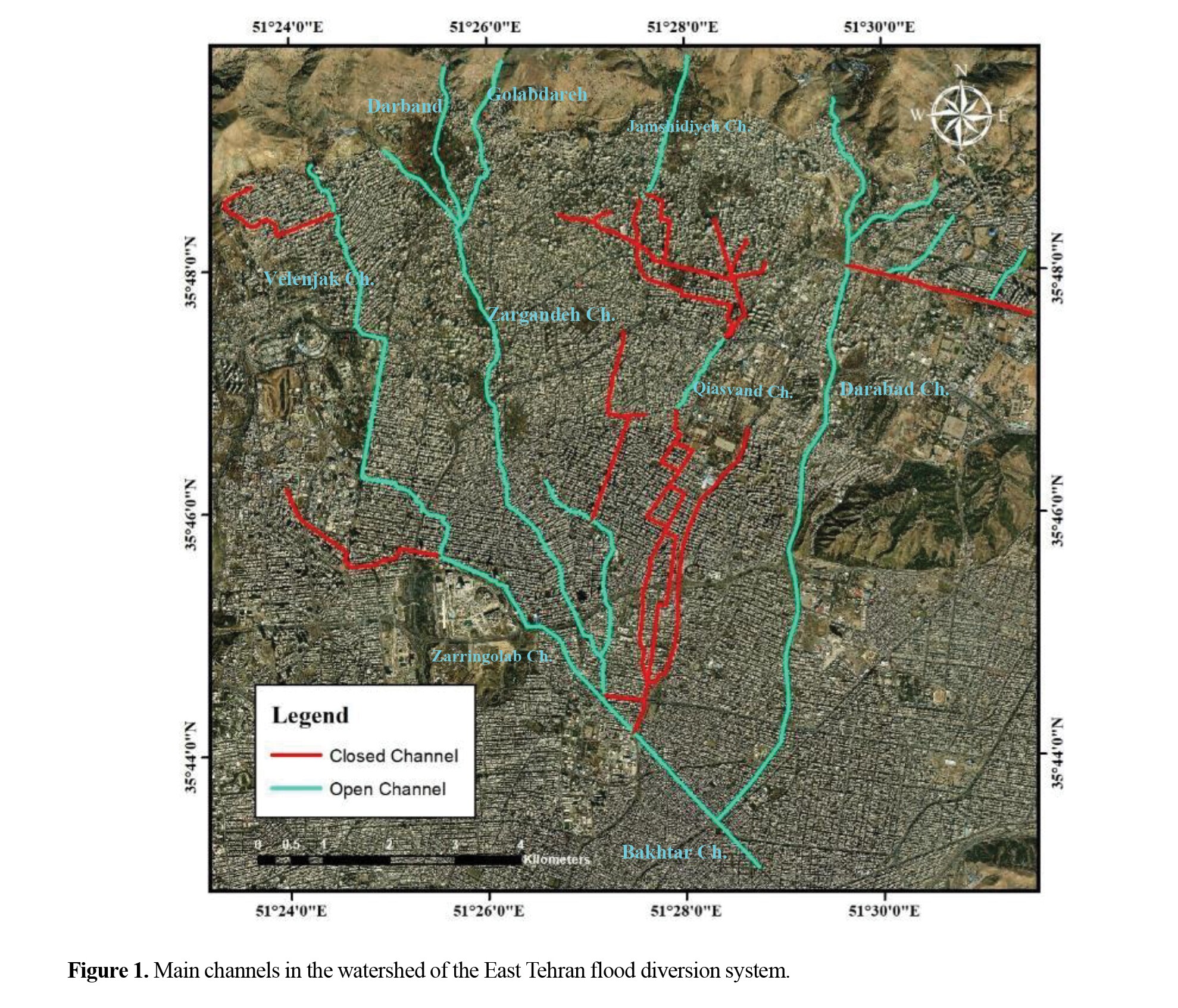
“The studied area was part of the East Tehran flood diversion and is located in the northern half of Tehran. This area extends from the north to Sadr Highway, from the south to Damavand Street, from the east to Imam Ali Highway, and from the west to Shahid Modarres Highway. It includes parts of districts 3, 4, 7, and 8 of Tehran, and the study area is approximately 41.65 km². The runoff collection channels in this area generally extend north-south along the dominant slope of the city; as a result, they have steep slopes and high flow rates. All channels in the East Tehran Watershed are defined based on different watercourse conditions. The main function of these channels is to collect and transport runoff from the mountainous and urban sub-basins. Figure 1 shows the channels in the studied area: The blue lines represent the main open channels and the red lines represent the main covered channels (Mohab Qods, 2011a). There are various bridges along the eastern flood diversion channel, some of which greatly restrict the flow path and cause water to back up and flow out of the channel during flood conditions (Mohab Qods, 2011). These structures affect the values of precipitation thresholds.
The general relationship between precipitation intensity, duration, and frequency in Tehran, representing the city’s short-term precipitation, has been presented by Mahab Ghodss Consulting Engineers Company in the studies for the comprehensive surface water plan (Mahab Ghodss, 2010b):
1. i=CAlt.RP D
-0.645
In Equation 1, i is rainfall intensity (millimeters per hour), D is rainfall duration (minutes), and is the equation coefficient. This coefficient is selected from the guide table in proportion to the design return period and the average elevation of the (sub)basin. It is also worth noting that in the aforementioned studies, a time pattern of alternating blocks was proposed for creating artificial rainfall or design rainfall (Mahab Ghodss, 2010a).
In this study, rainfall with return periods of 10 and 100 years—standard return periods used in many studies—was used to determine the flood hydrographs entering the channels of the simulation area. These rainfalls were constructed using the method proposed in the Tehran City Surface Water Master Plan. Based on the desired return period, the intensity-duration-frequency (IDF) relationship for Tehran was obtained by considering a 6-hour duration of rainfall intensity and depth. The 6-hour duration was obtained based on the comprehensive plan proposal and by performing sensitivity analysis in the aforementioned studies (Mohab Ghods, 2011b). Then, the precipitation depth was distributed over time using the alternating block method (Chow et al. 1988) to extract the design precipitation hyetograph with the desired return period. This hyetograph was converted into a flood hydrograph with the desired return period using the basin precipitation–runoff model and used in hydraulic modeling.
Precipitation-runoff modeling and flood zoning
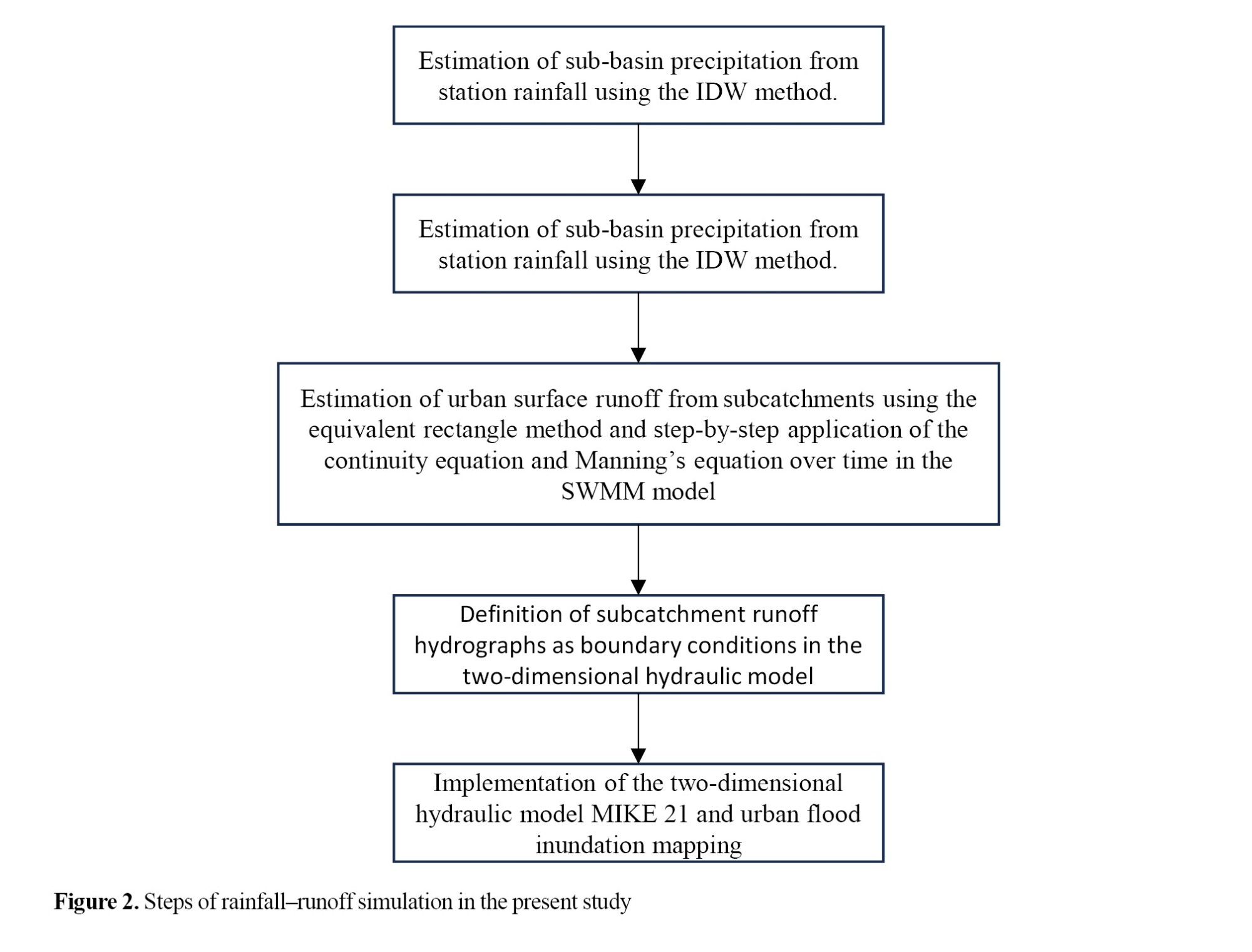
In this study, EPA-SWMM software was employed as the precipitation-runoff model. SWMM is a dynamic model primarily utilized for the quantitative and qualitative simulation of runoff in urban areas. This model is widely used globally for the planning, analysis, and design of stormwater, combined sewer, sanitary sewer, and other urban drainage systems (Rossman and Huber, 2015). Following the flowchart in Figure 2, sub-basins receive input from precipitation, with some of this input being lost through evaporation and infiltration. To model precipitation losses, the U.S. natural resources conservation service (NRCS) curve number (CN) method was applied. Excess precipitation was then routed through Manning and continuity equations at each time step at the sub-basin level to obtain the surface runoff hydrographs for the sub-basins. Within this model, the sub-basins were treated as equivalent rectangles. Surface runoff hydrographs from the sub-basins are numerically routed through the channel system by solving the Saint-Venant Equation (SVE). It is important to note that sensitivity analysis of the parameters and calibration for the studied area have been previously conducted by Kamver. For hydraulic modeling and flood zoning, the MIKE 21 model (DHI, 2012) was utilized.
The main equations for the flow, which are solved numerically by the MIKE21 HD model, include the continuity and momentum equations (DHI, 2012):
Equation 2:
.jpg)
Momentam formula (Equation 3) in the x direction:
.jpg)
Momentam formula (Equation 4) in the y direction:
.jpg)
The parameters and variables in these equations are as follows:
H(x, y, t) = ξ-d: Depth of water column (m); ξ (x, y, t) : Water level at the cross-section (m); d(x, y, t): Water depth varying with time (m); C(x, y): Chézy roughness coefficient (m(1⁄2)⁄s); u,v: Average velocity at depth in the x and y directions; ρw: Water density (kg⁄m3); ρ(x,y,t)=H.u(x,y,t): Current density in the x direction (m3⁄(s⁄m)); ρ(x,y,t)=H.v(x,y,t): Current density in the x direction ( ); g : Acceleration of gravity (m3⁄(s⁄m)); f(v): Wind friction coefficient; V,Vx,Vy: Wind speed and its components in the x and y directions (m⁄s ); Ω (x,y): Coriolis coefficient depending on longitude (S^(-1)); pa (x,y,t): Atmospheric pressure (kg⁄((m.s2))); τxx,τxy,τyy: Effective shear stress components
The MIKE21 HD software employs an implicit solution method called ADI to solve the algebraic system derived from the discretization of the continuity and probability equations. In this method, the matrix of equations obtained in each direction is solved using the dual sweep algorithm. To construct the geometry of the channels and passages, a digital surface elevation model (DSM) with an accuracy of 1 m was utilized. For this purpose, the purchased GeoEye-II satellite image was used. Manning coefficient values for different land uses and roads were incorporated into the hydraulic modeling as variables within the study area, consistent with the values reported by Gallegos et al. for urban land uses. The number of computational meshes was determined to be 19,335,862 across the entire solution domain, considering dimensions of 5 m². This mesh count is substantial, resulting in a very heavy computational load for the implementation of the hydraulic mode.
Indirect economic losses due to increased traffic time
Transportation networks are among the infrastructures that have a significant impact on economic activity by facilitating the movement of people and goods. This infrastructure can experience considerable direct and indirect damage under flood conditions. Among the indirect damages are the costs associated with delays in passenger travel and the increased fuel consumption resulting from these delays. To quantify this indirect damage, it is first necessary to calculate the duration of the delay caused by the reduction in vehicle speed and then use the estimated amount of indirect damage (per unit of time) to determine the total damage. Equation 4 is one of the equations used to calculate the maximum speed of vehicles for a given flood depth. By comparing the maximum speed obtained from this equation with the maximum permitted speed at each crossing, an estimate of the delay can be made:
1) Grading of urban roads: All urban roads can be categorized as first-class arterial streets, including freeways and highways; second-class arterial streets, including main arterial streets and secondary arterial streets; and local thoroughfares.
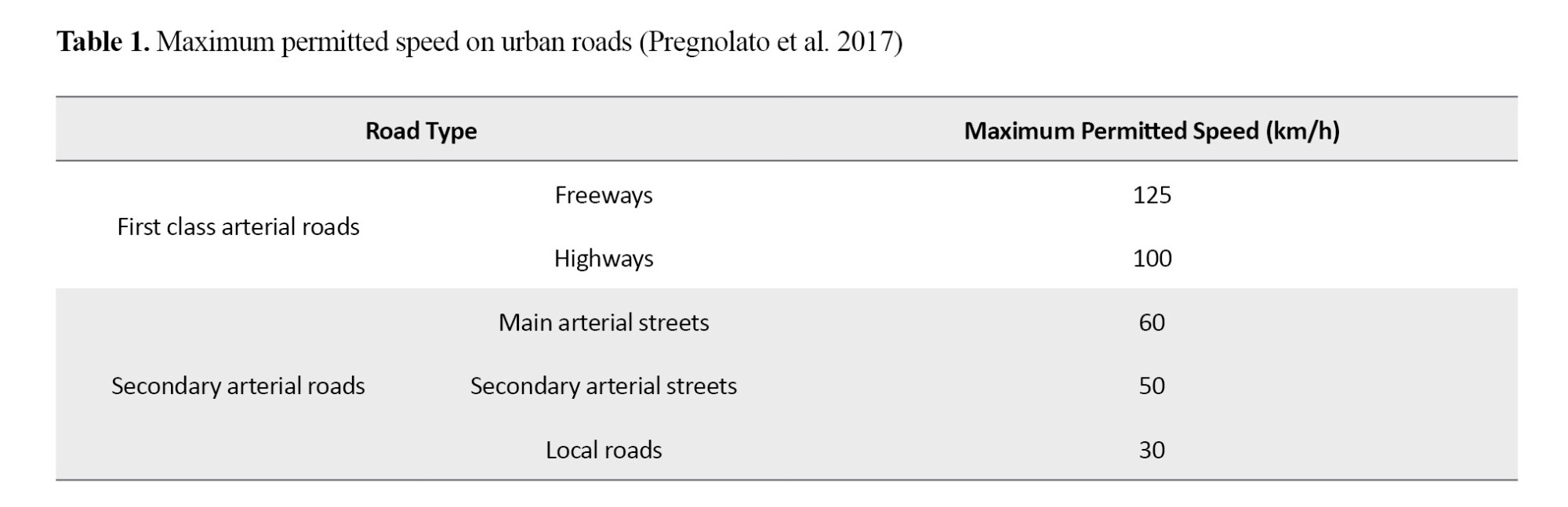
2) Determining the maximum speed limit for each roadway: Each roadway in the city has a specific speed limit corresponding to its grade. These values can be derived for all city roads based on traffic regulations. Table 1 shows the maximum speed limit for city roads.
3) Calculation of maximum vehicle speed in flooded conditions: Equation 5 shows the maximum speed of vehicles at different flood depths according to Pregnolato et al. In this equation, the flood depth is in millimeters and the maximum speed of the vehicle is in kilometers per hour.
5. v(w)=0.0009w2-0.5529w+86.9448
It is worth noting that vehicle speeds can also be reduced by traffic conditions or by obstructions caused by objects carried by floodwaters (such as garbage and wood, especially in foothill areas). However, the above equation does not take these factors into account.
4) Estimation of the delay at each intersection using the difference between the values obtained in steps 2 and 3;
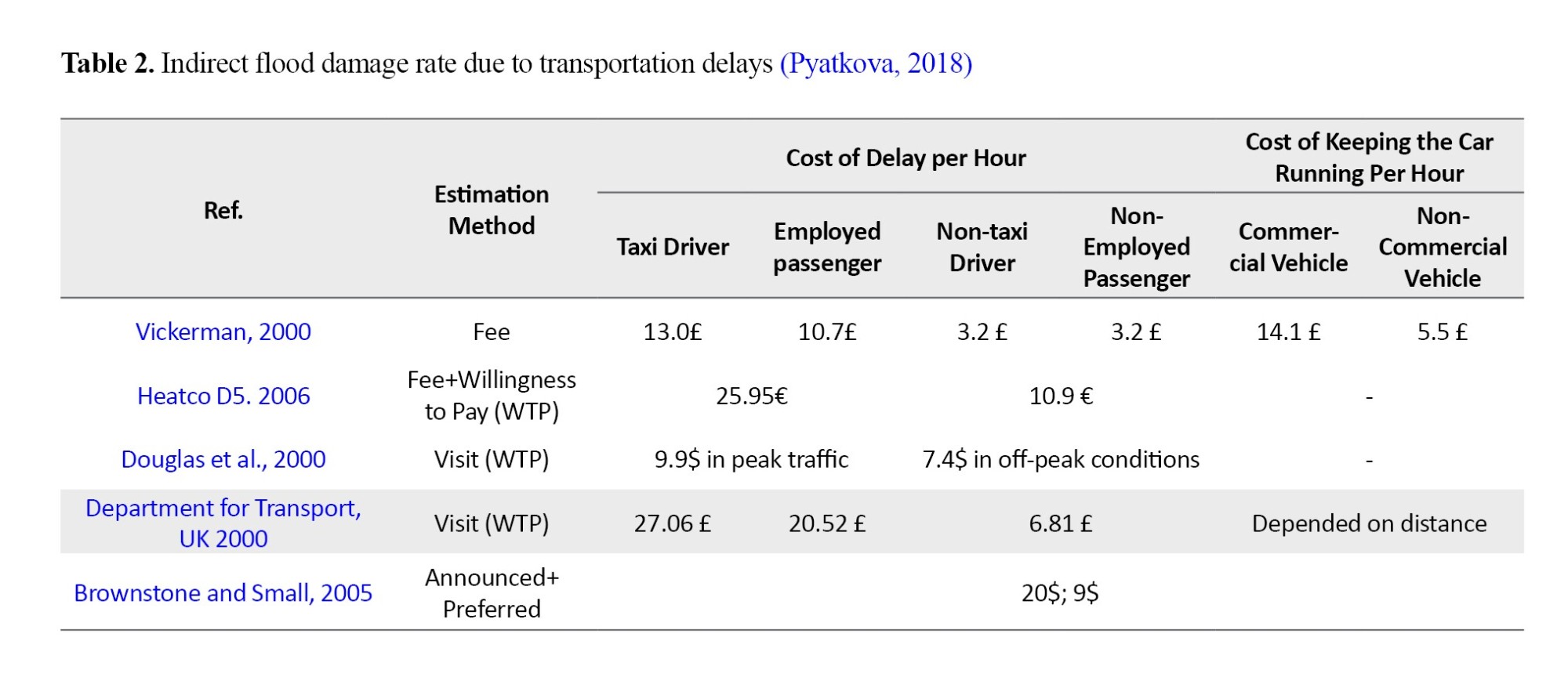
5) Estimation of indirect damage: Indirect damage—such as the cost of delays in economic activities or the increased fuel costs due to delays—can be estimated per unit of time. These values are derived from the average income of each person per unit of time or from the amount of fuel consumed per hour. Table 2 presents these values as reported in various references.
6) Estimating the number of vehicles passing through each crossing: Estimating the volume and types of passengers; The number of vehicles passing through each intersection is a key factor in determining the extent of damage. Several services can provide such information; one example is Google Traffic Maps, which offers traffic data for certain areas. Using these data layers, an estimate of the number of people passing through each intersection can be obtained.
7) According to Equation 6, the estimated damage for each urban road can be calculated by multiplying the values obtained in Steps 4–6 (Pregnolato et al. 2017).
6. D=Td*Pop*α
In Equation 6, D is the total damage amount, is the delay at each road, the passing population per unit of time, and is the damage rate per unit of time and person.
Model implementation and results
For precipitation-runoff calculations within the model, precipitation hydrographs for 10 and 100-year return periods were determined using the IDF curves of Tehran city and the time pattern of alternating blocks. The SWMM model parameters were adjusted in accordance with the information provided in the Tehran City Surface Water Master Plan (Mohab Ghods, 2011).
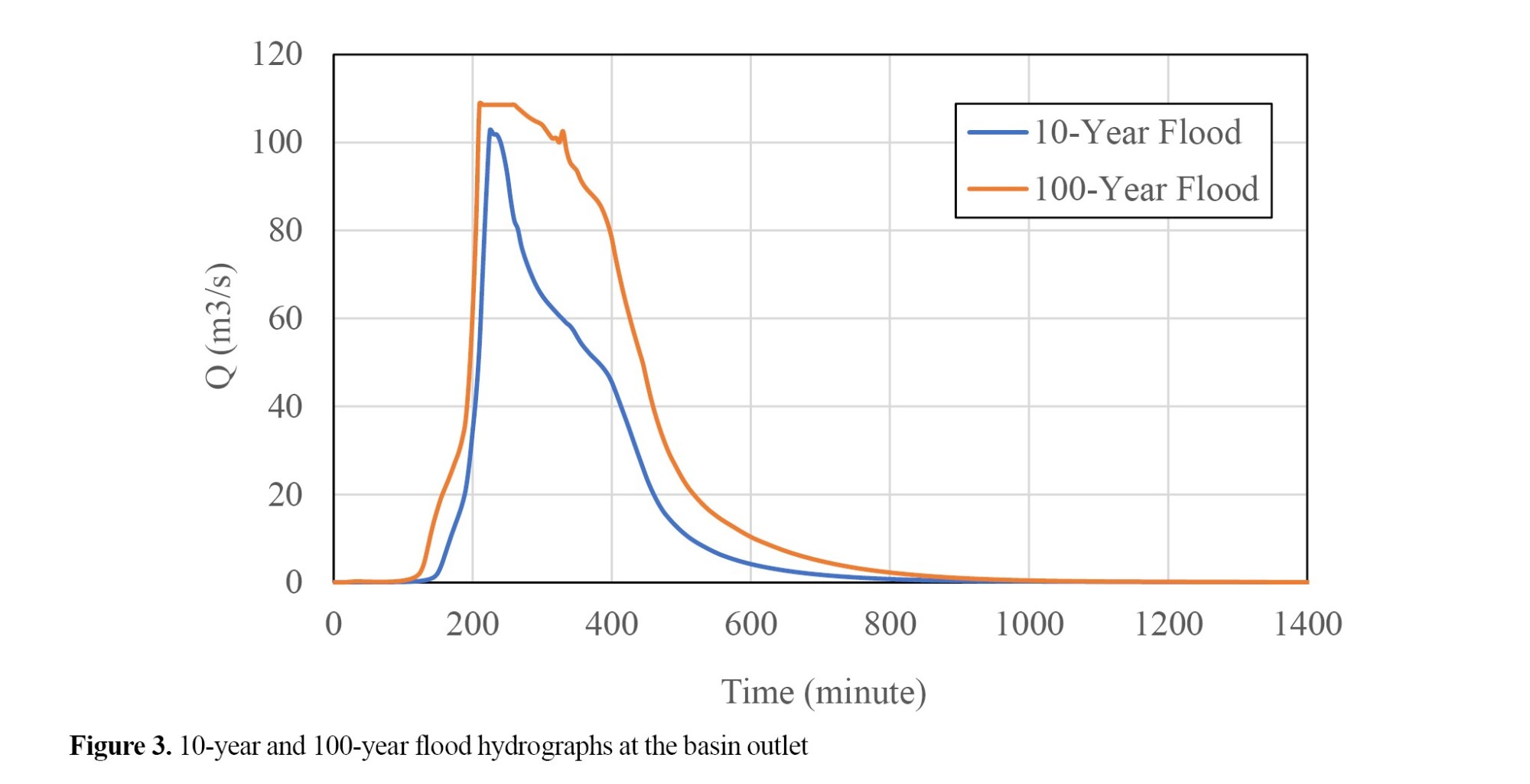
By running the area rainfall-runoff model in this software for 10- and 100-year rainfalls, the hydrograph of the inflow into the canal network from the sub-basin level was obtained. For instance, Figure 3 displays the hydrograph reaching the basin outlet during the 10- and 100-year floods. In this figure, the flattening of the peak of the 100-year flood hydrograph indicates that some upstream channels are unable to accommodate the 100-year flood, resulting in a portion of the channel runoff exiting the channel.
The sub-basin hydrographs were then input into the MIKE21 model to perform hydraulic modeling and flood zoning across the entire solution domain. Triangular gridding was employed for the study area, utilizing two different mesh sizes: 0.1 m² for the canal area and 5 m² for the remaining areas. Figure 4 provides an example of a portion of the modeling area’s gridding.
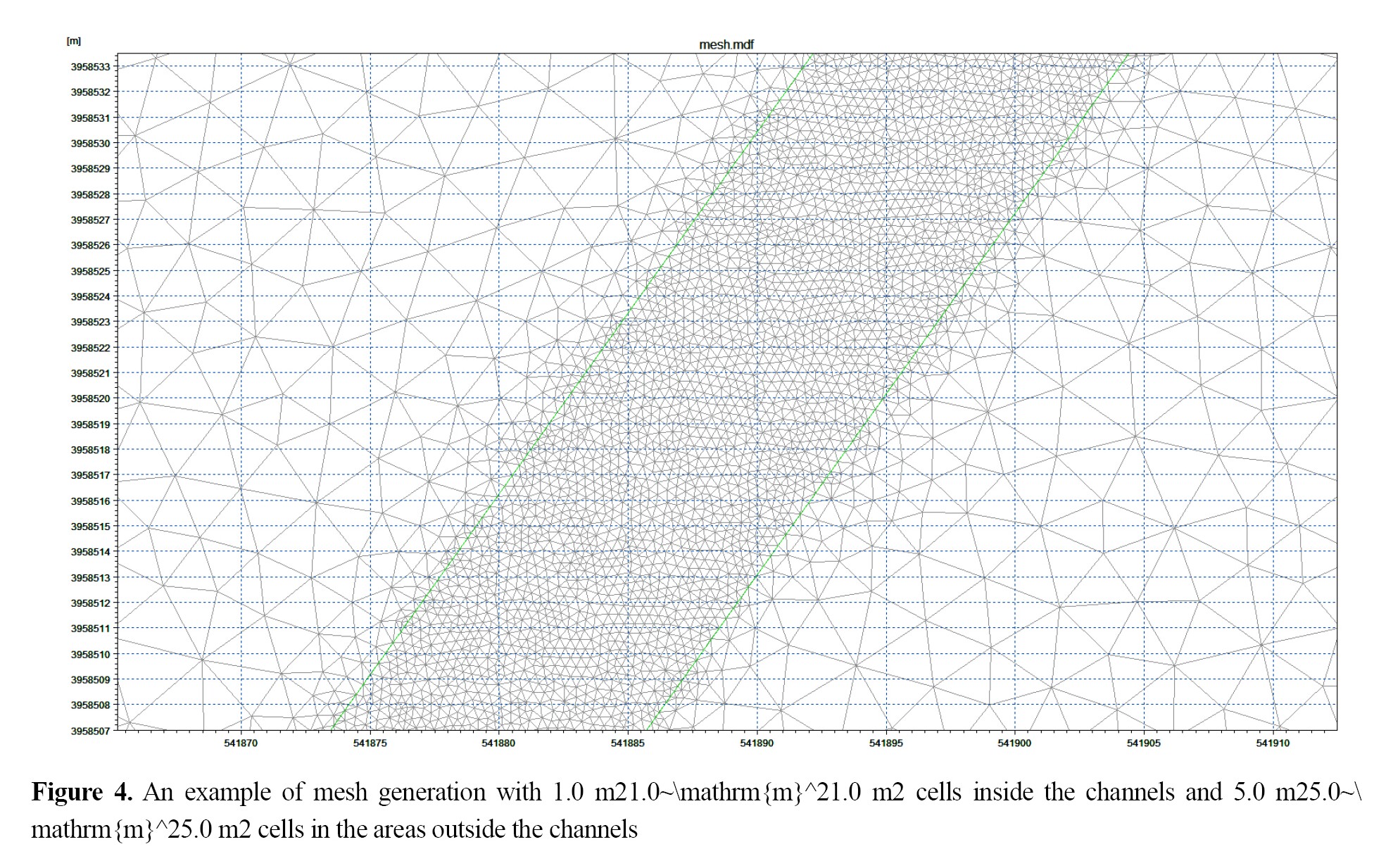
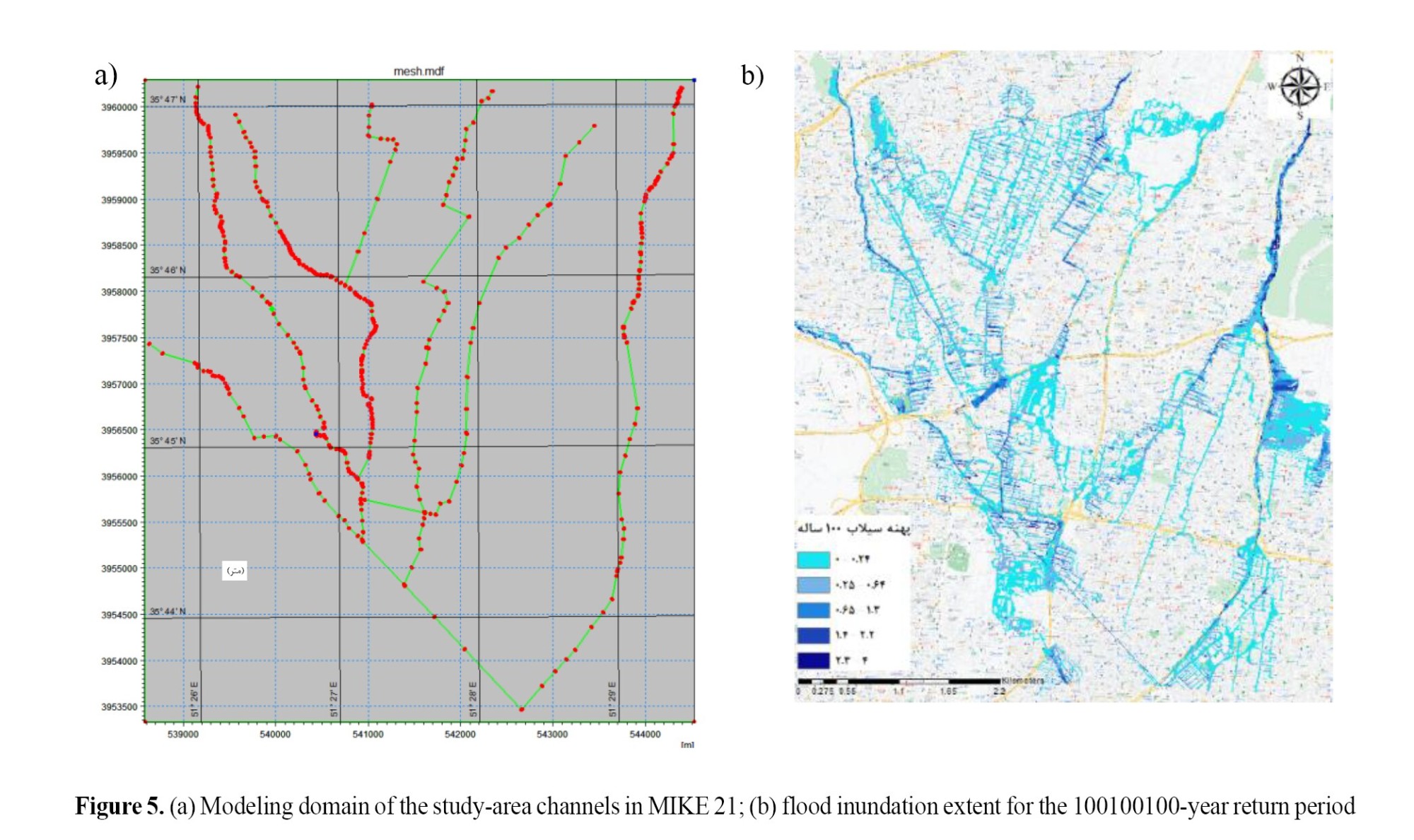
Figure 5a illustrates the modeling scope within the MIKE21 software environment, and Figure 5b depicts the flood depth zone for a 100-year return period resulting from the model run.
To run the models built in MIKE21, a system with the following specifications was used: 40 GB of RAM, an Intel® Xeon® CPU E5-2695 v3 @ 2.3 GHz processor (16 cores), and an NVIDIA GeForce GTX 1080 Ti graphics card. MIKE21 is capable of utilizing both the system’s central processor (CPU) and graphics processing unit (GPU) memory. This study utilized GPU acceleration to expedite the software’s numerical calculations. Using a system with these specifications, a single model run for the study area took approximately 215 hours.
Through field visits and vehicle counts (Figure 6), the number of vehicles passing through flood-affected sections of the Hemmat, Imam Ali (AS), and Hakim highways was estimated across three different days of the week (Sunday, Tuesday, and Thursday).
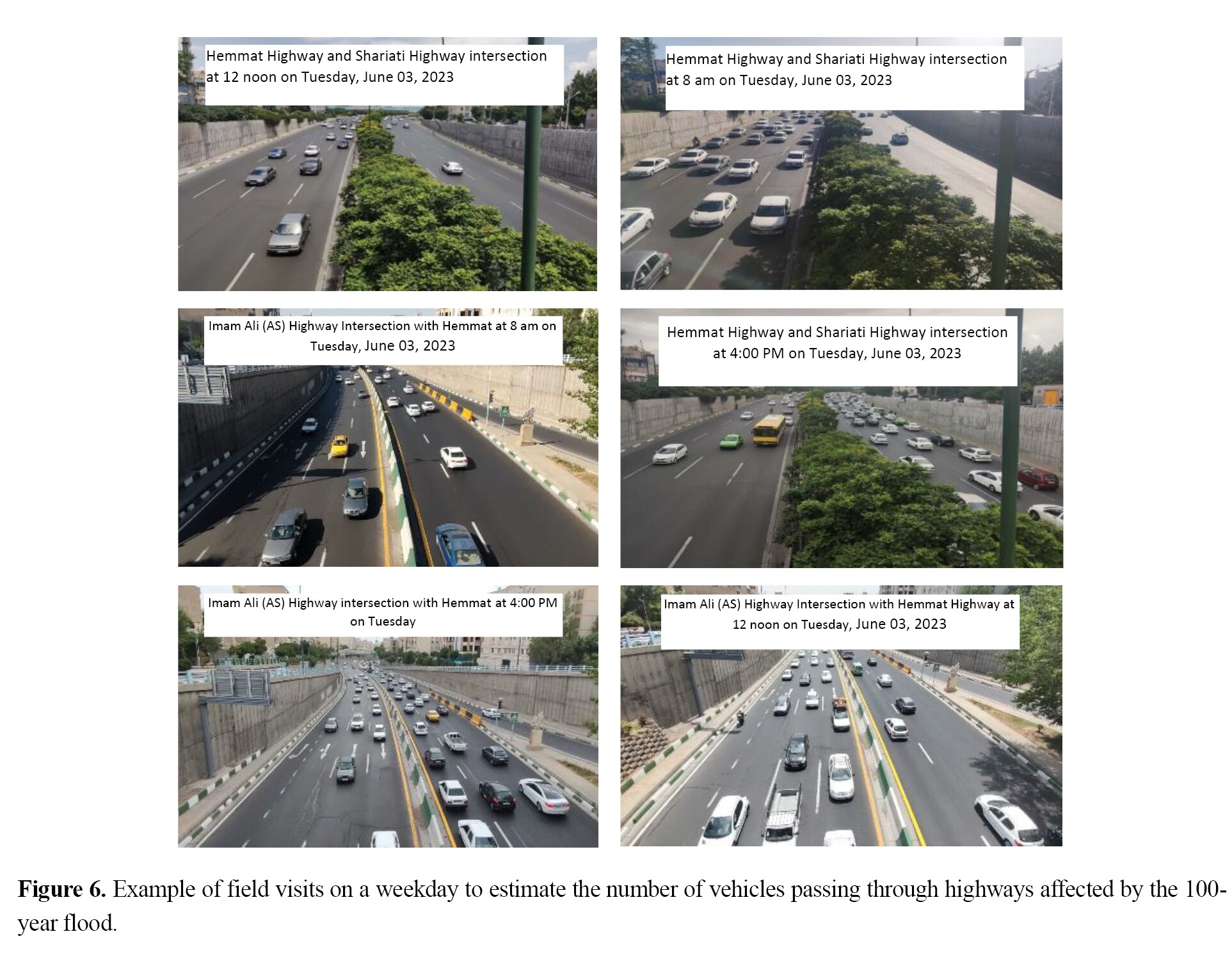
These counts were conducted during the 8:00–9:00 AM, 12:00–1:00 PM, and 4:00–5:00 PM time periods, respectively. The results are presented in Table 3.
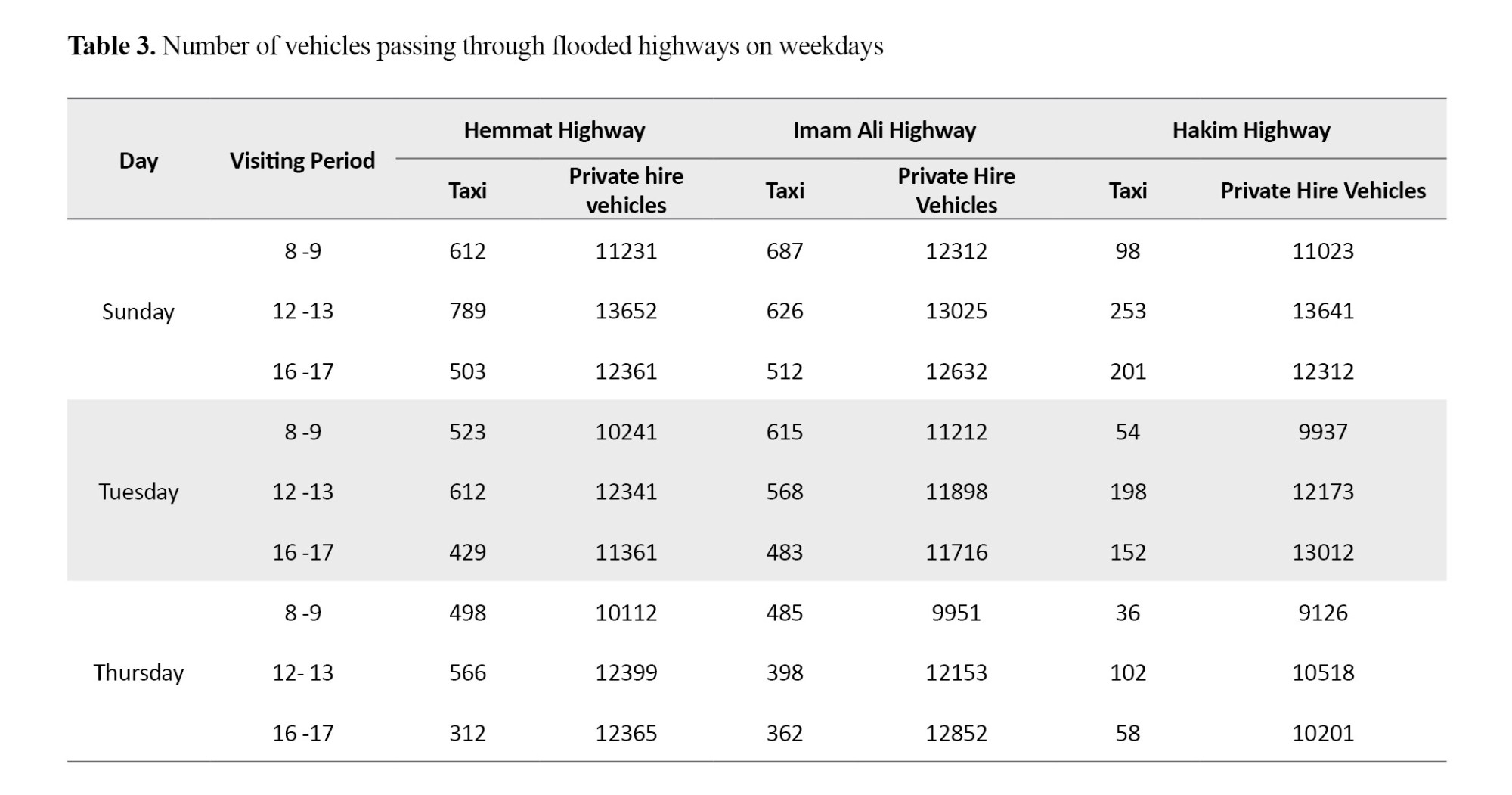
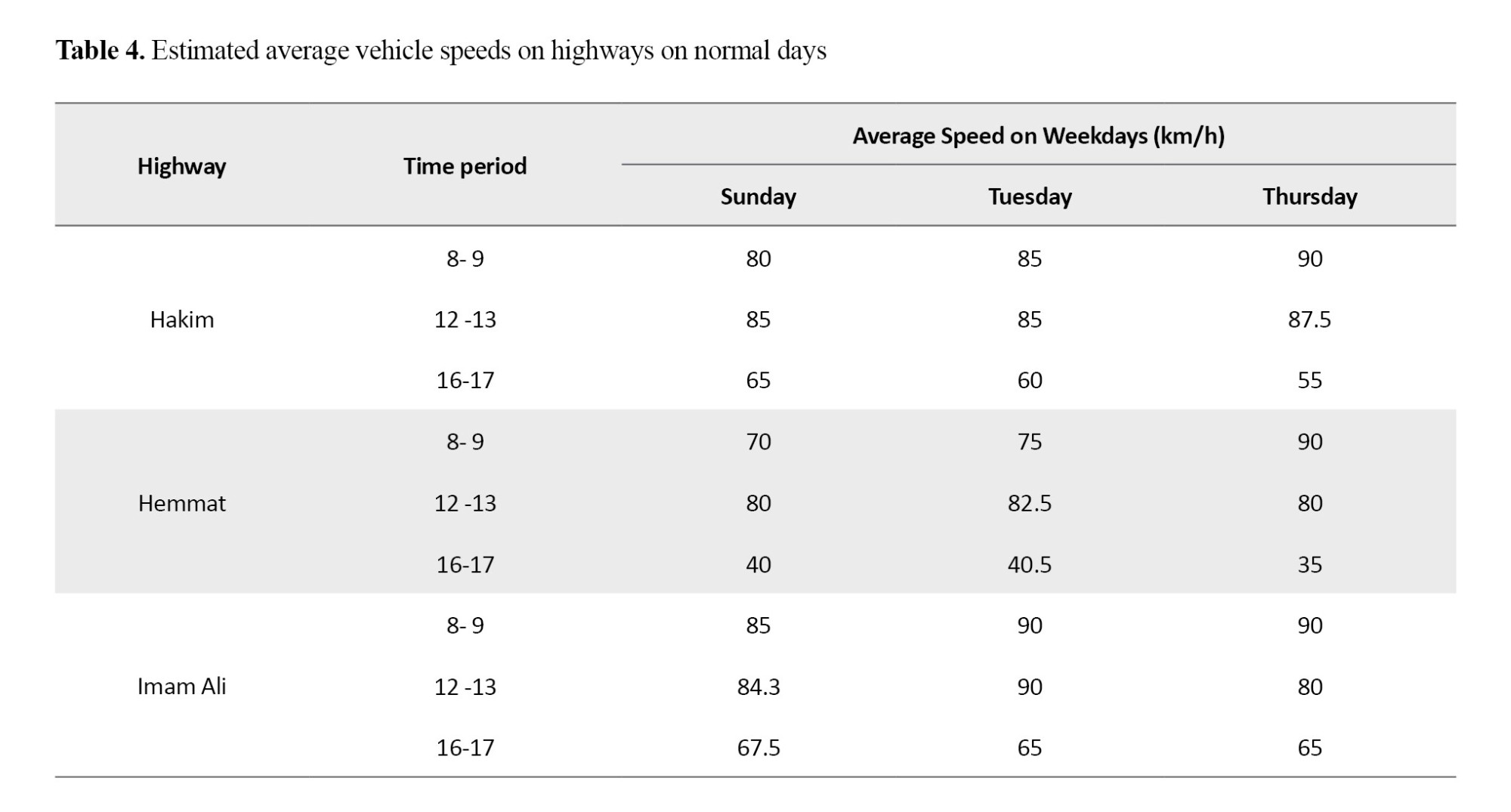
Based on field observations, site visits, and an analysis of traffic conditions in Tehran, it was concluded that driving at the maximum speed limit on Tehran’s highways is not feasible on normal days. Consequently, the average speed during the times when the number of passing vehicles was estimated was determined using the Neshan system on the studied days. The results are presented in Table 4. It is noteworthy that when estimating the speed under flooded conditions (Equation 5), if the calculated speed in flooded conditions exceeds the average traffic speed under normal conditions (Table 4), the speed reduction due to flooding is considered to be zero. Furthermore, in Tehran, considering the presence of suburban and urban sediment and garbage traps, we accounted for the overflow of muddy water from canals. It was assumed that heavy suspended objects and garbage would remain within the canals, allowing only runoff to flow on the street level. Therefore, the impact of flood debris on reducing speed on the surface of streets and highways was disregarded.
Using the method described, the damages caused by increased urban traffic due to flooding on different days were estimated and are presented below. The basis for calculating these damages was the estimation of delay hours caused by the flood, combined with the consideration of an average wage or income per working hour, derived from the average monthly salary for the year 2023.
The estimated average wage or income for passengers is as follows:
Hourly wage for taxi drivers: 1,071,500 Rials (based on inquiries from taxi drivers). Hourly wage for employees: 1,190,500 Rials (based on inquiries from the Ministry of Cooperatives, Labor, and Social Welfare)
Also:
Unit damage cost for business vehicles (taxis): 95,830 Rials (based on inquiries from taxi drivers and mechanics); Unit damage cost for non-business vehicles (personal): 50,000 Rials (based on inquiries from taxi drivers and mechanics); Number of passengers per business vehicle: 3 individuals.
Furthermore, it is assumed that when the flood depth reaches 0.5 meters, vehicles are unable to pass; consequently, that section of the highway is considered blocked, and drivers must take an alternative route.
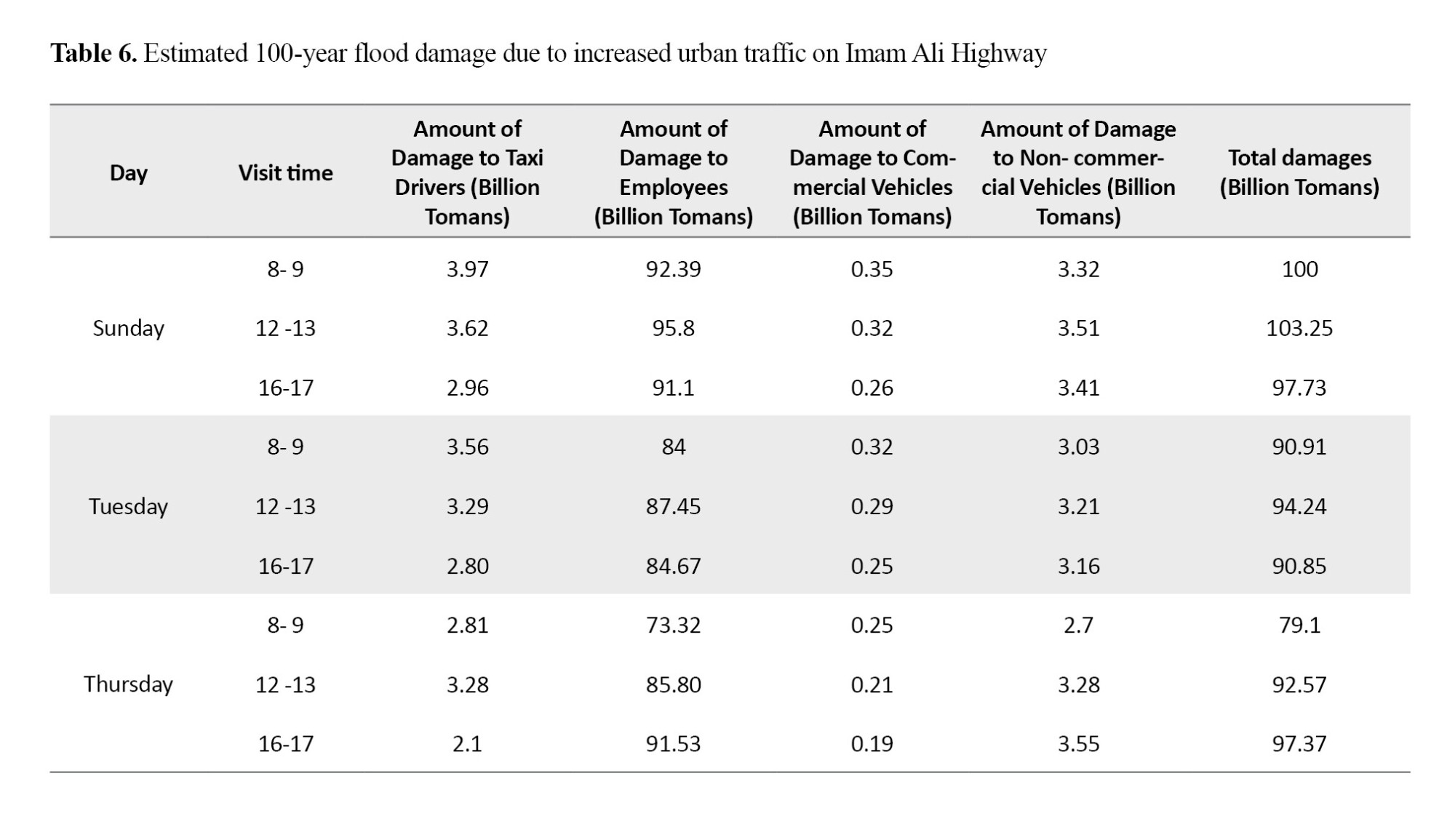
The estimated amount of damage caused by the 10- and 100-year floods on Imam Ali Highway (AS) for Sunday, Tuesday, and Thursday is presented in Tables 5 and 6.
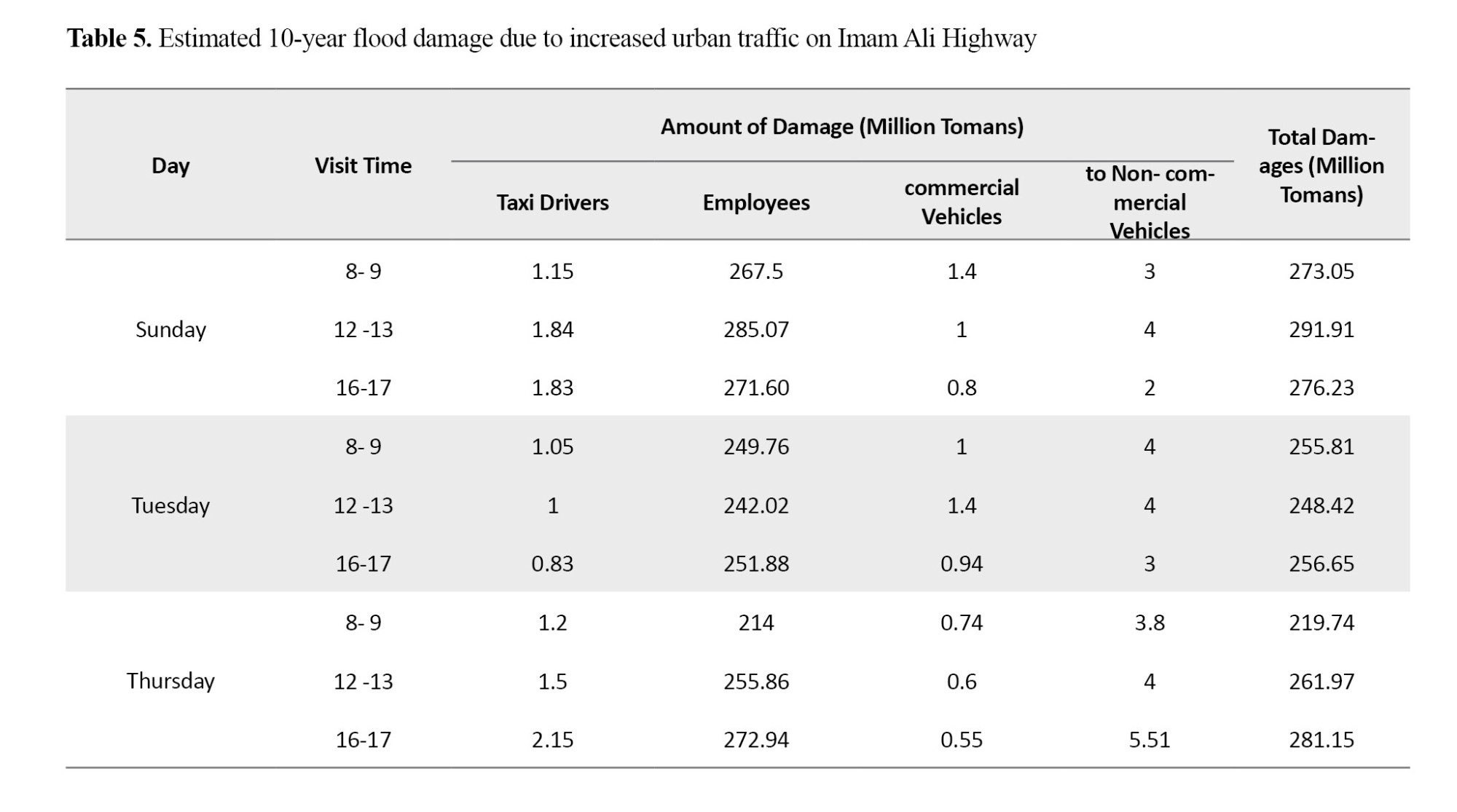
The damage from a 100-year flood is estimated to be more than 300 times the damage from a 10-year flood. It should be noted that during a flood with a 100-year return period, sections of the highways are flooded to depths greater than 0.5 meters, reaching approximately 3 meters in some areas. At these depths, vehicles are essentially unable to cross the water. Therefore, it can be assumed that the highway is blocked, and drivers will opt for alternative routes such as Sadr Highway, Sayyad Shirazi Highway, and other streets. However, the results of the 100-year flood zoning indicate that a significant portion of the streets and highways in the studied area will be severely flooded. Given that both the main highway arterials and surrounding streets will be inundated, a working day in such conditions is practically considered lost. With this assumption, the traffic-related damages for the 100-year flood zone were calculated based on the loss of a full working day. In the case of the 10-year flood, due to the calculated flooding depth on the highways within the flood zone, vehicles could still travel on them. Consequently, the basis for calculating the damage was the number of hours of delay caused. Similar calculations were performed for the Hemmat and Hakim highways, which can be found in the Meraj study.
 Conclusion
This study accurately simulated flooding in the eastern part of Tehran and analyzed the economic impacts of highway flooding using the MIKE21 2D hydraulic model, along with precise spatial and topographic data. The results demonstrated that an increased flood return period significantly enhances the flood’s extent, depth, and flow velocity. The economic damage analysis further revealed that floods have the most substantial impact on traffic along north-south highways, particularly during peak hours. This leads to a significant increase in indirect losses, especially for groups such as taxi drivers and employees. Overall, the findings indicate that the inefficiency of some urban infrastructures, including Overall, the findings suggest that the inadequacy of certain urban infrastructures, including bridges and flood diversion channels, plays a crucial role in intensifying flood damages. Consequently, reviewing the design of hydraulic structures, developing early warning systems, and enhancing public transportation are among the effective strategies to mitigate urban vulnerability to extreme events.
Finally, it is important to note that due to the numerous uncertainties inherent in the economic estimates related to increased urban traffic, the figures obtained should be regarded as a general overview of the damage’s extent and scale, rather than definitive values. Future research, by improving the quality of available information—such as more accurate data on vehicle numbers, affected populations, and traffic patterns—can undoubtedly lead to more realistic and reliable estimates.
Among the limitations of this study are the uncertainties in traffic and economic data, which affect the accuracy of damage estimations. Additionally, the limited scope of spatial and temporal data, along with the use of hypothetical data in simulations, may have influenced the results. Beyond the direct impact of traffic and the debris load from floodwaters on reducing vehicle speeds on highways, other limitations of this study can be addressed in future research. Therefore, future studies can enhance the accuracy and effectiveness of damage estimates and urban vulnerability reduction strategies by employing more realistic and comprehensive data, developing integrated flood forecasting models that consider the effects of climate change and urban development, and examining various flood management scenarios.
Ethical Considerations
Compliance with ethical guidelines
In this study, all ethical principles were observed. Since no experiments on animal or human samples were conducted, no ethical code was obtained.
Funding
The paper was extracted from the thesis of the Mohammadreza Meraji. This research was financially supported by Space Research Center, Iranian Space Research Institute.
Authors' contributions
Visualization and software: Mohammad Reza Meraji, Jafar Yazdi, and Mohammad Shahsavandi; Conceptualization and methodology: Jafar Yazdi and Mohammad Shahsavandi; Validation, formal analysis, research, sources, and data collection: Mohammad Reza Meraji and Jafar Yazdi; Writing the original draft, reviewing, editing, supervising, and managing the project: Jafar Yazdi; Fundraising: Jamal Aghayari and Amirhossein Abdi.
Conflicts of interest
The authors declared no conflict of interest.
References
Afsari, R., & Shahsourary, M. S. (2022). [Spatial analysis of resilience against natural hazards with emphasis on floods: A case study of District 1 of Tehran (Persian)]. Journal of Urban Planning Geography Research, 10(4), 119-133. [Link]
Bickel, P., Friedrich, R., Burgess, A., Fagiani, P., Hunt,A., & De Jong, G., et al. (2006). Developing Harmonised European Approaches for Transport Costing and Project Assessment. Georgia: HEATCO. [Link]
Brownstone, D., & Small, K. A. (2005). Valuing time and reliability: Assessing the evidence from road pricing demonstrations. Transportation Research Part A: Policy and Practice, 39(4), 279-293. [DOI:10.1016/j.tra.2004.11.001]
Choo, K., Kang, D., & Kim, B. (2020). Impact Assessment of urban flood on traffic Distruption using Rainfall-Depth-Vehicle speed Relationship. MDPI, 12, 926. [DOI:10.3390/w12040926]
Chang, H., Lafrenz, M., Jung, I., Figiliozzi, M., & Megolaza, R. (2011).Future flooding Impacts on Trasportation Infrastructure and ptraffic Patterns Resulting from Climate change. Washington: The National Academies of Sciences, Engineering, and Medicine. [Link]
Chow, V. T., Maidment, D. R., & Mays, L. W. (1988). Applied Hydrology. Ohio: McGraw-Hill, Inc. [Link]
Douglas, E. M., Vogel, R. M., & Kroll, C. N. (2000). Trends in floods and low flows in the United States: Impact of spatial correlation. Journal of Hydrology, 240(1-2), 90-105. [DOI:10.1016/S0022-1694(00)00336-X]
Danish Hydraulic Institute (DHI). (2012). MIKE 21 flow model FM. Denmark: Danish Hydraulic Institute. [Link]
Gallegos, H. A., Schubert, J. E., & Sanders, B. F. (2009). Two-dimensional, high-resolution modeling of urban dam-break flooding: A case study of Baldwin Hills, California. Advances in Water Resources, 32(8), 1323-1335. [DOI:10.1016/j.advwatres.2009.05.008]
Department for Transport (DfT). (2000). Transport 2010: The 10-Year Plan. Retrieved from: [Link]
He, S., Farda, A., & Lumbroso, D. (2021). Flood impacts on urban transit and accessibility: A case study of Kinshasa. Transportation Research Part D: Transport and Environment, 96, 102889.[DOI:10.1016/j.trd.2021.102889.]
Kamvar, K. (2021). [Determination of Flood‑Critical Locations and Thresholds in Urban Flood Conveyance Channels Using Hydrological/Hydraulic Simulation (Persian)] [MA thesis]. Tehran: Shahid Beheshti University.
Kasmalkar, I. G., Serafin, K. A., Miao, Y., Bick, I. A., Ortolano, L., & Ouyang, D., et al. (2020). When floods hit the road: Resilience to flood-related traffic disruption in the San Francisco Bay Area and beyond. Science advances, 6(32), eaba2423. [DOI:10.1126/sciadv.aba2423] [PMID]
Ghodss, M. (2011). [Comprehensive plan for surface water management in Tehran (Persian)]. Tehran: Municipality, Technical Consulting Organization of Tehran.
Ghodss, M. (2011). Comprehensive plan for surface water management in Tehran: Assessment of the existing main stormwater network. Tehran: Surface Water Management Organization.
Meraji, M. R. (2023). [Estimation of flood impacts on urban travel time (Persian)] [MA thesis]. Tehran: Shahid Beheshti University.
Norouzi, H. (2013). Assessment of crisis management strategies in the Golestan network [MA thesis]. Shahroud: Islamic Azad University.
Park, H. J., Song, S. M., Kim, D. H., & Lee, S. O. (2024). Socioeconomic impact on urban resilience against flood damage. Applied Sciences, 14(17), 7882. [DOI:10.3390/app14177882]
Pregnolato, M., Ford, A., Wikinson, S., & Dawson, R. (2017). The Impact of flooding on road transport: A depth-disruption function, Transportation Research part D, 67-81. [DOI:10.1016/j.trd.2017.06.020]
Pyatkova, K. (2018). Flood Impacts on Road Transportation [PhD dissertation]. England: University of Exeter.
Rajput, A. S., Hoteit, I., & Sharma, R. (2022). Anatomy of disrupted traffic networks: post-flood recovery and delays. Sustainable Cities and Society, 97, 104693. [DOI:10.1016/j.scs.2023.104693.]
Rossman, L., & Huber, W. (2015). Storm Water Management Model Reference Manual Volume I, Hydrology. Washington: U.S. EPA Office of Research and Development.
Vickerman, R. (2000). Evaluation methodologies for transport projects in the United Kingdom. Transport Policy, 7(1), 7-16. [Link]
Zeng, L., Chen, T. D., Miller, J. S., Goodall, J. L., & Zahura, F. T. (2024). Assessing The Spatially Heterogeneous Transportation Impacts of Recurrent Flooding in The Hampton Roads Region: Part 1 Auto Accessibility. arXiv preprint. [DOI:10.1016/j.trip.2025.101722]
Zeng, L., Chen, T. D., Miller, J. S., Zahura, F. T., & Goodall, J. L. (2024). The Shifting Impact of Recurrent Flooding on Transportation Accessibility: A Case Study of Affected Populations in The Hampton Roads Region. arXiv preprint. [Link]