Introduction
Problem statement
As the most complex and dynamic human ecosystems, cities have perpetually been exposed to a wide spectrum of natural and anthropogenic hazards. The accelerating pace of urbanization and the increasing concentration of population, capital, and critical infrastructure have transformed these hazards into multifaceted challenges with broader dimensions. Within this context, “physical hazards”—emanating from the urban built environment, including buildings, facilities, and infrastructure lifelines—play a pivotal role in urban sustainability and resilience due to their direct impact on citizens’ life and safety (Tobchi Sani et al., 2022).
The metropolis of Tehran, serving as the political, economic, and cultural capital of Iran, is a prominent manifestation of this challenge. A dense physical fabric, extensive deteriorated and historical areas, numerous high-rise buildings, and a complex network of critical infrastructure have rendered the city acutely vulnerable to hazards, such as earthquakes and fires (Pashapour & Pourakrami, 2017). Catastrophic events, such as the fire and subsequent collapse of the Plasco Building, clearly demonstrated that the prevailing system for addressing these hazards, despite all efforts, suffers from fundamental and structural dysfunctions (Research Center of the Islamic Consultative Assembly, 2017).
This structural dysfunction stems from a traditional, fragmented, and reactive managerial approach. Under the current regime, responsibilities are dispersed across numerous governmental and public entities without a robust, integrated coordinating structure to synergize their interventions (Special Commission for the National Report on the Plasco Incident, 2018). This dispersion—referred to as "fragmentation" in the disaster management literature—has led to challenges, such as task overlap, jurisdictional ambiguity, weak legal enforcement mechanisms, and an inability to implement effective proactive measures, ultimately undermining urban hazard resilience (Saraei & Manafi, 2016).
This state of affairs has resulted in operational redundancies, weak regulatory enforcement, and an incapacity for proactive intervention, thereby diminishing urban disaster resilience. Recent studies have thoroughly diagnosed the systemic dysfunctions of Tehran’s physical hazard management system, highlighting the imperative of shifting from conventional crisis management toward a governance paradigm (Kiani et al., 2025). Meanwhile, empirical evidence indicates that “good governance”—grounded in integrated management and stakeholder participation—plays a determinative role in managing and mitigating hazards and their associated tensions (Heydari, 2023). This situation underscores that the core issue is not merely a deficit of resources or technical capacity, but rather the prevailing paradigm governing urban safety administration.
Global literature and international frameworks, notably the Sendai framework for disaster risk reduction, emphasize the necessity of transitioning from “disaster management” to “disaster risk governance” (UNDRR, 2015). This transition entails moving toward a participatory, transparent, accountable, and networked system that engages all relevant stakeholders, including the private sector and civil society, in the risk reduction process (Goga, 2009).
Despite this global trajectory and the acknowledgment by domestic scholars of these managerial challenges in Iran (Abbasabadi Arab et al., 2024), a critical gap remains: the absence of an "applied conceptual framework" capable of operationalizing governance principles within a structured mechanism tailored to the legal, institutional, and social context of Iran, particularly the Tehran metropolis. Existing literature has predominantly focused on diagnosing current deficiencies (Fasihi & Parizadi, 2023; Kiani et al., 2025), presenting broad theoretical models (Adel Rastkhiz & Zarei, 2016), or examining international administrative structures (Khodabandehlou & Alidousti, 2015). However, research specifically dedicated to formulating a comprehensive conceptual governance framework—with precisely defined actors, intervention levels, and interactive relationships tailored to physical hazards in Tehran—remains sparse.
Consequently, despite theoretical consensus on the imperative of a paradigmatic shift toward risk governance, there is a pronounced lack of a cohesive and operational conceptual framework capable of identifying and structuring the relationships among key governance dimensions in Tehran’s physical context. To bridge this structural void, the present study aims to develop a multi-level framework leveraging theoretical concepts, such as collaborative governance and analytical tools, such as interpretive structural modeling (ISM).
Aiming to address this knowledge gap, this study seeks to design and propose an applied conceptual framework for the “physical hazard governance of Tehran metropolis.” The primary objective is to offer an alternative framework that transcends conventional managerial logic to synergistically and integrally mobilize the capacities of all key stakeholders toward enhancing the physical safety and resilience of Tehran. Accordingly, this research seeks to address the following core research question:
“What components, levels, and actors should constitute an effective conceptual framework for physical hazard governance in Tehran, and how should their interrelationships be defined?”
To achieve a comprehensive answer to this primary question, the study will also address the following sub-questions:
a) Who are the key actors in the desirable governance system, and which emerging actors need to be integrated into this domain?
b) How should the structure of this conceptual framework be configured to ensure synergistic and integrated performance among actors?
c) How can this conceptual framework address the identified fundamental challenges and provide structural solutions for them?
Theoretical framework and literature review
Networked and collaborative governance models
The transition from conventional administrative models toward modern paradigms represents a response to the escalating complexity of urban issues and the imperative to mobilize all societal capacities for their resolution. Within this context, the concept of “governance” serves as a pivotal analytical and operational framework.
Principles and dimensions of good governance
In its modern conceptualization, "governance" extends beyond the traditional notion of “government.” While government refers to formal state structures and institutions, governance denotes the “processes and interactions” among a diverse array of public, private, and civil society actors engaged in public policymaking and implementation. In this perspective, power is distributed across a network of relationships rather than concentrated in a single entity (Dehghanpour Farashah & Dehghanpour Farashah, 2024). European :union: literature articulates “good governance” based on five foundational principles:
1. Openness and transparency: Ensuring citizens’ free access to information and decision-making processes;
2. Participation: Actively engaging all stakeholders throughout the entire policy cycle;
3. Accountability: Holding institutions responsible for their decisions, policies, and operational performance;
4. Effectiveness: Achieving designated objectives through the optimal allocation and utilization of resources;
5. Coherence: Fostering alignment and synergy among policies and interventions across diverse levels and sectors (Goga, 2009).
Within a similar conceptual framework, the United Nations Economic and Social Commission for Asia and the Pacific (UNESCAP) has formulated a comprehensive definition of good governance, identifying eight core principles as its primary indicators:
6. Participation: Equitable and open opportunities for all societal segments;
7. Rule of law: Impartial and equitable enforcement of legal frameworks;
8. Transparency: Unhindered accessibility of information regarding government policies and decisions;
9. Responsiveness: Timely and adequate institutional response to the needs and demands of citizens;
10. Consensus-orientated: Mediation of differing interests to achieve a broad consensus on what is in the best interest of the collective;
11. Equity and Inclusiveness: Equal opportunities for all citizens to maintain and improve their well-being;
12. Effectiveness and efficiency: Optimal fulfillment of societal needs while maximizing resource efficiency;
13. Accountability: Answerability and responsibility of institutions to the public.
These principles underline the centrality of public engagement, governmental transparency, and institutional accountability, providing an evaluative benchmark for governance quality across nations (UNESCAP, 2009).
Complementarily, the World Bank introduced the Worldwide Governance Indicators (WGI) to evaluate governance quality internationally. These indicators are structured around six fundamental dimensions that directly influence state performance, institutional efficacy, and public trust:
1. Voice and accountability: The extent to which citizens are able to participate in selecting their government, alongside freedom of expression, association, and a free media;
2. Political stability and absence of violence/terrorism: The likelihood of political instability, politically-motivated violence, or systemic threats to state sovereignty;
3. Government effectiveness: The quality of public services, civil service competence, administrative capacity, and the credibility of the government’s policy commitments;
4. Regulatory quality: The capacity of the state to formulate and implement sound policies and regulations that facilitate private-sector and economic development;
5. Rule of law: The degree of societal confidence in legal frameworks, contract enforcement, property rights, judicial independence, and equal protection under the law;
6. Control of corruption: The extent to which public power is exercised for private gain, spanning both petty and grand forms of corruption, as well as state capture.
Collectively, these dimensions encompass political stability, administrative efficiency, anti-corruption mechanisms, and the rule of law, forming the empirical foundation for comparative cross-national governance analyses (Kaufmann, Kraay, & Mastruzzi, 2024).
These established principles provide an evaluative matrix for assessing institutional performance and transitioning toward more effective and democratic systems. Within such a framework, the operational efficacy of specialized entities—such as fire and rescue departments, serving as critical operational arms in mitigating anthropogenic hazards—plays a vital role in the overall resilience and success of the governance system (Gorzin et al., 2021).
Network governance as a solution to complex problems
As one of the most prominent manifestations of the modern governance paradigm, "network governance" is grounded in the premise that complex issues—such as urban hazard management—cannot be resolved by a single organization acting in isolation (Samadi Foroushani et al., 2023). This approach emphasizes the establishment and management of networks composed of autonomous yet interdependent actors who achieve common objectives through collaboration, negotiation, and resource pooling. In such a configuration, the state shifts its posture from an authoritative “command-and-control” authority to that of a “coordinator,” “facilitator,” or “resource mobilizer” (Adel Rastkhiz & Zarei, 2016).
Nevertheless, network governance encounters distinct structural challenges. Power dispersion and the relative autonomy of constituent actors can precipitate "institutional uncertainty” and coordination dilemmas. Mitigating these impediments necessitates institutional mechanisms, such as “inter-organizational learning,” “trust-building through recurrent interactions,” and “the formulation of explicit collaboration protocols” (Adel Rastkhiz & Zarei, 2016).
The adhocratic organizational model as a theoretical foundation for governance
A foundational framework within organizational theory capable of underpinning the paradigmatic transition from traditional bureaucracy to risk governance is the adhocracy model, introduced by Henry Mintzberg as one of the five core organizational configurations. An adhocracy is an organic structure specifically designed for complex, dynamic environments demanding continuous innovation (Mintzberg, 1979). In this configuration, the primary coordinating mechanism is neither standard operating procedures (characteristic of machine bureaucracies) nor vertical hierarchy, but rather mutual adjustment among multidisciplinary experts. Power within an adhocracy is distributed based on expertise and technical competence rather than formal hierarchical position, fostering selective decentralization. Furthermore, characterized by low formalization, high structural flexibility, and extensive deployment of liaison devices, this model enables the deployment of dynamic, project-based teams to resolve non-routine and ill-structured problems (Mintzberg, 1993). Hence, as a theoretical paradigm, adhocracy represents the most suitable model for governing complex, multifaceted, and dynamic issues (e.g. urban physical hazards) by emphasizing the central role of technical and support staff in fostering innovation, in full alignment with the networked nature of governance.”
Effective structures in crisis management and resilience
The ultimate objective of any hazard management system is to enhance the resilience of society and the urban environment. Resilience is not merely tantamount to resistance against shocks; rather, it encompasses a system’s capacity to absorb disruptions, adapt to changing conditions, and undergo positive transformation in the aftermath of a crisis (Tobchi Sani et al., 2022). This multidimensional construct spans physical, social, economic, and institutional domains, wherein “physical resilience” assumes particular significance due to its direct bearing on safeguarding human lives and preserving critical urban functions. Attaining this objective, however, necessitates efficient and adaptive management structures.
Standard structural models in disaster management
Global experiences in disaster and emergency management have catalyzed the development of standardized structural models designed to achieve cross-jurisdictional coordination and operational efficacy in complex, multi-agency scenarios. Among the most recognized frameworks is the Incident Command System (ICS), originally conceptualized in the United States and subsequently adopted as an international benchmark. ICS represents a standardized, modular, and flexible on-scene management system designed to command, control, and coordinate emergency operations. By instituting a common operational lexicon, a unified organizational hierarchy, and integrated action planning, ICS enables diverse entities—including fire departments, law enforcement, and emergency medical services—to operate synergistically without jurisdictional conflict (Khodabandehlou & Alidousti, 2015). Recent studies further underscore that mobile public participation platforms and urban reporting applications—as demonstrated in empirical research on the Karaj metropolis (Dehghanpour Farashah et al., 2025)—play a critical role in augmenting citizen engagement and improving the efficacy of local governance. These participatory digital mechanisms can be directly leveraged for real-time reporting and situational awareness of urban physical vulnerabilities and hazards.
At a macro level, the National Incident Management System (NIMS) provides a comprehensive, nationwide framework governing not only tactical on-scene operations but also all phases of mitigation, preparedness, response, and recovery across national, state, and local tiers. Grounded in core components, such as preparedness, communications and information management, resource management, and command and management, NIMS aims to enable public and private sector stakeholders to collaborate seamlessly within a unified architecture (Khodabandehlou & Alidousti, 2015). These standardized frameworks demonstrate that effective disaster governance fundamentally necessitates a pre-established, institutionalized, and mutually agreed-upon operational structure across all participating actors.
Linking the managerial structure to physical resilience
Enhancing physical resilience is a process that necessitates the execution of a comprehensive set of technical and engineering measures. These measures encompass “adherence to land-use standards,” “improving material quality and construction supervision,” “enhancing the permeability of the street network,” “maintaining setbacks from hazard hotspots,” and “providing safe and open spaces” (Tubchi Sani et al., 2022). Nevertheless, the successful implementation of these technical interventions is inherently contingent upon the presence of an efficient “managerial and governance framework.”
For instance, supervising construction quality demands coordination among the municipality, the Engineering Order Organization, and technical laboratories. Developing permeable street networks requires seamless integration between detailed urban master plans and civil development projects. Similarly, preventing construction within fault zones mandates the rigorous enforcement of legal authority and inter-institutional alignment. Consequently, an integrated and effective managerial structure serves as a fundamental prerequisite for achieving physical resilience. The conceptual governance framework proposed in this study is an endeavor to design such an architecture—one capable of ensuring the effective execution of technical and engineering interventions, and ultimately fostering the physical resilience of Tehran.
Literature review on crisis governance modeling and analysis
The scientific literature in crisis management is replete with studies analyzing administrative frameworks and organizational models. In a review study examining selected global models—such as the U.S. National Incident Management System (NIMS)—Khodabandehlou and Alidousti (2015) delineated the primary tiers in designing crisis management structures and determined the interrelations among these levels. They emphasized principles, such as “hierarchical categorization of centers,” “definition of intra- and inter-level communication channels,” and “allocation of duties across diverse operational tiers” as indispensable requisites for an efficient architecture.
Employing social network analysis (SNA), Samadi Foroushani et al. (2023) scrutinized the existing governance system within the Fourth Development Plan of Tehran Municipality. Their findings revealed that despite the plan’s emphasis on participatory governance, “a lack of role and responsibility clarity” and deficient engagement of the private sector and civil society organizations represent pivotal operational challenges. While their study provides an incisive diagnostic of the status quo, it does not propose an alternative model.
Adopting a network-centric approach, Adel Rastkhiz and Zarei (2016) addressed the challenge of mobilizing and coordinating a network of responders during crises amidst “institutional and strategic uncertainties.” Their research highlights the primacy of mechanisms, such as “inter-organizational learning” and “network mobilization processes” to surmount these ambiguities.
Furthermore, Khamesi and Lakizadeh (2024) underscored the imperative of “formulating an institutional framework for urban safety governance,” highlighting the vital role of institutions in cultivating safe and resilient cities.
In alignment with the emphasis on the necessity of a paradigm shift from traditional crisis management toward risk governance, Kiani et al. (2025) conducted a comprehensive investigation into the challenges and structural dysfunctions within Tehran’s physical risk management system. They argued that catastrophic events, such as the Plasco incident, are not isolated anomalies but symptomatic manifestations of broader systemic failure, thereby underscoring the urgency of transitioning from reactive response to systemic governance. Their study validates the absence of an operational framework in Tehran, directly substantiating the rationale for designing the conceptual framework introduced in the present study (Kiani et al., 2025).
A review of these studies indicates that:
a) The necessity for well-defined, standardized managerial structures is widely recognized;
b) Existing frameworks in Iran confront profound challenges regarding coordination, transparency, and participation; and
c) Network-oriented and participatory models have predominantly been posited as theoretical solutions.
Nevertheless, a critical research gap persists regarding a “comprehensive, integrated, and contextualized conceptual framework” capable of operationalizing these theoretical principles for the physical risk governance of Tehran. This study endeavors to bridge this gap by proposing such a conceptual model.
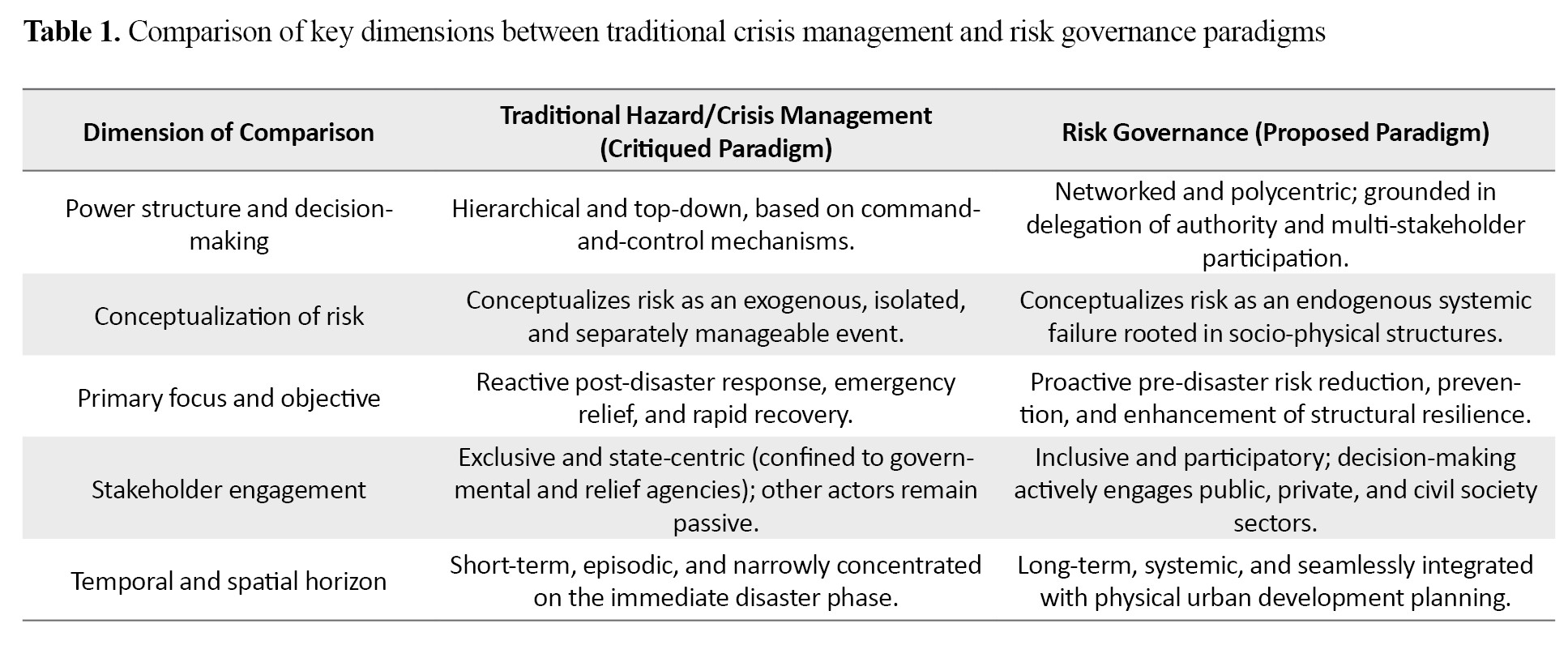
Numerous studies indicate that traditional risk management structures—rooted in command-and-control hierarchies and reactive posture—have proven ineffective in addressing the systemic complexities of megacities, such as Tehran. These structural dysfunctions necessitate a fundamental paradigm shift from conventional crisis management to risk governance. Far from a mere administrative reform, governance signifies a profound transformation in power dynamics and decision-making theories concerning disaster risk.
Table 1 summarizes the key distinctions between these two paradigms across critical dimensions—specifically decision-making structures, risk orientation, and temporal horizons—which serve as the theoretical foundation for the conceptual framework developed in this study.
As illustrated in
Table 1, the risk governance paradigm demands a “systemic and networked approach” to transition from mere reactive crisis management toward “prevention and structural resilience” within the physical context of Tehran. This conceptual transition inherently necessitates the “identification and structuring of the key driving factors” within this networked system.
Materials and Methods
Research philosophy
The philosophical underpinning of the present study is rooted in interpretivism. This paradigm emphasizes an in-depth understanding and contextual interpretation of social and human phenomena (Iman, 2010). Since designing a conceptual governance framework for a complex socio-institutional setting constitutes a conceptual, knowledge-synthesis endeavor, an interpretive approach provides an appropriate epistemological foundation for this investigation. Accordingly, this study adopts a qualitative design, specifically employing a design research (DSR) or constructive strategy. In this type of research, the primary objective extends beyond merely describing or explaining the status quo toward the ‘creation of an innovative artifact or construct’ (herein, a conceptual framework) aimed at addressing a real-world, practical problem. This approach is particularly prevalent in domains, such as management and public policy, that contend with the design of novel systems. Furthermore, the nature of this inquiry is exploratory, as formulating a comprehensive conceptual framework for physical risk governance represents an emerging and nascent field in Iran.
A systemic approach to conceptual framework design
Within systems and governance theories, conceptual frameworks serve not only as instruments for organizing multifaceted knowledge, but also as mechanisms for complexity reduction in heterogeneous systems. Their primary objective is to bridge the divide between theoretical constructs and operational contexts. Given the fragmented nature of knowledge and the wide array of influential variables in disaster risk governance, this study initially employs meta-synthesis—an optimal qualitative methodology for the systematic extraction and synthesis of core concepts from a vast body of literature. This stage provides the theoretical foundation for variable identification. Subsequently, because the fundamental imperative in governance extends beyond mere factor identification to deciphering the influence architecture and interrelationships among variables, ISM is utilized. “Theoretically grounded in structured modeling, this approach reinforces the premise that the reciprocal interactions among factors—such as the internal dynamics among stakeholders or institutions—carry greater significance than the isolated factors themselves. It is solely through structuring these interdependencies that the governance system can be rigorously analyzed and, ultimately, its operational framework robustly formulated.”
Conceptual framework design process: a three-stage approach (systematic review, meta-synthesis, and interpretive structural modeling)
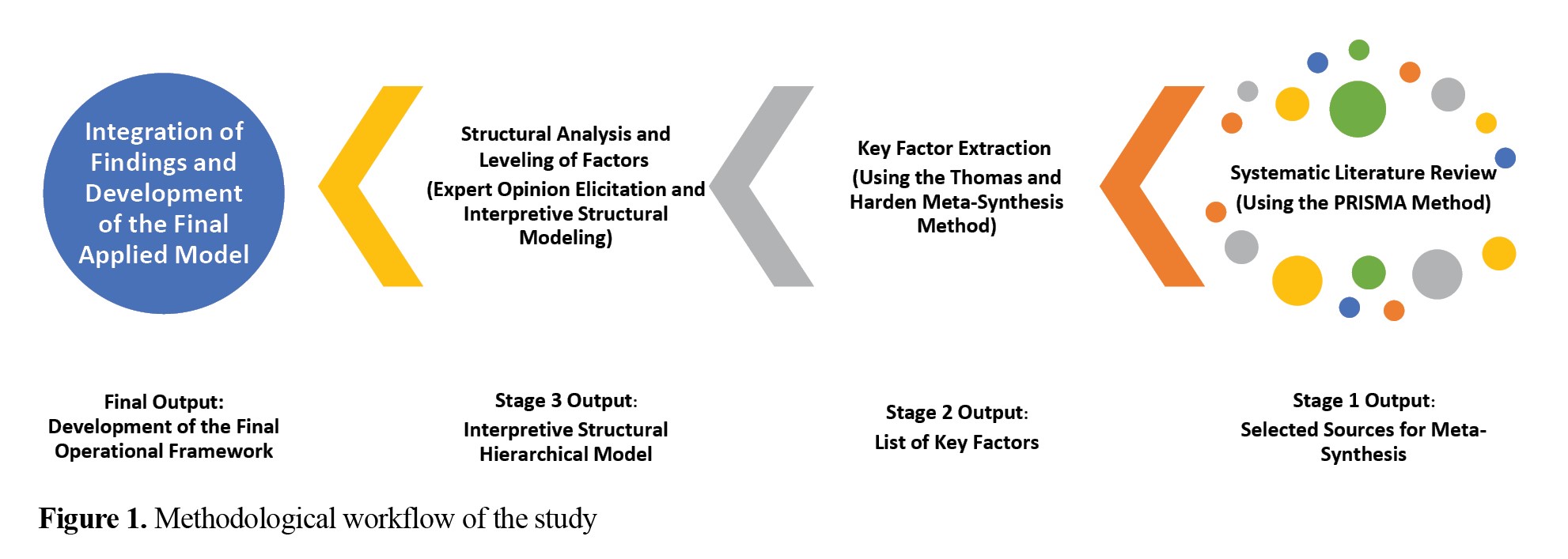
To enhance validity and methodological rigor in designing the conceptual framework, a three-stage hybrid approach was employed. In the first stage, a systematic literature review was conducted using Uman’s (2011) eight-step protocol for systematic review and data gathering. In the second stage, meta-synthesis was utilized to extract the core components of the conceptual framework from the synthesized literature. In the third stage, ISM was implemented to structure and hierarchically stratify these components.
Figure 1 shows the comprehensive methodological workflow.
Stage 1: Systematic literature review
Yeoman’s eight-step protocol provides a structured framework that guides researchers in executing systematic reviews rigorously and systematically. This method was selected primarily due to its emphasis on minimizing bias through the rigorous identification, critical appraisal, and synthesis of literature—distinguishing systematic reviews from conventional narrative literature collection techniques (Uman, 2011). The protocol comprises eight fundamental stages as outlined below:
a) Defining the research question: In this stage, a clear and focused research question is formulated to steer the inquiry. The researchers addressed questions, such as: What are the foundational principles of sound risk governance? (Guga, 2009); What structural characteristics define effective crisis management systems? (Khodabandehlou & Alidousti, 2015); Which key actors must participate within an urban safety system? (Samadi Foroushani et al., 2023); and What core components constitute successful international models?
b) Protocol development: A comprehensive protocol delineating the methodology, search strategy, and explicit eligibility (inclusion and exclusion) criteria was established. No geographical restrictions were imposed. The inclusion and exclusion criteria were defined as follows:
Articles or reports were required to be published within a 16-year timeframe, spanning from 2009 to 2025, with studies outside this temporal window being excluded. The sources had to demonstrate acceptable scientific rigor and scholarly quality (substandard works and unindexed conference papers were omitted). Publications were restricted to English or Persian (other languages were excluded). The studies had to align with at least one of the core thematic domains: safety and disaster/crisis management, physical resilience, urban governance, institutional and structural modeling, disaster risk management, stakeholder engagement and network governance, or public policy. Furthermore, sources were required to be published in reputable, peer-reviewed journals or constitute authoritative institutional reports, with full-text accessibility to the documents or book chapters.
c) Literature search: A comprehensive search was executed across reputable academic databases using targeted keywords. Data sources comprised peer-reviewed national and international journal articles, institutional reports from international bodies (e.g. the Sendai Framework for Disaster Risk Reduction), and high-level national analytical reports (e.g. the Plasco Building collapse investigation reports). The search strategy incorporated key terms and their equivalents, including: “urban governance”, “crisis/disaster management”, “physical resilience”, “institutional modeling”, and “urban safety”.
d) Study selection: Identified publications were screened against the predefined inclusion and exclusion criteria.
e) Data extraction: Relevant empirical, conceptual, and structural data were extracted and systematically cataloged from the selected studies.
f) Critical quality appraisal: The methodological rigor, internal validity, and reliability of the findings within the selected studies were systematically appraised.
g) Data analysis and synthesis: Extracted data were synthesized and categorized conceptually.
h) Reporting results: The synthesized findings were documented and reported transparently and comprehensively.
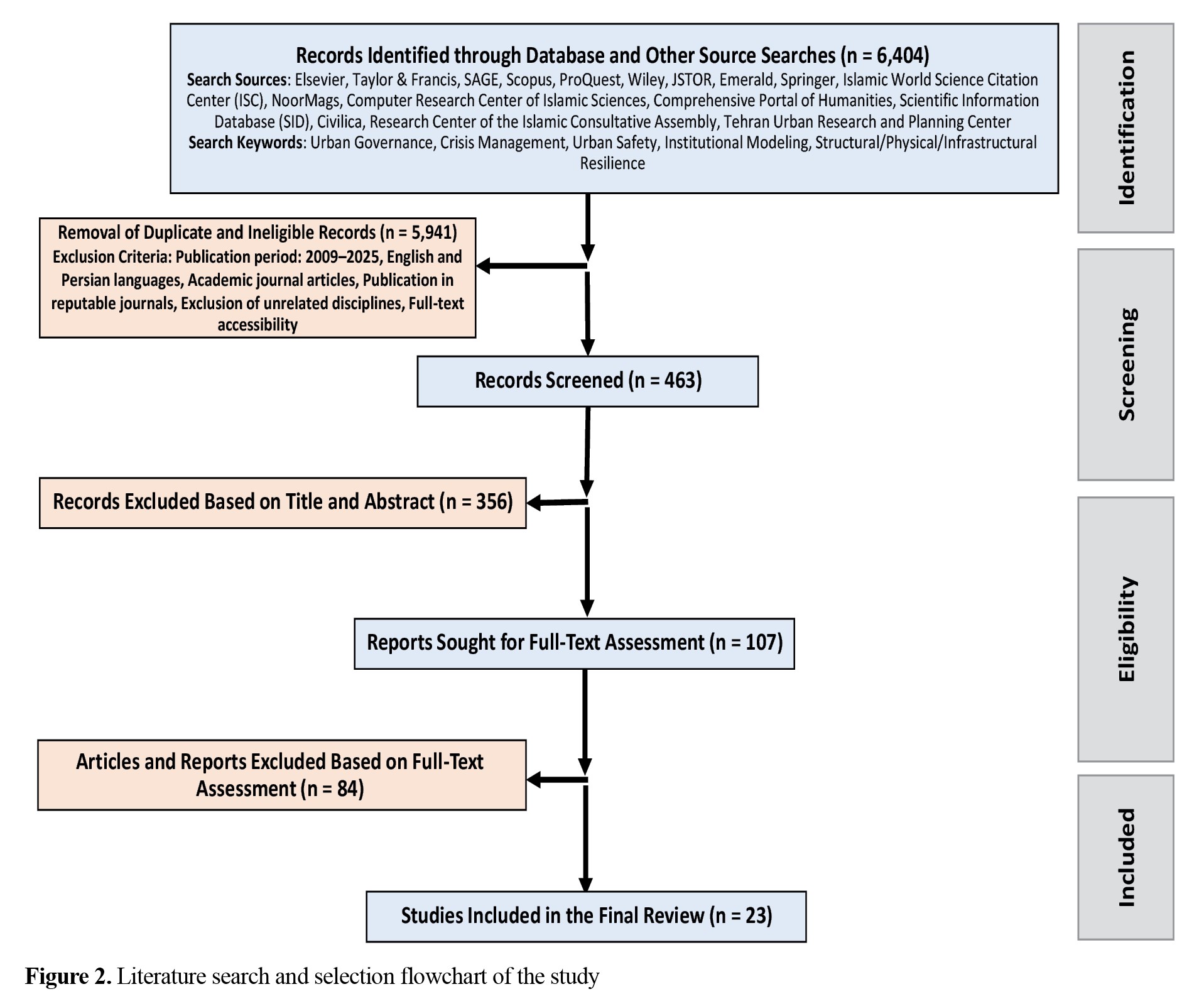
Following advanced search filtering and the rigorous application of inclusion and screening criteria, the final corpus was narrowed down to 23 core sources (comprising 3 international documents/reports, 3 landmark national analytical reports, and 17 peer-reviewed journal articles).
As outlined in the methodology section, the preliminary phase in extracting the core components of the conceptual framework entailed conducting a systematic literature review. Following the identification, screening, and eligibility appraisal stages applied to scholarly publications and official policy reports, 23 core sources—which directly addressed dimensions of risk governance, structural and institutional modeling, and disaster management frameworks—were ultimately selected to enter the meta-synthesis process.
Table 2 presents a detailed overview of these selected sources.
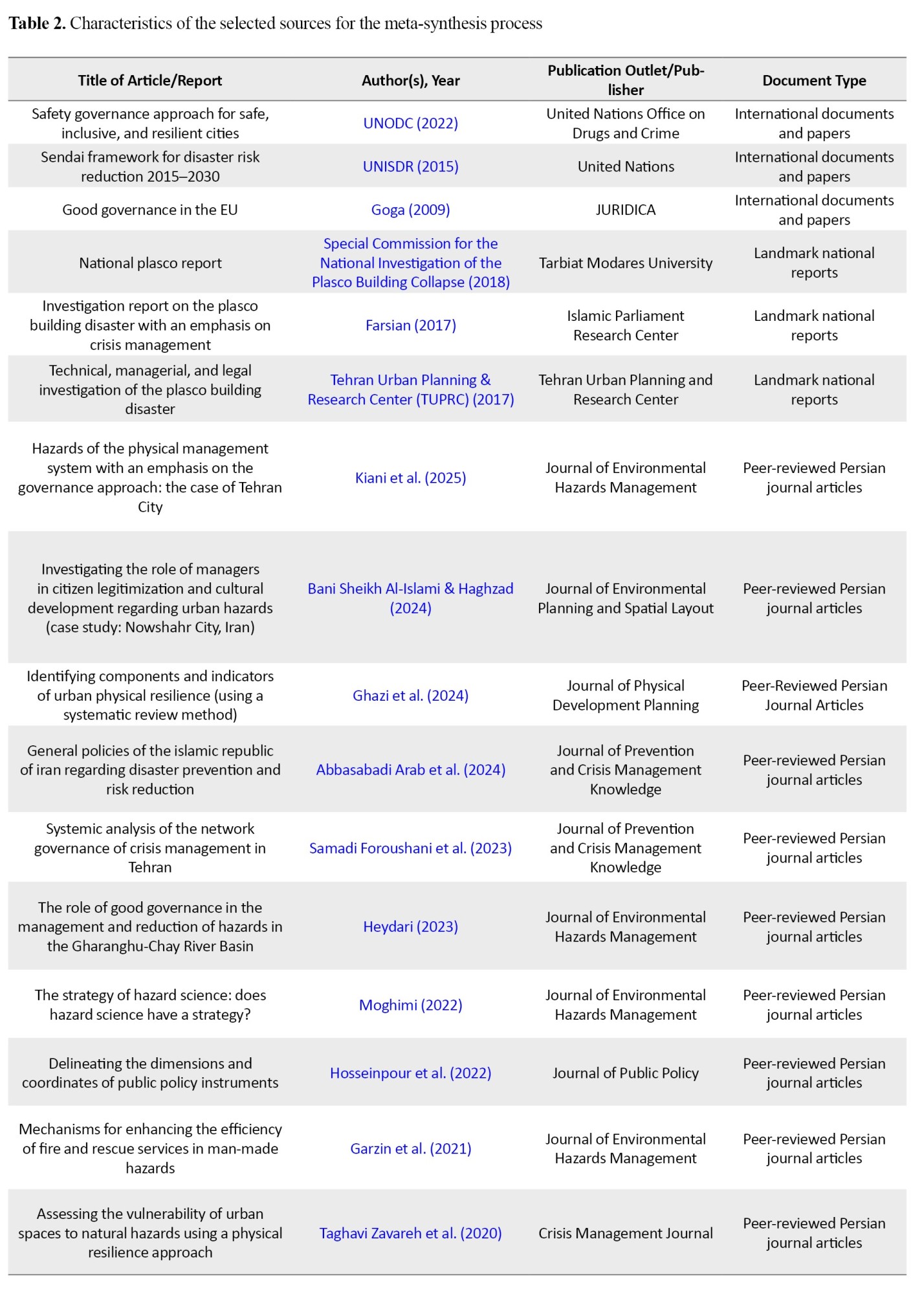
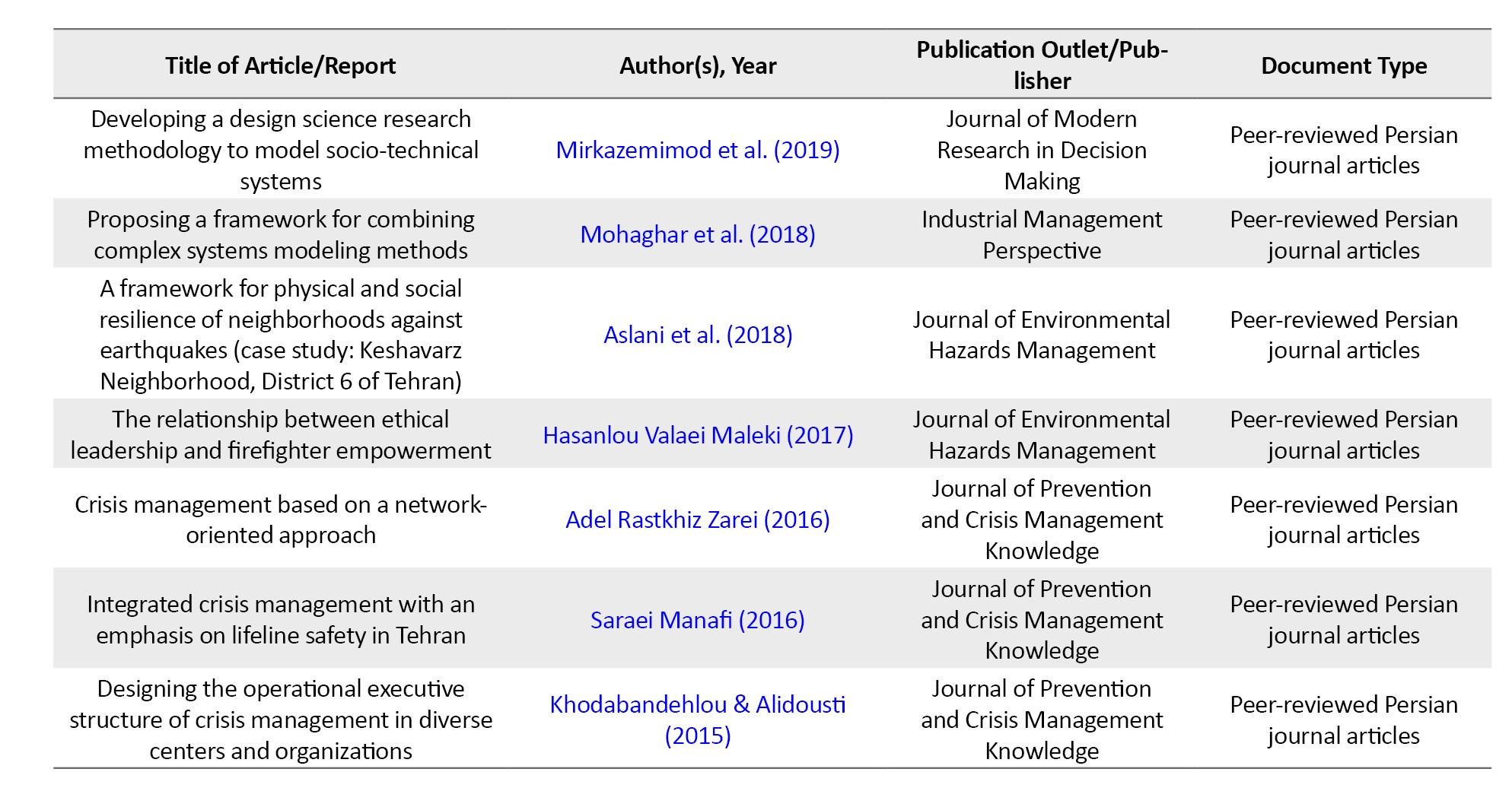
This curated body of literature served as the study’s qualitative database, establishing the primary foundation for the subsequent stage: the thematic synthesis method developed by Thomas and Harden (2008). In this stage, through in-depth coding and analysis of these texts, the overarching themes and key determinants of an optimal risk governance system were systematically extracted.
Stage 2: Component extraction via thomas and harden’s meta-synthesis approach
Meta-synthesis is a rigorous, systematic methodology designed to integrate and synthesize findings from diverse qualitative studies, thereby generating a deeper and more comprehensive conceptual understanding of a given phenomenon. In this study, the thematic synthesis framework developed by Thomas and Harden (2008) was adopted. This method comprises three primary stages:
a) Line-by-line coding of findings: In this initial step, the selected key articles and institutional reports retrieved from the preceding stage were scrutinized in detail, and their primary concepts and substantive meanings were extracted as initial open codes.”
b) Developing descriptive themes: Initial codes sharing conceptual similarities were grouped into broader conceptual categories designated as “descriptive themes.” These themes systematically summarize and structure the primary findings of the reviewed literature.
c) Generating analytical themes: In the final step, the researchers synthesized and interpreted the interrelationships among the descriptive themes to attain a higher level of abstraction, thereby generating “analytical themes.” These analytical themes constitute the core “factors” or “components” that serve as the foundational input for the subsequent stage of conceptual framework development (
Table 3).
.jpg) Stage 3: Structuring the conceptual framework via interpretive structural modeling
Stage 3: Structuring the conceptual framework via interpretive structural modeling
Following the identification of the key factors, interpretive structural modeling (ISM) was employed to delineate their contextual relationships and establish a hierarchical structure among them. ISM is a well-established methodology designed to transform complex mental models into a transparent, visual, and well-structured graphical representation based on expert judgment and consensus. The operational steps of this methodology are delineated as follows:
a) Identification of key factors: A comprehensive list of the final factors extracted from the meta-synthesis stage is compiled.
b) Construction of the structural self-interaction matrix (SSIM): Through a structured survey of an expert panel, pairwise relationships among the identified factors are determined based on the logic of influence and dependence, categorized into four distinct types: V, A, X, and O.
The selection of experts for the ISM phase was conducted using purposive judgmental sampling to ensure that the diverse dimensions of physical hazard governance—encompassing theoretical, technical, legal, and operational perspectives—were comprehensively addressed. The final panel consisted of 17 prominent experts, each possessing over 15 years of professional and academic experience.
Table 4 delineates the multidisciplinary composition of this panel, which was curated to provide a holistic and multidimensional perspective for analyzing model relationships by integrating expertise in public law, policymaking, governance, crisis management, and technical safety.
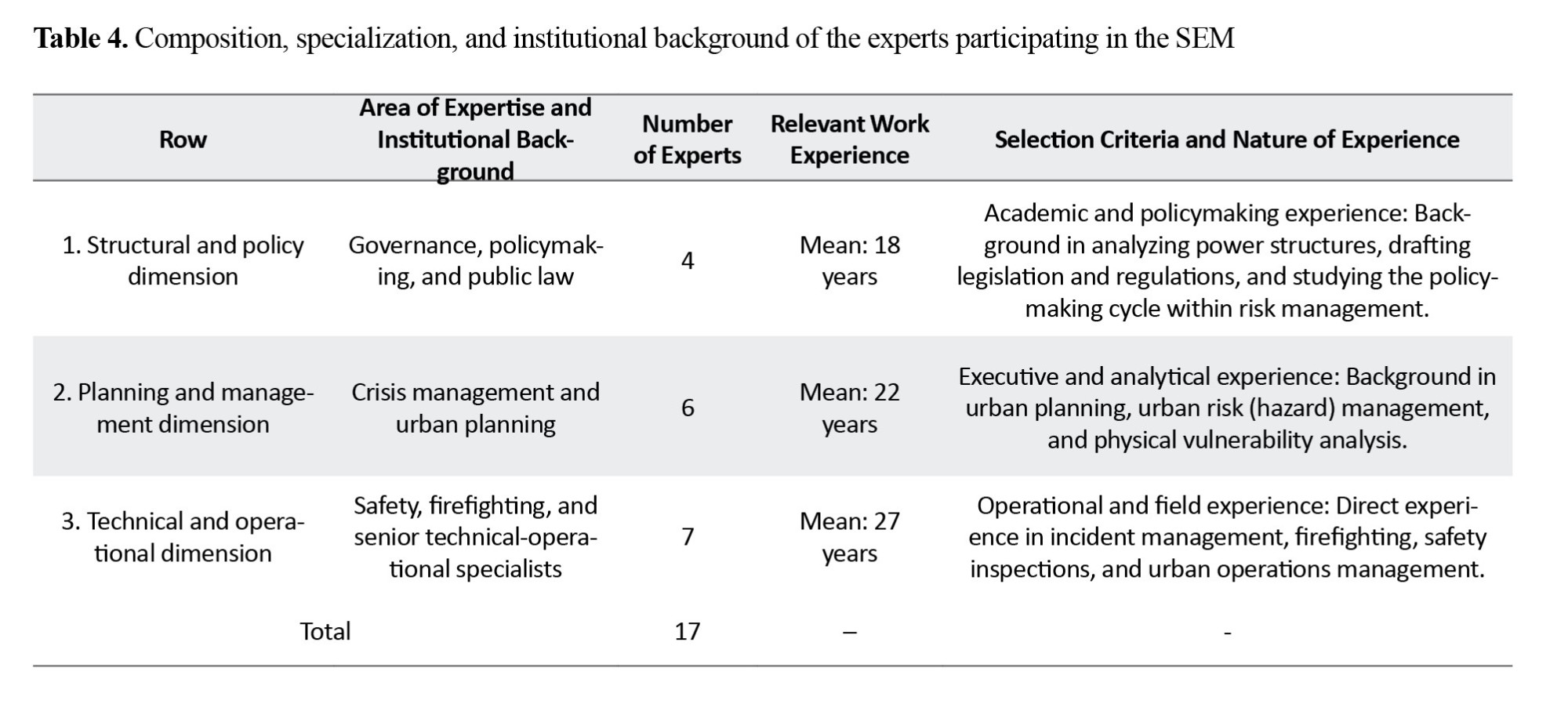
c) Formation of the initial reachability matrix: The initial reachability matrix is converted into a binary matrix (comprising 0 and 1).
Analysis and leveling of factors: Utilizing matrix operations to examine the driving power and dependence degree of each factor, variables are categorized into various hierarchical levels. Factors situated at the lower levels are identified as “strategic drivers,” while those at the higher levels represent the system’s “ultimate goals.” The final output of this stage is a structured and leveled diagram of the final governance conceptual framework.
The interpretive structural modeling implementation process
The implementation process of this stage involved establishing an expert panel, designing the questionnaire, constructing the SSIM, forming the reachability matrix, achieving matrix consistency, and finally, analyzing and leveling the factors. Following the formulation of the initial and final reachability matrices, the driving power and dependence degree for each of the 11 factors were calculated. For the sake of brevity, the intermediate computational steps for the aforementioned matrices are omitted from this study, and only the final findings derived from this method are presented.
Table 5 shows the final analysis of the driving power and dependence degree of the eleven factors, based on expert consensus.
.jpg) Research trustworthiness
Research trustworthiness
Most qualitative methodologists, rather than using the terms "validity" and "reliability"common in quantitative research, employ the criterion of "trustworthiness" to evaluate the quality of qualitative research findings. Lincoln and Guba (1985) assess the quality of qualitative research results through four criteria: credibility, dependability, transferability, and confirmability. In the present study, these criteria (credibility, dependability, transferability, and confirmability) were utilized to evaluate the quality of the data and the research findings.
Credibility
a) Reliance on expert consensus: At the core of the ISM process lies the consultation of an expert panel. In this study, the relationships between factors are determined through the judgments of 17 experts and specialists in the fields of safety, crisis management, governance, policymaking, and urban planning. Relying on the collective wisdom of specialists significantly enhances both the credibility and the pragmatic validity of the final model (Barber & Walczak, 2009).
b) Peer debriefing: In this research, the final results and the conceptual framework are shared with research colleagues and specialists outside the immediate research process to evaluate them for internal logic, clarity, and comprehensiveness.
Dependability
The stability and consistency of the research process are guaranteed through two methods. First, during the factor extraction stage, the systematic meta-synthesis protocol by Thomas and Harden (2008) was followed, ensuring the process is repeatable. Second, in the structuring stage, the ISM method possesses inherent dependability due to its algorithmic and mathematical nature; it consistently produces the same output when provided with the same input.
Transferability
Although the conceptual framework was designed for the specific context of Tehran, the provision of a thick description of the two-stage process (meta-synthesis and ISM) allows other researchers to apply this methodology to design models or conceptual frameworks in similar contexts and to judge the generalizability of the results.
Confirmability
To minimize bias and ensure that the findings are grounded in the data, a transparent and audit trail is provided. In the meta-synthesis stage, the links between the primary texts and the extracted themes are fully documented. More importantly, in the ISM stage, the final structure of the conceptual framework is shaped not by the researcher’s personal interpretation, but by the structural analysis of expert judgments, thereby ensuring the findings are maintained at the highest level of confirmability (Bitsch, 2005).
Results
This section provides a detailed presentation of the results obtained from the two-stage conceptual framework design process. As described in the methodology section, key factors of an ideal governance system were first extracted from the research literature using the meta-synthesis method. Subsequently, these factors were leveled and structured through ISM to derive the final conceptual framework.
Meta-synthesis findings: Identification of key governance factors
The first step in the conceptual framework design process involved identifying the key components and factors of an ideal governance system through a systematic synthesis of the research literature. To this end, a rich collection of relevant articles and documents was analyzed using the Thomas and Harden (2008) meta-synthesis protocol. This three-stage process—comprising line-by-line coding, the development of descriptive themes, and ultimately, the generation of analytical themes—enabled the transition from scattered findings in previous studies to a coherent conceptual framework and a consolidated list of key factors.
The output of this stage is a set of 11 “key factors” that constitute the core pillars of an efficient governance conceptual framework for physical risk management. These factors, which range from “theoretical principles” to “structural requirements” and “operational functions,” serve as the input for the subsequent stage of the research, namely ISM.
Table 3 presents the complete results of this process, detailing the descriptive themes and the final key factor extracted from each source.
These eleven key factors, being the product of a systematic synthesis of the research literature, served as the input for the subsequent stage: ISM. The objective of this next phase was to elucidate the internal relationships and the hierarchical structure among these factors through expert consultation.
Interpretive structural modeling findings: Presentation of the hierarchical model
Following the extraction of the eleven key factors of ideal governance through meta-synthesis, the second stage of this research employed the ISM method to analyze the interrelationships and structure these factors. This methodology enables researchers to design a defensible, hierarchical model of the physical hazard governance system by leveraging the collective wisdom of experts. The relationships between these factors were derived from the structured judgments of 17 experts and specialists in the fields of safety, crisis management, governance, policymaking, and urban planning.
Presentation of the final hierarchical model
To gain a deeper understanding of the nature of each factor, their positions were mapped on the driving power-dependence map. This diagram categorizes the factors into four quadrants: "independent," “linkage,” “dependent,” and “autonomous,” based on their degree of influence (driving power) and susceptibility (dependence degree). Factors situated at the lower levels are identified as “strategic drivers,” whereas those at the higher levels represent the system’s “ultimate goals.” The final output of the ISM process is a structured, multi-level model that illustrates the cause-and-effect relationships among the key governance factors.
Figure 2 shows the position of each of the eleven factors within these four quadrants.
In
Figure 3, the driving power (Y-axis) represents the extent to which a factor influences other factors, while the dependence degree (X-axis) represents the extent to which a factor is influenced by others.
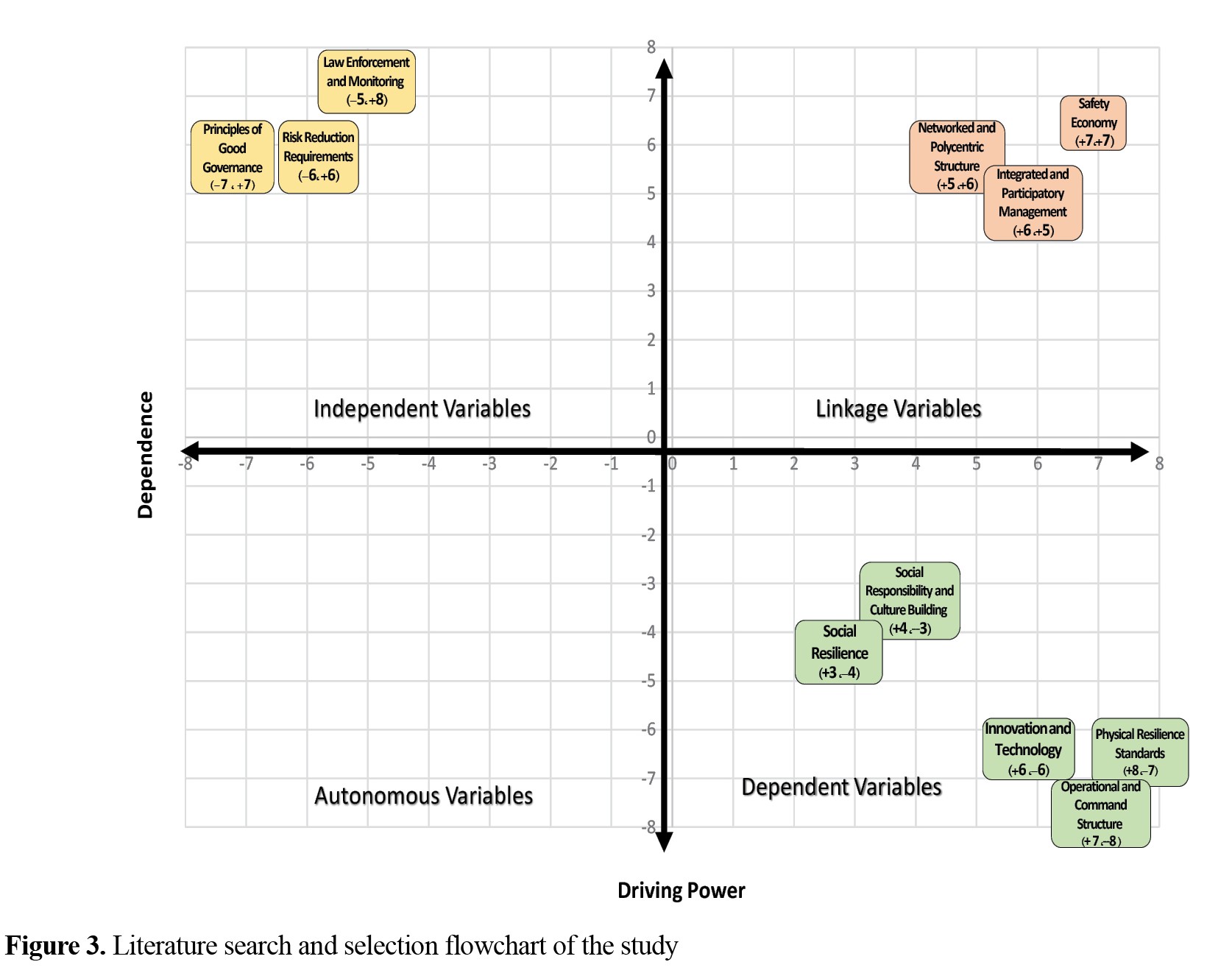
As illustrated in the diagram, most key factors are situated within the independent (drivers), linkage (critical factors), and dependent (outcomes) quadrants. Notably, no factors are located in the Autonomous quadrant, which signifies a high degree of system coherence and interconnectedness. This analysis provides a deeper understanding of the strategic role of each factor within the final conceptual framework. Based on the ISM methodology, the characteristics and functions of the four quadrants are described as follows:
● Quadrant I (linkage factors): These are the “critical and volatile factors” of the system. They exhibit both high driving power and high dependence. These factors represent vital leverage points; any change within them can trigger a systemic impact across the entire framework.
● Quadrant II (independent factors): These act as the “fundamental drivers” of the system. They exert the maximum influence on other factors while being relatively unaffected by them. These are typically “soft” factors—such as values, legal frameworks, and policymaking—that define the “rules of the game.”
● Quadrant III (autonomous factors): These factors have weak connections with the other primary components of the system. In a cohesive and well-integrated model, it is expected that only a minimal number of factors fall into this quadrant.
● Quadrant IV (dependent factors): These represent the “ultimate goals and outcomes” of the system. They are the products of the proper functioning of other sectors and do not exert a direct influence on others. They typically manifest as the tangible and observable outputs of the system.
Integration of findings and presentation of the final conceptual framework for physical hazard governance
The findings from the two previous stages provided the necessary analytical and structural foundations for designing the final conceptual framework. In the meta-synthesis stage, 11 key factors were identified as the components of an ideal governance system. Subsequently, in the ISM stage, the internal relationships and hierarchical structure of these factors were determined based on expert opinions.
In this final step, the objective is to integrate these two sets of findings and present the final conceptual framework for “physical hazard governance.” It should be noted that the output of the ISM analysis is a structural-analytical model that validates the “why” and the scientific logic behind the relationships. In contrast, the final conceptual framework presented hereafter is a conceptual-practical model; inspired by the analytical structure, it delineates the “what” and the functional roles of an ideal governance system in a language accessible to policymakers and urban managers. In other words, while the ISM model provides the empirical evidence and theoretical foundations, the final conceptual framework operationalizes those findings within a functional framework.
Mapping interpretive structural modeling factors onto the conceptual framework
To understand how this integration is achieved, it is first necessary to establish the connection between the 11 key factors extracted from the meta-synthesis and the various components of the final conceptual framework.
Table 6, illustrates this mapping, demonstrating how each level and layer of the conceptual framework corresponds to the key factors identified in the ISM analysis.
.jpg) The analysis of this mapping reveals several key strategic insights
The analysis of this mapping reveals several key strategic insights
A) The underlying philosophy of the conceptual framework: Factors, such as “networked structure (NS)” and “integrated management (IP),” which were identified as pivotal linking factors in the ISM analysis, do not occupy a single specific layer. This finding indicates that they are not merely components, but rather the philosophy and logic governing the entire framework—connecting all levels and layers and ensuring its synergistic nature.
B) The dual role of oversight: The factor “Law enforcement and monitoring (LE)” functions both at the “overarching level” (as part of macro-policymaking) and as a distinct “level of intervention.” This overlap is a significant finding, demonstrating that oversight serves as both an overarching principle and an operational function within this conceptual framework.
C) Structural justification of the conceptual framework: This mapping clearly demonstrates that the framework’s structure is not arbitrary. For instance, the placement of factors, such as “good governance principles” and “disaster risk reduction requirements” at the “overarching level” aligns with their status as foundational drivers in the ISM analysis.
Principles and assumptions governing the conceptual framework
In response to the dysfunctions of the traditional management system and based on the theories of networked and participatory governance, this section presents an applied conceptual framework for “physical hazard governance.” This framework is the result of synthesizing research findings and lessons learned from past disasters, while aligning with the national institutional and legal structure. It aims to create an integrated, synergistic, and proactive framework for enhancing built safety in the metropolis of Tehran. The presentation of this conceptual framework proceeds in three steps: first, the governing principles and assumptions are described; second, the actors and levels of engagement are introduced; and finally, the operational structure and layers of the model are detailed.
The efficiency and success of any conceptual framework hinge on the fulfillment of a set of fundamental principles and assumptions. The proposed framework for physical hazard governance rests on seven key assumptions, which serve as strategic objectives for reforming the status quo:
a) Assumption of legal efficiency: This framework is predicated on the assumption that identified legal gaps, such as the absence of a comprehensive building safety law, have been addressed, and existing laws have been revised to enhance enforceability and deterrence (Farsian, 2017).
b) Assumption of structural reform in executive agencies: It is assumed that executive structures, particularly in institutions related to urban management and safety, have been reformed with a synergistic approach—eliminating overlap and redundancy to provide a suitable foundation for inter-sectoral collaboration.
c) Assumption of proper execution of legal duties: This framework will be efficient when all defined actors and stakeholders perform their legal duties in interaction with other levels correctly and timely, transitioning from a passive approach to an active one.
d) Assumption of maximum citizen participation: One of the pillars of governance is public participation. This framework assumes that the necessary mechanisms for the meaningful participation of citizens, NGOs, and local communities in monitoring, education, and culture-building processes have been established (Samadi Foroushani et al., 2023).
e) Assumption of sustainable resource provision: The framework assumes that the "revenue-safety paradox" has been resolved by defining sustainable financial resources for municipalities and allocating specific budget lines to safety and risk management programs (Farsian, 2017).
f) Assumption of utilizing modern technology: It is assumed that technological gaps have been bridged through support for knowledge-based companies and the application of modern technologies in areas, such as monitoring, early warning systems, and retrofitting.
g) Assumption of maximizing private sector capacity: This framework is designed based on maximizing private sector participation through mechanisms such as outsourcing technical and oversight services and creating economic platforms for investment in the safety sector.
Actors and levels of engagement in the proposed conceptual framework
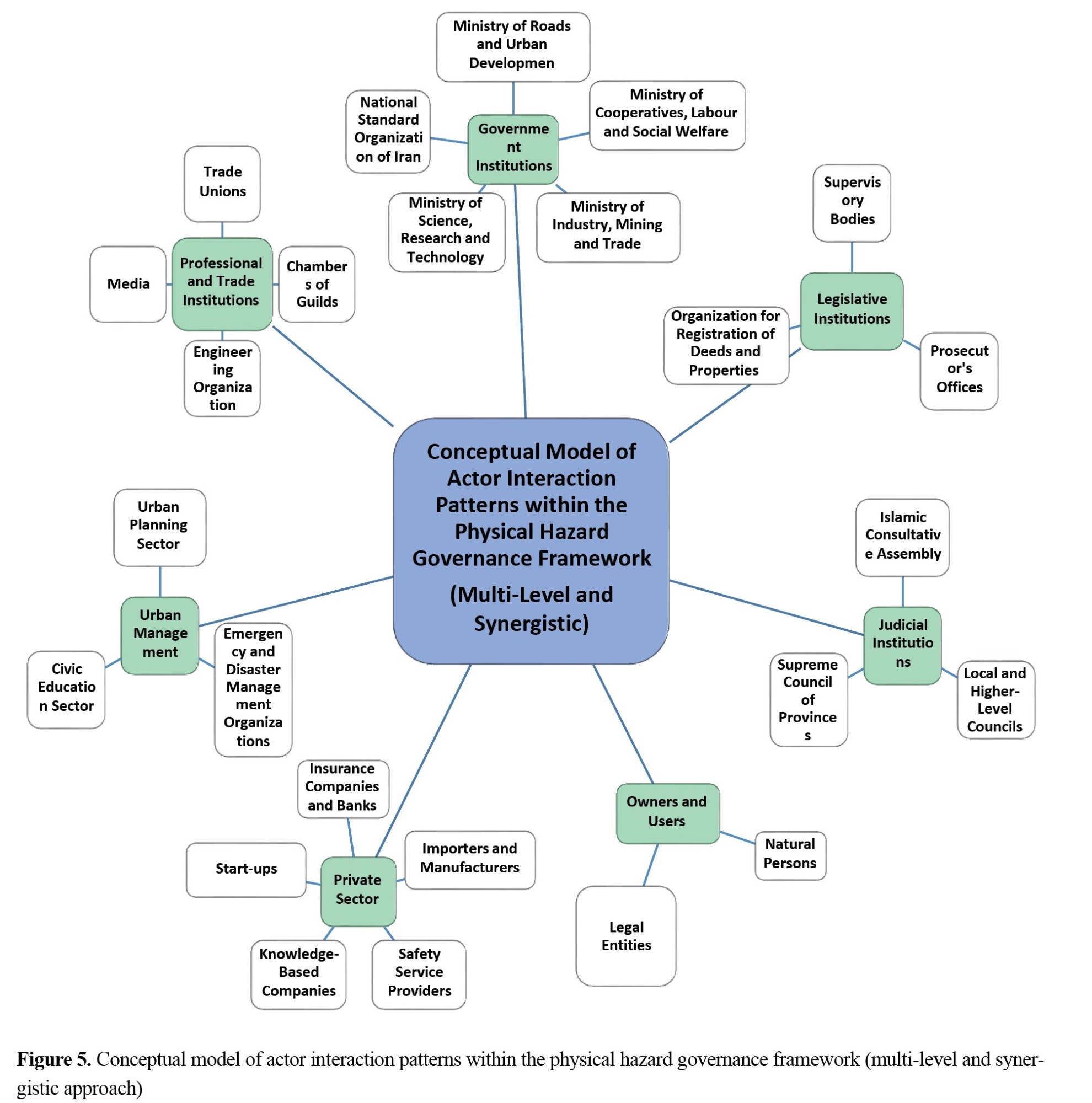
The traditional risk management system was defined by a limited number of governmental actors, which resulted in overlooking the vast capacities of other sectors. The proposed risk governance conceptual framework, adopting a networked and inclusive approach, significantly expands the scope of actors. In this conceptual framework, 25 key actors are identified and defined across 7 macro levels (
Figure 4).
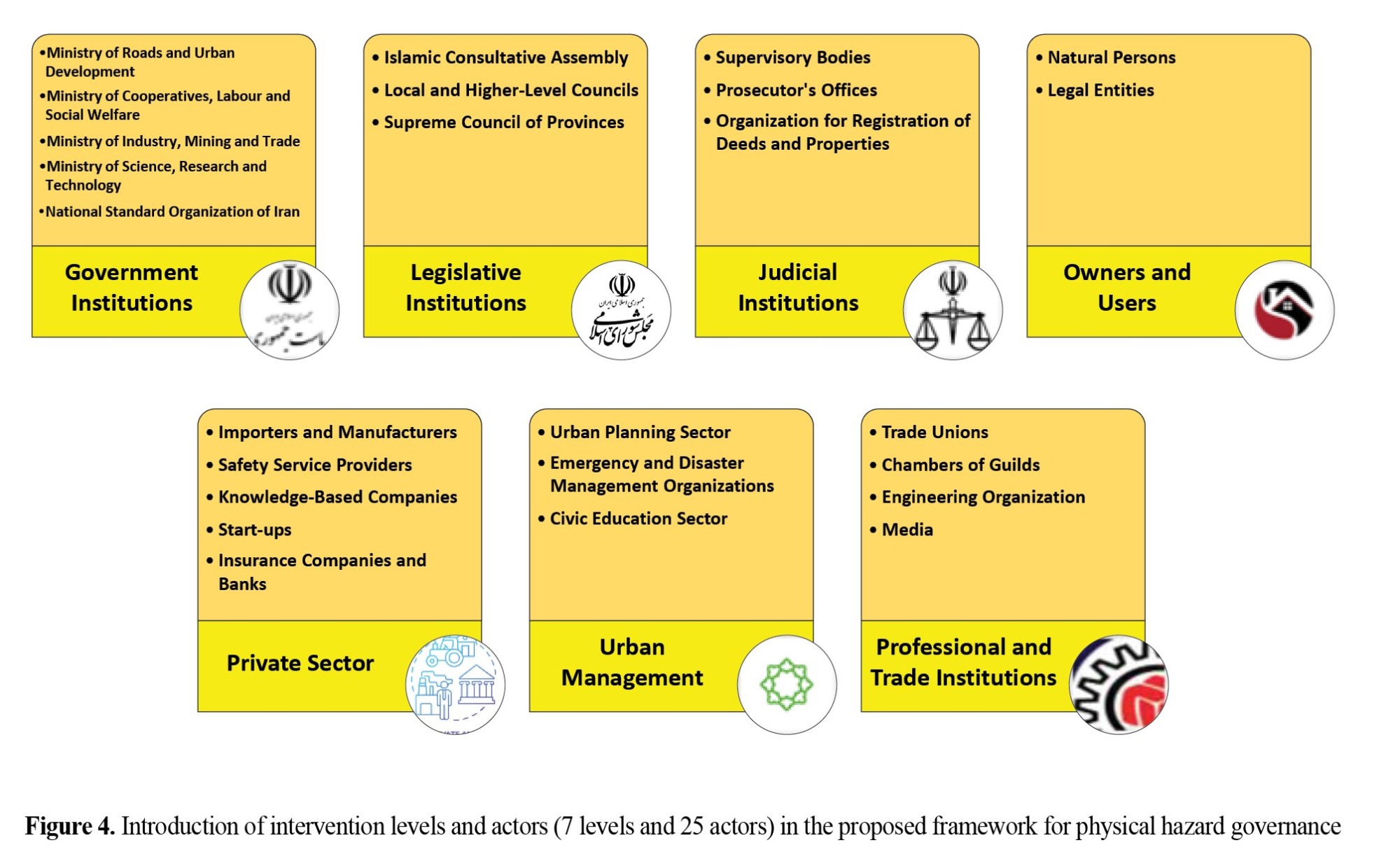
This expansion marks a paradigm shift from a one-dimensional, state-centric perspective to a multifaceted, society-centered approach. The actors identified in this domain were extracted through a literature meta-synthesis and subsequently validated by experts via questionnaires during the ISM process.
The integration of new actors into this domain aims to address the gaps identified in the current system
a) Economic institutions (banks and insurance companies): These actors play a vital role in activating the “safety economy” and establishing economic levers and incentives to ensure compliance with standards (Special Board for the National Report on the Plasco Building Incident, 2018).
b) Private sector (knowledge-based companies, startups, and safety implementation firms): This sector has been incorporated into the conceptual framework to bridge technological gaps, provide innovative solutions, and enhance the country’s executive and supervisory capacities.
c) Professional and academic institutions: Acting as specialized scientific arms, these actors play a key role in formulating standards, training human resources, and providing consultancy services to other levels.
d) Civil society institutions (media and non-governmental organizations): This sector plays an indispensable role in strengthening public safety culture, increasing social demand, and fostering transparency and accountability within the system (Samadi Foroushani et al., 2023).
This multi-actor structure shifts interactions from a “divergent” and conflict-prone pattern toward a “synergistic” and collaborative model, where each actor, within their specialized domain, contributes to the overall efficiency of the system.
Description of the structure and layers of the proposed conceptual framework
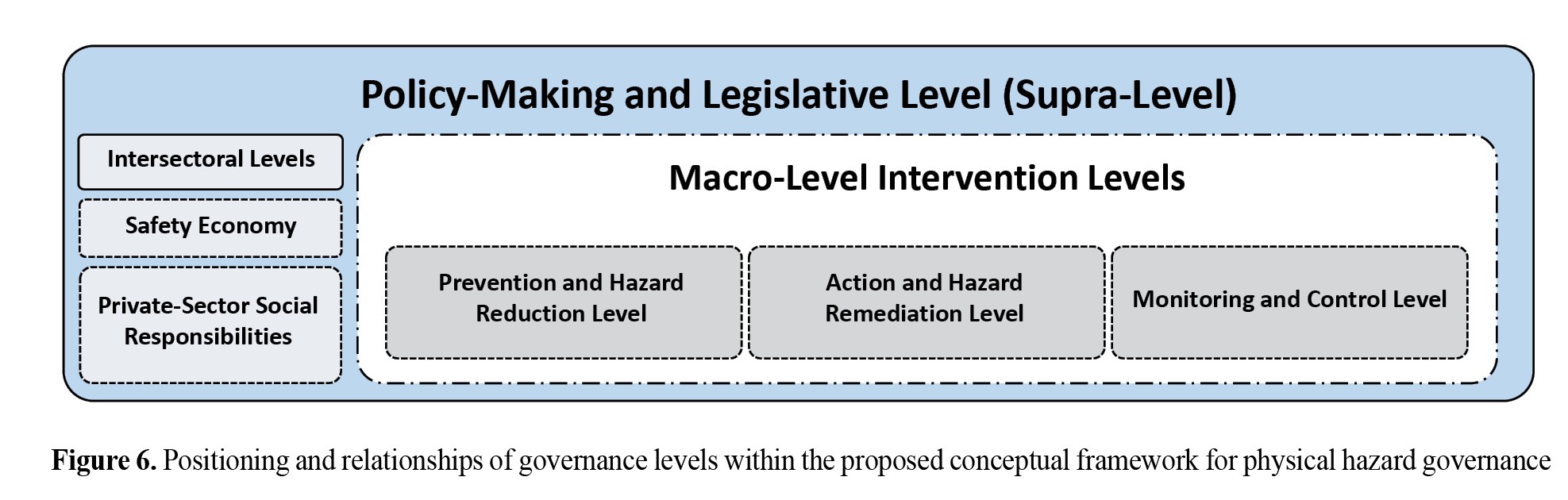
The proposed conceptual framework for physical hazard governance is a multi-level, dynamic structure where functions are integrated. It consists of one “overarching level,” three “intervention levels,” and two “inter-level layers”.
Figure 6 shows the position and relationships of these governance levels within the proposed framework for physical hazard governance.”
Overarching level (meta-level)
As the most foundational and overarching layer of the governance system, this level establishes the "rules of the game" for all stakeholders. Institutions at this level—including the Islamic Consultative Assembly (Parliament), the Government, and various High Councils—are responsible for drafting and revising comprehensive legislation (such as the Comprehensive Building Safety Act), reforming inefficient regulations, and exercising macro-level oversight to ensure effective policy implementation. Ultimately, this level provides the essential legal and strategic foundation for all other levels.
As demonstrated by the ISM analysis, factors, such as “good governance principles” and “risk reduction requirements”, serve as the primary drivers of the system. This level carries the responsibility for drafting and revising comprehensive legislation—such as the comprehensive building safety act—reforming inefficient regulations, and providing high-level oversight of policy implementation. Institutions operating at this level, including the Islamic Consultative Assembly (Parliament), the Government, and High Councils, establish the requisite legal and strategic foundation for the performance of all other levels; without their effective functioning, subsequent measures would fail to achieve the desired efficacy."
Three levels of intervention
Prevention and hazard mitigation level
This level constitutes the core of the “proactive” approach within the conceptual framework, focusing on fundamental risk reduction rather than adopting traditional reactive strategies. It directly interfaces with key parameters, such as physical resilience standards and innovation and technology. Key actors at this level (including the Ministry of Roads and Urban Development, the Ministry of Industry, Mine and Trade, the Ministry of Science, urban management authorities, and the National Standard Organization) are tasked with preventing the generation and accumulation of new risks. They achieve this by drafting and enforcing comprehensive national building regulations, promoting advanced construction technologies, standardizing building materials, and exercising strict land-use oversight, thereby systematically reducing vulnerability.
Action and hazard remediation level
Serving as the “operational” arm of the framework, this level targets existing and imminent physical hazards. It corresponds directly to the critical variable operational and command structure (OC), identified as a key ultimate objective within the ISM analysis. The operational actors (urban management, fire and rescue services, certified safety engineering contractors, property owners, and facility operators) are responsible for identifying, assessing, prioritizing, and remediating risks in unsafe structures and critical urban infrastructure. The deployment of standard frameworks, such as the incident command system (ICS), plays a decisive role in coordinating multi-agency operations at this level.
Oversight and control level
This level ensures accountability, regulatory compliance, and the rule of law across the governance system. It directly links to the fundamental driver law enforcement and monitoring (LE). Institutional actors at this level (the Judiciary, Public Prosecutor’s Offices, the General Inspection Organization, and other regulatory oversight bodies) supervise the strict execution of statutory mandates across all governance tiers and enforce decisive judicial measures against violations, preventing enforcement failures and systemic inertia.
Cross-level enabling layers
Safety economy layer
Acting as the financial and economic engine of the entire framework, this layer establishes horizontal linkages across all intervention levels. Corresponding to the pivotal linkage variable Safety Economy (SE), it transforms safety from an operational “cost” into a value-generating “investment.” Financial actors (commercial banks, the insurance sector, and municipalities through sustainable municipal revenue mechanisms) deploy financial incentives (e.g. retrofitting loans) and risk-adjusted pricing penalties (e.g. risk-tiered insurance premiums) to guide stakeholder behaviors toward compliance and ensure sustainable funding for preventive and corrective interventions.
Social responsibility layer
This layer represents the “social capital” and “soft power” of the governance system, corresponding to key variables, such as social resilience and culture-building and social responsibility. Key actors (the media, Civil Society Organizations [CSOs/NGOs], the private sector through Corporate Social Responsibility [CSR], and citizens) foster public awareness, institutionalize a culture of safety, exercise civic oversight, and conduct policy advocacy. This layer transitions hazard governance from a purely bureaucratic obligation into a shared civic responsibility. This transition is essential because risk perception and lived experiences among decision-makers and citizens—particularly within vulnerable environments, such as educational institutions—critically determine actual disaster readiness and seismic resilience (Feizbakhsh et al., 2021).
Table 7 presents the functional matrix of key actors across their respective levels and layers, while
Figure 7 illustrates the proposed multi-level, synergistic conceptual framework for physical hazard governance.
.jpg)
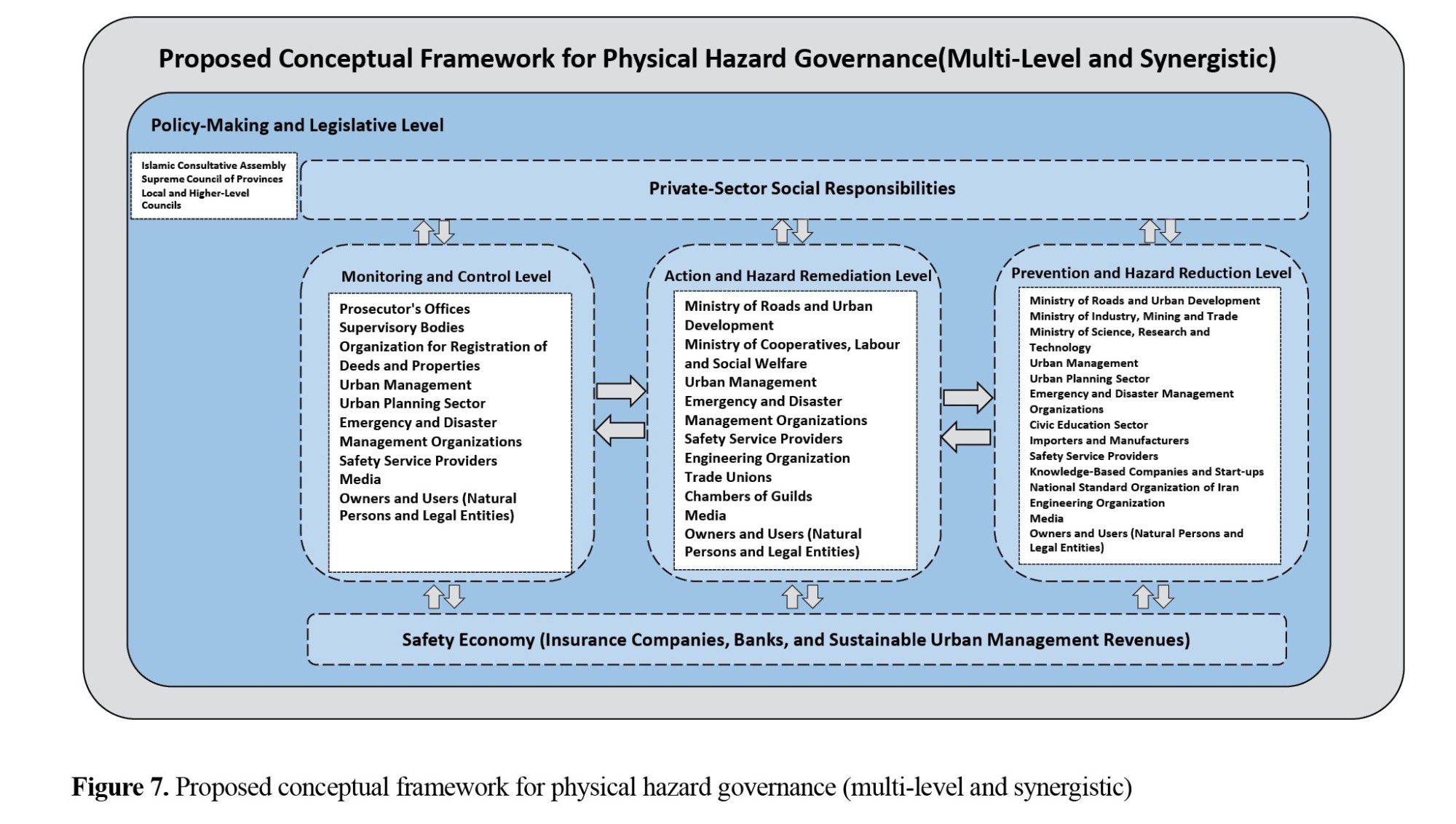
This framework provides urban policymakers with an evidence-based, actionable roadmap for structural risk mitigation.
This integrated, multi-layered conceptual framework overcomes the systemic fragmentation and institutional silos inherent in traditional hazard governance through precise role definition and cross-sectoral synergy, paving the way toward safe and resilient cities. The final section discusses and analyzes the advantages and implementation challenges of this model.
Discussion
The conceptual framework for physical hazard governance represents an effort to provide a structural and integrated response to the complex, intertwined challenges facing the traditional urban safety management system. By moving beyond sectoral and reactive managerial logics, this framework seeks to lay the foundation for a synergistic and proactive system by reconfiguring actor relationships and defining novel functions. This approach aligns with the core strategy of hazardology, which aims to transform and simplify complex, multidimensional phenomena into an intelligible and manageable framework (Moghimi, 2022). An analysis of the framework’s components demonstrates how each dimension directly addresses one of the fundamental deficiencies of the existing system.
Addressing fragmentation and incoherence: The key challenges of the ‘lack of a coordinating body’ and ‘overlapping responsibilities,’ which lead to organizational paralysis in the traditional system, are addressed in this conceptual framework through defining distinct levels of intervention and a networked structure. By precisely defining the roles of actors at each level (prevention, action, and oversight) and establishing horizontal communication layers, the proposed conceptual framework seeks to replace hierarchical, siloed structures with an interactive and accountable network (Khodabandehlou & Alidousti, 2015).
Addressing regulatory gaps and enforcement deficits: The conceptual framework addresses these issues by designating an ‘overarching policy-making and legislation level,’ which centralizes the responsibility for drafting and revising laws within legislative bodies. More importantly, by establishing a ‘supervision and control level’—where the judiciary and inspection agencies play pivotal roles—a robust mechanism is defined to ensure legal compliance and hold violators accountable. Consequently, this structurally resolves the long-standing challenge of the ‘lack of enforcement capacity’.
Addressing the income-safety paradox: Perhaps one of the most innovative dimensions of this conceptual framework is the introduction of the inter-level layer termed ‘safety economy.’ This layer directly targets the ‘income-safety paradox’ and the ‘absence of economic actors’ in traditional models. By integrating stakeholders, such as banks and insurance companies, and emphasizing the necessity of defining sustainable revenue streams for urban management, this framework seeks to transform safety from a perceived ‘cost’ into a viable economic ‘investment.’ Consequently, it aims to generate the requisite financial incentives for safe behavior among all actors, particularly property owners and the private sector.
Addressing deficiencies in public participation and safety culture: The ‘social responsibility’ inter-level layer serves as a response to the challenges of ‘weak public safety culture’ and the ‘passivity of civil society organizations.’ By recognizing the vital roles of citizens, media, and NGOs, this conceptual framework introduces social capital as a fundamental pillar of the governance system. It aims to strengthen public oversight, civic advocacy, and mass education as ‘soft tools’ for enhancing safety (Samadi Forousani et al., 2023).
Table 8 presents a comparative mapping of the challenges within the traditional system against the solutions offered by the proposed conceptual framework.
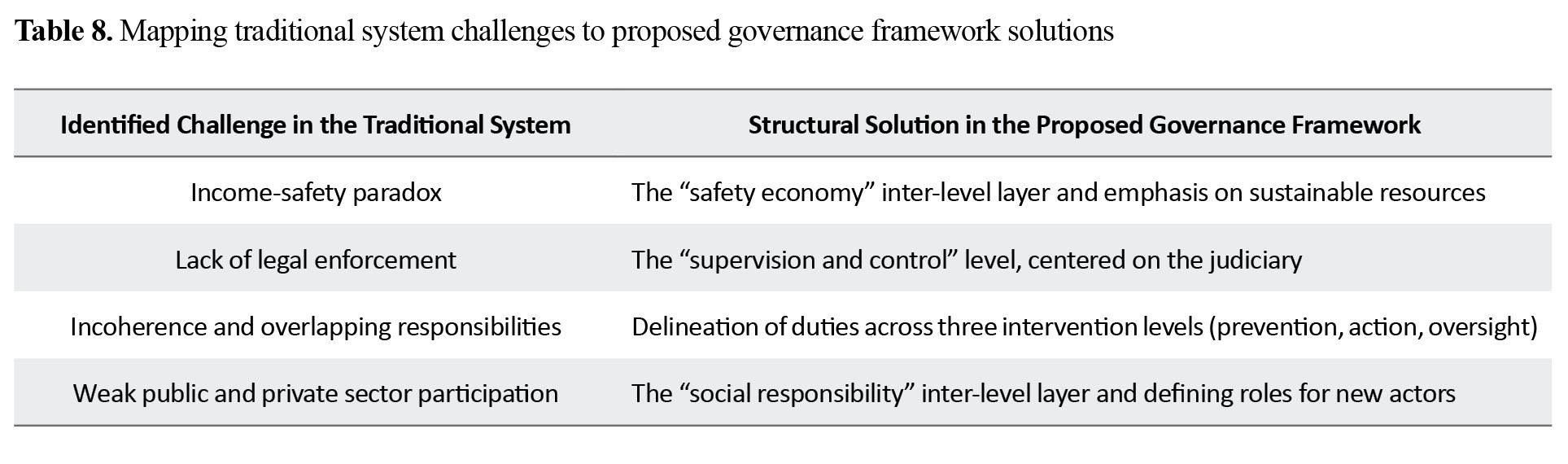
To illustrate the abstract functions of the proposed conceptual framework in an operational and intelligible process, consider the scenario of addressing a high-risk building, such as Plasco. The prevention level identifies hazards using technical tools. The action level (including the municipality and the owner) is responsible for mitigating the risk. If no action is taken, the supervision and control level (the Judiciary) intervenes using legal enforcement mechanisms. Simultaneously, the safety economy layer (insurance companies) exerts economic pressure by increasing insurance premiums, and the social responsibility layer (media) creates public demand through information dissemination.
Comparison of the conceptual framework with similar research
The conceptual framework presented in this research, while aligning with the general principles of successful global models, attempts to provide innovations tailored to the specific context of Iran. In comparison with standard crisis management models, such as the “incident command system” (Khodabandehlou & Alidousti, 2015), which primarily focus on the “response” phase and on-scene operational command, the present conceptual framework is a comprehensive “governance” framework that covers all four stages of the crisis management cycle (prevention, preparedness, response, and recovery). In other words, the incident command system is an operational tool that can be utilized within the “action and hazard mitigation level” of this conceptual framework, whereas the proposed governance framework is a strategic and macro-level framework that incorporates that tool within itself.
Furthermore, in comparison with studies that have analyzed the existing governance network in Tehran (Samadi Forousani et al., 2023), this research goes one step further. Those studies correctly identified the weaknesses of the current network, such as the weak participation of the private sector and civil society organizations. The proposed conceptual framework in this research directly responds to that pathology by formally incorporating these overlooked actors and defining specific roles for them in layers, such as "safety economy" and "social responsibility," thereby providing a “desirable and redesigned network.”
Distinctive features and innovations of the conceptual framework
The significance and innovation of the proposed conceptual framework can be summarized in four main features:
a) Comprehensiveness and holism: This conceptual framework is the first comprehensive framework that attempts to view all legal, institutional, economic, and social dimensions affecting physical hazards within an integrated structure and provides solutions for them.
b) Proactive approach: Unlike the traditional system, which is often reactive, this conceptual framework shifts its primary emphasis from crisis management to “vulnerability management” by dedicating an entire level to “prevention and hazard mitigation.”
c) Networked and multi-actor structure: By introducing 25 actors from 7 different levels, the conceptual framework moves away from state-centric logic and, based on the networked governance paradigm, relies on cooperation and synergy among all stakeholders.
d) Integration of soft and hard dimensions: By defining the inter-level layers of "safety economy" and "social responsibility," this conceptual framework combines “hard” tools (law, oversight, enforcement) with “soft” tools (culture-building, economic incentives, participation), thereby adopting a holistic approach to problem-solving.
Conclusion
This research, aimed at designing a conceptual framework for physical hazard governance in the Tehran metropolis, seeks to provide a structural and operational model to remedy the inefficiencies of the traditional management system. Managing physical hazards in complex metropolises, such as Tehran, necessitates a transition from traditional managerial patterns toward modern governance paradigms. To facilitate this transition, a conceptual-applied framework for “physical hazard governance” was designed and presented. In the meta-synthesis stage, the research identified 11 key factors influencing physical hazard governance. In the subsequent stage, ISM was employed to determine the influence and dependence structure of these factors.
From a theoretical perspective, the structure of the physical hazard governance framework derived through ISM demonstrates full alignment with the principles of Mintzberg’s Adhocracy organizational pattern. By emphasizing the pivotal role of linking and intervening factors (which represent specialists and support institutions) and the necessity for mutual adjustment within the 7-level relational structure, this framework fundamentally proposes a networked adhocracy to replace the traditional bureaucracy of command and control. This theoretical alignment not only justifies the transition from a traditional system to governance but also confirms that the proposed framework is capable of addressing non-repetitive and dynamic issues within the complex physical hazard environment of Tehran.
With its multi-level and multi-actor structure, and by emphasizing the principles of integration, participation, prevention, and accountability, the proposed framework attempts to provide a structural response to the current system, which is plagued by structural dysfunctions and fragmentation. The framework revealed that the factors of “legal authority and integration” and the “development of a culture and knowledge of resilience” occupy the lowest level of influence, acting as the fundamental intervening and determining factors of the system. Therefore, any practical action toward implementing this governance must commence with the reinforcement of these factors. Ultimately, the findings of this research provide a structured framework that, instead of focusing on outcomes (such as damage reduction), focuses on the root causes (intervening factors) within the governance system. This framework can serve as a basis for decision-making in reviewing the institutional structure of physical hazard management in Tehran. Furthermore, this conceptual framework acts as a roadmap for policymakers and urban managers to take effective steps toward achieving a safer and more resilient city through the reconfiguration of structures, the redefinition of roles, and the mobilization of all existing societal capacities.
Challenges and requirements for implementing the proposed conceptual framework
Presenting a conceptual framework is merely the first step in the transformation process. The successful implementation of the proposed governance framework in the field faces several challenges and requirements that must be addressed. The most significant challenges include:
a) Political and Institutional Barriers: Potential resistance from existing institutions toward changes in power structures and the redistribution of responsibilities, as well as bureaucratic inertia, may slow down the transition process.
b) Economic barriers: Securing sustainable financial resources for the full implementation of this framework—particularly for the “safety economy” layer and the support of mitigation and retrofitting projects—requires political will and large-scale investment.
c) Legal barriers: The lengthy and complex process of drafting and approving new laws (such as a comprehensive safety law) and amending existing regulations is a time-consuming prerequisite for the full realization of this framework.
d) Cultural barriers: Shifting organizational culture from a command-based approach to a participatory one, as well as building public trust to secure genuine citizen engagement, is a gradual process requiring continuous efforts in education and culture-building.
Strategic and operational recommendations
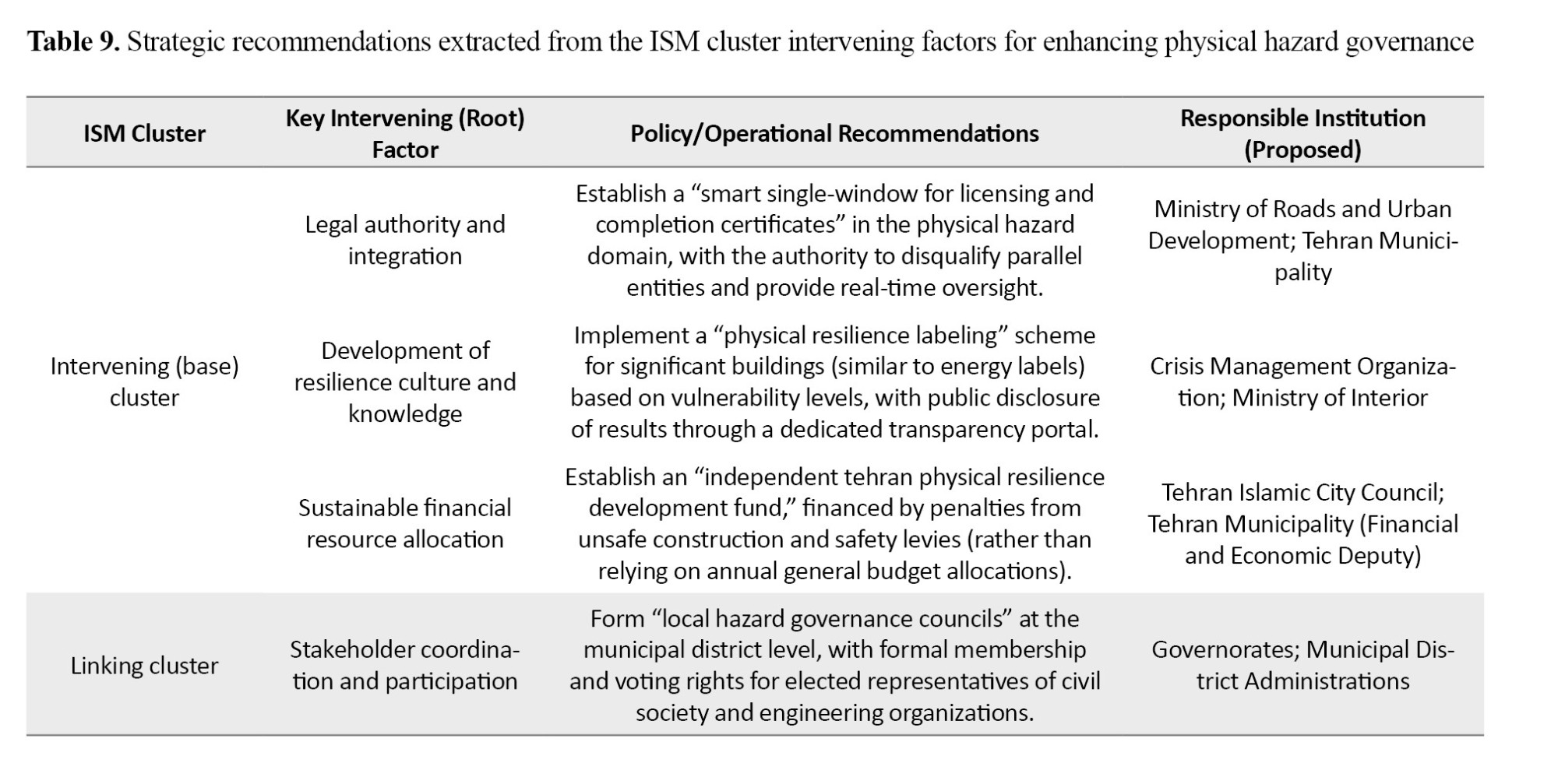
The recommendations of this study are extracted directly from the results of the ISM and the analysis of the Influence and Dependence Matrix. From a systemic governance perspective, the intervening factors located at the lowest levels of the model possess greater strategic importance. Based on the research findings, these factors are the most fundamental and critical variables for inducing change across the entire governance system. Consequently, the recommendations in
Table 9 have been formulated within policy-oriented and operational domains, focusing on these key factors to ensure maximum effectiveness in reforming Tehran’s physical hazard governance system.
 Recommendations for future research
Given the conceptual nature of the designed framework and the challenges associated with transforming this structural model into an executive system within the Tehran metropolis, it is recommended that future research be conducted to focus on the operational development, quantification, and scientific validation of the ISM results. These studies can specifically be developed in the following areas:
Developing an implementation plan based on interpretive structural modeling influence levels
Future research should focus on formulating an executive roadmap for each of the influence levels within the ISM model. This plan could establish a distinct operational program for every level of the model’s hierarchical structure. Furthermore, it should detail key performance indicators and institutional accountability for each of the 11 key factors of the proposed framework, grounded in governance principles, such as accountability and transparency.
System dynamics analysis and feedback loop simulation
It is recommended that the influence and dependence relationships mapped in the ISM be quantified and simulated as feedback loops using the “system dynamics” approach. This modeling would enable policymakers to assess the impact of various intervention scenarios—such as increasing prevention budgets or strengthening enforcement mechanisms—on overall system performance, thereby identifying more effective leverage points for intervention.
Empirical and statistical validation of the conceptual framework structure
To verify the scientific validity of the final conceptual model, future quantitative research is suggested. Methods, such as structural equation modeling (SEM) or confirmatory factor analysis, can be utilized to empirically validate the multi-level structure and relationships derived from the ISM, utilizing survey data collected from key stakeholders within the governance system.
Governance network analysis and actor mapping
Given the inherently collaborative nature of governance, it is recommended that studies be conducted using “governance network analysis.” These studies should analyze the actual state of relationships, coordination, and network density among key actors involved in each of the 11 framework factors, identifying specific densities, centralities, and existing gaps within the physical hazard governance network of Tehran.
Ethical Considerations
Compliance with ethical guidelines
In this study, all ethical principles were observed. No experiments on human or animal samples were conducted. Therefore, no ethical approval code was needed.
Funding
This research did not receive any specific grant or financial support from public, commercial, or non-profit organizations.
Authors' contributions
The authors contributed equally to preparing this article. All authors read and approved the final version of the manuscript for submission.
Conflicts of interest
The authors declared no conflict of interest.
References
Abbasabadi Arab, M., Ahmadi, Sh., Khankeh, H., Mohammadi, F., & Haq Roosta, S. (2025). [Challenges of implementing the policies for natural disaster risk prevention and mitigation in Iran (Persian)]. Disaster Prevention and Management Knowledge, 14(4), 406-423. [DOI:10.32598/DMKP.14.4.865.1]
Adel Rastkhiz, S. E., & Zarei, B. (2016). [Crisis management based on network approach (Persian)]. Disaster Prevention and Management Knowledge, 6(3), 210-223. [Link]
Aslani, F., Amini Hosseini, K., & Fallahi, A. (2018). [The Physical and Social Resilience Framework of the City Districts against the Earthquake (Case Study: Keshavars District in Region 6 of Tehran City) (Persian)]. Environmental Hazards Management, 5(4), 417-433. [DOI:10.22059/jhsci.2019.278000.455]
Barber, J. P., & Walczak, K. K. (2009). Conscience and critic: Peer debriefing strategies in grounded theory research. In Annual Meeting of the American Educational Research Association. San Diego, CA. [Link]
Bani Sheikh Al-Islami, F., & Haqzad, A. (2024). [The role of managers in the regulation and culturalization of citizens regarding urban hazards (Case study: Nowshahr city) (Persian)]. Journal of Environmental Planning, 64(17), 205-224. [Link]
Bitsch, V. (2005). Qualitative research: A grounded theory example and evaluation criteria. Journal of Agribusiness, 23(1), 75-91. [Link]
Dehghanpour-Farashah, A., Behnamifard, F., Behzadfar, M., Alalhesabi, M., & Mojtabazadeh-Hasanlouei, S. (2025). Mobile Participatory Urban Governance in a Developing Country: Women’s Acceptance of City Reporting Apps in Karaj, Iran. Sustainability, 17(12), 5388. [DOI:10.3390/su17125388]
Dehghanpour Farashah, A. & Dehghanpour Farashah, A. (2024). [Analyzing the Ethical and Policy Considerations of Data-Driven Governance (Persian)]. Journal Strategic Studies of Public Policy, 14(51), 104-124. [DOI:10.22034/sspp.2024.2025254.3587]
Farsian, M. R. (2017). [Review of the Plasco building accident with an emphasis on crisis management (Persian)]. Islamic Parliament Research Center, 25(4), 1-29. [Link]
Fasihi, H., & Parizadi, T. (2023). [Investigation of natural and human hazards and vulnerability of historical fabric in Ferdowsi neighborhood of Tehran (Persian)]. Journal of Spatial Analysis Environmental Hazards, 10(4), 113-128. [DOI:10.61186/jsaeh.10.4.113]
Feizbakhsh, H., Salehi, K., & Mohammadi, M. (2021). [Phenomenological Analysis of School Principals' Perceptions and Lived Experiences about Preparedness for Earthquake Hazards (Persian)]. Journal of Environmental Hazard Management, 8(2), 177-189. [Link]
Ghazi, F., Zabihi, H., & Majedi, H. (2024). [Identification of components and indicators of urban physical resilience (Using systematic review method) (Persian)]. Physical Social Planning, 11(3), 17-36. [Link]
Goga, G. L. (2009). Good Governance in the EU. Acta Universitatis Danubius. Juridica, 5(1), 173-181. [Link]
Gorzin, A., Shamsaei, F., & Soori, H. (2021). [Mechanisms for improving the efficiency of firefighting organizations in man-made hazards (Persian)]. Journal of Environmental Hazard Management, 8(1), 49-61. [Link]
Hasanloo, H., & Valaei Maleki, Z. (2017). [The relationship between ethical leadership and empowerment of the employers of the Tehran Fire Department (Persian)]. Environmental Hazards Management, 3(3), 285-296. [DOI:10.22059/jhsci.2016.62161]
Heydari, A. (2023). [The role of good governance in managing and reducing the risks of the Qaranqouchay River Basin (Persian)]. Environmental Hazards Management, 10(3), 261-275. [Link]
Hosseinpour, D., Abdolhosseinzadeh, M., Aslipour, H., & Ghorbanzadeh, V. (2022). [Visualize the dimensions and characteristics of policy instruments and provide policy recommendations to improve the national policy system (Persian)]. Strategic Studies of Public Policy, 12(42), 2-28. [Link]
Iman, M. T. (2010). [Paradigmatic foundations of quantitative and qualitative research methods in human sciences (Persian)]. Qom: Howzeh and University Research Institute Publications. [Link]
Khamseh, F., & Lakizadeh, E. (2024). [Developing the institutional framework of urban safety governance (Persian)]. Paper presented at The 6th International Conference and Exhibition on Urban Fire Service and Safety, Tehran, Iran, 1 July, 2024. [Link]
Khodabandehlou, A., & Alidousti, A. (2015). [Designing the Executive Structure of Disaster Management Operation in Different Organizations and Centers (Persian)]. Disaster Prevention and Management Knowledge, 5(1), 58-68. [Link]
Kaufmann, D., & Kraay. (2024). The Worldwide Governance Indicators: Methodology and 2024 Update. Policy Research Working Paper; 10952. © World Bank. [Link]
Kiani, M., Kazemi, M., & Dehghanpour-Farashah, A. (2025). [Physical Management System Hazards with Emphasis on the Governance Approach: A Case Study of Tehran (Persian)]. Environmental Management Hazards, 12(2), 181-197. [Link]
Lincoln, Y. S., Guba, E. G., & Pilotta, J. J. (1985). Naturalistic inquiry: Beverly Hills, CA: Sage Publications, 1985, 416 pp., $25.00 (Cloth). International Journal of Intercultural Relations, 9(4), 438-439.[DOI:10.1016/0147-1767(85)90062-8]
Mintzberg, H. (1979). The structuring of organizations: A synthesis of the research. New Jersey: Prentice Hall. [Link]
Mintzberg, H. (1993). Structure in fives: Designing effective organizations. New Jersey: Prentice Hall. [Link]
Mirkazemi Mood, M., Mohaghar, A., & Sadeghi Moghadam, M. R. (2019). [Developing design science research methodology to design a method to model socio-technical systems (Persian)]. Modern Research in Decision Making, 4(2), 145-173. [Link]
Mohaghar, A., Ansari, M., Sadeghi Moghaddam, M. R., & Mirkazemi Mood, M. (2018). [A framework to synthesize the modeling methods of socio-technical systems using critical interpretive meta-synthesis (Persian)]. Journal of Industrial Management Perspective, 8(1), 9-38. [Link]
Moghimi, E. (2022). [Hazards science strategy Does Hazards science have a strategy?. (Persian)] Environmental Management Hazards, 9(1), 45-54. [DOI:10.22059/jhsci.2022.345598.730]
Pashapour, H., & Pourakrami, M. (2017). [Measurement of physical dimensions of urban resilience against natural hazards (earthquake) (Case study of District 12 of Tehran) (Persian)]. Journal of Human Settlement Planning, 12(4), 985-1002. [Link]
Rabbani, T., Tayebi, S., Gholich, M., & Esmailnejad Tanha, T. (2018). [Futures studies of Tehran metropolis: Scenarios for the 1410 horizon (Persian)]. Tehran: Urban Planning and Research Center. [Link]
Saraei, M. H., & Manafi, S. (2016). [Integrated crisis management with emphasis on the safety of lifelines in Tehran (Persian)]. Disaster Prevention and Management Knowledge, 6(2), 120-132. [Link]
Samadi Foroushani, M., Mirasmaeeli, S. S., & Nasiri, A. (2023). [A study on the network governance system of disaster management in Tehran, Iran, based on participatory governance: A social network analysis (Persian)]. Disaster Prevention and Management Knowledge, 13(2), 144-163. [DOI:10.32598/DMKP.13.2.758.1]
Special National Board for the Plasco Building Accident Report. (2018). [The national report on Plasco building (Persian)]. Tehran: Tarbiat Modares University Press. [Link]
Taghavi Zavareh, M., Saremi, H., & Rafieian, M. (2020). [Assessing the vulnerability of urban spaces to natural hazards with physical resilience approach: Case study of Zargandeh neighborhood of Tehran (Persian)]. Emergency Management, 9(2), 127-137. [Link]
Tayebi Rahni, A., & Mohammadi Moghadam, Y. (2022). [A prescriptive model of governance in human resource management after the Corona pandemic crisis (Persian)]. Journal of Transformational Human Resources, 1(3), 26-32. [Link]
Tehran Urban Planning and Research Center. (2017). [Technical, managerial, and legal review of the Plasco building accident (Persian)]. Tehran: Tehran Urban Planning and Research Center. [Link]
Toobchi Sani, A., Mohammadi, M., Mirzayi, M. R., & Toobchi Sani, A. H. (2023). [Evaluating the importance of physical resilience criteria of run-down urban fabrics using the improved analytical hierarchy process (IAHP) method (Persian)]. Disaster Prevention and Management Knowledge, 12(4), 407-422. [Link]
United Nations Economic and Social Commission for Asia and the Pacific. (2009). What is Good Governance? Bangkok: UNESCAP. [Link]
UNISDR. (2015). Sendai framework for disaster risk reduction 2015-2030. Geneva, Switzerland: United Nations Office for Disaster Risk Reduction. [Link]
UNODC. (2022). Safety governance approach for safe, inclusive, and resilient cities. Vienna: United Nations Office on Drugs and Crime. [Link]
Uman, L. S. (2011). Systematic reviews and meta-analyses. Journal of the Canadian Academy of Child and Adolescent Psychiatry, 20(1), 57-59. [PMID]
Thomas, J., & Harden, A. (2008). Methods for the thematic synthesis of qualitative research in systematic reviews. BMC Medical Research Methodology, 8, 45. [DOI:10.1186/1471-2288-8-45] [PMID]
World Bank. (2025). Worldwide Governance Indicators overview. Retrieved from: [Link]