Introduction
Terrorism remains a persistent and evolving global threat with an expanding geographic scope. The global terrorism index (GTI), published by the Institute for Economics and Peace (IEP), provides a comprehensive summary of key global terrorism trends and patterns based on the number of terrorist incidents, fatalities, injuries, and hostages taken in terrorist attacks (IEP, 2025). Terrorism in Iran has shown an increasing trend in recent years, with 163 terrorist attacks recorded in 2024. Notable incidents include two bomb explosions in Kerman during the funeral of Martyr Soleimani (2023), which resulted in over 100 deaths and 284 injuries; the terrorist attack on the Shah Cheragh shrine in Shiraz (2022); and the attack on the armed forces parade in Ahvaz in 2018, causing 24 deaths and 68 injuries. Additionally, the recent 12-day war represents another widespread terrorist attack on Iran, claiming the lives of approximately one thousand civilians in Tehran alone and damaging or destroying about 3,600 buildings (ISNA, 2025).
The emergence of new terrorist threats and the increasing complexity of urban infrastructure highlight the need for more resilient and sustainable systems capable of coping with such adverse events (Fischer et al., 2018). One significant change in the trend of terrorist attacks is the increased focus on civilians in places of mass urban gatherings (Christensen, 2020). In recent years, security in urban areas has gradually become a central concern, drawing growing attention to citizens, institutions, and political forces (Ciaburro & Iannace, 2020). However, research on urban environmental security against terrorism remains limited (Christensen, 2020). Achieving sustainability requires strengthening urban resilience, and a comprehensive approach is necessary to assess and enhance the resilience of urban infrastructure (Fischer et al., 2018). Urban resilience against the diverse and destructive threats posed by terrorism is crucial in terms of community design, governance, and the efforts of urban stakeholders to improve safety and security against activities vulnerable to terrorist attacks (Hadi, 2019). A resilient city can reduce its vulnerability to terrorist attacks and recover more quickly by adopting strategic and comprehensive approaches. This demands a deep understanding of the factors influencing urban resilience and the implementation of strategies to strengthen them (Mirza et al., 2024). The resilience of modern societies increasingly depends on critical infrastructure. Severe disruptions to critical infrastructure are likely to create chaotic operational conditions, requiring infrastructure service providers, emergency services, police, municipalities, and other key stakeholders to act effectively to minimize damage and restore normal operations (Heino et al., 2019).
In this context, there is growing interest in understanding and addressing studies related to cities’ capacity to resist, absorb, recover from, and adapt to a wide range of threats, including terrorism, within the conceptual framework of urban resilience. However, weaknesses and gaps remain in the literature regarding the definition of its foundations, topics, and characteristics (Bueno et al., 2021). Moreover, given Iran’s geopolitical situation and the recent spread of terrorist attacks, it has become increasingly necessary to identify the dimensions of urban resilience and the drivers that strengthen it, in line with comprehensive urban resilience planning against terrorism.
Accordingly, this systematic scoping review aims to recognize the dimensions and thematic areas of urban resilience against terrorist threats and, by mapping the thematic structure of existing studies, seeks to identify drivers for strengthening urban resilience to rethink urban resilience planning in the face of terrorist threats.
Literature review
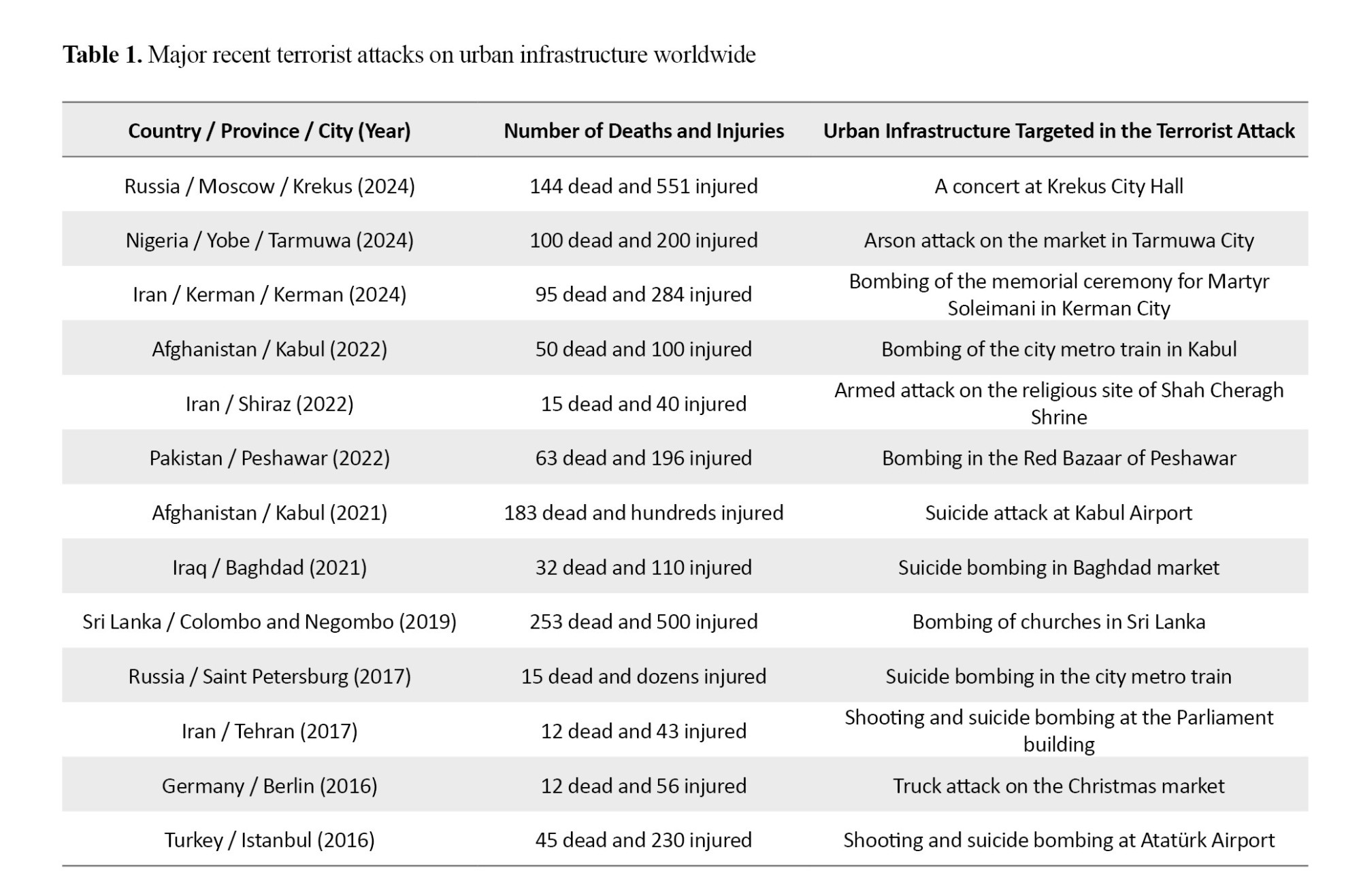
Terrorism and terrorist threats: Terrorism is the deliberate use of violence and intimidation, primarily by non-state actors, to achieve political or ideological goals. These acts may be carried out by individuals or groups with diverse motivations, exhibiting either rational or irrational behavior. The roots of terrorism are complex and multidimensional, involving a range of underlying factors that fuel such acts of violence. The UN General Assembly (UNGA) resolution identifies four root causes of terrorism: colonialism; racism; widespread violations of fundamental human rights and freedoms; and foreign rule or occupation—systemic issues that form the basis for terrorism (Ullah et al., 2018). A review of global terrorism reports in recent years reveals a significant shift in the trend of terrorist attacks, with an increased focus on civilians in urban mass gathering places as frequent targets (Christensen, 2020). Urban markets, community halls, metro train stations, airports, and places of worship have all been sites of recent large-scale terrorist attacks worldwide.
Table 1 provides details of some of these attacks in urban locations.
Urban resilience: Following recent crises such as Hurricanes Katrina (2005) and Sandy (2012) in the United States, the concept of resilience has emerged globally as a new paradigm for risk management and disaster reduction. The term resilience has been defined in various ways, with the most comprehensive definition provided by Meerow et al. (2016): “Urban resilience refers to the ability of an urban system—and all of its constituent socio-ecological and socio-technical networks across spatial and temporal scales—to maintain or rapidly return to optimal functioning in the face of a disturbance, adapting to change and rapidly transforming systems that limit current or future adaptive capacity.” This definition highlights the systemic nature of resilience and underscores the importance of considering the time dimension (Cariolet et al., 2019).
Terrorist attacks are a complex and multifaceted phenomenon that requires comprehensive responses extending beyond mere security measures. A resilient city can reduce its vulnerability to terrorist attacks and enhance its ability to recover more rapidly by adopting strategic and holistic approaches. Achieving this requires a deep understanding of the factors influencing urban resilience and the implementation of strategies that strengthen these factors (Mirza et al., 2024).
Given Iran’s geopolitical situation and the recent increase in terrorist attacks, it has become more essential than ever to recognize the dimensions of urban resilience, as well as the solutions and drivers that strengthen it, in alignment with comprehensive urban resilience planning against terrorism. Accordingly, this study systematically reviews the literature in this field to identify the dimensions and thematic areas of urban resilience against terrorist threats. It aims to provide a thematic map of existing studies and to identify drivers for strengthening urban resilience, thereby contributing to a rethinking of urban resilience planning in response to terrorist threats.
Materials and Methods
This study employed a combination of bibliometric and thematic analyses. Bibliometric analysis offers a comprehensive overview of a large body of scientific literature and facilitates the evaluation of scientific output, including research patterns of authors, journals, countries, and institutions. Additionally, this method helps identify the latest developments and emerging trends within a specific field of study.
The bibliometric analysis was conducted within the framework of a systematic scoping review. Systematic scoping reviews are valuable for synthesizing research evidence and are often used to map the existing literature in a given field in terms of its nature, characteristics, and volume. Generally, scoping reviews serve as a “diagnostic” tool—to clarify working definitions and conceptual boundaries of a topic or field. They are particularly useful when the body of literature has not yet been comprehensively reviewed or when it is too large, complex, or heterogeneous to be subjected to more systematic scrutiny (Peters & et al, 2015). Typically, a review process consists of five steps: 1) defining the research question, 2) identifying relevant studies, 3) selecting studies, 4) data mapping, and 5) integrating, summarizing, and reporting the results. Comprehensiveness and flexibility in conducting searches are essential for the success of review studies (Malley & Arksey, 2005; Daudt et al., 2013). Accordingly, the research questions were formulated to identify relevant studies, and primary studies were then located through search engines and various databases.
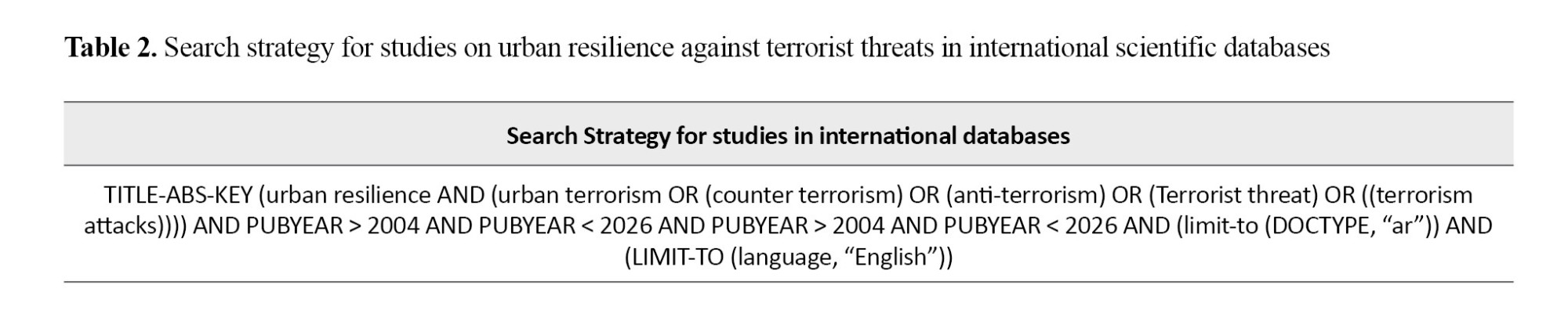
Table 2 presents the search strategy used in international scientific databases (Scopus, Google Scholar). For Persian-language studies, the databases and search engines of the Islamic World Science Citation Center (ISC), the Scientific Information Database (SID), and Magiran were examined as the main sources indexing scientific articles.
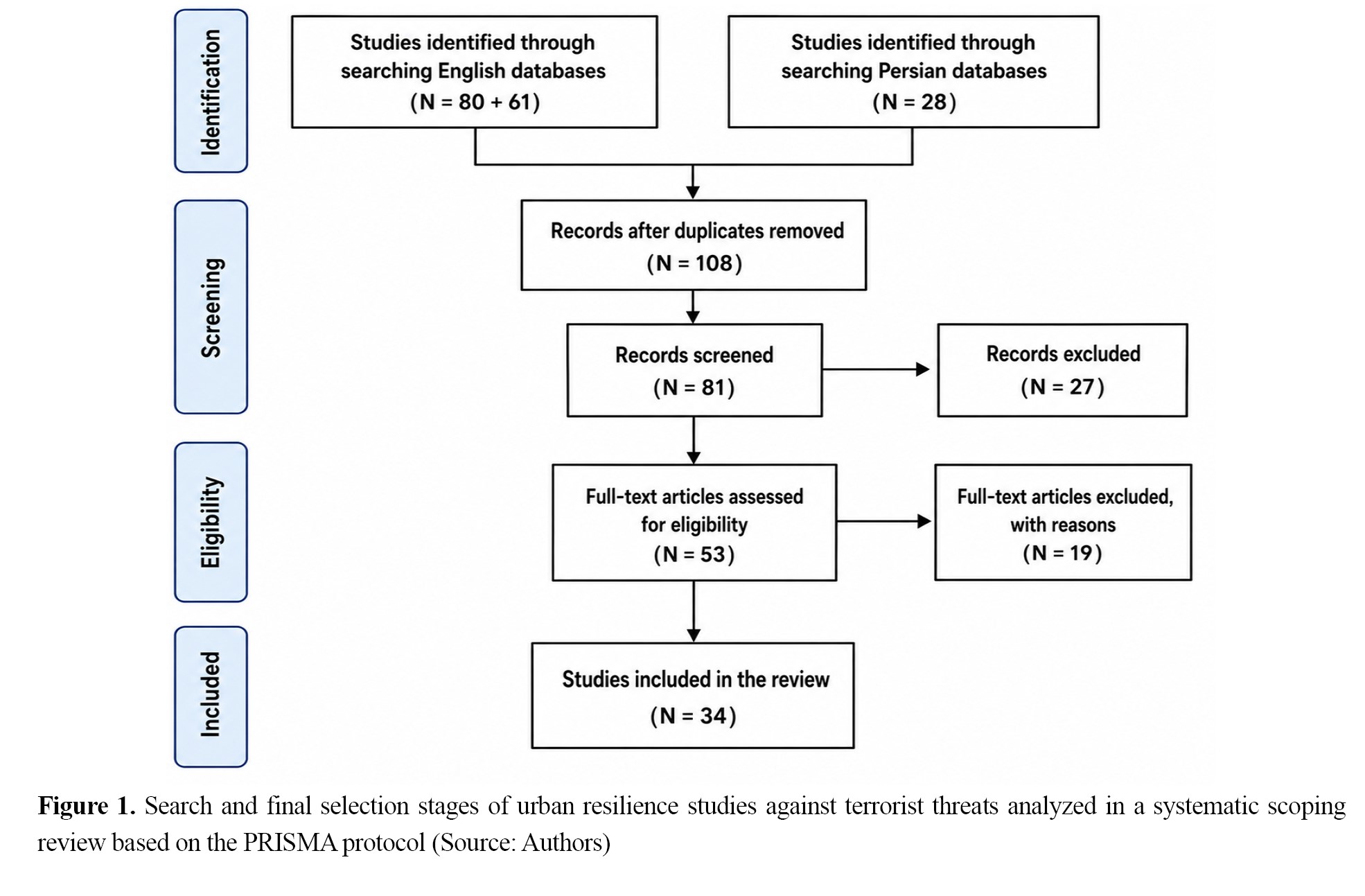
For study selection, a process based on the PRISMA diagram (
Figure 1) was designed, with inclusion and exclusion criteria defined.
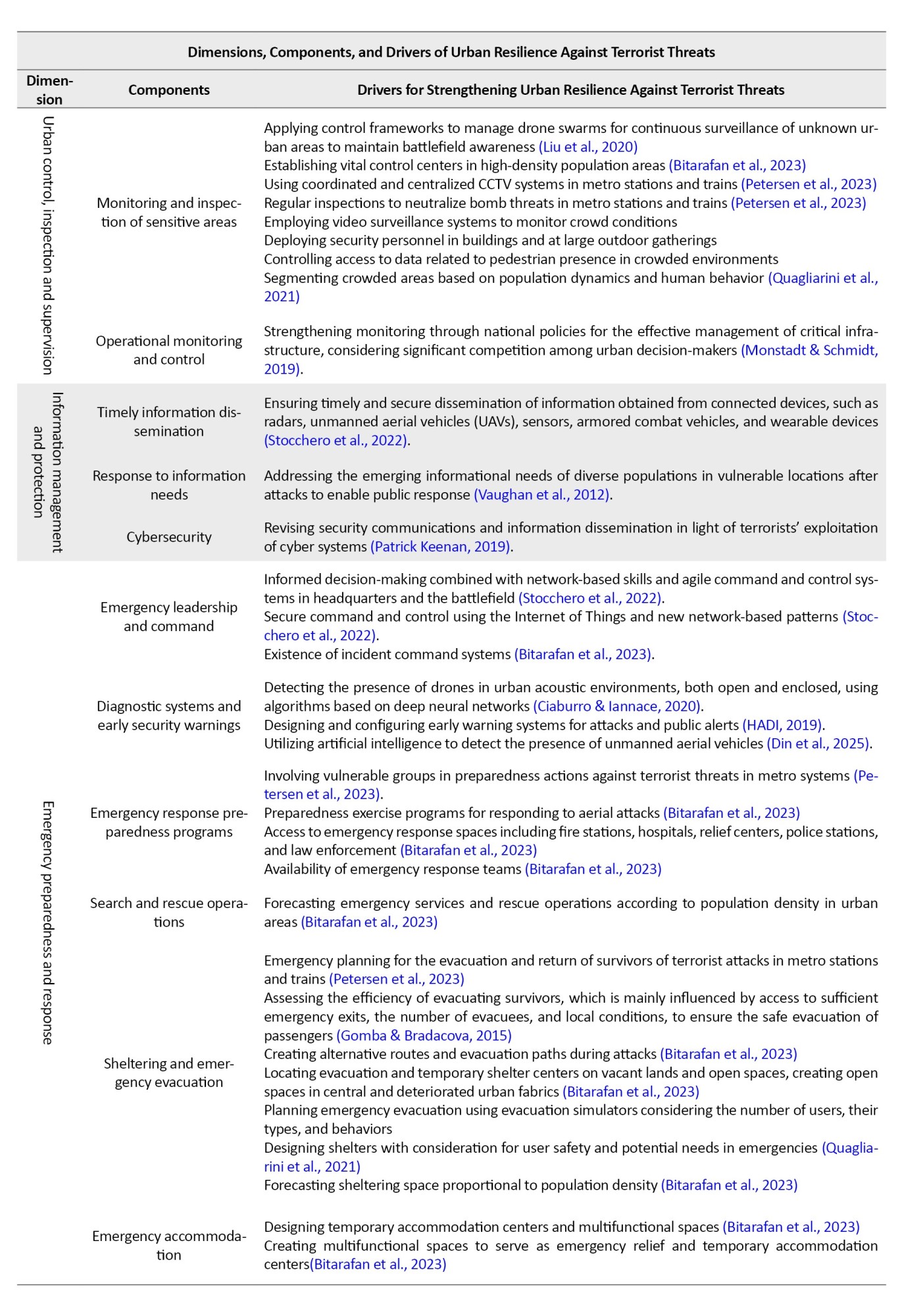
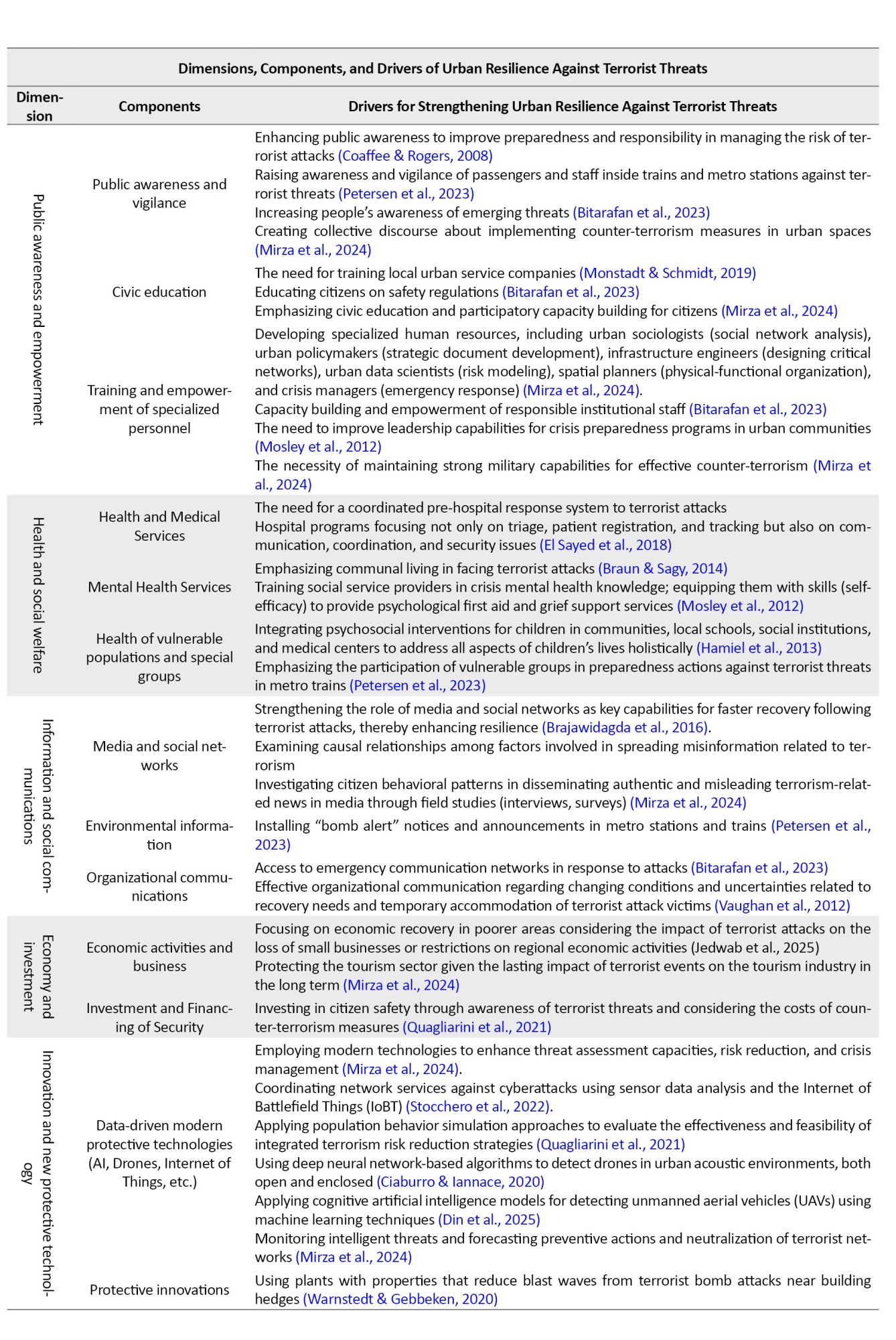
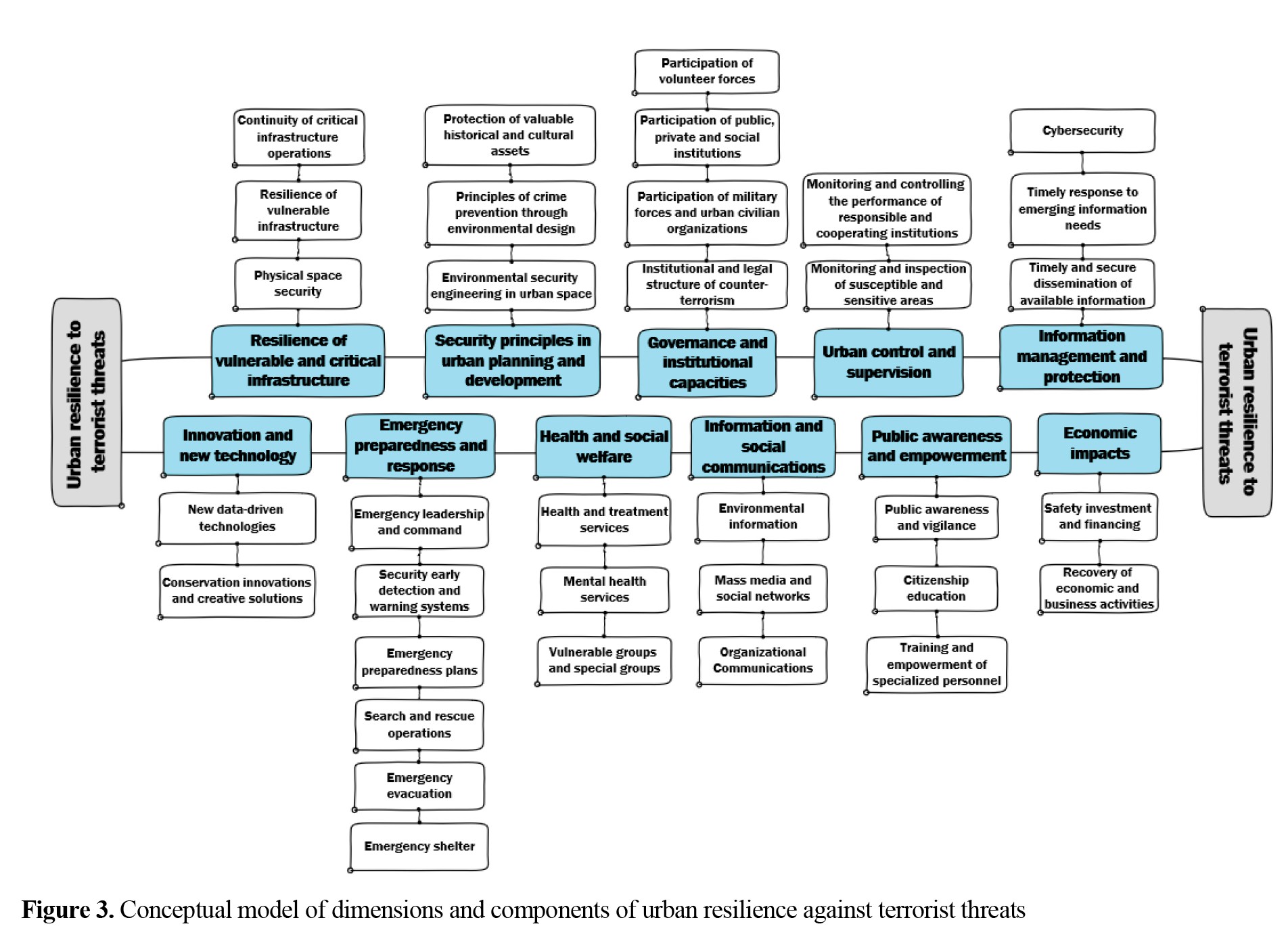
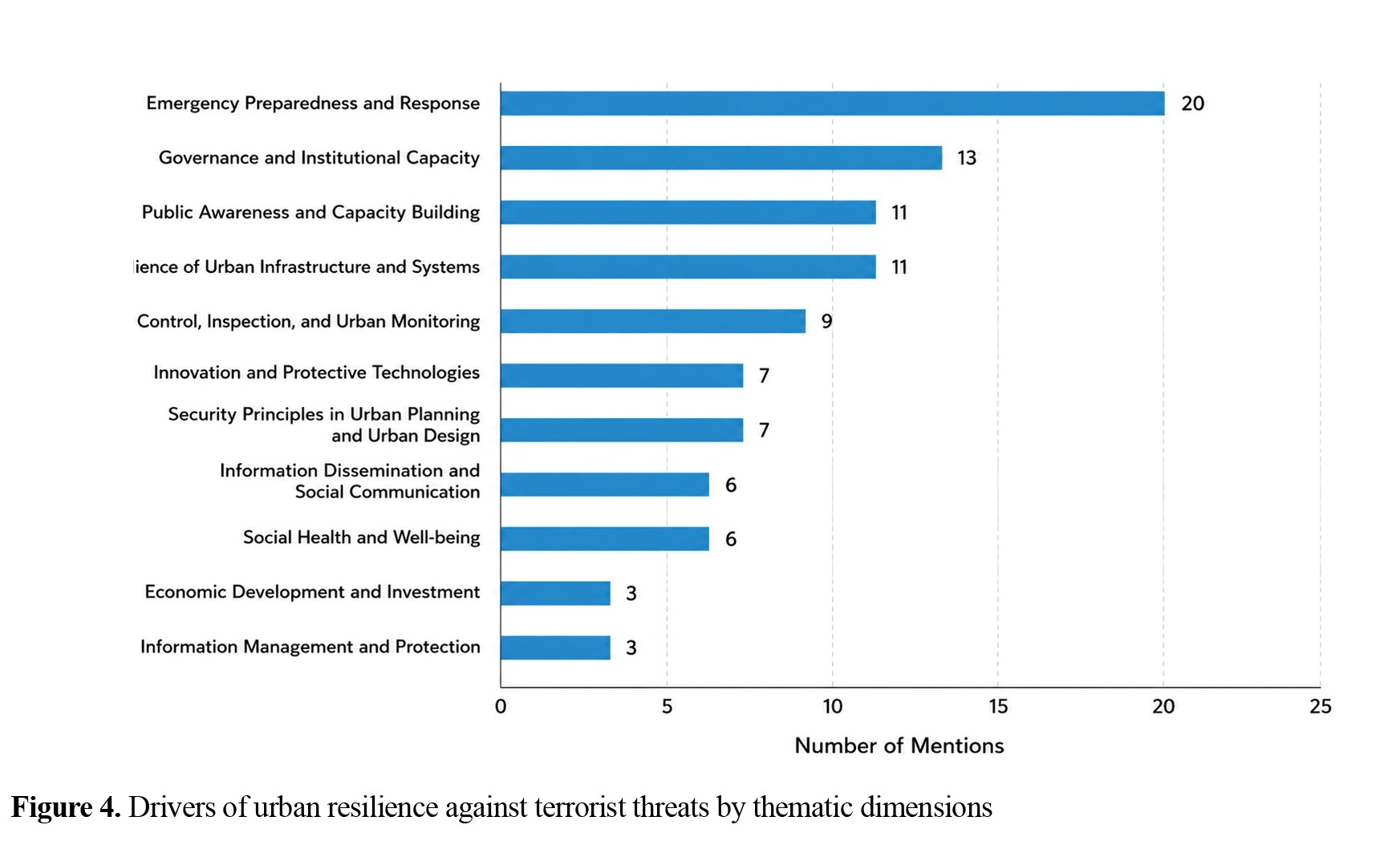
The drivers of resilience enhancement in the field of emergency preparedness and response showed the highest frequency, with 20 urban resilience drivers. The next highest ranks are governance and institutional capacity building (13 drivers); public awareness and empowerment (11 drivers); urban infrastructure and structural resilience (11 drivers); urban control, inspection, and supervision (9 drivers); innovation and new security technologies (7 drivers); security principles in urban planning and design (7 drivers); information and social communication (6 drivers); health and social welfare (6 drivers); economy and investment (3 drivers); and information management and protection (3 drivers).
Discussion
A comprehensive resilience framework encompasses prevention and protection, mitigating and response, recovery and adaptation, and compromise (Fischer et al., 2018). Accordingly, the studies were discussed in line with these four resilience domains. In general, prevention and protection drivers focus on actions taken before terrorist attacks; mitigating and response drivers address the emergency phase during terrorist attacks; and recovery and adaptation drivers concentrate on the period following terrorist attacks. The following summarizes the studies within each domain.
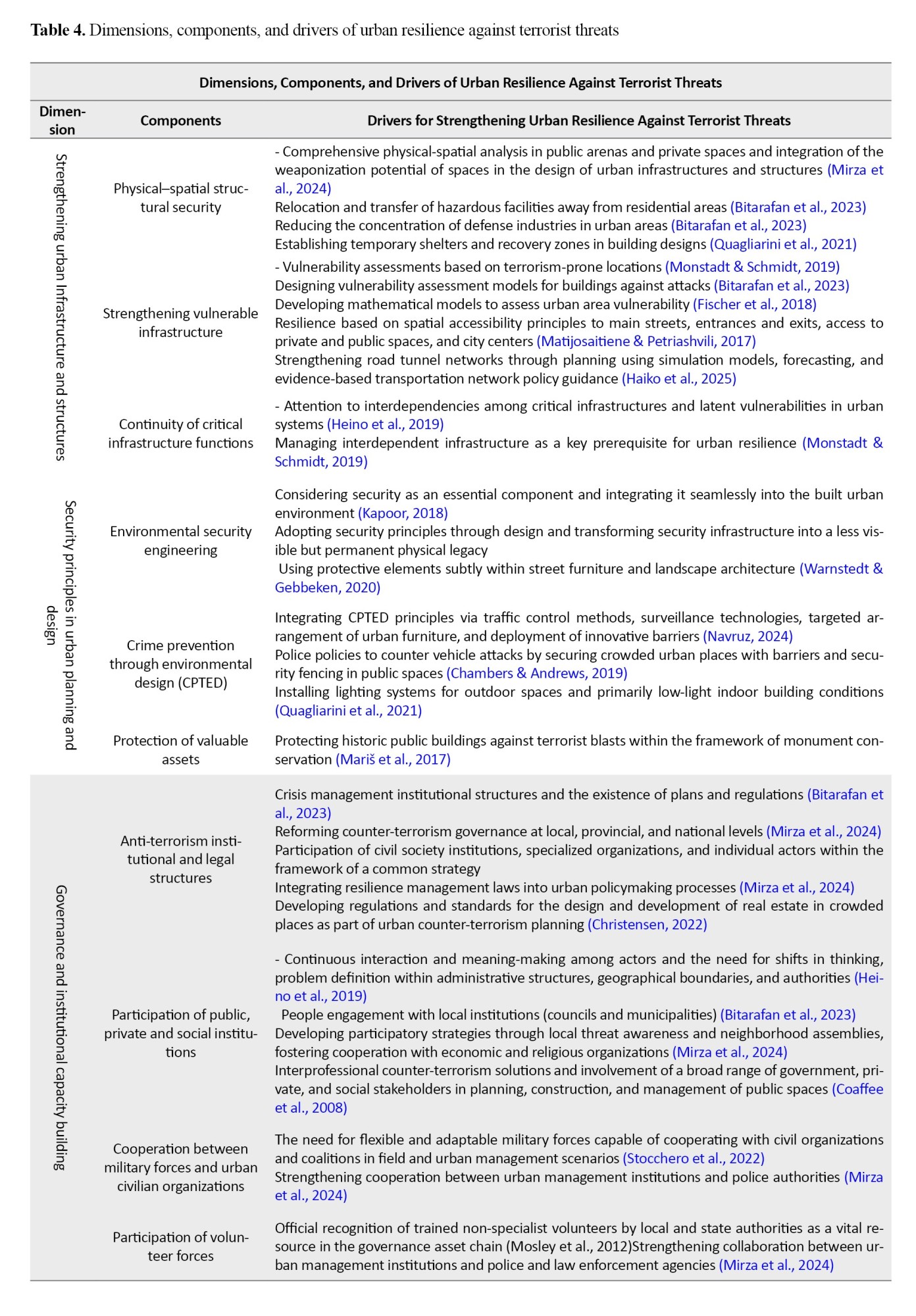
Preventive counterterrorism drivers: Infrastructure retrofitting focused on urban spatial security involves a comprehensive physical-spatial analysis of the city to enable forward-looking planning of urban infrastructure and structures (Mirza et al., 2024). This includes considering the location of hazardous facilities near residential areas and the concentration of defense industry activities within urban zones (Bitarafan et al., 2023). Some studies have assessed vulnerabilities based on locations prone to terrorism (Monstadt & Schmidt, 2019) and emphasized designing mathematical models to evaluate the vulnerability of buildings and urban areas to attacks (Bitarafan et al., 2023; Fischer et al., 2018). Others have highlighted retrofitting based on principles of spatial access to main streets, entrances and exits, access to private and public spaces, and access to the city center (Matijosaitiene & Petriashvili, 2017). Regarding the continued functioning of critical infrastructures, attention to the interdependencies among critical infrastructures and the inherent vulnerabilities within urban systems (Heino et al., 2019), as well as the management of these interdependencies, is a key prerequisite for urban resilience (Monstadt & Schmidt, 2019).
Many studies on prevention have emphasized the principles of security in urban planning and design, focusing on environmental security engineering through urban space design and the discreet use of protective elements integrated into street furniture and landscape architecture (Kapoor, 2018; Coaffee, 2024; Warnstedt & Gebbeken, 2020). The integration of “crime prevention through environmental design” principles as preventive measures is highlighted in numerous studies, including the installation of fences, lighting systems, and innovative surveillance and security technologies (Navruz, 2024; Chambers & Andrews, 2019; Quagliarini et al., 2021). Additionally, the creation of temporary shelters and recovery areas within building designs is also considered a safety and preventive measure (Quagliarini et al., 2021). Rethinking security communications and information dissemination in light of terrorists’ misuse of cyber systems (Patrick Keenan, 2019), along with urban control, inspection, and surveillance through the establishment of critical control centers in densely populated areas (Bitarafan et al., 2023), are also emphasized. Preventive security solutions include applying control frameworks to manage drone swarms for continuous surveillance of unknown urban areas (Liu et al., 2020), as well as using coordinated and centralized CCTV systems in urban metro stations and trains, combined with regular inspections to neutralize bomb threats (Petersen et al., 2023). Raising public awareness and vigilance, along with fostering collective citizen discourse on the implementation of counter-terrorism measures in urban spaces (Mirza et al., 2024); addressing the need for training urban service companies (Monstadt & Schmidt, 2019); and increasing citizens’ awareness of various terrorist threats while educating them on safety regulations (Bitarafan et al., 2023) are all critical. Modern technologies are employed to coordinate network services against cyberattacks by analyzing sensor data and leveraging the internet of battlefield things (IoBT) (Stocchero et al., 2022). Additionally, monitoring intelligent threats and forecasting preventive actions, as well as neutralizing terrorist networks, are key components of this approach (Mirza et al., 2024). Innovative protective strategies, such as using plants with properties that reduce blast waves from terrorist bomb attacks, are also emphasized (Warnstedt & Gebbeken, 2020).
Regarding the drivers of attraction and emergency response to terrorist attacks, the focus is on leadership and command during emergencies, supported by network-based decision-making systems and secure command and control (Stocchero et al., 2022), as well as the presence of an incident command system (Bitarafan et al., 2023). Early security warning and citizen notification systems are also emphasized (HADI, 2019). Given the importance of detecting unmanned aerial vehicles, some studies (Ciaburro & Iannace, 2020; Din et al., 2025) have proposed algorithms for identifying drones in urban environments. Emergency preparedness programs highlight the deployment of emergency response teams, access to emergency communication networks, and training programs for responding to attacks (Bitarafan et al., 2023), along with addressing emerging information needs to support public response (Vaughan et al., 2012). Research on emergency shelter and evacuation has focused on establishing evacuation routes, predicting population behavior, and planning sheltering spaces (Quagliarini et al., 2021; Petersen et al., 2023; Gomba & Bradacova, 2015). Finally, emergency shelter and the design of multi-purpose refuge spaces are considered essential components within the domain of emergency mitigating and response to terrorist attacks (Bitarafan et al., 2023).
In the context of recovery drivers after terrorist attacks, emphasis is placed on health and medical services (El Sayed et al., 2018), mental health services (Braun & Sagy, 2014), and the health of vulnerable and specific groups (Hamiel et al., 2013). Additionally, strengthening the role of media and social networks is recognized for its significant potential to accelerate recovery (Brajawidagda et al., 2016), along with attention to the economic recovery of poorer areas affected by the loss of small businesses (Jedwab et al., 2025).
In the context of drivers of adaptation to terrorist threats, emphasis is placed on institutional and legal counterterrorism structures, reforming governance frameworks at local, provincial, and national levels, and integrating resilience management into urban policy and decision-making processes (Mirza et al., 2024). The participation of public, private, and social institutions in developing interdisciplinary solutions to combat terrorism, along with the interaction between citizens and local institutions, and the need for changes in mindset, the development of participatory strategies, and shifts in authority are all considered key adaptation capacities (Heino et al., 2019). The necessity for cooperation between military and civilian forces (Stocchero et al., 2022) and the recognition of non-specialized trained volunteers as vital resources within the government asset chain (Mosley et al., 2012) represent additional dimensions of adaptation. Other studies highlight strategies such as developing specialized human resources—including urban sociologists, urban policymakers, infrastructure engineers, urban data scientists, spatial planners, and crisis managers (emergency response) (Mirza et al., 2024)—capacity building and empowerment of employees in responsible institutions (Bitarafan et al., 2023), and maintaining strong military capabilities to effectively combat terrorism (Mirza et al., 2024) as essential for adapting to terrorist threats.
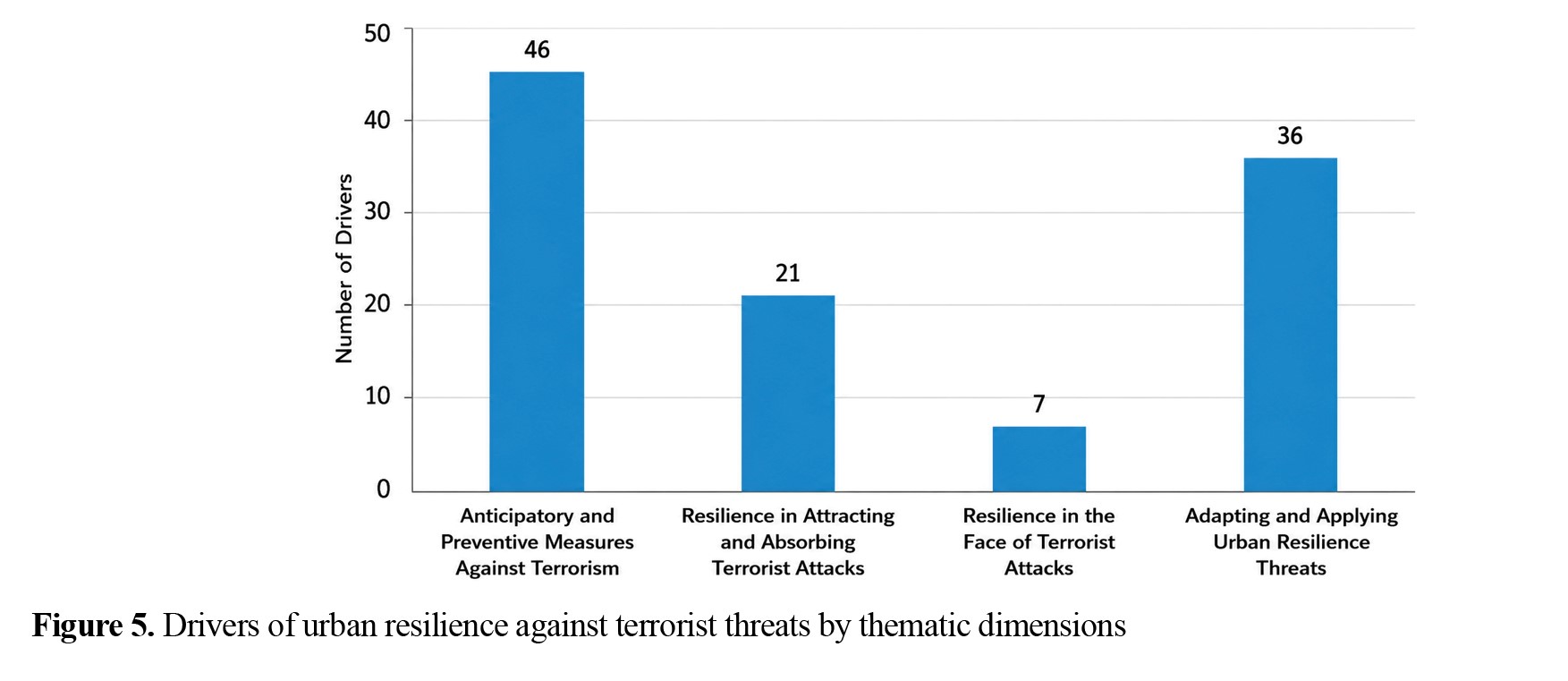
As observed, the focus of studies is primarily on two areas: preventive counter-terrorism measures (46 drivers) and adaptation to terrorist threats (36 drivers), which have the most themes for strengthening urban resilience against terrorist threats (
Figure 5).
In the areas of mitigating and emergency response to terrorist attacks (21 drivers) and recovery after terrorist attacks (7 drivers), fewer drivers have been presented in the studies.
Conclusion
The emergence of new terrorist threats and the increasing complexity of urban infrastructure underscore the need for more resilient and sustainable systems capable of withstanding such adverse events (Fischer et al., 2018). One of the most notable shifts in terrorist attacks is the recent emphasis on civilians in urban mass gathering places as frequent targets (Christensen, 2020). Urban markets, community halls, metro train stations, airports, and places of worship have all been sites of recent large-scale terrorist attacks in cities worldwide. In this context, there is growing interest in studying and addressing the capacity of cities to resist, absorb, recover from, and adapt to a wide range of threats—including terrorism—within the conceptual framework of urban resilience. However, weaknesses and gaps remain in the literature regarding the identification of its foundations, themes, and characteristics (Bueno et al., 2021).
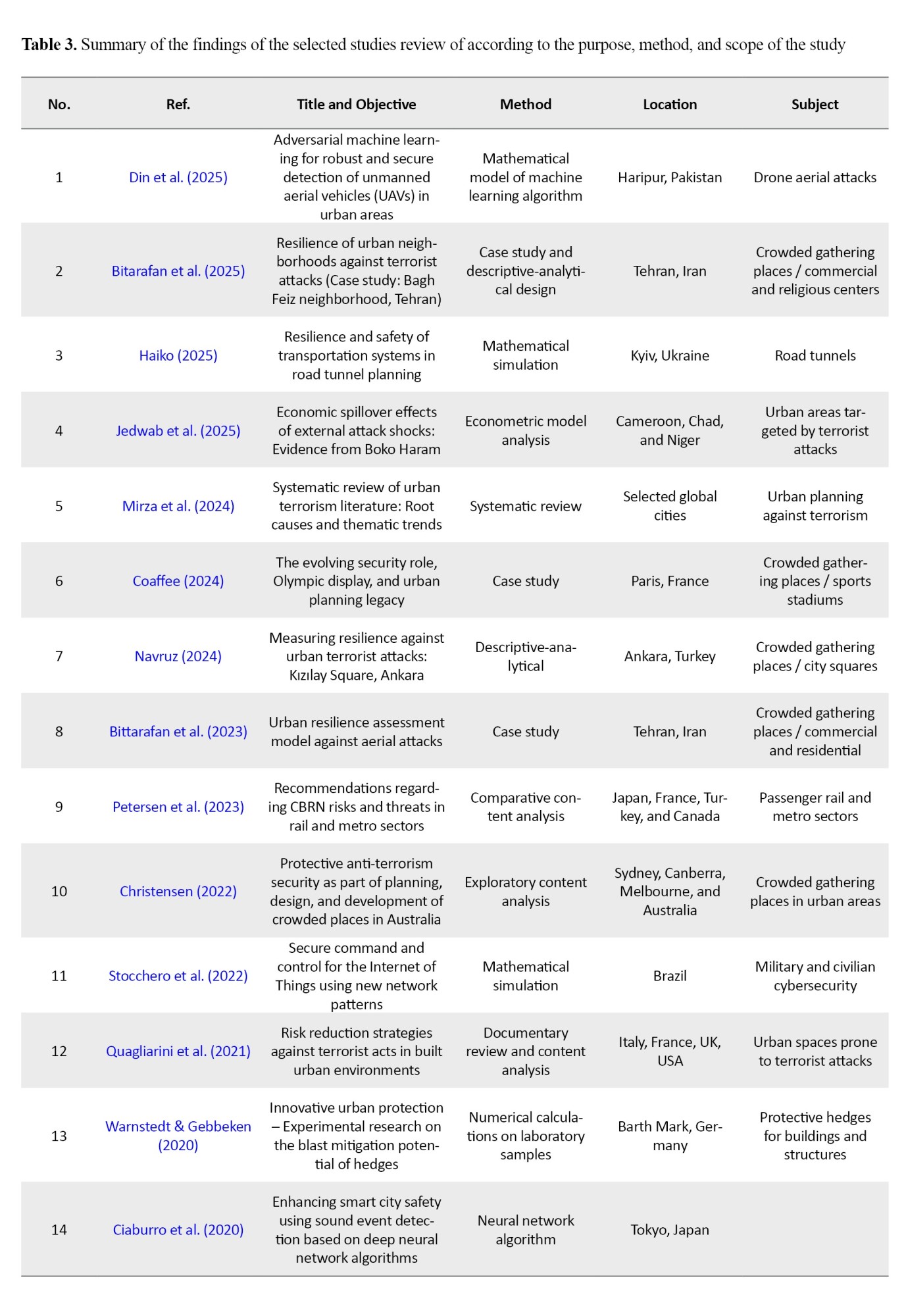
This systematic scoping review, while recognizing the dimensions and thematic areas of urban resilience against terrorist threats and providing a map of the thematic structure of existing studies, aimed to identify drivers for strengthening urban resilience in order to rethink urban resilience planning against terrorist threats. Accordingly, a review framework was designed based on a bibliographic approach and content analysis. By reviewing national and international scientific databases and following the PRISMA protocol, 34 articles—including 32 in English and 2 in Persian—were selected for analysis from the perspectives of thematic context, purpose, and method. Thematic analysis of the texts of these selected articles was conducted, and efforts were made to extract drivers for strengthening urban resilience against terrorist threats from their findings as primary codes. In this process, 97 themes were classified under 34 subthemes as components and 11 thematic contexts as dimensions of urban resilience against terrorist threats. Among the resilience-enhancing drivers, those related to emergency preparedness and response showed the highest frequency (20 urban resilience drivers), followed by governance and institutional capacity building (13 drivers), public awareness and empowerment (11 drivers), urban infrastructure and structural resilience (11 drivers), urban control, inspection, and surveillance (9 drivers), innovation and new security technologies (7 drivers), security principles in urban planning and design (7 drivers), information and social communication (6 drivers), health and social welfare (6 drivers), economy and investment (3 drivers), and information management and protection (3 drivers). Furthermore, considering the stages of urban resilience, the frequency of drivers was classified and discussed in four areas: preventive and protective measures against terrorism, mitigating and emergency response to terrorist attacks, and adaptation to terrorist threats. Overall, studies focused most heavily on preventive measures against terrorism (46 drivers) and adaptation to terrorist threats (36 drivers), which presented the greatest number of themes for strengthening urban resilience. Additionally, 21 drivers were identified for mitigating and emergency response to terrorist attacks, and 7 drivers for recovery after terrorist attacks. Based on these findings, the following suggestions are proposed for strengthening urban resilience against terrorist threats:
The need for participatory governance and institutional capacity building for counterterrorism: It is essential to review the institutional and legal frameworks of counterterrorism at both national and municipal levels to clarify roles and responsibilities and to strengthen the legal and institutional basis for involving military institutions and civilian urban management organizations. This will facilitate the integration of urban resilience drivers into counterterrorism policymaking processes. Additionally, the participation of public, private, and social institutions in providing multidisciplinary solutions should be promoted, along with continuous interaction between stakeholders, citizens, and local institutions. Strengthening the involvement of trained local volunteers in participatory governance and capacity building for counterterrorism is also crucial.
Strengthening economic capacities, investment, and financing of counterterrorism resilience: The costs associated with counterterrorism measures should be financially supported as investments in safety and infrastructure resilience, both at the government level and through the social participation of all stakeholders. In this regard, investment through financial funds and compensation via insurance mechanisms is recommended. Furthermore, considering the lasting economic impacts of terrorist events and the loss of businesses, special attention should be given to strengthening economic recovery in affected areas.
Promoting public awareness of terrorist threats: Increasing public awareness of terrorist threats, educating citizens, and fostering a collective discourse about the use of counter-terrorism measures in urban spaces are essential. Emphasizing capacity building and citizen participation is crucial to prepare individuals to identify suspicious behaviors and understand how to respond in the event of a terrorist attack, thereby enhancing prevention and protection efforts in urban environments.
Securing infrastructure and structures in urban areas: Strengthening the security of urban areas may require relocating hazardous facilities away from residential zones, reducing the concentration of defense industry activities within cities, and incorporating temporary shelters and recovery areas into building designs.
Reinforcing vulnerable infrastructures prone to terrorist attacks: It is recommended to assess vulnerabilities and reinforce infrastructure based on principles such as spatial access to main streets, entrances and exits, access to private and public spaces, and proximity to city centers. Anticipating and implementing solutions to strengthen locations vulnerable to terrorism in urban areas is essential.
The need to incorporate protection and security principles in urban planning: Security must be regarded as an essential and integrated component of the built urban environment. Many studies emphasize security and crime prevention principles based on urban design. Integrating the concept of “crime prevention through environmental design” into urban planning and design is proposed, utilizing methods such as traffic control, invisible protective elements, surveillance technologies, strategic placement of urban furniture, and the installation of innovative barriers.
Urban control, inspection, and surveillance of sensitive areas prone to terrorist attacks: It is recommended to establish critical control centers in high-density population areas using a coordinated and focused system of covert security forces, CCTV cameras, and video surveillance systems. These centers should monitor conditions continuously and conduct regular inspections to neutralize potential threats in urban spaces and mass gathering locations.
Strengthening leadership, command, and coordination in response to terrorist threat emergencies: Command and control principles based on network decision-making models and the enhancement of leadership skills during terrorist attacks should be prioritized. Activating a unified command system for emergency response to terrorist incidents is strongly recommended.
Planning emergency preparedness and response plans based on the risk of terrorist attacks: It is essential to ensure access to fire services, hospitals, relief centers, police, and law enforcement facilities in sensitive and vulnerable urban areas. Relief services and rescue operations should be planned in proportion to the population density of these areas. Additionally, response readiness drills and the deployment of emergency response teams tailored to different types of terrorist threats should be implemented.
Establishing early warning systems, emergency shelters, and evacuation procedures: Early warning systems must be designed and adapted to the specific types of terrorist attacks. Providing clear information to the public about emergency shelters and evacuation procedures is crucial, considering the location of shelters and safe zones relative to the urban population and their potential needs. Evacuation routes during attacks should also be clearly designated and communicated.
Emphasis on health, social welfare, and support for vulnerable and special groups during terrorist attack crises: There is a need for a coordinated system of pre-hospital response and medical services that maintains security while providing psychological first aid and grief support. Special attention should be given to psychosocial interventions for children, the elderly, and other groups with special needs during and after terrorist attacks.
Timely dissemination of information, cybersecurity, and addressing information needs during terrorist attacks: Ensuring the timely and secure dissemination of information from surveillance systems and warning sensors to meet critical information needs is highly recommended. Additionally, reviewing security protocols for communications is essential in light of the potential misuse of cyber systems by terrorists.
Organizational information and communications in emergency responses to terrorist attacks: Effective organizational communication during emergencies requires access to a stable communications network to maintain coordination, manage changing conditions, and address uncertainties in decision-making throughout the crisis.
Strengthening the role of the media and analyzing citizens’ behavioral patterns on social networks regarding terrorism-related news: Investigating the causal factors behind the spread of false information related to terrorism and analyzing how citizens share both accurate and misleading news on social media are crucial. Enhancing the role of the media and social networks in this context represents a significant capability that should be prioritized.
Utilizing innovation and new security technologies to build capacity to counter the risk of terrorist attacks: The use of new technologies—specifically algorithms based on artificial intelligence and machine learning—is proposed to detect acoustic events and enhance data-driven surveillance using unmanned aerial vehicles. Innovative security measures, such as planting blast-wave-reducing vegetation in urban areas, should also be considered.
In general, the drivers of resilient cities against terrorist attacks encompass a set of coordinated and systemic measures and policies that strengthen a city’s capabilities to prevent, counter, and recover from the effects of terrorist attacks. Conversely, drivers related to adaptation to terrorist threats require a fundamental shift in the mindset of policymakers and urban planners. The institutional and legal frameworks for counterterrorism must include mechanisms for the participation of military forces and civilian organizations across organizational dimensions, as well as the involvement of public, private, governmental, and community institutions. Empowering and training multidisciplinary experts to develop protection and security solutions and initiatives is also critical. Moreover, continuous surveillance of complex and unpredictable urban areas by drone fleets offers a low-cost and promising future application for combating terrorism, enhancing monitoring, and improving situational awareness in urban environments.
Given the limitations of existing studies in the fields of terrorism and urban resilience, it is suggested that future research focus on recovery after terrorist attacks and responses to emergency situations. Additionally, cross-regional comparative analyses should be conducted, with particular attention to the dimensions of urban resilience relevant to different types of terrorist threats. These include explosive attacks (bombings, suicide attacks), armed attacks (mass shootings, hostage-taking, targeted assassinations), chemical, biological, radiological, and nuclear (CBRN) attacks, cyberterrorism (targeting banking systems, healthcare systems, electricity, water, telecommunications, and urban transportation infrastructure), and air attacks (missiles, drones, etc.).
Furthermore, due to the scarcity of studies in Persian, greater attention from Iranian researchers to this field is strongly encouraged. Given the abundance of topics that have been less addressed—such as investment and financing for security and resilience against terrorism, principles of protection and security in urban planning, and leadership and command during emergency operations responding to various terrorist attacks—these areas should be prioritized in future research. It is also recommended to explore some less-studied dimensions, including the identification and management of terrorist attack casualties, the psychosocial resilience of citizens after attacks, multi-level governance, and trans-organizational cooperation aimed at designing emergency coordination mechanisms among emergency services, police, military, and civil institutions. Moreover, since most existing studies focus on developed metropolises, future research should also examine resilience against terrorism in marginalized cities, impoverished areas, and informal urban settlements.
Ethical Considerations
Compliance with ethical guidelines
In this study, all ethical principles were considered. Since no experiments were conducted on animal or human samples, no ethical code was required.
Funding
This research did not receive any specific grant from funding agencies in the public, commercial, or not-for-profit sectors.
Authors' contributions
All authors contributed equally to the conception and design of the study, data collection and analysis, interpretation of the results, and drafting of the manuscript. Each author approved the final version of the manuscript for submission.
Conflicts of interest
The authors declared no conflict of interest.
Acknowledgments
The authors would like to thank the Tehran Municipality’s Institute of Applied Science and Technology and the Tehran Disaster Mitigation and Management Organization, for their cooperation.
References
Arksey, H., & O'malley, L. (2005). Scoping studies: Towards a methodological framework. International Journal of Social Research Methodology, 8(1), 19-32. [DOI:10.1080/1364557032000119616]
Bitarafan, M., Abazarlou, S., & Zarei, G. (2025). [Assessing urban resiliency against terrorist attacks (Case study: Bagh-e-Fayz neighborhood in Tehran) (Persian)]. Journal of Urban Studies on Space and Place, 9(34), 131-152. [DOI:10.22034/jspr.2025.2049650.1110]
Bitarfan, M., & Amini Hosseini, K. (2023). [Presenting a model for assessing urban resilience against air attacks using the (IHWP) method, a case study of District 5 of Tehran (Persian)]. Safe City, 6(1), 116-142. [Link]
Brajawidagda, U., Reddick, C. G., & Chatfield, A. T. (201). Social media and urban resilience: A case study of the 2016 Jakarta terror attack. In Proceedings of the 17th International digital government research conference on digital government research (pp. 445-454). [DOI:10.1145/2912160.2912193]
Brajawidagda, U., Reddick, C. G., & Chatfield, A. T. (2017). Urban resilience in extreme events: Analyzing online news and Twitter use during the 2016 Jakarta terror attack. Information Polity, 22(2-3), 159-177. [DOI:10.3233/IP-170410]
Braun-Lewensohn, O., & Sagy, S. (2014). Community resilience and sense of coherence as protective factors in explaining stress reactions: Comparing cities and rural communities during missiles attacks. Community Mental Health Journal, 50(2), 229–234.[DOI:10.1007/s10597-013-9623-5] [PMID]
Bueno, S., Banuls, V. A., & Gallego, M. D. (2021). Is urban resilience a phenomenon on the rise? A systematic literature review for the years 2019 and 2020 using textometry. International Journal of Disaster Risk Reduction, 66, 102588. [DOI:10.1016/j.ijdrr.2021.102588]
Cariolet, J. M., Vuillet, M., & Diab, Y. (2019). Mapping urban resilience to disasters-A review. Sustainable Cities and Society, 51, 101746. [DOI:10.1016/j.scs.2019.101746]
Ciaburro, G., & Iannace, G. (2020). Improving smart cities safety using sound events detection based on deep neural network algorithms. Informatics, 7( 3), 23. [DOI:10.3390/informatics7030023]
Chambers, P., & Andrews, T. (2019). Never mind the bollards: The politics of policing car attacks through the securitisation of crowded urban places. Environment and Planning D: Society and Space, 37(6), 1025-1044. [DOI:10.1177/0263775818824343]
Christensen, P. H. (2022). Counterterrorism protective security as part of the planning, design and development of crowded places in Australia: Where are we now? Journal of European Real Estate Research, 15(1), 112-129. [DOI:10.1108/JERER-06-2021-0034]
Coaffee, J. (2024). Evolving security motifs, Olympic spectacle and urban planning legacy: From militarization to security-by-design. Planning Perspectives, 39(3), 637-657. [DOI:10.1080/02665433.2024.2322002]
Coaffee, J., & Rogers, P. (2008). Rebordering the city for new security challenges: From counter-terrorism to community resilience. Space and Polity, 12(1), 101-118. [DOI:10.1080/13562570801969556]
Coaffee, J., & Wood, D. M. (2006). Security is coming home: Rethinking scale and constructing resilience in the global urban response to terrorist risk. International Relations, 20(4), 503-517. [DOI:10.1177/0047117806069416]
Daudt, H. M., Van Mossel, C., & Scott, S. J. (2013). Enhancing the scoping study methodology: a large, inter-professional team’s experience with Arksey and O’Malley’s framework. BMC Medical Research Methodology, 13(1), 48. [DOI:10.1186/1471-2288-13-48]
Din, I. U., Almogren, A., & Rodrigues, J. (2025). Adversarial machine learning for robust and secure uav detection in consumer applications. IEEE Transactions on Consumer Electronics. [DOI:10.1109/TCE.2025.3572255]
El Sayed, M., Chami, A. F., & Hitti, E. (2018). Developing a hospital disaster preparedness plan for mass casualty incidents: Lessons learned from the downtown Beirut bombing. Disaster Medicine and Public Health Preparedness, 12(3), 379-385. [DOI:10.1017/dmp.2017.83] [PMID]
Fischer, K., Hiermaier, S., Riedel, W., & Häring, I. (2018). Morphology dependent assessment of resilience for urban areas. Sustainability, 10(6), 1800. [DOI:10.3390/su10061800]
Gilbertson, A., & Hayes, A. (2012). Engineering to reduce crime and disorder in public places. Proceedings of the Institution of Civil Engineers-Municipal Engineer, 165(3), 175-183. [DOI:10.1680/muen.12.00002]
Gomba, P., & Bradacova, I. (2015). Critical systems and processes affecting the resilience of subway systems to terrorism risks. Communications-Scientific Letters of the University of Zilina, 17(1), 22-27. [DOI:10.26552/com.C.2015.1.22-27]
Goldman, S. O., & Neubauer-Shani, M. (2024). The recurrence of terrorism. International Politics, 1-30. [DOI:10.1057/s41311-024-00631-3]
Hadi, E. (2019). Resilient safety anti-terrorism city terrorism as a new challenge in contemporary Iraqi city. Periodicals of Engineering and Natural Sciences, 7(3), 1486-1498. [Link]
Haiko, H., Savchenko, I., & Shelestov, A. (2025). Ensuring resilience and safety of the transportation system of Kyiv in planning the network of road tunnels. Case Studies on Transport Policy, 19, 101355. [DOI:10.1016/j.cstp.2024.101355]
Heino, O., Takala, A., Jukarainen, P., Kalalahti, J., Kekki, T., & Verho, P. (2019). Critical infrastructures: The operational environment in cases of severe disruption. Sustainability, 11(3), 838. [DOI:10.3390/su11030838]
Hamiel, D., Wolmer, L., Spirman, S., & Laor, N. (2013). Comprehensive child-oriented preventive resilience program in Israel based on lessons learned from communities exposed to war, terrorism and disaster. Child & Youth Care Forum, 42, 261-274. [DOI:10.1007/s10566-013-9200-7]
Institute for Economics and Peace (IEP). (2025). Global Terrorism Index (GTI). Retrieved from: [Link]
Iranian Students News Agency (ISNA). (2025). [Urban Management Measures During the 12-Day and 40-Day Wars (Persian)]. Retrieved from: [Lik]
Jedwab, R., Blankespoor, B., Masaki, T., & Rodríguez-Castelán, C. (2025). Estimating the spillover economic effects of foreign conflict shocks: Evidence from Boko Haram. World Development, 193, 107016. [DOI:10.1016/j.worlddev.2025.107016]
Kapoor, M. K. (2018). Security assessment case studies of public buildings in India. In C. A. Brebbia, F. Garzia, M. Lombardi & M. Guarascio (Eds.), Safety and Security Studies. Ashurst Lodge: WIT Press. [Link]
Liu, Y., Liu, H., Tian, Y., & Sun, C. (2020). Reinforcement learning based two-level control framework of UAV swarm for cooperative persistent surveillance in an unknown urban area. Aerospace Science and Technology, 98, 105671. [DOI:10.1016/j.ast.2019.105671]
Mariš, L., Grúňová, Z., Figuli, L., & Jangl, Š. (2017). Resilience of historical public buildings against blast in a context of monument preservation. Key Engineering Materials, 755, 248-260. [Link]
Monstadt, J., & Schmidt, M. (2019). Urban resilience in the making? The governance of critical infrastructures in German cities. Urban Studies, 56(11), 2353-2371. [DOI:10.1177/0042098018808483]
Mirza, M. N. E. E., & Rana, I. A. (2024). A systematic review of urban terrorism literature: Root causes, thematic trends, and future directions. Journal of Safety Science and Resilience, 5(3), 249-265.[DOI:10.1016/j.jnlssr.2024.03.006]
Meerow, S., Newell, J. P., & Stults, M. (2016). Defining urban resilience: A review. Landscape and Urban Planning, 147, 38-49. [DOI:10.1016/j.landurbplan.2015.11.011]
Matijosaitiene, I., & Petriashvili, A. (2017). Urban planning and design for terrorism resilient cities. Journal of Sustainable Architecture and Civil Engineering, 18(1), 27-38. [DOI:10.5755/j01.sace.18.1.15443]
McCabe, O. L., Marum, F., Mosley, A., Gwon, H. S., Langlieb, A., & Everly, G. S., Jr, et al. (2012). Community capacity-building in disaster mental health resilience: A pilot study of an academic/faith partnership model. International Journal of Emergency Mental Health, 14(2), 112–122. [PMID]
Navruz, M. (2024). Resilience Measures Against Urban Terrorist Attacks: An Evaluation On Ankara’s Kızılay Square. Urban 21 Journal, 2(2), 46-78. [Link]
Patrick Keenan, K. (2019). Creating spaces of public insecurity in times of terror: The implications of code/space for urban vulnerability analyses. Environment and Planning C: Politics and Space, 37(1), 81-101. [DOI:10.1177/2399654418776660]
Petersen, L., Havârneanu, G. M., Arnold, A., Carbon, D., Görgen, T., & Gavel, A., et al. (2023). Applicability of PROACTIVE recommendations on CBRNe risks and threats to passenger rail and metro sectors. Journal of Transportation Security, 16(1), 4. [DOI:10.1007/s12198-023-00263-3] [PMCID]
Peters, M. D., Godfrey, C. M., Khalil, H., McInerney, P., Parker, D., & Soares, C. B. (2015). Guidance for conducting systematic scoping reviews. JBI Evidence Implementation, 13(3), 141-146. [Link]
Quagliarini, E., Fatiguso, F., Lucesoli, M., Bernardini, G., & Cantatore, E. (2021). Risk reduction strategies against terrorist acts in urban built environments: towards sustainable and human-centred challenges. Sustainability, 13(2), 901. [DOI:10.3390/su13020901]
Stocchero, J. M., Silva, C. A., de Souza Silva, L., Lawisch, M. A., dos Anjos, J. C. S., & de Freitas, E. P. (2022). Secure command and control for internet of battle things using novel network paradigms. IEEE Communications Magazine, 61(5), 166-172. [DOI:10.1109/MCOM.001.2101072]
Svitková, K. (2018). Making a ‘resilient Santiago’: Private sector and urban governance in Chile. Sociologický časopis/Czech Sociological Review, 54(06), 933-960. [Link]
Ullah, A., Qingxiang, Y., Ali, Z., & Anees, M. (2018). Terrorism in India as a determinant of terrorism in Pakistan. Asian Journal of Criminology, 13, 57-77. [DOI:10.1007/s11417-017-9257-6]
Vaughan, E., Tinker, T. L., Truman, B. I., Edelson, P., & Morse, S. S. (2012). Predicting response to reassurances and uncertainties in bioterrorism communications for urban populations in New York and California. Biosecurity and Bioterrorism: Biodefense Strategy, Practice, and Science, 10(2), 188-202. [DOI:10.1089/bsp.2011.0100] [PMID] [PMCID]
Warnstedt, P., & Gebbeken, N. (2020). Innovative protection of urban areas-Experimental research on the blast mitigating potential of hedges. Landscape and Urban Planning, 202, 103876. [DOI:10.1016/j.landurbplan.2020.103876]