Introduction
Owing to the severe impacts of natural and human-induced disasters, infrastructure resilience has increasingly attracted scholarly attention as a critical concept for effective disaster risk management (Sun and Zhang, 2020; Alkady et al., 2024). Infrastructure systems deliver services to end users (consumers) and resilience ensures the continuity of service provision (functionality), even under adverse conditions (Levin et al., 2024). Business continuity refers to an infrastructure facility’s ability to produce or provide services within an acceptable and approved timeframe, at a predefined capacity, during and after a threat or disruptive event (Passive Defense Organization, 2023). Accordingly, resilient infrastructure is essential for urban sustainability and the rapid restoration of urban functions (Alavi et al., 2020).
Studies on resilience have introduced innovative perspectives and valuable tools that not only improve emergency response and the management of disaster consequences but also emphasize the importance of anticipatory planning for preparedness, risk reduction, and impact mitigation activities, including business continuity planning (Alkady et al., 2024).
Like other critical infrastructures, urban water supply systems comprise diverse and interconnected components. As vital infrastructure systems that sustain numerous societal functions, they are continuously vulnerable to external and internal stressors. These stressors (
Figure 1), in light of recent experiences showing that existing water infrastructure systems cannot remain fully protected or immune to all disruptive events may trigger cascading events and potential consequences.
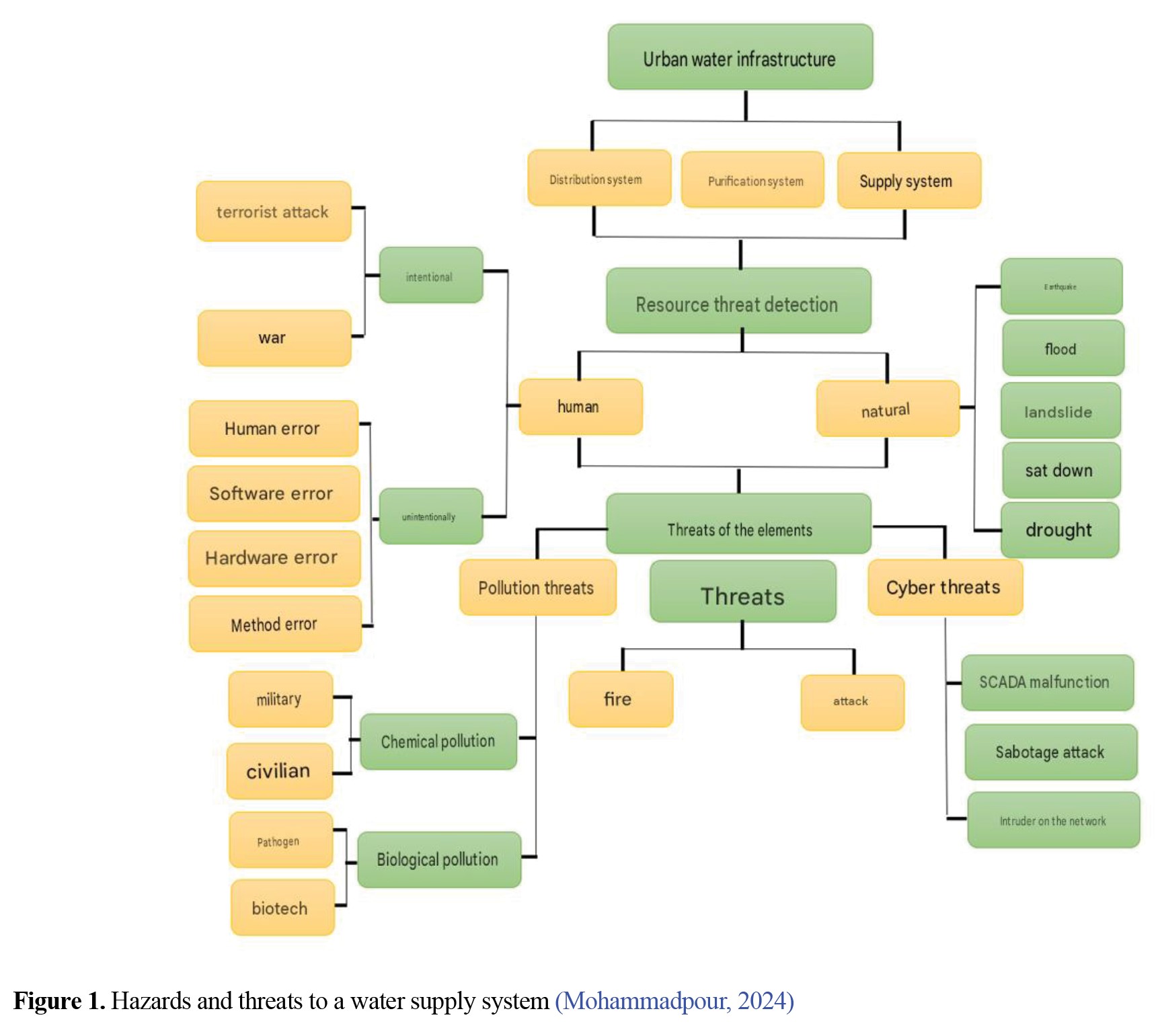
Ultimately, such circumstances can result in unreliable performance of drinking-water systems across the three main sectors of water supply, treatment, and distribution (Rockstad et al., 2023; Bakhshi et al., 2020; Lorenz and Pels, 2020; Shin et al., 2019). Therefore, enhancing system reliability and reducing vulnerability to damage and disruption have long been major concerns for engineers and managers responsible for designing, operating, and protecting these systems (Yazdani et al., 2011).
Resilience is an approach that reinforces service reliability at every stage of the service-delivery chain and, in turn, enhances a system's capacity to maintain an agreed level of service despite shocks and respond effectively to them. However, given the inadequate incorporation of passive defense requirements in infrastructure design and implementation, as well as the aging condition of urban water supply systems in the country, ensuring their resilience in a manner that enables efficient, reliable, and equitable water distribution to citizens is far from straightforward (Stip et al., 2019; Crozier et al., 2024; Pourtabari and Pourtabari, 2017).
In recent years, managers have increasingly focused on improving the resilience of water supply systems, which constitute an integral component of human life and societies. The objective is to enable these systems to sustain the least possible damage and return to normal service provision in the shortest possible time, at minimum cost, and with minimal human intervention (Jebeli, 2020; Mohammadpour et al., 2024). Furthermore, since managerial decision-making and investment selection for each strategy remain challenging tasks even under optimal conditions (Tortilla, 2016), this study seeks to develop a framework for prioritizing resilience-enhancement strategies.
In this regard, numerous scholarly sources have addressed the importance of improving infrastructure resilience against various hazards. However, a literature review clearly reveals a lack of a framework for prioritizing strategies to enhance the resilience of water supply systems, which is the objective of the present study. Accordingly, after presenting the research questions, this study reviews the most significant studies on prioritizatig resilience-enhancing strategies in various fields.
The research questions are as follows:
1. Which strategies, under which threats, can be proposed to enhance the resilience of Babol City's water distribution network?
2. What criteria should be considered to evaluate the most appropriate strategies for enhancing the resilience of the water distribution network?
3. What method can be used to prioritize strategies to improve the resilience of the water distribution network?
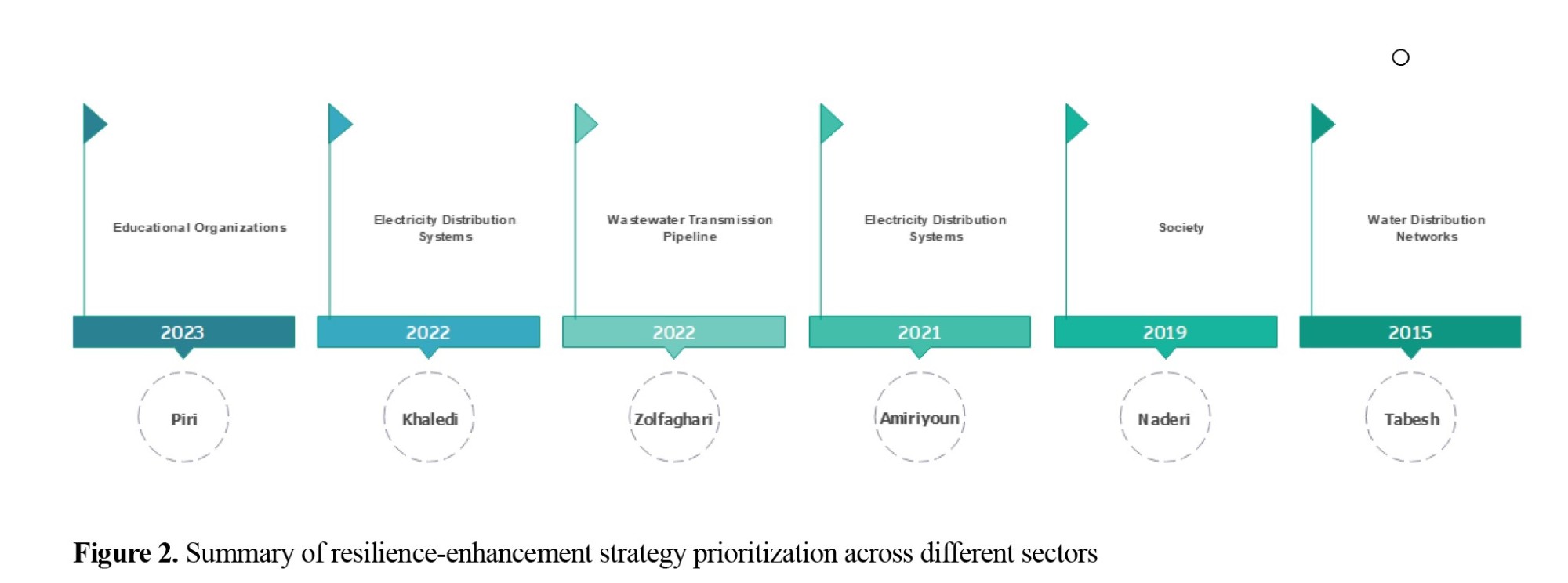
Piri and Jafari (2023), in a study aimed at identifying and prioritizing psychological resilience strategies for human resources in educational organizations, employed purposive sampling and the snowball technique using both qualitative and quantitative approaches. In the quantitative phase, the study population included 67 senior- and middle-level managers, as well as administrative staff, at the University of Urmia, selected through a non-probability sampling method. In the qualitative phase, data obtained from interviews were analyzed using MAXQDA 2020 software, identifying 14 psychological resilience strategies for human resources. The quantitative analysis was conducted using the DEMATEL method. The findings indicated that stress management, the importance of feedback, improvement of quality of work life, and effective communication were the strategies exerting the greatest influence on other strategies. In contrast, strategic agility, structural empowerment, horizontal management, and perceived organizational support were more influenced by other strategies. Ultimately, psychological empowerment, horizontal management, stress management, and effective communication were identified as the selected strategies that both influence and are influenced by other strategies.
Khaledi et al. (2022) focused their study on the distribution sector, given the insufficient attention paid to electricity distribution systems as one of the most critical components of energy infrastructure. The study identified the principal resilience-enhancement strategies as: (1) the use of distributed generation, (2) intentional islanding, (3) identification of critical loads, (4) optimal reconfiguration of the distribution network, (5) smart grids, and (6) robust optimization. The authors further noted that these strategies are generally more costly than conventional approaches to operating energy systems and are therefore less likely to be embraced by policymakers in this field. They recommended that future studies investigate the integrated application of these strategies to reduce costs and facilitate the development of resilient smart energy systems.
Zolfaghari et al. (2022), in a study assessing the resilience of the wastewater transmission pipeline infrastructure connecting the Tehran metropolitan area to the Firouz Bahram Treatment Plant, identified the factors influencing resilience in light of the various potential threats to this infrastructure. Subsequently, they applied an infrastructure resilience assessment method and adapted it to the wastewater transmission line leading to the Firouz Bahram Treatment Plant. In addition to determining the infrastructure’s current resilience status, the method included developing resilience-enhancement strategies and reassessing resilience during the structural assessment stage (Step 6). Finally, following the calculation of the optimal resilience cost, the author proposed implementing a wastewater bypass to the Kan River.
Amiriyoun et al. (2021) proposed a novel method for prioritizing resilience-improvement strategies in electrical distribution networks, which constitute the final link in the energy supply chain of power systems. First, a set of candidate strategies to enhance the resilience of distribution networks against disruptive events was defined. Subsequently, the value of each strategy was determined using a benefit–cost ratio, considering both the resilience improvement achieved through implementation and the associated implementation cost. The strategies were ultimately prioritized by benefit–cost ratio. To demonstrate the effectiveness of the proposed method, it was implemented in MATLAB using the standard IEEE 33-bus test system.
Naderi and Mahsouli (2019) developed an optimization model for the resilience index within the Rtx resilience assessment framework at Sharif University of Technology. This index is calculated based on the total costs imposed on society as a consequence of a hazardous event. The probability distribution of these societal costs was simulated through Monte Carlo sampling to calculate the index. Such costs arise from: (1) repair and replacement of damaged structures and infrastructure; (2) injuries and fatalities; (3) infrastructure service disruptions; (4) business interruptions; (5) deterioration in the quality of life of affected individuals; (6) temporary housing; and numerous other phenomena simulated using agent-based modeling throughout the community recovery period. By maximizing the resilience index—which consequently minimizes the total societal cost—the optimal priorities for infrastructure repair and reconstruction operations were determined as integer values. A genetic algorithm was employed to perform this optimization. The principal innovation of this study was the decentralized optimization of probabilistically simulated events occurring during the recovery period of interdependent infrastructure systems. The optimization results demonstrated a 2% reduction in the total societal cost, corresponding to savings of approximately USD 3 million. This improvement was achieved without additional resources, solely through optimal recovery planning. The proposed framework can serve as a decision-support system by evaluating the effects of different decisions on resilience and optimizing these effects by identifying and refining optimal decisions.
Tabesh et al. (2015) developed a model for selecting the most appropriate water demand-management strategy in urban water distribution networks using multi-criteria decision-making methods. They also implemented the proposed model in Tehran to evaluate its effectiveness. The selected strategies included consumer awareness-raising through educational and promotional programs, reducing non-revenue water, increasing water tariffs, and using water-saving devices. The criteria used to score the strategies were: (1) cost, (2) time, (3) customer satisfaction, (4) the level of unaccounted-for water, and (5) the effect of implementation on reducing water consumption. Sensitivity analyses were also performed on the weights assigned by decision-makers and on the form of the fuzzy numbers used to assess how uncertainty in the model affects the final results. Ultimately, reducing non-revenue water was identified by decision-makers as the most appropriate strategy.
The diagram below (
Figure 2) illustrates the various areas of research and application in this field.
Materials and Methods
This study’s proposed mechanism was developed from a previous study entitled “Development of an integrated resilience model for urban water supply networks: A Case study of Babol City, Iran.” That study confirmed the need to enhance the resilience of Zone X within Babol’s water distribution network, which is one of the network’s critical bottleneck zones. This zone comprises one reservoir, one water pumping station, one water treatment plant, and 10,257 m of pipelines made of asbestos, polyethylene, PVC, steel, and ductile iron.
The research procedure followed a systematic, step-by-step framework. Resilience-enhancement strategies for the water distribution network were categorized into six groups: water quality and safety, aging and deterioration, pressure differentials, flooding, earthquakes, and other necessary measures. These strategies were evaluated based on three key parameters: time, cost, and performance.
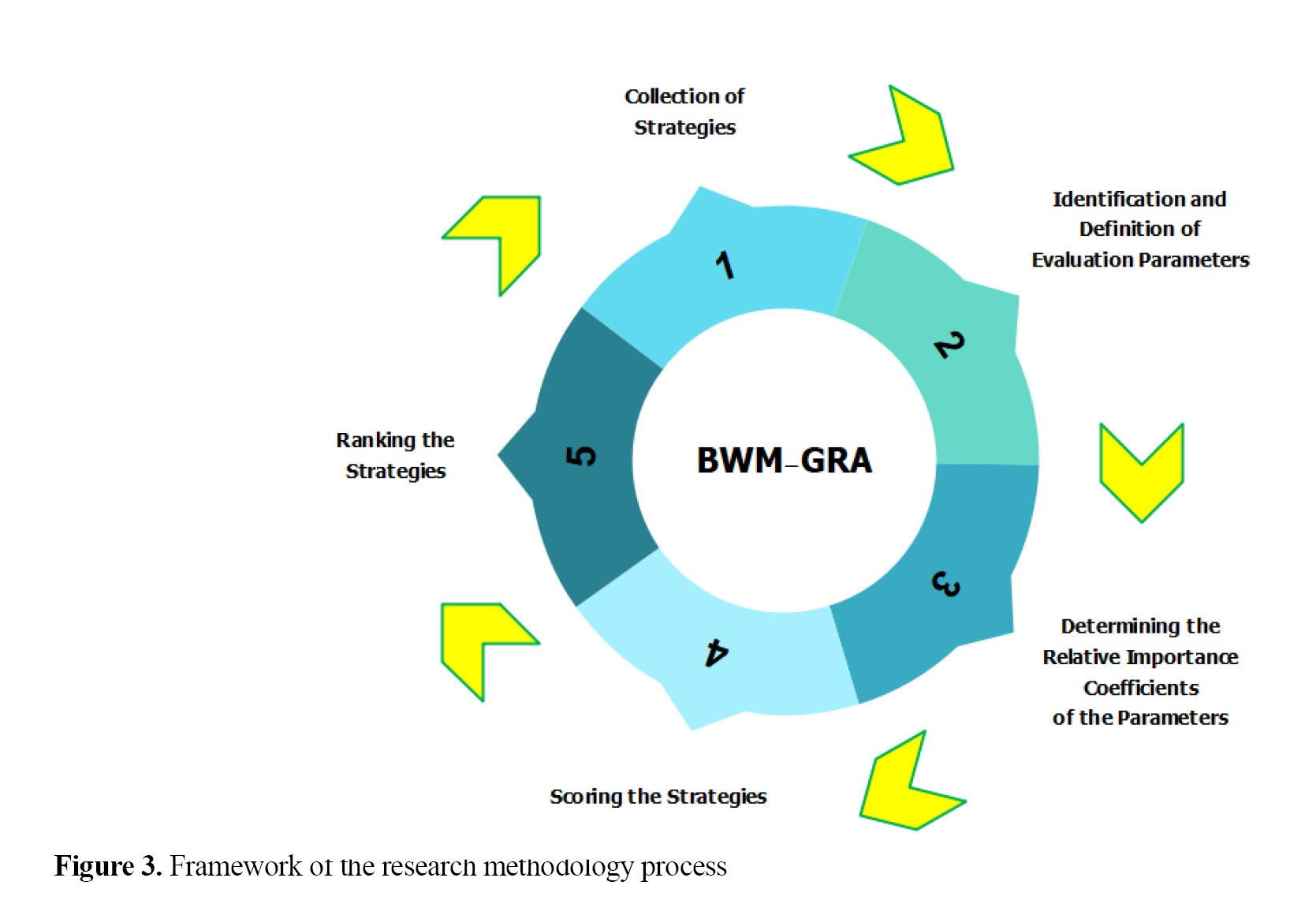
The analytical process employed an integrated two-method approach, including the best–worst method (BWM) to determine the relative importance of the evaluation parameters and grey relational analysis (GRA) to obtain the final ranking of strategies according to their respective scores. This framework, developed in alignment with the objectives of the present study, consists of five operational steps, as illustrated in
Figure 3.
In this study, GRA was conducted using the specialized GRA Solver 2015 software. Based on the fundamental algorithms of Grey Systems Theory, this software enables data normalization and the precise calculation of the effects of grey relational coefficients. Its major capabilities include automatically importing data from Excel files and performing complex calculations to generate objective and reliable results for the final prioritization of strategies. However, one limitation of the software is its maximum analytical capacity of 82 alternatives and 82 criteria.
Given that the present study focused exclusively on a single bottleneck zone within Babol’s water distribution network, the expert panel was selected from three specialized groups: water supply and wastewater network designers, officials and managers from the Water and Wastewater Company, and experts in crisis management and passive defense. All selected experts had direct, in-depth knowledge of the study zone. The number of specialists was considered adequate and appropriate for the scope and level of the present investigation.
Results
Step 1: Collection of strategies
To identify and extract effective strategies for enhancing the resilience of Babol City's water distribution network, a mixed approach comprising field investigations, expert interviews, and a review of scientific literature was employed. Accordingly, three key sources of data were used:
1. Field visits to the assets of the water distribution network, conducted to assess the existing conditions and identify operational challenges;
2. Interviews with crisis management and passive defense experts, as well as managers in the Mazandaran Province water and wastewater sector, conducted to draw upon experiential knowledge and technical perspectives; and;
3. Review and analysis of scientific resources, including books, research articles, and relevant theses, conducted to identify evidence-based proposed strategies.
This process identified 63 strategies, classified into six distinct categories. These categories were developed around five major hazards—namely, water quality and safety, aging and deterioration, pressure differentials, flooding, and earthquakes—as well as a sixth category entitled "other strategies." The latter category was developed based on weaknesses observed during field inspections of the infrastructure.
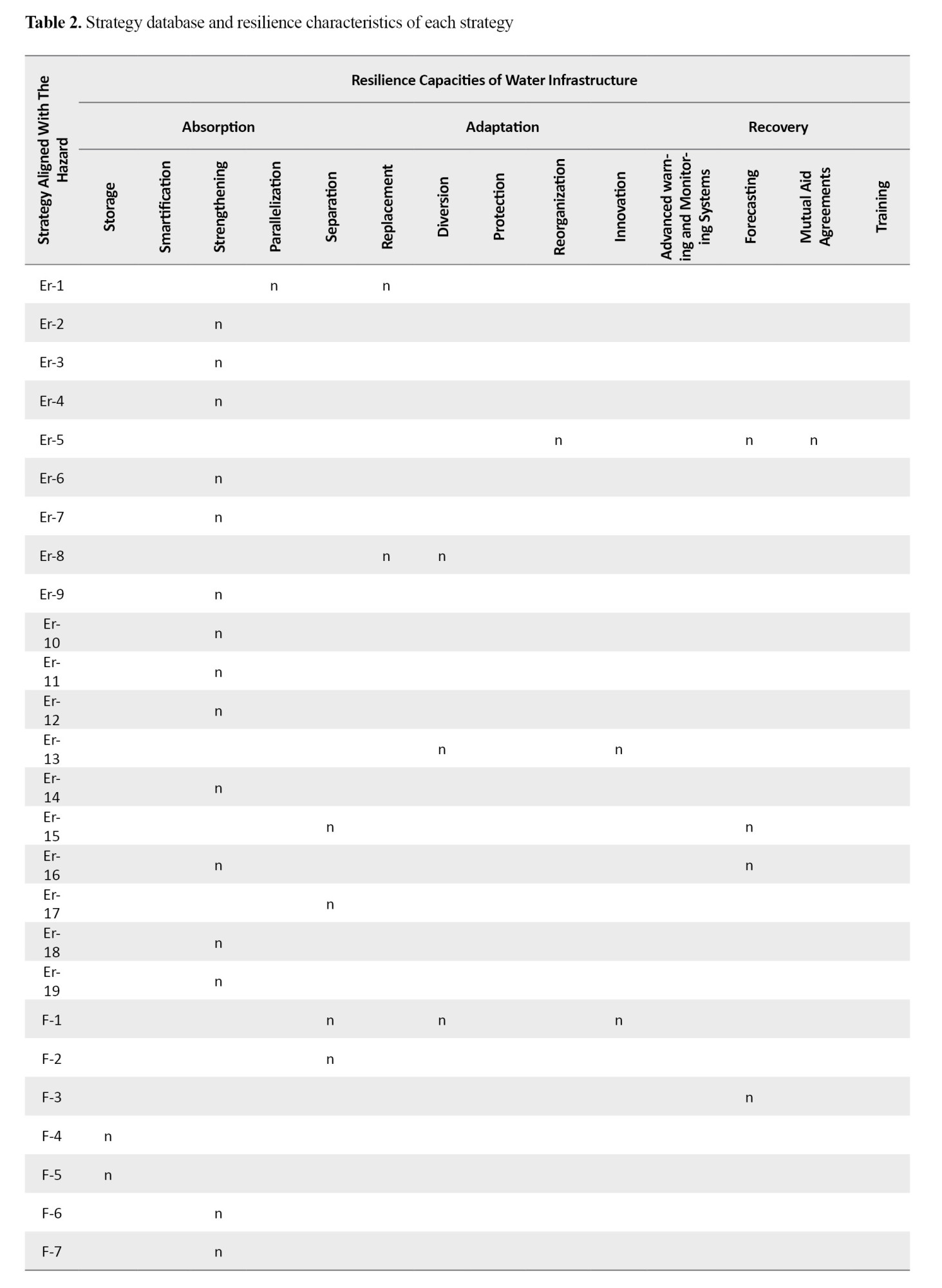
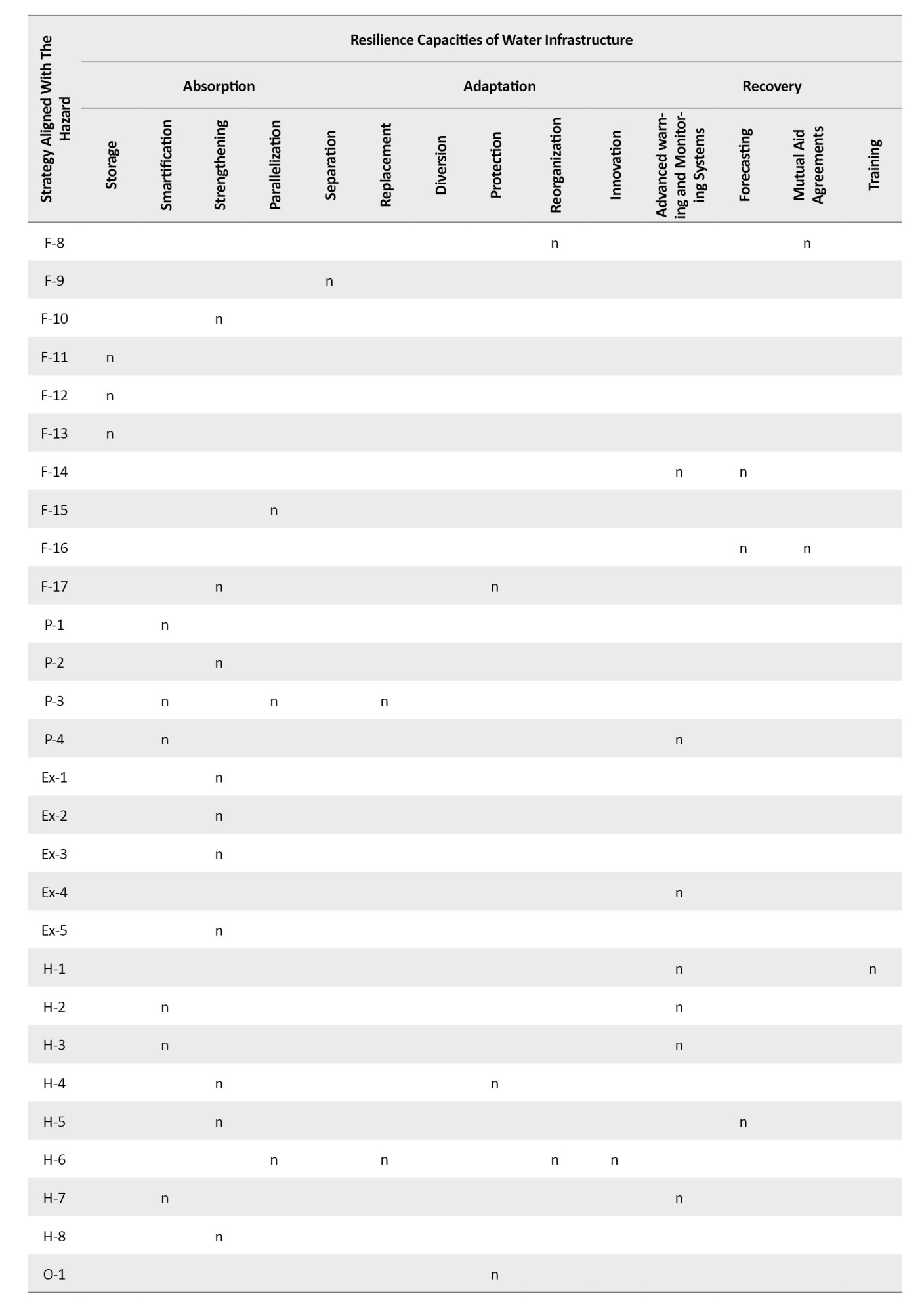
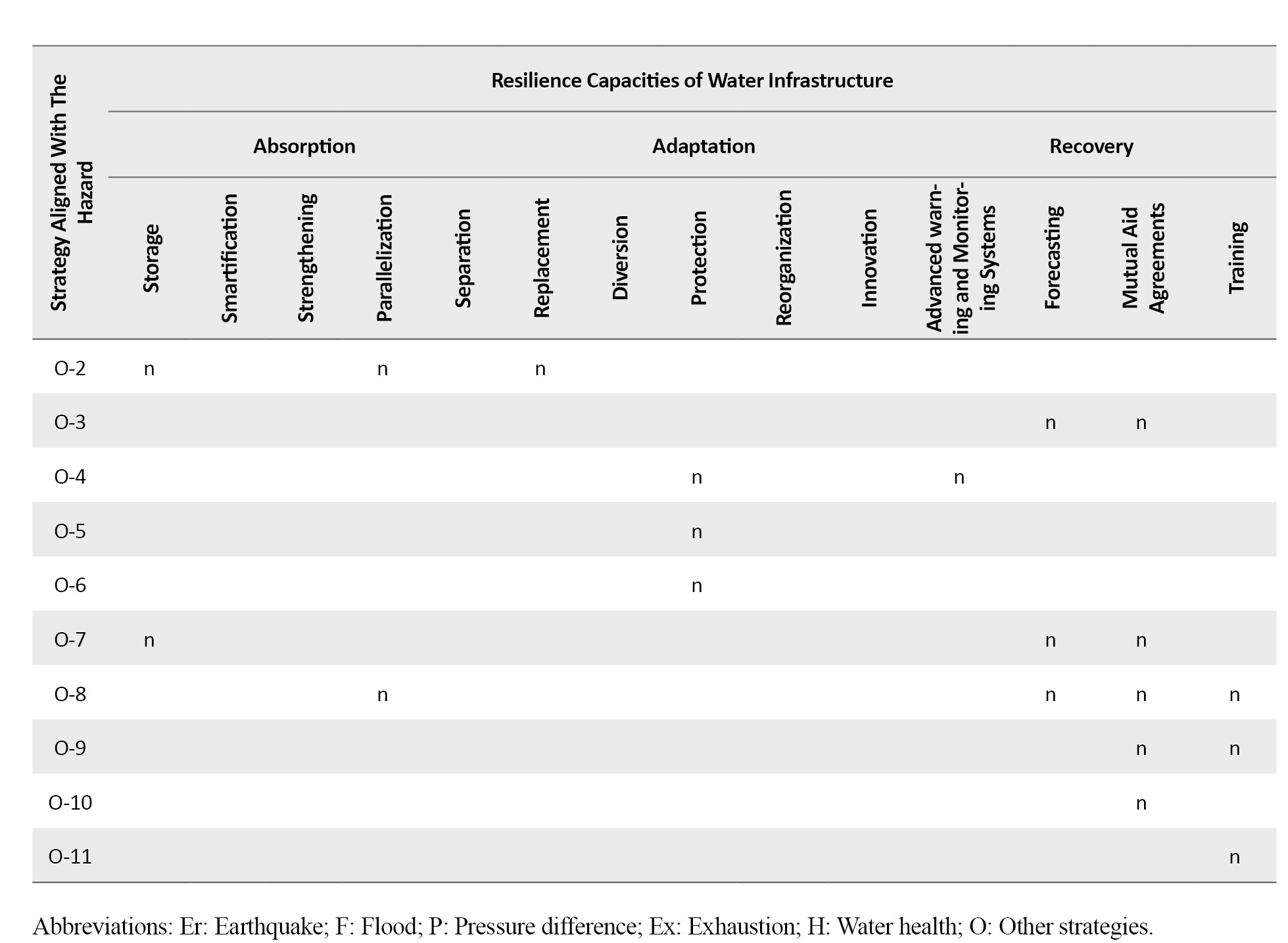
Tables 1 and
2 present the proposed strategies in coded form.
From an asset-classification perspective, the water distribution network in this study was divided into two principal components:
1. Reservoir-related facilities, including storage reservoirs, pumping stations, and water treatment plants; and
2. Pipeline systems, including transmission and distribution pipelines and all associated connections.
This classification framework provided the basis for the subsequent analyses undertaken to prioritize resilience-enhancement strategies.
Step 2: Identification and definition of evaluation parameters
At this stage, following expert assessments and consultations with specialists in the water and wastewater sector, and drawing on scientific literature such as the ERASMUS model, the criteria for selecting the most appropriate strategies to strengthen the resilience of Babol City's water distribution network were identified and formulated. These criteria comprise three principal and influential parameters (
Figure 4) for evaluating and prioritizing the strategies, each of which directly affects the overall performance and resilience of the network:
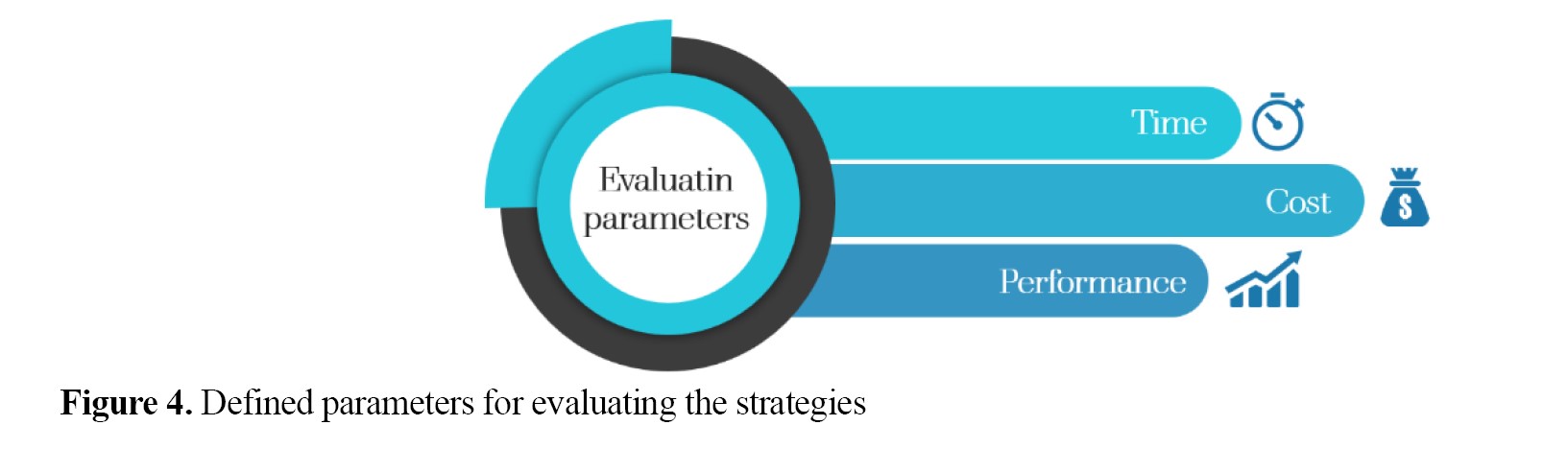
Required implementation time
This parameter is directly associated with social resilience and represents the time required to implement each strategy for improving the performance and resilience of the water distribution network. It matters because implementation duration may affect social stability and the community’s capacity to withstand crises.
Required implementation cost
This parameter assesses the financial resources required to implement each strategy and represents the amount of budget needed to operationalize the proposed measure.
Activation of sub-capacities (performance)
This criterion evaluates each strategy's effect on the overall performance of the water distribution network. More specifically, it assesses the extent to which a strategy activates the sub-capacities associated with each resilience capacity, according to its impact on the network's overall functioning.
In other words, this parameter measures how much each strategy's implementation enhances the network's overall productivity and operational efficiency of the network.
The following section defines and explains the indicators associated with each parameter to clarify how the strategies were evaluated and prioritized.
Assessment of the time criterion
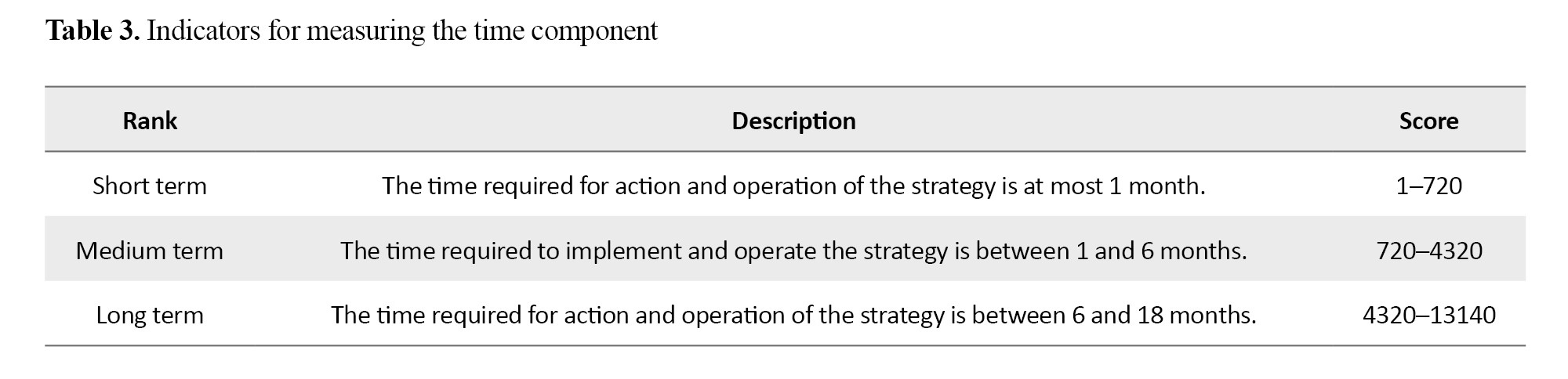
In this section, the time criterion was evaluated based on the duration required to initiate and implement each strategy in the bottleneck zones of the water distribution network. To determine the implementation timeline for each strategy, three temporal categories were considered:
1. Short term (0 to 1 month),
2. Medium term (1 to 6 months), and
3. Long term (6 to 18 months).
These classifications were adopted to provide a comprehensive and accurate assessment of the implementation schedule of the strategies and their impact on network performance improvement. Scoring for each component was performed in hours, as specified in
Table 3.
 Assessment of the cost criterion
To estimate and evaluate the costs associated with initiating, implementing, and executing each strategy in the critical zones, the cost of each strategy was presented within defined categories. These categories, detailed in
Table 4, were determined according to the cost range of the different strategies—from the lowest to the highest implementation costs among the available options.
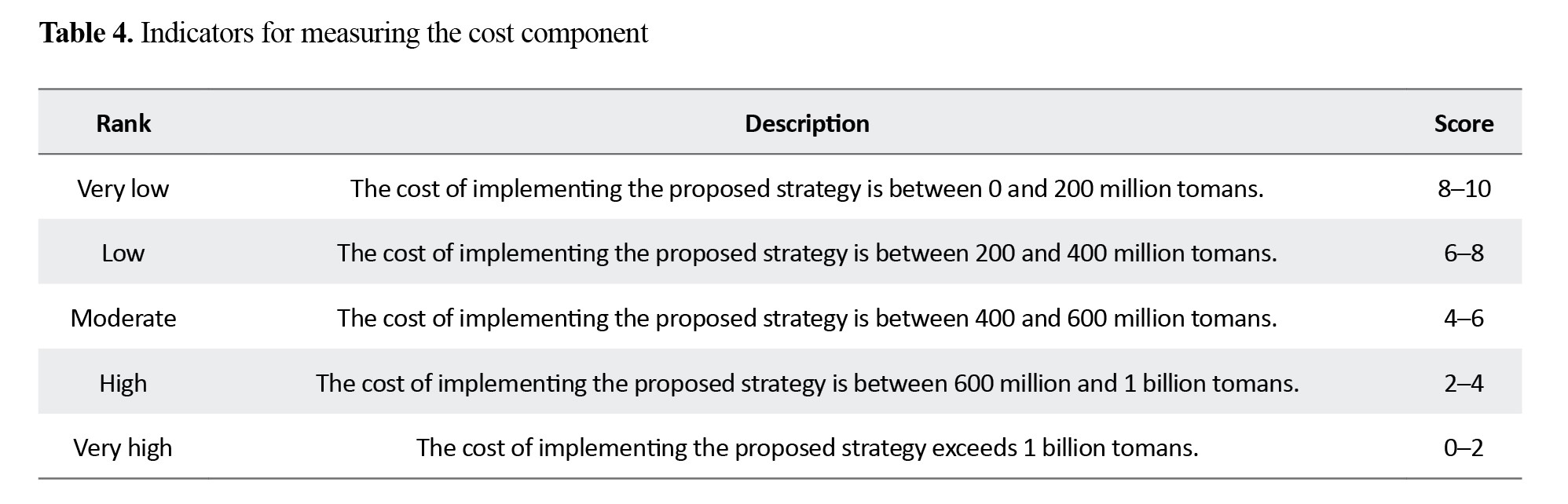
In other words, each strategy was assigned to a category based on its associated cost, enabling effective comparison and prioritization.
Assessment of the performance criterion
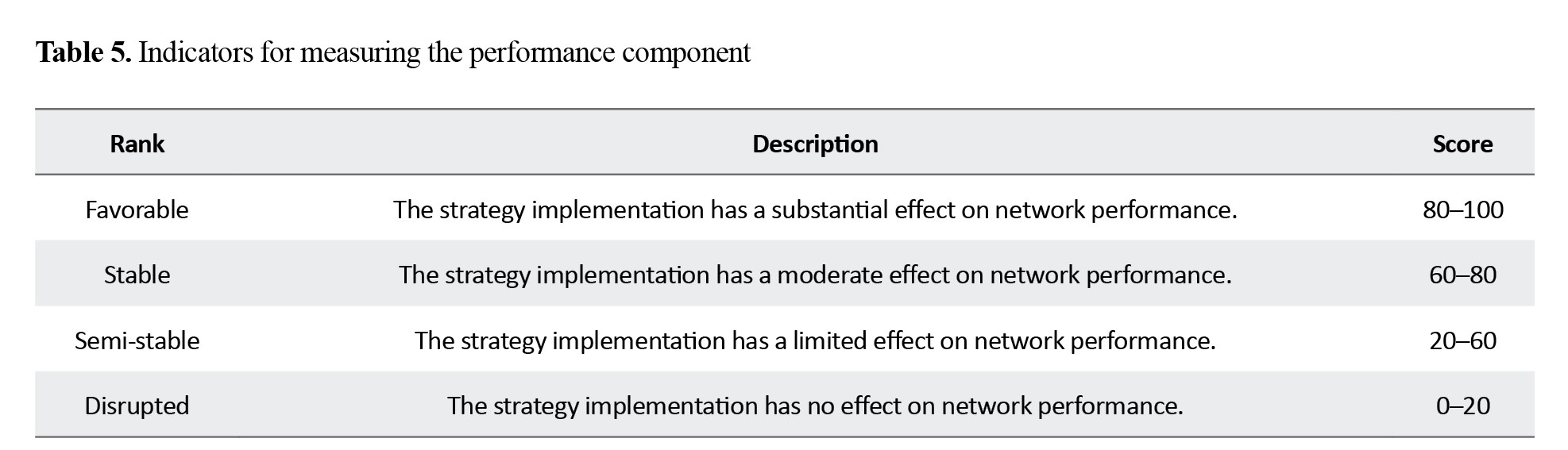
In this section, the performance parameter was evaluated in terms of the overall performance of the network—specifically, the water-delivery capacity of the water distribution network—as affected by the implementation of each strategy in the bottleneck zone. The scoring indicators for this parameter were designed to accurately assess network performance by implementing each strategy and were established in accordance with
Table 5.
 Step 3: Determining the relative importance coefficients of the parameters
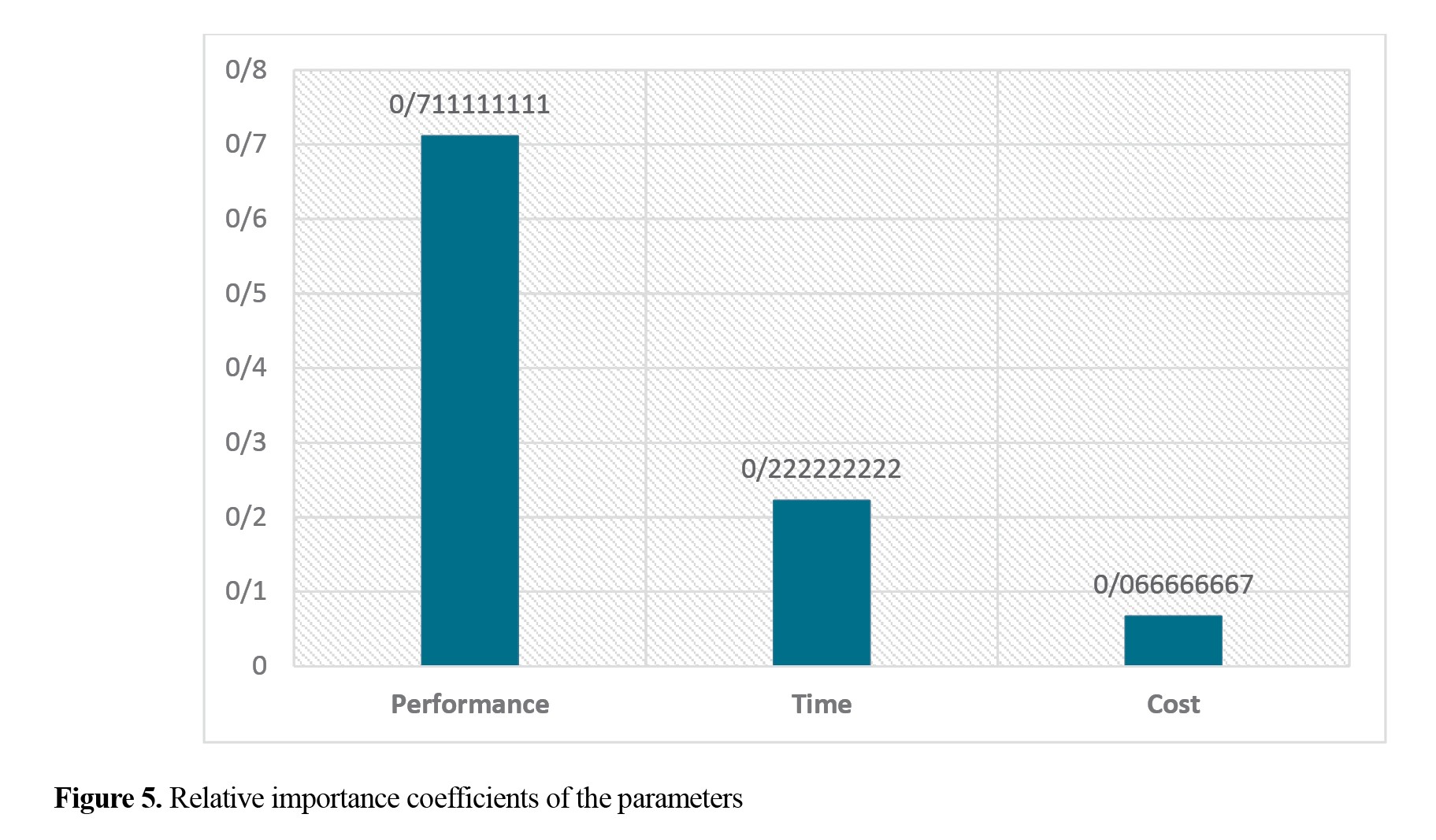
In the third step, the BWM, a multi-criteria decision-making technique, was employed to determine the relative importance coefficients of the criteria selected in the previous step. The analysis used managers' opinions from the Water and Wastewater Company and was performed in Microsoft Excel. First, performance was selected as the best (most important) parameter, whereas cost was identified as the worst (least important) parameter. Subsequently, the best-to-others (BO) and others-to-worst (OW) vectors were constructed and scored. In the BO vector, the best criterion was compared with itself and with the other criteria. In the OW vector, each of the three criteria was compared with the worst criterion. The relative importance coefficient of each criterion was then calculated and determined.
Figure 5 shows the results of these calculations and served as the basis for prioritizing the criteria during the evaluation process.
Step 4: Scoring the strategies
After determining each criterion’s weight, the strategies listed in the strategy database (
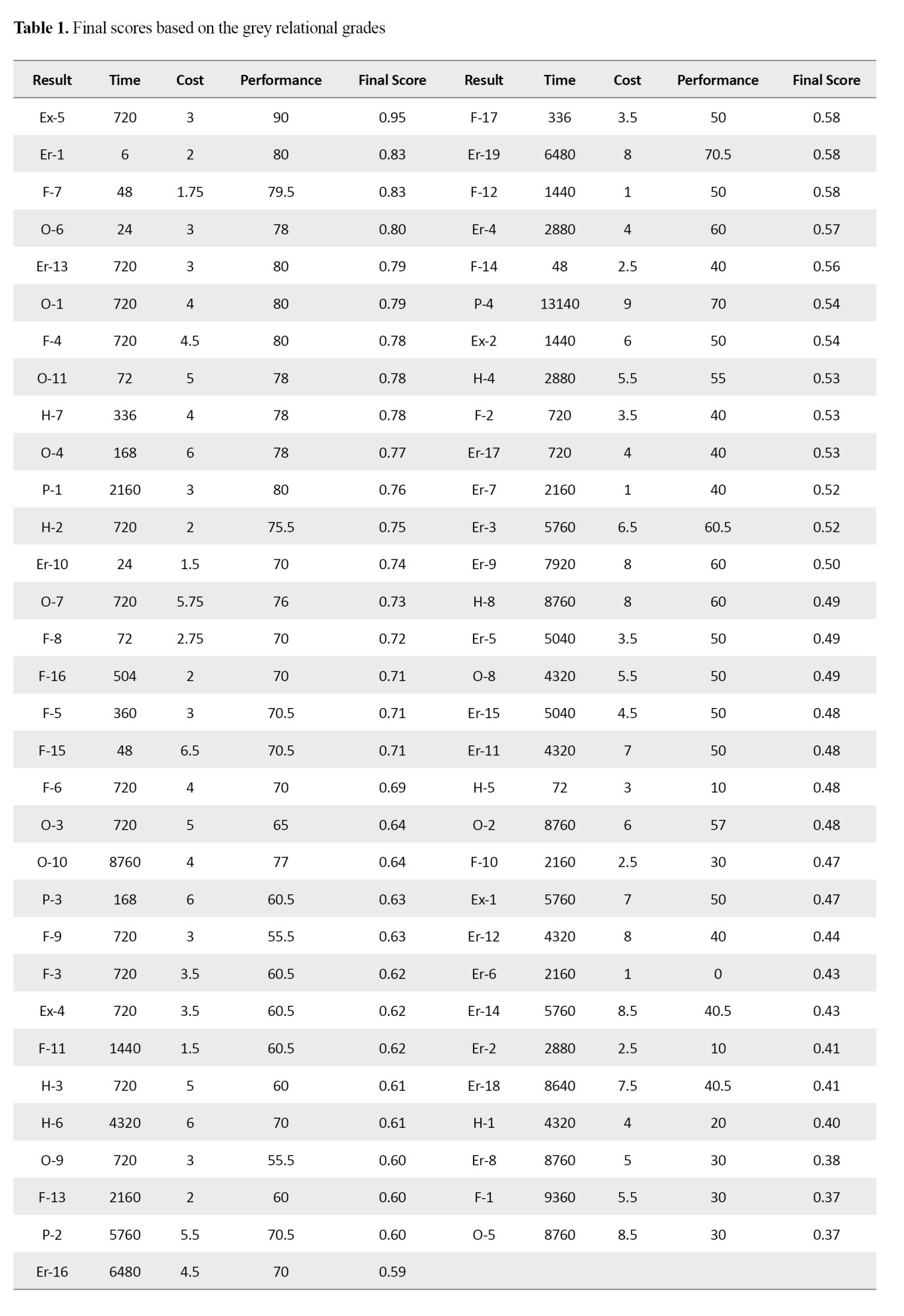
Table 2) were scored according to the target zone characteristics and the indicators defined for each criterion in the decision matrix. Also, at this stage, the decision matrix must be constructed, the data normalized or made dimensionless, the reference target series defined, the grey relational coefficient calculated, the grey relational grade determined, and ultimately the final score obtained based on the grey relational grades using GRA Solver 2015, so that a more accurate evaluation and prioritization of the strategies can be achieved.
It should be noted that, because of the considerable length of the strategy titles associated with the threats/hazards examined in this article, abbreviated labels were used. Each label begins with an abbreviation representing the relevant threat or hazard, followed by a number indicating the strategy’s sequence within that threat category. The abbreviations are as follows:
Er: Earthquake
F: Flood
P: Pressure difference
Ex: Exhaustion
H: Water health
O: Other strategies
Table 1 presents the scores assigned to each strategy and its final score based on the grey relational grade.
Abbreviations: Er, earthquake; F, flood; P, pressure difference; Ex, exhaustion; H, water health; O, other strategies.
Step 5: Ranking the strategies
The final prioritization of the strategies was based on expert judgment and the decision to implement resilient strategies for the Mazandaran Water and Wastewater Company in Babol City, as shown in the
Table 6.
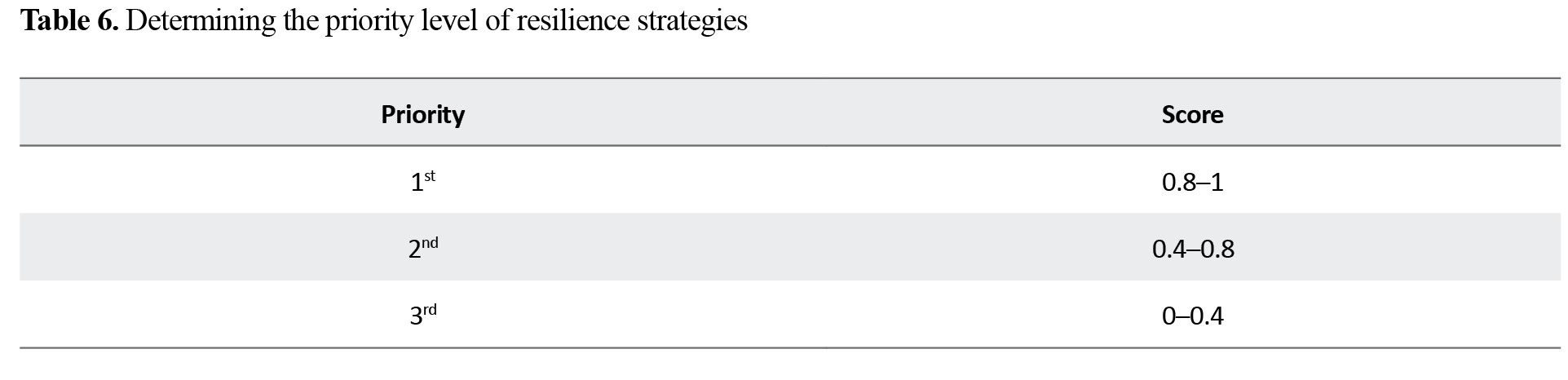 Table 7
 presents the strategies assigned to first priority—those considered highly important to implement.
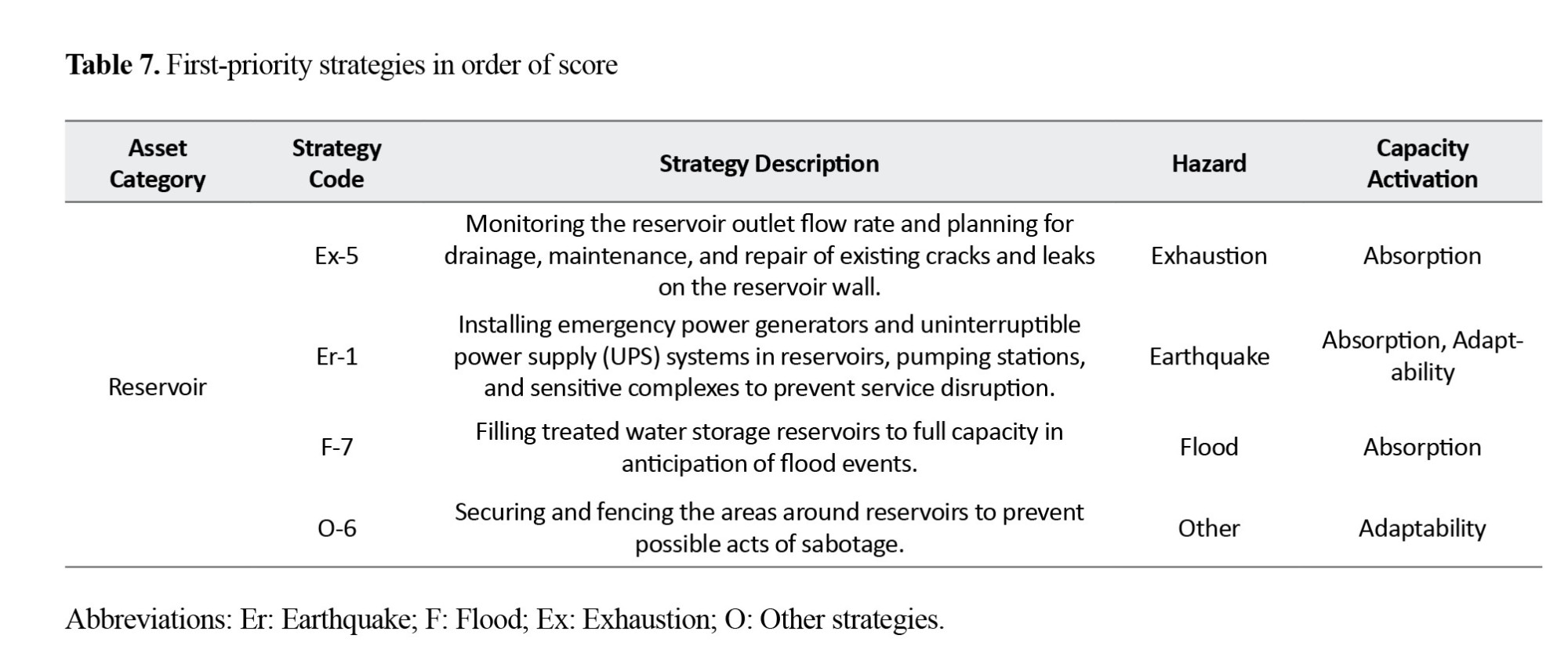 Detailed description and importance of the first-priority strategies
The details and significance of each strategy are explained below.
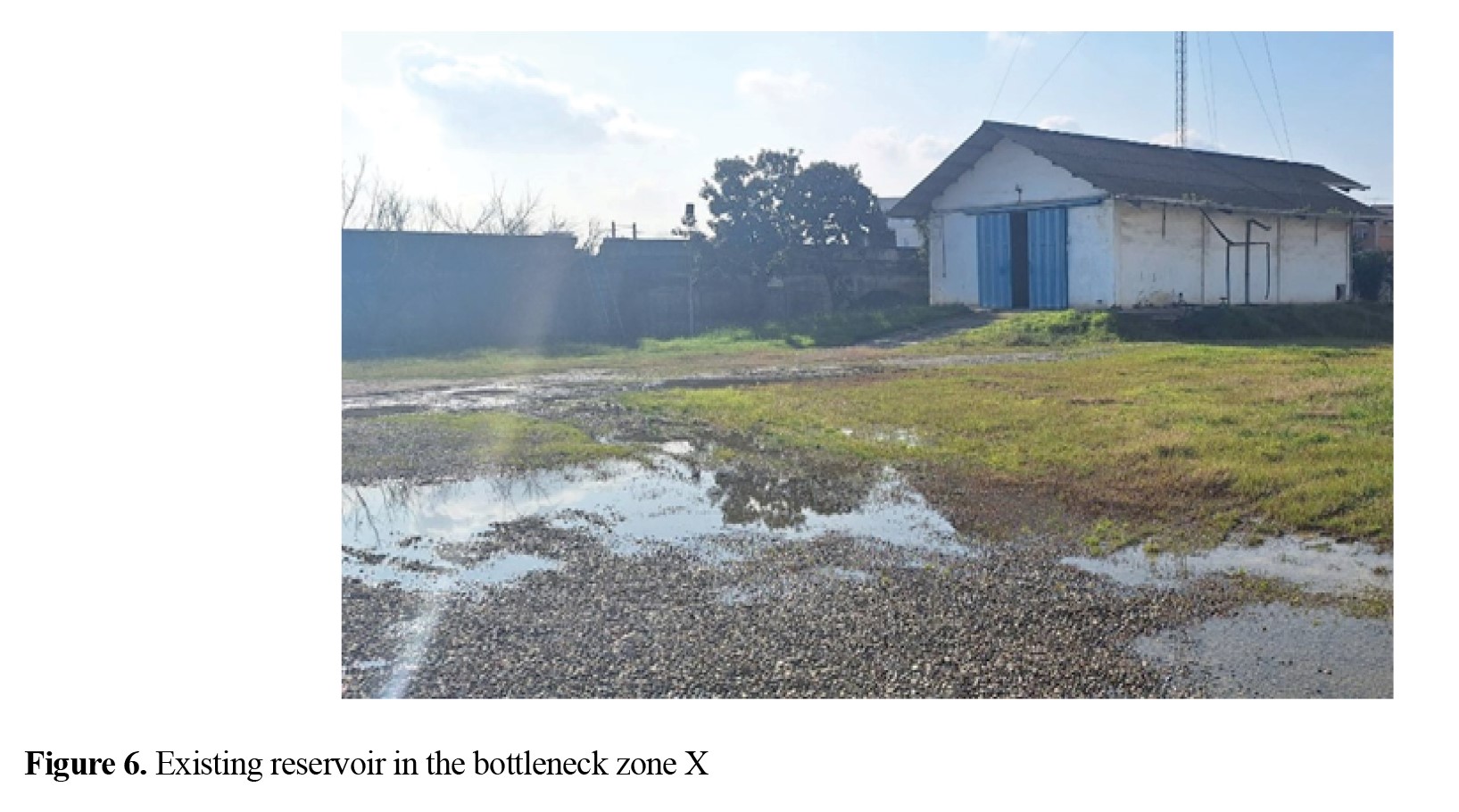
Strategy 1: Monitoring the reservoir outlet flow rate, scheduling reservoir drainage, carrying out maintenance, and repairing existing joints and cracks in the reservoir wall are among the critical elements of reservoir management and maintenance. Monitoring outlet flow helps identify unusual fluctuations that may indicate structural or hydraulic problems. Based on these data, an accurate schedule can be developed to drain the reservoir and perform the necessary repairs to eliminate leaks and cracks. Repairing the visible defects identified during the field visit (
Figure 6) prevents contamination from entering the water source and also helps maintain the reservoir's long-term safety and efficiency.
In this way, in addition to preserving water quality, the water supply system is protected from more serious problems and additional future costs (Ex-5).
Strategy 2: Installing emergency power generators and uninterruptible power supply (UPS) systems in the reservoir, pumping station, and sensitive complexes is proposed to prevent service disruption during power outages and improve emergency preparedness in the target zone. These systems support infrastructure resilience against natural and human-made hazards, especially when reliance on the public power supply is disrupted. In other words, such energy sources in critical facilities—particularly in disaster-prone areas—play an important role in maintaining the continuity of essential services and reducing damage from disruptions. In this regard, in addition to installing emergency generators and UPS systems, these systems must be regularly tested and maintained so that they are fully operational when needed. Moreover, proper management of these energy sources, including consumption management and optimized scheduling of their use, can increase efficiency and reduce long-term costs. Ultimately, given the need to maintain functionality and service delivery under crisis conditions, installing these systems is recognized as an infrastructural priority for enhancing the resilience of pumping stations and water reservoirs (Er-1).
Strategy 3: To leave sufficient space for flood infiltration and avoid contamination of existing water reservoirs, fill all available storage capacity when flood risk is forecast. This strategy is critical to maintaining the resilience of water supply systems and ensuring the availability of water resources during emergencies. Therefore, filling water reservoirs during periods of risk and before a crisis occurs not only serves as a preventive measure for emergency water supply, but also plays a fundamental role in improving the resilience of water infrastructure and protecting the health and well-being of society under crisis conditions (F-7).
Strategy 4: Securing and fencing the areas around reservoirs is proposed to prevent possible acts of sabotage. This measure is intended to prevent unauthorized access to the reservoir and water transmission facilities, as well as to define the boundaries of the land owned by the Regional Water Company. Ultimately, it is recommended to increase the security level of reservoirs against potential sabotage activities (O-6).
Discussion
The study’s findings indicate that the combined BWM–GRA approach is an appropriate tool for prioritizing resilience strategies in water supply networks. The results show that the performance criterion, weighted at 0.71, had the greatest influence on the final evaluation of the strategies. One innovative aspect of this study was simultaneously considering quantitative criteria—time and cost—and the qualitative performance criterion when evaluating the proposed strategies.
Strategy Ex-5—monitoring the outlet flow rate and repairing the existing joints and cracks in the reservoir wall—was identified as the highest-priority strategy, with a final score of 0.95. This result reflected the combination of a short-term implementation period (720 hours), a high cost (3 units), and favorable performance (90%). Strategies Er-1—installation of UPS systems—and F-7—filling the reservoirs before the occurrence of a flood—were ranked next, both with a score of 0.83. A notable feature of these strategies is their short implementation times (6 and 48 hours, respectively), combined with stable performance levels (80% and 79.5%, respectively). This finding highlights the importance of rapidly implementable strategies with substantial effects under crisis conditions. By contrast, strategy O-6—securing and fencing the areas surrounding the reservoirs—has a score of 0.80, with a high cost (3 units), a short implementation time (24 hours), and acceptable performance (78%). In the middle range of the ranking, strategies such as F-15—installation of a standby pump—have a final score of 0.71. This strategy has a short implementation time (48 hours) and stable performance (70.5%). Although such strategies have a lower priority, they nevertheless remain suitable options for implementation.
Furthermore, strategy O-3—regular training of personnel and raising citizens’ awareness regarding emergency response—was classified as a second-priority strategy, with a score of 0.64, despite its short-term feasibility (720 hours) and moderate cost (5 units). This strategy’s role in establishing long-term network performance stability through enhanced human capital is strategic and undeniable. Its implementation should therefore be regarded as an enabling prerequisite for other high-priority technical strategies. Finally, strategies such as F-1—implementing permeable paving on street surfaces above the infrastructure—with a score of 0.37, were assigned to the third-priority category. This was due to their semi-stable performance (30%) and their lack of a substantial effect on overall network performance, even though they may be considered low-cost strategies.
Study limitations
The limitations of this study include limited access to the expert population and technical constraints that prevented a comprehensive assessment of all bottleneck zones.
Suggestions for future research
The following suggestions are proposed for future studies:
● Conducting a comparative study of other bottleneck zones and performing an integrated analysis of the entire water distribution network to identify performance patterns and interactions among its different components;
● Combining multi-criteria decision-making methods with complementary assessment techniques to improve the accuracy and reliability of the process of selecting optimal network-management strategies; and
● Developing a dynamic model for the quantitative and qualitative assessment of network stability under different conditions and changing circumstances.
Conclusion
This study can substantially contribute to raising awareness among researchers and decision-makers, particularly managers of the Mazandaran Water and Wastewater Company, regarding existing challenges. It can also assist them in identifying appropriate measures to improve prevention and preparedness for potential future crises and in implementing strategies that enhance the resilience of water and wastewater infrastructure. One of the main achievements of this study was the development of a comprehensive framework for prioritizing and selecting resilience-enhancing strategies in urban water supply networks. Given limited resources and the economic infeasibility of strengthening all components of a water supply system, this study developed a framework and identified the measures needed to classify and prioritize resilience strategies for one of the bottleneck zones of the Babol water supply network—Zone X.
Accordingly, after identifying and categorizing the hazards—including floods, earthquakes, deterioration, pressure differences, and water-quality threats—based on their frequency of occurrence and the weaknesses of the network, a set of strategies was identified and prioritized according to three indicators: implementation time, implementation cost, and impact on the overall performance of the network.
The results show that, among the 63 strategies proposed for Zone X, 4 strategies were assigned to the first-priority category, 56 strategies to the second-priority category, and 3 strategies to the third-priority category. As shown in
Table 2, some strategies can activate several sub-capacities under different resilience capacities. However, this does not necessarily indicate that one strategy is superior to another. The key consideration is how the distribution network's strategy affects the overall performance—namely, the water-delivery capacity—regardless of how many resilience capacities or sub-capacities it activates.
Moreover, based on the strategies presented in
Table 7 and assigned to the first-priority category, the existence of non-revenue water in this bottleneck zone can be clearly inferred. Therefore, to reduce water losses and improve the performance of the water supply system, the necessary measures should be implemented in accordance with the explanations provided for the relevant strategies.
It should be noted that all the strategies identified and extracted through interviews and field investigations were considered necessary for the target zone; therefore, removing any of them is not recommended.
Ethical Considerations
Compliance with ethical guidelines
In this study, all ethical principles were observed. No experiments on human or animal samples were conducted. Therefore, no ethical approval code was needed.
Funding
This research did not receive any specific grant from funding agencies in the public, commercial, or not-for-profit sectors.
Authors' contributions
All authors contributed equally to the conception and design of the study, data collection and analysis, interpretation of the results, and drafting of the manuscript. Each author approved the final version of the manuscript for submission.
Conflicts of interest
The authors declared no conflict of interest.
References
Alavi, S., Masoud, M., & Karimi, A. (2020). [Urban resilience: Restoration analysis of urban water infrastructures in a potential earthquake (case study: region 2 of Tehran municipality) (Persian)]. Human Geography Research, 52(2), 533-550. [DOI:10.22059/jhgr.2018.233691.1007468]
Amirioun, M. H., Dadashzadeh, A., Mottaghizadeh, M., Aminifar, F., & Abniki, H. (2022). [Prioritizing resilience enhancement measures for electric distribution networks against hurricanes (Persian)]. Journal of Iranian Association of Electrical and Electronics Engineers, 19(4), 213-221. [DOI:10.52547/jiaeee.19.4.213]
Bakhshy, F., Zarghani, S. H., & Kharazmi, O. A. (2020). Analysis of vulnerable elements of the Cities water infrastructure against terrorist threats. Geopolitics Quarterly, 16( 2), 32-57. [Link]
Crozier, A., Lence, B. J., & Weijs, S. V. (2024). Resilience framework for urban water supply systems planning. Sustainable and Resilient Infrastructure, 9(4), 386-406. [DOI:10.1080/23789689.2024.2340378]
Elkady, S., Mehryar, S., Hernantes, J., & Labaka, L. (2024). “Prioritizing stakeholder interactions in disaster management: A TOPSIS-based decision support tool for enhancing community resilience. Progress in Disaster Science, 22, 100320. [DOI:10.1016/j.pdisas.2024.100320]
Jabali, S. (2021). [Examining existing assumptions in the field of solutions for improving the resilience of water supply infrastructure projects during construction (case study of Tehran) (Persian)]. Paper presented at: 4th International Conference on Modern Studies in Civil Engineering, Architecture, Urban Planning and Environment in the 21st Century, Tehran, Iran, 19 December 2020. [Link]
Khalidi, A., & Seifuddin Asl, S., & Zwari, S., & Mahtab, M. (2022).[Resilient power distribution networks against natural disasters (Persian)]. Paper presented at: Fourth National Conference on Environmental Engineering and Management. Ghaemshahr, Iran.
Lewin, C., Rossi, M., Soultani, E., & Raj, K. S. (2024). Managing infrastructure resilience and adaptation. Sustainable and Resilient Infrastructure, 9( 2), 107-123. [DOI:10.1080/23789689.2023.2241728]
Lorenz, I. S., & Pelz, P. F. (2020). Optimal resilience enhancement of water distribution systems. Water, 12( 9), 2602. [DOI:10.3390/w12092602]
Mohammadpour, Z. (2024). [Localization of a Hybrid Operational Resilience Model Based on a Quantitative-Qualitative Approach Based on Developed IRAM Models in Water Distribution Networks (Persian)] [MA thesis]. Tehran: Malek Ashtar University of Technology.
Mohammadpour, Z., Nakoei, M., & Zakeri Khatir, E. (2024). [Introduction and comparative study of approaches to measuring the resilience of water and wastewater infrastructure (Persian)]. Paper presented at: 5th Iranian Congress of Water and Wastewater Science and Engineering, Isfahan, Isfahan, Iran, 26 November 2024. [Link]
Naderi, M., & Mahsouli, M. (2019). [Optimally increasing community resilience by prioritizing recovery operations for interdependent infrastructure (Persian)]. Paper presented at: Third International Conference on Applied Research in Structural Engineering and Construction Management. Tehran, Iran. [Link]
Passive Defense Organization. (2023). [Technical and specialized system for protecting the country’s infrastructure (Persian)]. Retrieved from: [Link]
Piri, M., & Jafari, M. (2023). Developing Strategies for Psychological Resilience of Human Resources in Educational Organizations Using DEMATEL. Transformation Management Journal, 15(1), 162-190.[Link]
Pour Tabari, M., & Pour Tabari, M. (2017). [Protecting water supply systems with a passive defense approach (Persian)]. Paper prsented at: Second National Conference on Hydrology of Iran, Shahrekord, Iran, 11 July 2017. [Link]
Rokstad, R. G., Makropoulos, C., & Rokstad, M. M. (2023). Resilience assessment of water distribution networks exposed to substance intrusion. Urban Water Journal, 20(9), 1110-1122. [DOI:10.1080/1573062X.2023.2237944]
Shin, S., Lee, S., Judi, D. R., Parvania, M., Goharian, E., & McPherson, T., et al. (2018). A systematic review of quantitative resilience measures for water infrastructure systems. Water, 10(2), 164.[DOI:10.3390/w10020164]
Stip, C., Mao, Z., Bonzanigo, L., Browder, G., & Tracy, J. (2019). Water infrastructure resilience- Examples of Dams, Wastewater Treatment Plants, and Water Supply and Sanitation Systems. Washington: World Bank. [DOI:10.1596/31911]
Sun, J., & Zhang, Z. (2020). A post-disaster resource allocation framework for improving resilience of interdependent infrastructure networks. Transportation Research Part D: Transport and Environment, 85, 102455. [DOI:10.1016/j.trd.2020.102455]
Tabesh, M., Bariany, A. E., Motevallian, S. S., Roozbahani, A., & Beygi, S. (2017). Prioritization of water consumption management strategies in water distribution networks using multiple criteria decision making method of fuzzy analytic hierarchy process (Case study: Tehran). Amir Kabir Journal of Civil Engineering, 49(1), 47-56. [Link]
Tortajada, C. (2016). Water, Governance, and Infrastructure for Enhancing Climate Resilience. In C. Tortajada (Ed.), Increasing Resilience to Climate Variability and Change. Water Resources Development and Management. Singapore: Springer. [DOI:10.1007/978-981-10-1914-2_1]
Yazdani, A., Otoo R. A., & Jeffrey, P. (2011). Resilience enhancing expansion strategies for water distribution systems: A network theory approach. Environmental Modelling & Software, 26(12), 1574-1582. [DOI:10.1016/j.envsoft.2011.07.016]
Zolfaqari, M., Ghanbari Nasab, A., Nekooie, M. A., & Hosseini, S. M. (2023). [Evaluation of resilience of West Tehran wastewater transmission line to Firooz Bahram treatment plant (Persian)]. Emergency Management, 12(1), 1-15. [Link]