Introduction
Nuclear contamination refers to the release of radioactive materials and particles capable of emitting ionizing radiation into the environment (Liland, 2015; Povinec & Hirose, 2015). This contamination typically results from nuclear explosions, accidents at nuclear facilities, unauthorized disposal of nuclear materials, or other unstable nuclear activities. Once radioactive substances enter the environment, they can be transferred through air, water, or soil. Nuclear accidents can have severe impacts on humans, the environment, and communities. Given the potentially complex and widespread consequences, proper management and the ranking of regions based on the intensity of nuclear risk in such accidents are considered essential (Salbu et al., 2015). Razi and Ali emphasized the importance of utilizing renewable energy sources to reduce dependence on fossil fuels and pollution, employing the VIKOR (Vlse Kriterijumsk Optimizacija Kompromisno Resenje) and technique for order preference by similarity to ideal solution (TOPSIS) methods to analyze various energy resources (Razi & Ali, 2019). Nokhbatolfoghahaayee et al. introduced a fuzzy decision support system designed for crisis management in large-scale systems (Nokhbatolfoghahaayee et al., 2010). Ribeiro et al. (2013) utilized a multi-criteria decision-making tool to support the evaluation of various power generation scenarios. They ranked different scenarios based on 13 criteria, including economic factors, labor market conditions, quality of life of local populations, technical issues, and environmental considerations.
Choukolaei et al. (2023) employed the PROMETHEE method to assess the efficiency and sustainability of evaluation criteria for selected disaster management centers under three scenarios: natural disaster conditions, epidemic conditions, and epidemic disaster conditions. Darvish et al. (2015) developed fire safety models for nuclear power plants and concluded that training firefighting personnel, familiarizing them with radiological and nuclear hazards, understanding response procedures, and being acquainted with operational guidelines and protocols are essential. Baležentis et al. (2021) proposed a multi-criteria decision-making framework based on a matrix approach for group decision-making in crisis situations, such as COVID-19.
Pamučar et al. (2020) examined the challenges faced by healthcare systems during the COVID-19 pandemic and proposed a multi-criteria method for selecting sustainable strategies in the reorganization of these systems. Salehi et al. (2020) aimed to evaluate the crisis management systems of five petrochemical units from organizational, human, and technical perspectives, employing a multi-criteria decision-making approach that included the Shannon entropy method and TOPSIS to prioritize alternatives based on similarity to the ideal solution. Their results indicated that organizational and human factors, with respective importance weights of 58% and 49% at management and staff levels, had the greatest impact on the crisis management systems of the plants. Hajarian (2024) focused on site selection for multi-purpose shelters, emphasizing passive defense principles and considering specific criteria for the city of Isfahan. Gheibdoust et al. (2024) employed the ARAS method to identify and prioritize influential factors in the hospitality industry and to evaluate five-star hotels during the COVID-19 crisis.
Erden et al. (2024) investigated the criteria influencing the location of humanitarian logistics distribution centers using the ARAS method in Sakarya Province, Turkey, a region prone to natural disasters. Liu et al. (2024) analyzed public attitudes and participation regarding treated radioactive water from Fukushima (FTRW) and proposed an evolutionary analytical framework to examine opinions collected from social media. Susiati et al. (2024) conducted a systematic evaluation of criteria and methods for locating nuclear power plants, identifying that this process encompasses bio-geophysical, socio-economic, and disaster-related aspects.
Chen et al. (2024) developed a quantitative evaluation system for safety management against nuclear radiation hazards, covering four main aspects: safety management, safety environment, radiation equipment, and the testing team. Using the analytic hierarchy process (AHP) and the cloud model method, they assessed the safety level of a tested institution and provided managerial recommendations to improve specific organizational components. They also emphasized that, in crisis situations such as war or nuclear accidents—especially in vulnerable areas—rapid and effective access to healthcare services, particularly radiological medical services and equipment, is a fundamental and critical need. However, access to healthcare services during wartime, particularly in nuclear accident scenarios, becomes a significant challenge. Since radiological medical centers play a vital role in diagnosing and treating individuals affected by radiation exposure, selecting high-risk provinces for enhanced service delivery to patients is crucial. This process not only contributes to improving the quality of medical services in emergency situations but also helps maintain public health and safety against the adverse effects of nuclear accidents. Fisher et al. (Fisher et al., 2013) investigated the effects of radioactivity from the damaged Fukushima nuclear reactor on marine organisms and calculated both Fukushima-derived and natural radiation doses for consumers.
Given the lack of research on the assessment and prioritization of Iranian regions based on nuclear-related indicators and risks, as well as its practical application for stakeholders involved in managing nuclear accidents, this study aimed to utilize the ARAS method to evaluate and prioritize the provinces of Iran. This approach seeks to facilitate more effective planning to enhance resilience and preparedness against nuclear disasters. The framework used was structured to first precisely define the issue under investigation, then clarify the various dimensions of the challenges, followed by the introduction and explanation of applicable solution methodologies. Subsequently, the results obtained are presented in detail. Finally, through a comprehensive analysis of these findings, a thorough and accurate conclusion was drawn, which can serve as a foundation for future decision-making processes.
Problem definition
In today’s world, the increasing global population alongside the rising number of wars and nuclear accidents has posed significant risks to human health and safety. In crisis situations resulting from conflicts and nuclear accidents, easy access to medical services and essential equipment for the diagnosis and treatment of radiation-exposed patients is critically important. Such conditions typically lead to a sudden surge in demand for healthcare services, destruction of infrastructure, and disruption of normal service delivery systems. Therefore, identifying and prioritizing regions vulnerable to nuclear hazards is a necessary and urgent measure. The objective of this study was to analyze and rank areas with a higher likelihood of nuclear accidents. For this purpose, factors such as population, presence of nuclear facilities, economic conditions (including gross national product and key industries), as well as urban and military infrastructure were considered. The outcomes can lead to significant improvements in crisis management, as proper preparedness for the allocation of resources and healthcare services during emergencies is enhanced, thereby improving the quality and effectiveness of medical services. Additionally, identifying high-risk areas can help reduce their vulnerability, consequently minimizing human casualties and financial losses resulting from nuclear accidents. Furthermore, accurate assessment of nuclear hazards and existing needs facilitates more effective coordination in crisis response and reduces the costs associated with crisis management. Increased awareness of nuclear risks and appropriate planning also enhance public security and bolster citizens’ trust in relevant institutions. Ultimately, this research can contribute to the development of collaboration between governmental and non-governmental organizations in crisis management and establish effective measures to address nuclear challenges. Overall, neglecting the necessity of research and analysis in the field of nuclear hazards poses a serious threat to public health and safety and increases the vulnerability of countries to potential crises.
Materials and Methods
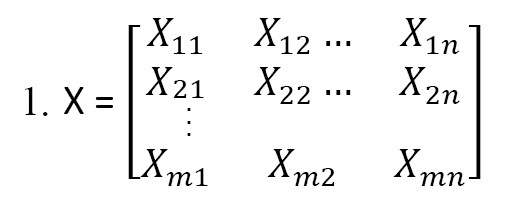
This study assessed and ranked regions based on the intensity of nuclear risk using the additive ratio assessment (ARAS) method. Expert opinions were employed to assign weights to the criteria. Initially, a decision matrix was constructed, where the rows represent the target regions and the columns correspond to the considered criteria. Each cell in the matrix indicates the evaluation of each option with respect to the criteria (
Equation 1) (Ferati et al., 2020).
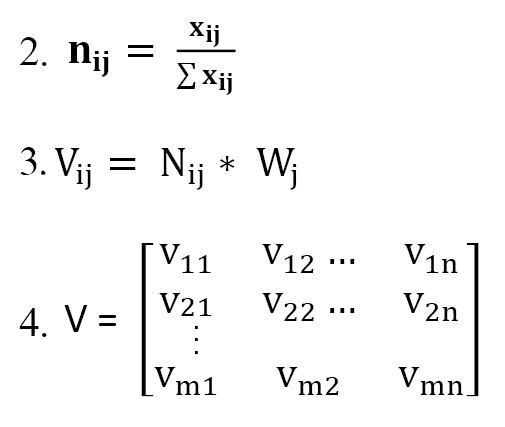
To determine the ideal value, positive criteria were assigned the maximum value, while negative criteria were assigned the minimum value. In this study, all criteria were evaluated as positive. The decision matrix was normalized separately for positive and negative criteria, and the weight (Wj) of each criterion was incorporated into this normalization (Nij) (
Equation 2, 3, and
4).
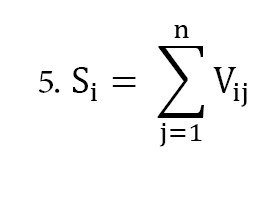
The overall utility (Si) of each option was calculated by summing the weighted normalized values (Vij) row-wise, where the highest value represents the best option and the lowest value represents the worst (
Equation 5).
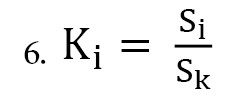
The sum of all Si values equals one, with the best option having the largest Si value. The degree of utility of the options was denoted by Ki and can be computed accordingly (
Equation 6).
This method enables the ranking of regions based on evaluations conducted against various criteria and ultimately provides decision-makers with more comprehensive information to effectively manage nuclear risk. To rank the provinces, the ARAS ranking method was employed, allowing for a systematic assessment of provinces according to the selected criteria. Using the ARAS method as a multi-criteria decision-making (MCDM) tool for analyzing and ranking provinces under crisis conditions offers significant advantages. Below are the reasons justifying the use of this method:
1- Simplicity and understandability: The ARAS method features a straightforward and comprehensible process that enables decision-makers to easily evaluate and compare various criteria and alternatives.
2- Integration of multiple criteria: This method allows for the combination of multiple criteria, which, in the context of healthcare facility location, can include diverse factors such as accessibility to transportation networks, facility capacity, distance from high-risk areas, and others.
3- Flexibility: ARAS can adapt to different conditions and scenarios. In crisis situations where variables and parameters may change rapidly, this method helps decision-makers identify the most suitable options.
4- Transparent ranking: The final ranking of alternatives in ARAS is based on aggregated scores, enhancing the transparency and clarity of the results. Such transparency is crucial for making swift and effective decisions during emergencies.
5- Incorporation of quantitative and qualitative data: ARAS can incorporate both quantitative and qualitative data in the evaluation process. For example, when assessing healthcare centers, it can evaluate quantitative criteria, such as treatment capacity alongside qualitative criteria such as service quality.
Overall, the application of the ARAS method in analyzing and ranking provinces under crisis conditions—due to its ability to integrate and analyze diverse criteria, as well as its ease of use in the decision-making process—can facilitate the formulation of efficient, data-driven decisions that ultimately enhance the effectiveness of crisis response.
Results
The increasing population and the risks associated with nuclear accidents have posed serious threats to the health and security of communities, particularly in countries such as Iran. This study examined and ranked the provinces of Iran based on population, presence of nuclear facilities, and geographical location. The findings can contribute to improved crisis management by identifying vulnerable areas, enhancing the quality of healthcare services, and reducing casualties and damages resulting from nuclear accidents. Furthermore, accurate assessment of nuclear risks and a clear understanding of existing needs will facilitate more effective collaboration between governmental and private institutions in crisis management.
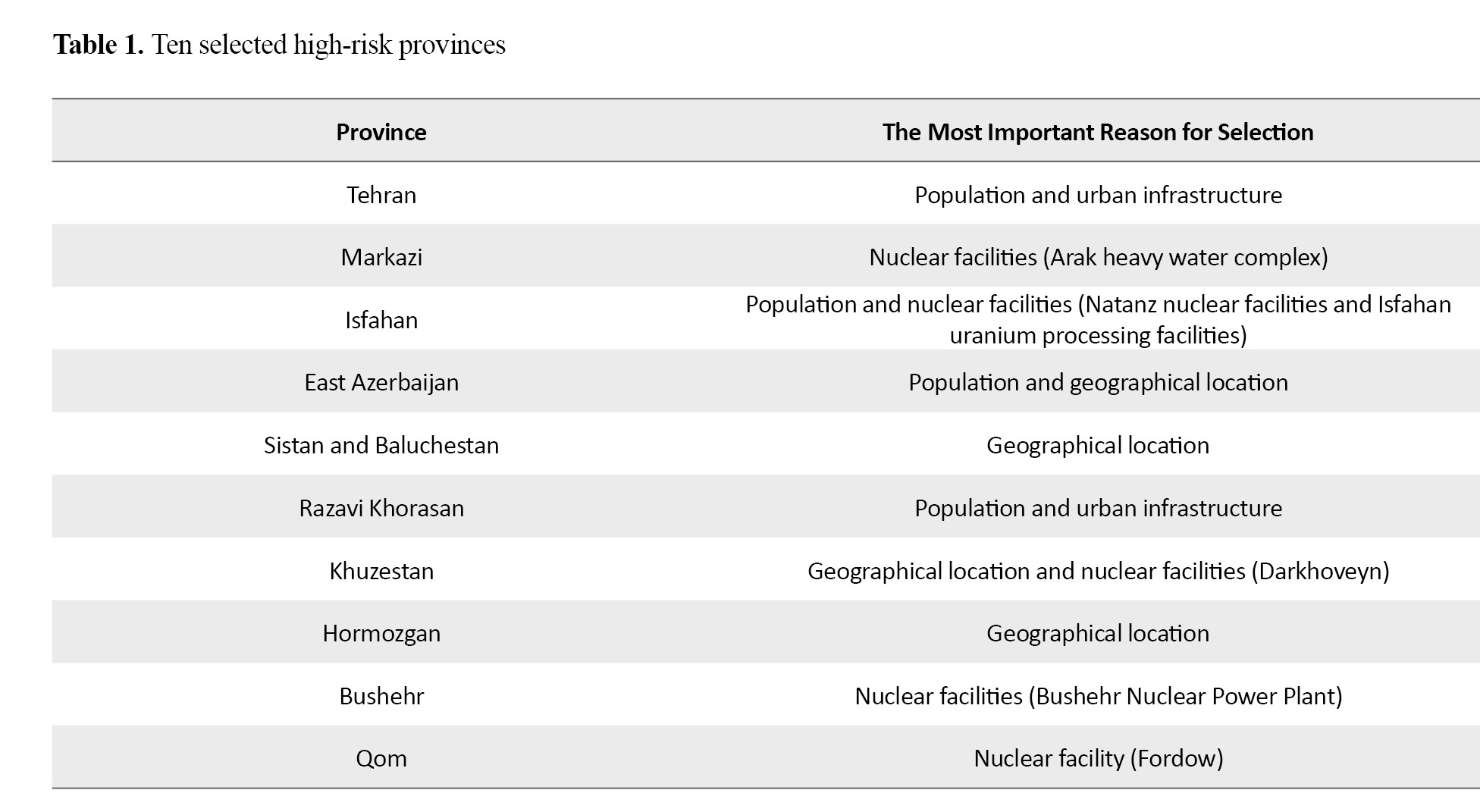
Table 1 presents the ten selected high-risk provinces in Iran, which, due to their demographic characteristics and proximity to nuclear facilities, are prioritized in crisis planning and management.
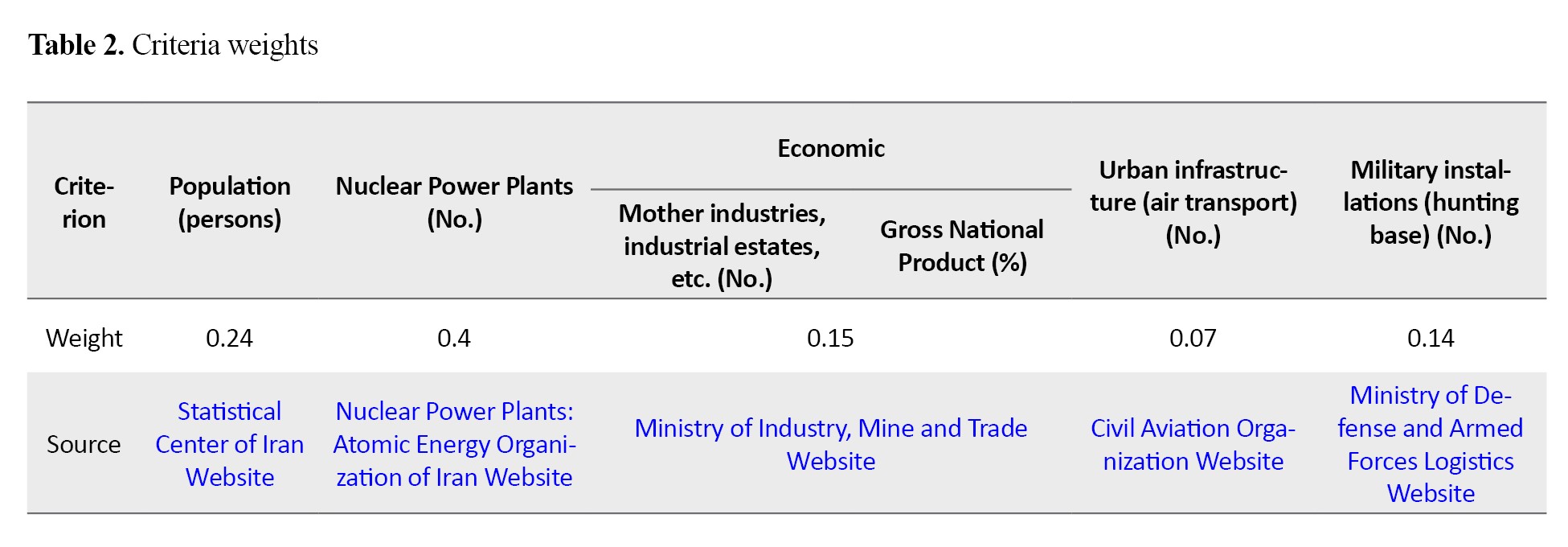
Prior to the analysis and ranking, it is necessary to determine the significance and weight of each criterion. Using expert opinion, valid weights for the criteria were extracted, as shown in
Table 2.
 Decision matrix construction
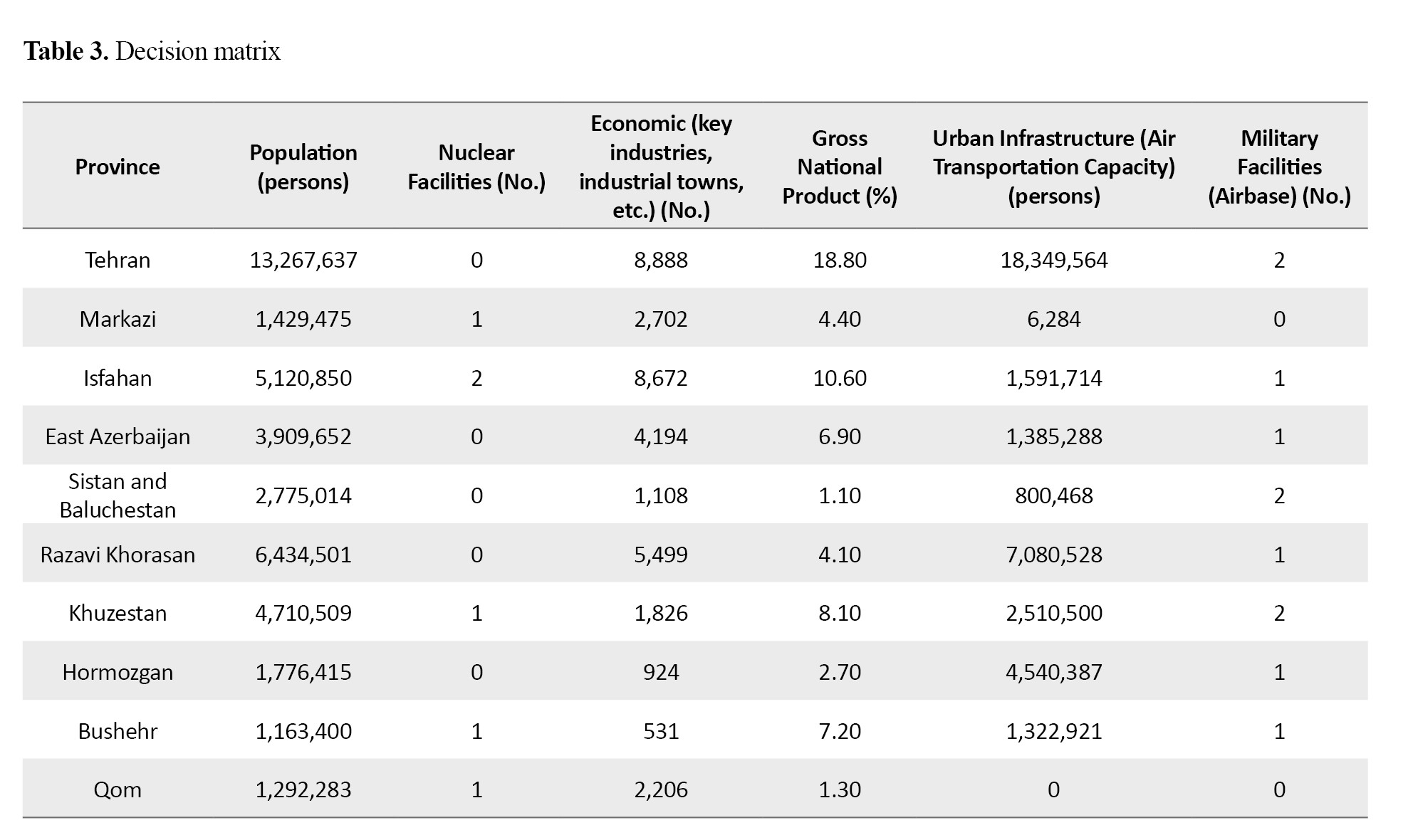
The initial step of this method involves constructing the decision matrix, which facilitates the evaluation of the available alternatives. In this matrix, the rows represent the provinces, and the columns correspond to the research criteria, including population, nuclear facilities, economic status (comprising key industries and gross national product), urban infrastructure, and airbase locations. Each cell in the matrix reflects the assessment of each alternative against each criterion (
Table 3).
 Determination of the hypothetical ideal value
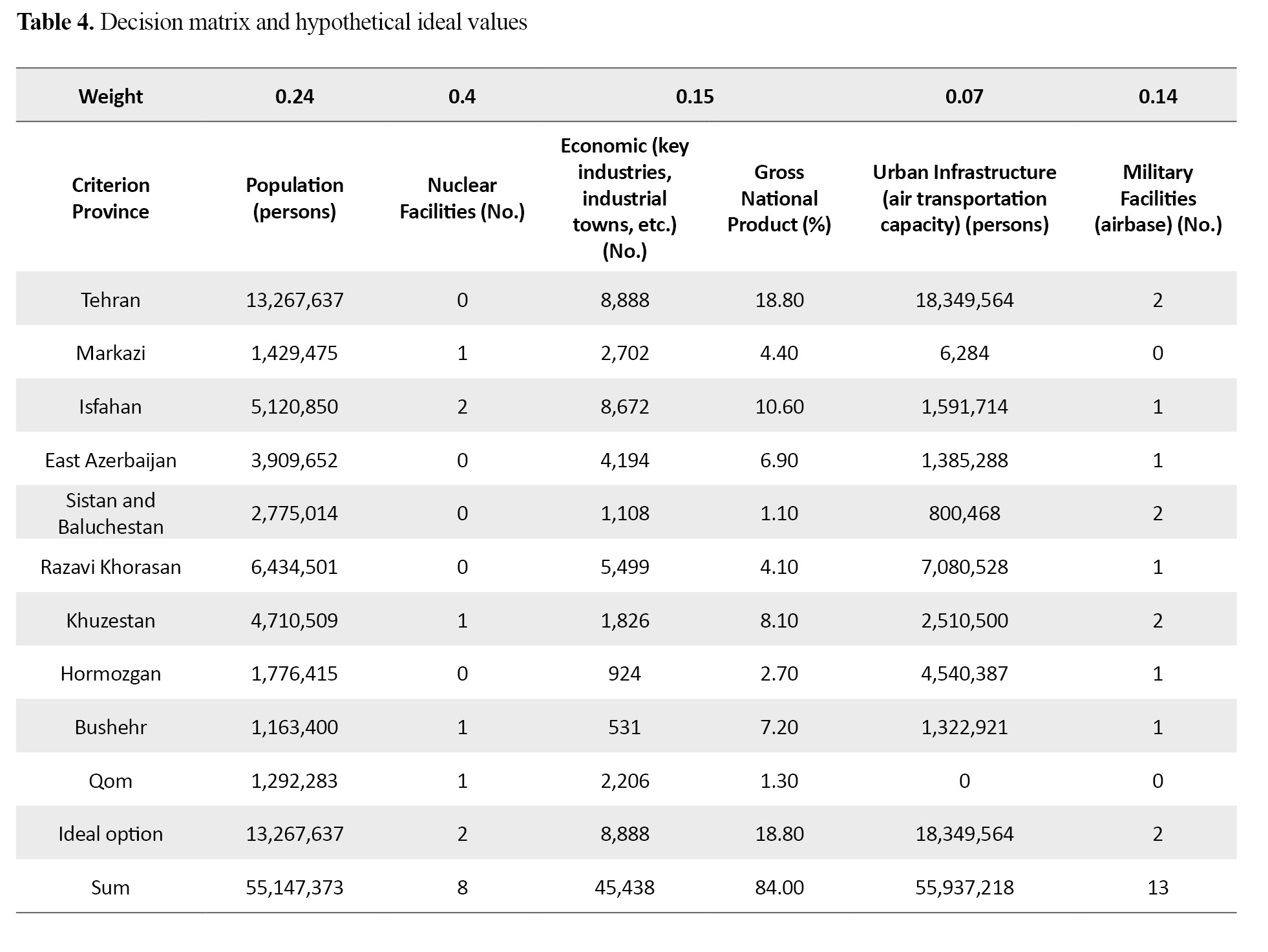
The ideal value for benefit criteria corresponds to the maximum value, while for cost criteria it corresponds to the minimum value. The decision matrix was constructed so that all criteria were treated as benefit criteria. In other words, each criterion was considered a desirable attribute, and the objective was to achieve the best performance across all criteria. Accordingly, the hypothetical ideal value for each cell in the decision matrix was defined as the maximum attainable value for that criterion. Put differently, for each province and criterion, the ideal value equaled the highest score observed within that category (
Table 4).
 Normalization and weighting of the decision matrix
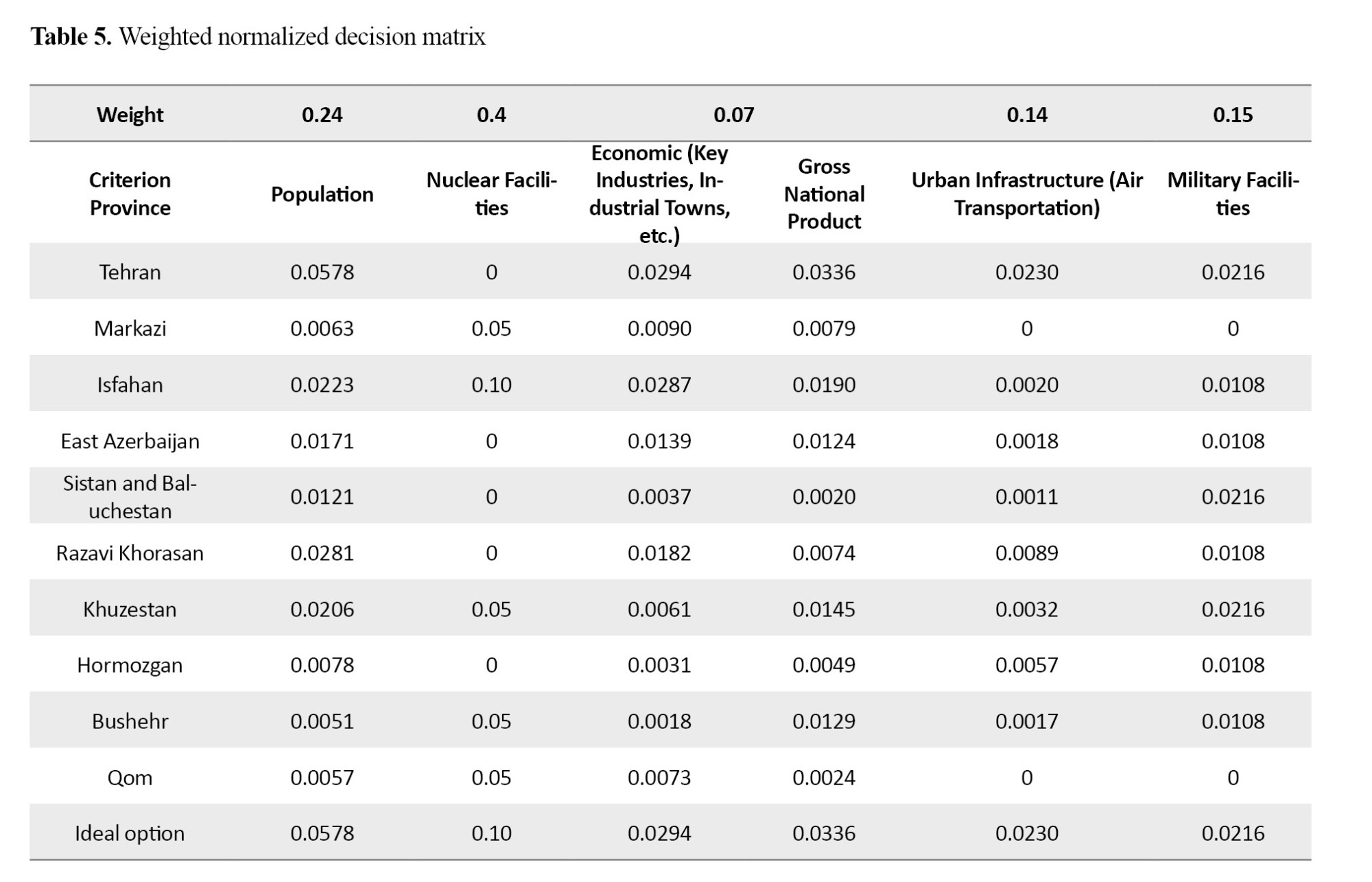
The decision matrix must be normalized separately for benefit and cost criteria. To this end, the matrix was normalized using the linear normalization method. In the subsequent step, the importance and weight of each criterion were incorporated into the normalized decision matrix. Specifically, the weight of each criterion was multiplied by the values in its corresponding column. As a result, the weighted normalized decision matrix was formed (
Table 5).
 Overall and relative utility of each option
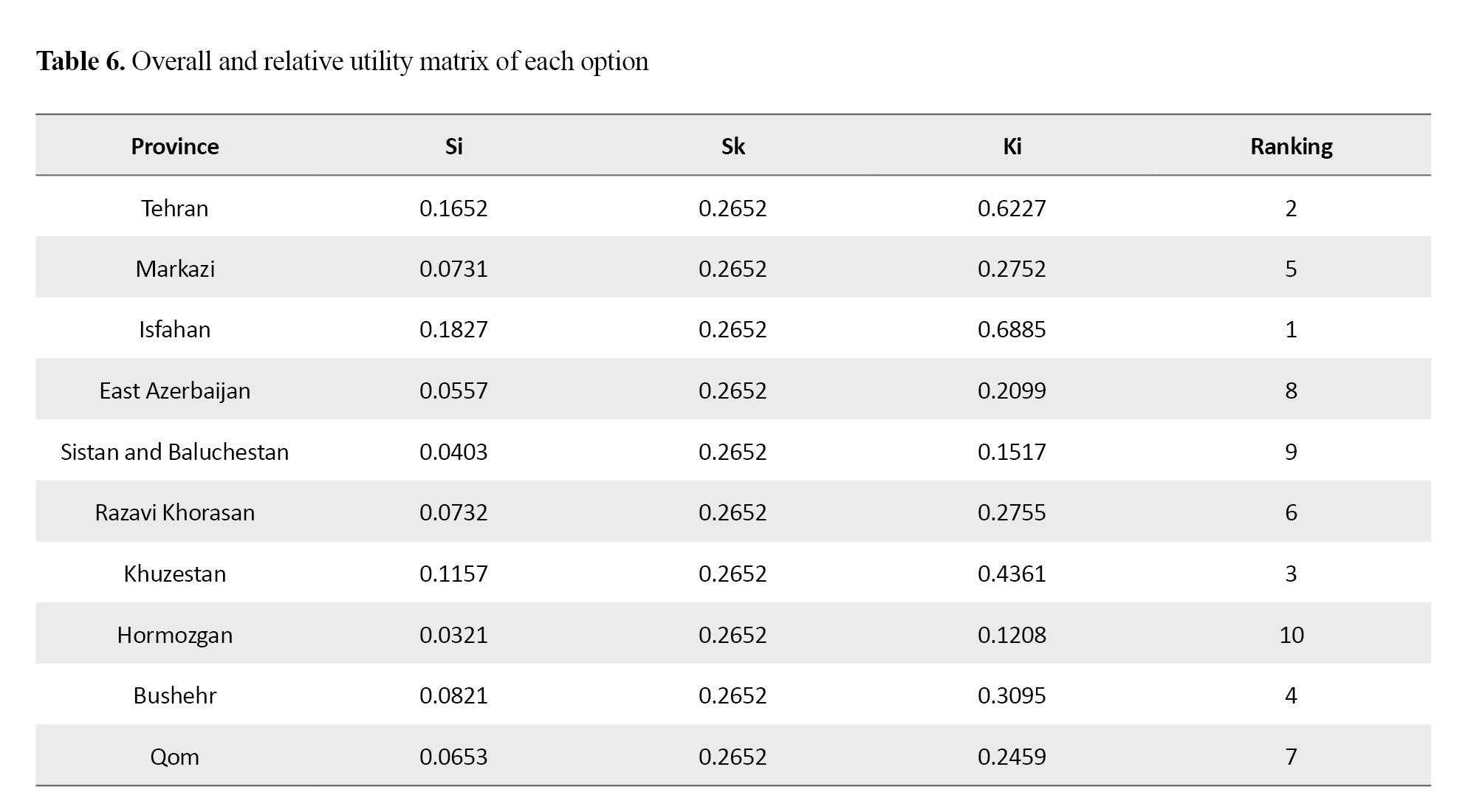
At this stage, both the overall utility and the relative utility of each option were calculated. To compute the overall utility, the normalized values in the decision matrix were summed row-wise, where the highest sum corresponded to the best option and the lowest sum to the worst. Calculating the utility degree of each option is not only crucial for ranking the alternatives but also important for determining the relative quality (utility) of each option presented. The utility degree of each province, derived using the utility function, is presented in
Table 6.
 Ranking of the alternatives
Following the implementation of the ARAS method steps, the provinces were evaluated and ranked. This multi-criteria decision-making approach enables the ranking of each province based on assessments conducted against various criteria. The final ranking results of the provinces are presented in
Table 7.
 Discussion and Conclusion
The present study, by ranking the provinces of Iran based on the intensity of nuclear risk and the probability of a nuclear accident, provides valuable managerial insights for policymakers and the government. To make effective and optimal decisions in nuclear risk management and minimize the consequences of potential accidents, it is essential to implement specific operational measures. These measures include allocating resources to high-risk provinces to reduce risk intensity through preventive actions and the provision of financial and human resources, such as safety equipment, specialized training, and infrastructure improvements.
To enhance crisis management and mitigate the risks associated with nuclear accidents, the following operational recommendations are proposed for managers and decision-makers:
1- Development of monitoring and early warning systems: Establish and expand monitoring and early warning systems for nuclear accidents, including environmental sensors and analytical software.
2- Resource allocation based on risk ranking: Allocate financial and human resources to provinces with the highest risk intensity, particularly in healthcare and medical services.
3- Development of specialized medical centers: Establish and strengthen specialized medical centers near nuclear facilities to provide immediate care to patients during crises.
This study was conducted using the ARAS method and criteria including population, presence of nuclear facilities, economic status, urban infrastructure, and military capacity of each province. The weighting of these criteria was determined based on expert opinions in the field. Isfahan province ranked first, followed by Tehran and Khuzestan provinces in second and third place, respectively, in terms of nuclear risk intensity.
The distinction of this research compared to previous studies lies in its more comprehensive approach to criteria selection, application of the ARAS method, emphasis on operational measures, focus on crisis management, and incorporation of expert judgments. Given these features, the findings can assist decision-makers in optimal planning and allocation of medical resources, especially during crises, thereby ensuring improved quality of patient care under such conditions.
Ethical Considerations
Compliance with ethical guidelines
In this study, all ethical principles were considered. Since no experiments were performed on animal or human samples, no ethical code was required.
Funding
This article was extracted from the master’s thesis of Amir Ghamcheghayi, approved by the Department of Industrial Engineering, Bu Ali Sina University, Hamadan, Iran. This research did not receive any specific grant from funding agencies in the public, commercial, or not-for-profit sectors.
Authors' contributions
Conceptualization, validation, and investigation: All Authors; Methodology, software, formal analysis, resources, data curation, visualization, and writing original draft: Amir Ghamcheghayi; Review, editing, and supervision: Parvaneh Samouei.
Conflicts of interest
The authors declared no conflict of interest.
References
Baležentis, T., Morkūnas, M., Žičkienė, A., Volkov, A., Ribašauskienė, E., & Štreimikienė, D. (2021). Policies for rapid mitigation of the crisis’ effects on agricultural supply chains: A multi-criteria decision support system with monte carlo simulation. Sustainability, 13(21), 11899. [DOI:10.3390/su132111899]
Chen, Y., Lin, Q., Wang, Y., & Li, H. (2024). AHP-based quantitative evaluation of radiation safety in nuclear technology utilization units. Journal of Radiation Research and Applied Sciences, 17(1), 100806. [DOI:10.1016/j.jrras.2023.100806]
Chen, Y., Lin, Q., Zhu, W., Tang, M., Li, H., & Li, G., et al. (2024). A scientometric review of knowledge domains on nuclear radiation. Journal of Radiation Research and Applied Sciences, 17(3), 100995. [DOI:10.1016/j.jrras.2024.100995]
Choukolaei, H. A., Ghasemi, P., & Goodarzian, F. (2023). Evaluating the efficiency of relief centers in disaster and epidemic conditions using multi-criteria decision-making methods and GIS: A case study. International Journal of Disaster Risk Reduction, 85, 103512. [DOI:10.1016/j.ijdrr.2022.103512] [PMID]
Darvish, R., Hasani, N., & Rasti Ardakani, R. (2015). [Models fire safety approach in nuclear power plants (Persian)]. Disaster Prevention and Management Knowledge, 5 (2), 130-143. [Link]
Erden, C., Ateş, Ç., & Esen, S. (2024). Distribution center location selection in humanitarian logistics using hybrid BWM-ARAS: A case study in türkiye. Journal of Homeland Security and Emergency Management, 21(3), 383-415. [DOI:10.1515/jhsem-2022-0052]
Fisher, N. S. Beaugelin-Seiller, K. Hinton, T. G. Baumann, Z. Madigan, D. J. & Garnier-Laplace, J. (2013). Evaluation of radiation doses and associated risk from the Fukushima nuclear accident to marine biota and human consumers of seafood. Proceedings of the National Academy of Sciences of the United States of America, 110(26), 10670–10675. [DOI:10.1073/pnas.1221834110] [PMID]
Forati, H., Jowkar, A., & Harati, L. (2020). [Performance Evaluation of Child and Adolescent Health Centers in the Welfare Organization by AHP and ARAS Method (Case study: Semnan, Golestan and North Khorasan Provinces) (Persian)]. Public Organizations Management, 8(2), 113-128. [Link]
Gheibdoust, H., Gilaninia, S., & Taleghani, M. (2024). Identification and prioritization of the factors influencing service quality in the hotel industry by SWARA and ARAS methods during the COVID-19 pandemic. Journal of Quality Assurance in Hospitality & Tourism, 25(6), 1918-1940. [DOI:10.1080/1528008X.2023.2209343]
Hajarian, A. (2024). [Locating the Optimal Areas for Multipurpose Urban Shelters Based on the Principles of Passive Defense in Isfahan, Iran (Persian)]. Disaster Prevention and Management Knowledge, 14(1), 44-59. [DOI:10.32598/DMKP.14.1.803.1]
Liland, A. (2015). Societal Consequences of Nuclear Accidents. In S. Apikyan & D. Diamond (Eds), Nuclear Terrorism and National Preparedness. NATO Science for Peace and Security Series B: Physics and Biophysics. Dordrecht: Springer. [DOI:10.1007/978-94-017-9891-4_19 ]
Liu, X., Chen, Z., Wang, F. Y., Yang, D., Qin, R., & Pang, M. et al. (2024). Nuclear pollution or safe discharge: topic evolution and cognitive analysis on Fukushima’s treated radioactive water. IEEE Transactions on Computational Social Systems, 11(6), 7338 - 7347. [DOI:10.1109/TCSS.2024.3406700]
Nokhbatolfoghahaayee, H., Menhaj, M. B., & Shafiee, M. (2010). Fuzzy decision support system for crisis management with a new structure for decision making. Expert Systems with Applications, 37(5), 3545-3552. [DOI:10.1016/j.eswa.2009.10.011]
Pamučar, D., Žižović, M., Marinković, D., Doljanica, D., Jovanović, S. V., & Brzaković, P. (2020). Development of a multi-criteria model for sustainable reorganization of a healthcare system in an emergency situation caused by the COVID-19 pandemic. Sustainability, 12(18), 7504. [DOI:10.3390/su12187504]
Povinec, P. P., & Hirose, K. (2015). Fukushima radionuclides in the NW Pacific and assessment of doses for Japanese and world population from ingestion of seafood. Scientific Reports, 5, 9016. [DOI:10.1038/srep09016] [PMID]
Razi, M., & Ali, Y. (2019). Ranking renewable energy production methods based on economic and environmental criteria using multi-criteria decision analysis. Environment Systems and Decisions, 39, 198-213. [DOI:10.1007/s10669-018-9713-6]
Ribeiro, F., Ferreira, P., & Araújo, M. (2013). Evaluating future scenarios for the power generation sector using a Multi-Criteria Decision Analysis (MCDA) tool: The Portuguese case. Energy, 52, 126-136. [DOI:10.1016/j.energy.2012.12.036]
Salbu, B., Skipperud, L., & Lind, O. C. (2015). Sources contributing to radionuclides in the environment: With focus on radioactive particles. In C. Walther & D. Gupta (Eds), Radionuclides in the Environment. Cham: Springer. [DOI:10.1007/978-3-319-22171-7_1]
Salehi, V., Zarei, H., Shirali, G. A., & Hajizadeh, K. (2020). An entropy-based TOPSIS approach for analyzing and assessing crisis management systems in petrochemical industries. Journal of Loss Prevention in the Process Industries, 67, 104241. [DOI:10.1016/j.jlp.2020.104241]
Susiati, H., Widiawaty, M. A., Dede, M., Sunardi, Ryanto, T. A., & Handono, K. (2024). Criteria and methods in nuclear power plants siting: A systematic literature review. Cogent Social Sciences, 10(1), 2354976. [DOI:10.1080/23311886.2024.2354976]