Introduction
Emergency evacuation simulation in buildings, especially in public and high-density spaces, plays a vital role in safety planning and building design assessment. The development of evacuation simulation models for various applications has been a key focus of recent research. Many of these models have utilized evolutionary computation methods, such as genetic algorithms (GA), estimation of distribution algorithms (EDA), and ant colony optimization (ACO). For example, Garrett et al. (2006) employed GA and EDA for the optimal placement of exits, while Zong et al. (2010) used ACO to model evacuation routes in mixed traffic. Among these approaches, particle swarm optimization (PSO) has garnered significant attention from researchers due to its simple structure and high efficiency. First introduced by Kennedy and Eberhart (1995), PSO is inspired by the collective behavior of birds and possesses the capability to accurately simulate human movement across various scenarios. This algorithm has been utilized to analyze human behavior, prevent crowd collisions, and optimize the interior design of buildings. In this study, a PSO-based framework was proposed for simulating emergency evacuation in high-traffic religious sites. By considering the specific needs of individuals with disabilities and veterans, this framework incorporates factors, such as environmental obstacles and collision avoidance mechanisms as objective functions within the model. The objective was to provide a solution for optimizing interior space design and enhancing safety under both normal and emergency conditions. This paper is organized as follows: section 2 reviews the details of the PSO algorithm and previous research; section 3 explains the proposed framework improvements and simulation scenarios, while the results are presented in section 4, and finally, section 5 provides a summary and suggestions for future research.
Materials and Methods
PSO-based simulation scheme
In line with recognizing the role and status of individuals with disabilities and veterans in the tourism industry, there is a critical need to provide specialized facilities and services for this demographic. With the increasing presence of disabled pilgrims and worshippers in the country’s religious and holy sites, the necessity of addressing their specific needs is more apparent than ever; therefore, meeting the requirements of disabled tourists in these venues must be prioritized. When designing spaces and facilities for individuals with disabilities and veterans, criteria, such as comfort, rapid and safe evacuation, and ensuring their security must be considered. Conventional design of spaces and buildings is primarily tailored to the majority of the population, which often leads to significant accessibility barriers for people with disabilities. This social group exhibits greater vulnerability, particularly during emergencies, such as earthquakes or fires; therefore, it is essential to provide appropriate strategies for their safe evacuation. Empirical estimates indicate that as a location becomes more crowded and enclosed, accessibility for individuals with disabilities and their ability to exit the premises become increasingly difficult. In this context, the social group of individuals with disabilities and veterans has a greater need for presence in religious sites, especially the Holy Shrine of Imam Reza (AS), to benefit from the tranquility of such spaces. Given the teachings of the Imams regarding the importance of the shrines’ serenity for pilgrims, access for those in need must be facilitated. In recent research, scholars in the field of building design have proposed various criteria and standards to evaluate and measure the level of accessibility for people with disabilities.
Although issues related to accessible tourism have been researched in developed countries, accessible tourism for people with disabilities and the elderly has not yet been extensively explored in Iran (Qobadian, 2016). The central aim of this research is the use of artificial intelligence, specifically the PSO algorithm, to improve the pilgrimage experience of individuals with disabilities and veterans and to reduce potential risks during emergency situations. The PSO algorithm, introduced in 1995 by Kennedy and Eberhart (1995), formulates each potential solution as a particle in a multi-dimensional space and is recognized as an effective tool for solving optimization problems. This research aimed to provide strategies for the safe and optimal evacuation of individuals with disabilities and veterans in religious sites using this algorithm (
Equation 1).
1. x=[x1,x2,....,xD]T
Each particle possesses its own position, velocity, and objective value, which is determined by the objective function. The new position of a particle is determined by leveraging its own experience and communication with other particles to move toward the desired solution. Before determining the new position, the velocity is first calculated; the particle’s velocity at pi at time t+1 is determined by
Equation 2.
2. vi(t+1)=wvi(t)+c1r1(piBLS-pi(t))+c2r2(pBGS-pi(t))
Where, vi and pi represent the velocity and position of the i-th particle, respectively. w is the inertia weight of the previous velocity, piBLS is the best position based on personal experience (local best), and pBGS is the global best position obtained by the swarm. c1 and c2 are parameters to control the influence of pBGS and piBLS r1 and r2 are random numbers selected from (0, 1) to provide diversity to the velocity. After calculating the velocity, the new position of the particle can be determined using
Equation 3.
3. pi(t+1)=pi(t)+vi(t+1)
In each iteration, every particle updates its velocity and position, and subsequently evaluates its objective value based on the objective function. Among all new objective values, piBLS and pBGS may also be updated to steer the swarm toward the optimal solution. Since a particle is free to move in any possible direction, modifications must be implemented to ensure the simulation of human behavior is conducted successfully and realistically. Based on previous studies in the papers by Lin and Chen titled “Controlling crowd motions in computer graphics using the PSO mechanism” (Lin & Chen, 2007) and “Crowd control using swarm intelligence,” three primary factors must be adjusted: the first is applying constraints to particle movement to simulate human trajectory; the second is the simulation of obstacles; and the third is collision avoidance between obstacles and particles.
Particle movement
Referring to
Figure 1, given that the evacuation simulation is conducted in a 2D space, we restrict the position and velocity of the particles to a 2D space, as
Equation 4:
4. pi=[pix,piz]T و vi=[vix,viz]T.
In order to simulate human space and prevent particles from jumping beyond the reality of human movement, the velocity was divided into a direction component and a speed component; the direction component was used for decision-making regarding the particle’s path, and the speed component was used to control the distance of each particle step. The update equation for the direction component is similar to the velocity update equation (
Equation 5).
5. Di(t+1)wDi(t)+c1r1(piBLS-pi(t))+c2r2(PBGS-pi(t))
In this equation, piBLS-pi (t), pBGS-pi (t), are represented as unit vectors to indicate direction only. The other parameters are determined as in the standard PSO. By selecting the particles’ direction, the new position of each particle can be determined by
Equation 6.
6. pi(t+1)=pi(t)+Si(t+1)×Di(t+1)
Si(t+1) is the speed component within the interval [0,Vmax]. The maximum speed can be selected as the size of a single step or by other defined parameters. To simulate particle movement as human movement, the speed can be updated proportionally to the inverse of the particle’s objective function value. This is derived from the reality that humans decrease their speed when approaching an obstacle. Because PSO searches for minima in the surrounding environment, the value of the objective function must increase when a particle approaches an obstacle so that the particle’s speed decreases.
Objective function
In the papers by Cheng et al. titled “Controlling crowd motions in computer graphics using the PSO mechanism and crowd control using swarm intelligence” (Cheng et al., 2008), a cost function has been defined to evaluate the relationship between particles and other targets present in the search space. The cost value of particle p with target q is obtained by
Equation 7.
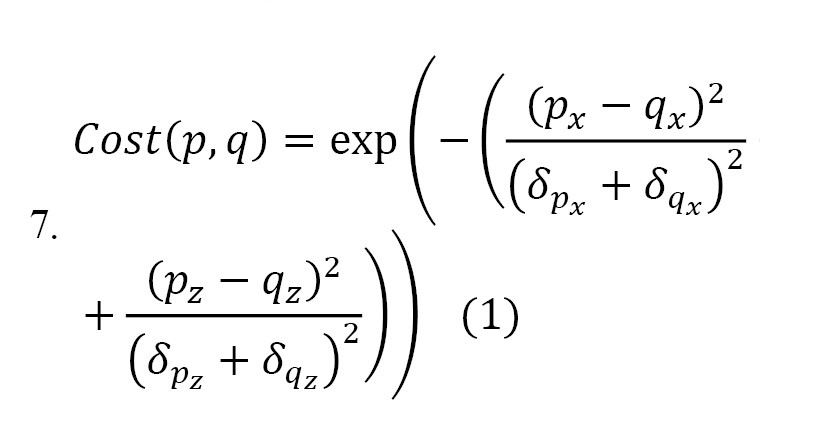
In this equation, px and pz represent the position of particle p. qx and qz represent the position of target q, and the range of particle p and object q denotes the area covered by the target. Since the target can be an obstacle, a destination, or other particles, the range will differ. For example, the range of a target measuring 20×40 is equivalent to the set (δqx, δqz=(10, 20). To represent the target, the range might encompass the entire search space. Among these modifiable parameters, the target is readily adjustable and controllable to fulfill diverse user needs, essentially defining the spatial structure of a religious venue or the arrangement of elements within a space. By establishing a cost function, the search space with minimum positions as targets can be achieved through the superposition of these exponential functions with similar or varied parameters. Consequently, the objective function is determined by
Equation 8.

O is the set of all obstacles, including structural obstacles of the space and other individuals present in the crowd, g represents a destination for the particle’s forward movement, and cobs is a constant for the user to control the relative importance between obstacles and the destination. By observing the definition of the objective function, it can be seen that a particle will have a lower objective value when approaching destinations. On the other hand, when a particle approaches an obstacle, it makes no difference to the particle whether it encounters a wall or another individual in the crowd; in this case, the objective value increases. Under this cost function, PSO can be used to simulate an evacuation model from a building. Safe exits or safe zones can be modeled as destinations, while walls, furniture, and elements present in the space can be modeled as obstacles.
Another advantage of the scheme is that there is no need to add an additional model to incorporate new objects, and by controlling the introduced parameters, all objects can be modeled with other types of particles such as moving vehicles or larger entities. With appropriate parameter settings, the PSO-based simulation scheme can achieve its design objective, and particles can converge to the intended destination with a high probability along a reasonable path.
Collision avoidance
Although the objective function is designed to guide the particle around obstacles, there is still a possibility of the particle crossing obstacle boundaries or colliding with other particles or obstacles. To prevent this, the new particle position must be evaluated at each update to verify the feasibility of its occurrence; for this purpose, a validation mechanism has been described. An exponential function was used for the position validation mechanism, although other function families can be used depending on user preference.
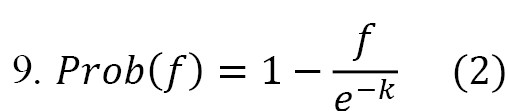
The reason for selecting the exponential function is its ease of calculation and modification. The validation mechanism uses probabilities to determine the acceptance of a particle’s newly calculated position (
Equation 9).
In
Equation 9, f is the cost of the newly calculated position, and k is a constant that allows the user to determine the validity of a particle near an obstacle.
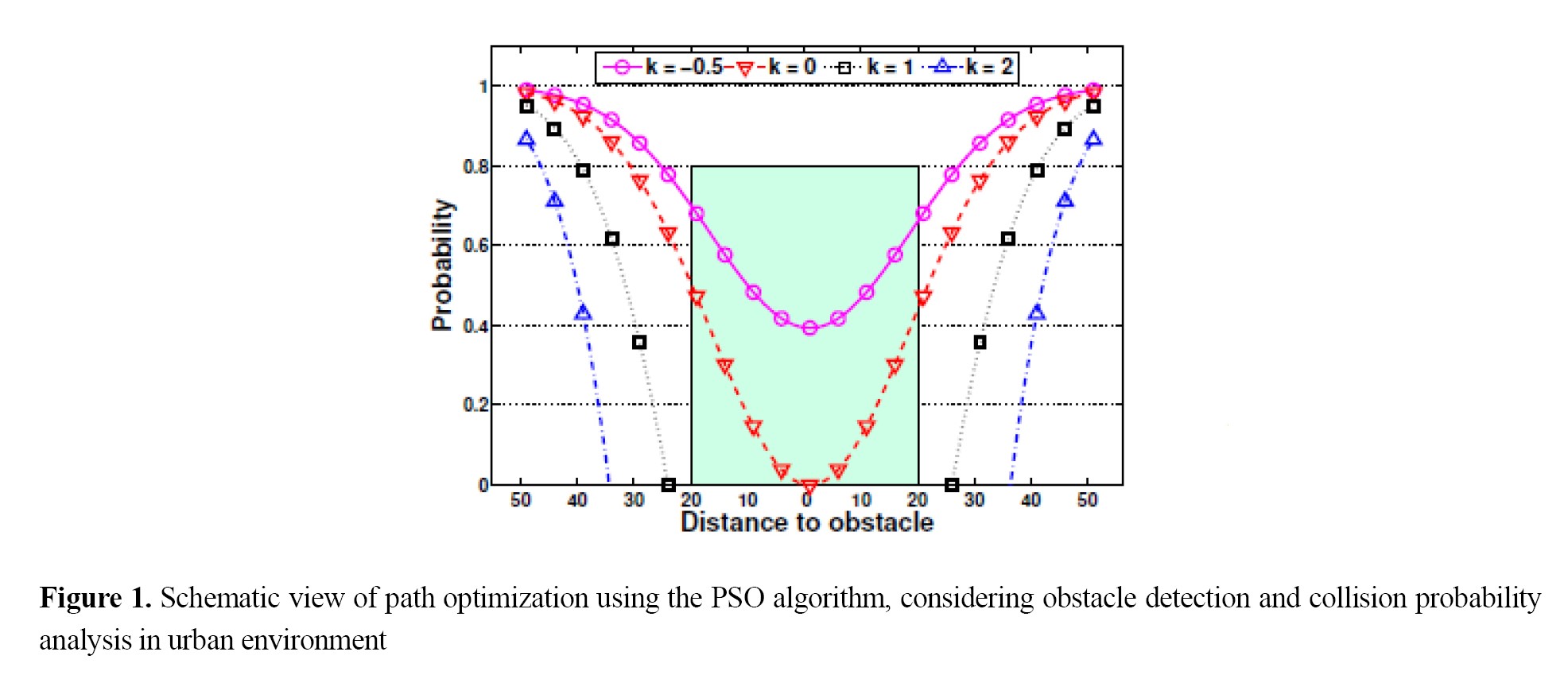
Based on the validity probability function, a hard boundary is created when k=1 is chosen, because the probability of accepting the particle’s position is zero if f=e−1, which means the particle and the obstacle will remain adjacent to each other based on the definition of Equation 1; therefore, collision with obstacles is avoided through the validation mechanism. Assuming the radii of the particle and the obstacle are 5 and 20, respectively,
Figure 1 shows the probability of accepting the particle’s position while it is near the obstacle. If the new position is not validated, a new direction—such as adding a random degree between -20 and +20—is added to the original goal, and the new position is tested again for validity; however, the position with the lower cost is selected as the particle’s new position.
Improvements to the PSO-based evacuation framework
While the proposed simulation approach has addressed many challenges related to crowds in real-world spaces and particles in free space, several key issues remain that require further investigation. Among these challenges are the potential for a particle to become trapped and problems related to exiting the sight line. To resolve these challenges, two main solutions are proposed.
Local search
By examining the collision avoidance mechanism introduced by Lin and Chen in their papers titled “Controlling crowd movements in computer graphics using the PSO Mechanism and “Crowd Control with Swarm Intelligence” (Chen & Lin, 2009), a particle may be positioned very close to an obstacle and, when encountering non-circular obstacles, may become trapped and unable to find a suitable exit position. In this state, the particle might reach a specific location and remain there until the end of the simulation. To resolve this, improvements have been made to the local search. Local search is a common mechanism in PSO, which has also been utilized in the works of Lin and Chen to avoid collisions. However, the current search range is limited to between -20 and +20 degrees; while sufficient for circular obstacles, particles cannot find acceptable positions within this constraint when facing obstacles with sharp edges. Therefore, the local search range is gradually expanded to find a suitable path for continued movement. After calculating the DS via the original PSO, a direction is randomly selected from the ±20-degree range, and its validity is checked. If this direction is also ineffective, the process is repeated up to 20 more times. Finally, if all sampled directions are not acceptable, the search position will be evaluated by adding the angle θ, or in other words, θ₂ and θ₃. The search mechanism is designed to mimic human behavior toward obstacles, where a human attempts to find a way to continue movement, such as moving parallel to a wall until reaching a door or an exit. Consequently, the movement of trapped particles, based on this stepwise search, ultimately takes the form of movement along the edges of obstacles. As a result, the expanded local search space and the random sampling mechanism can provide particles with the opportunity to move and prevent oscillation between two points in the target space. These improvements in the local search can enhance the efficiency of the PSO-based evacuation framework and lead to significant improvements in future simulations.
Global best value update mechanism in the PSO algorithm
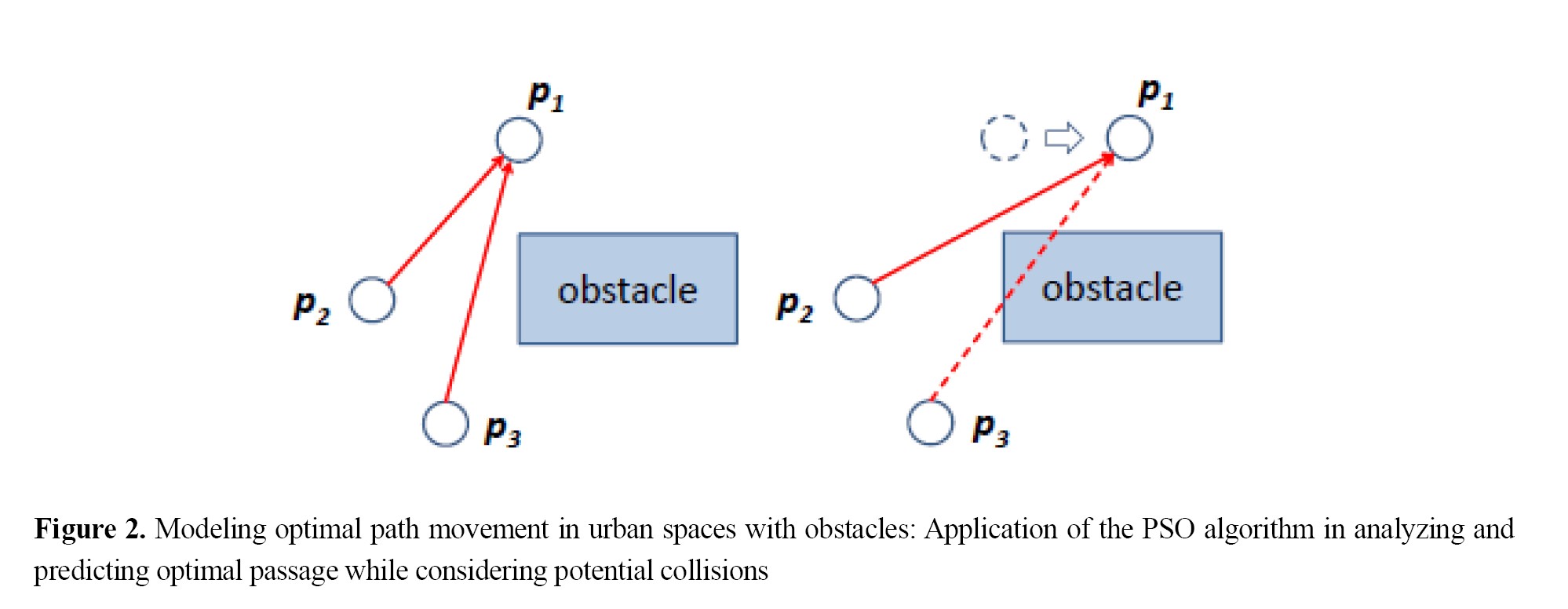
In the PSO algorithm, one of the key concepts is the updating of the global best information. In the original version of this algorithm, there are no obstacles in the search space, and particles can always update the global best information regardless of their spatial position. However, in the real world, the presence of various obstacles can lead to an inability to access accurate information. For example, if an obstacle is placed between a particle (human) and the position with the best objective value, they will be unable to perceive the position of the best particle. This phenomenon, known as the line-of-sight obstruction effect, necessitates modifying the update mechanism in PSO to align with real-world conditions. To model the line-of-sight obstruction effect in PSO, instead of directly sharing the global best information, each particle must retain only the best position that has appeared within its field of view up to that moment. In other words, information is updated only if a particle with a better target value comes into the line of sight of another particle; that is, there must be no obstacle between them.
Figure 2 illustrates an example of the modified update mechanism.
The description for
Figure 2 assumes that the objective value of particle p1 is better than all other particles, such as p2 and p3; since p2 and p3 can see particle p1, they can maintain the position of p1 as the global best information. After particle p1 moves to a new position with a better objective value, only particle p2 can receive the new global best information, as p1p1 is still within its field of view. However, particle p3 cannot access the new information from p1. This mechanism is designed to simulate a situation in which individuals are unaware of the movement of a person located behind an obstacle. The modified computational steps for each particle in each iteration are as follows:
1- Finding a new acceptable position,
2- Calculating the objective value,
3- Updating the local best and global best information if necessary,
4- Updating the global best information of all particles within their sight line.
By implementing these significant improvements, the simulation framework can easily simulate human behaviors. To better understand the capabilities and efficiency of this framework, several practical examples will also be presented, demonstrating the new functionalities and increased accuracy in the simulations.
Consideration of individuals with disabilities
Identifying the specific needs of disabled pilgrims in the Razavi Holy Shrine can significantly improve the quality of services and facilitate this group’s access to religious facilities, positively and meaningfully impacting the pilgrims’ mental health and quality of life (Basouli & Derakhsh, 2022), especially for those facing mobility challenges (Hosseini & Yazdani, 2021). Investigations and observations conducted in the Goharshad Mosque courtyard within the Razavi Holy Shrine and other sacred sites indicate that approximately 3% of the population present in these locations have some form of disability. Of these individuals, about 33% suffer from physical disabilities, 33% have visual impairments, and the remaining 33% suffer from both types of limitations. These statistics underscore the necessity of addressing the specific needs of these individuals when designing and optimizing public spaces. PSO, considering the percentage of individuals with disabilities: in the optimization of the Particle Swarm model, the speed of 2% of this population is considered at 40% of normal speed, and the vision of 2% of the community is considered at 50% of the vision of a normal individual. These assumptions are applied to simulate the behavior of these individuals in the defined environment more accurately, and the speed and line of sight of each particle are proportionally reduced according to these limitations.
Results
In this section, the Goharshad Mosque area is investigated and simulated. The designed map is presented in
Figure 3.
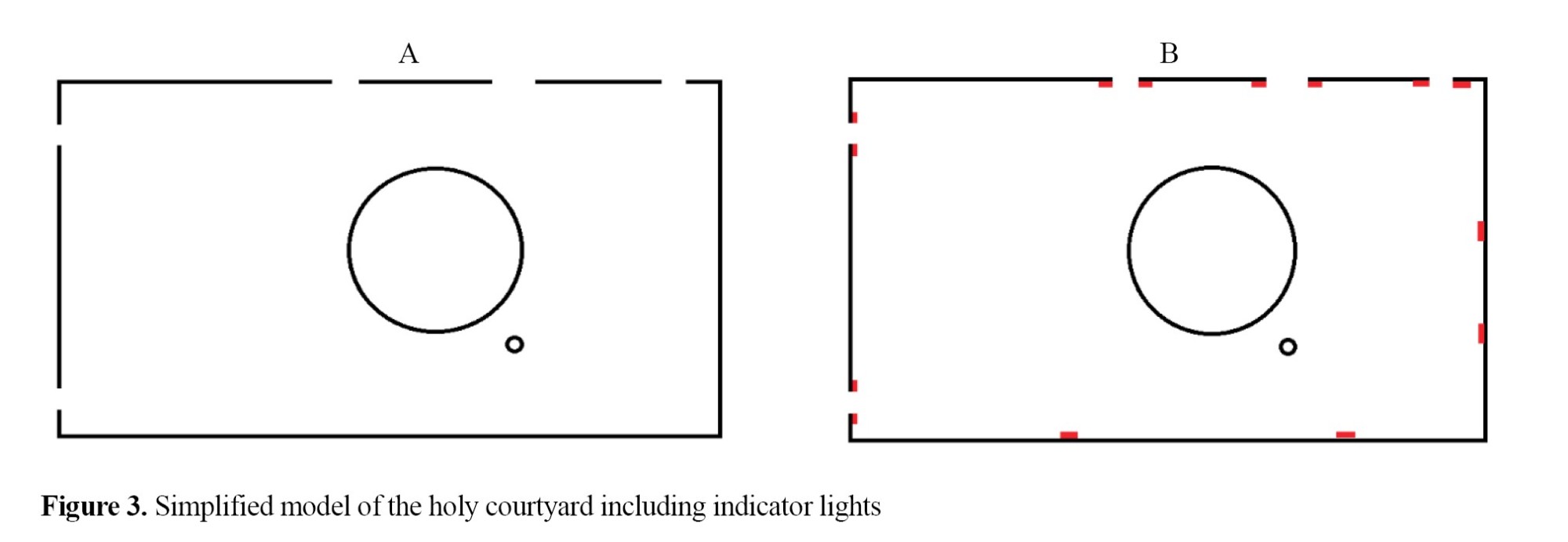
The overall area of the mosque is defined with dimensions of 700×400 square meters, and the coordinates of this space are specified in the same figure. Each particle is considered as a circle with a radius of 5 units and a maximum velocity (Vmax=5). The parameters used in the PSO algorithm are provided in
Table 1.

Furthermore, this research assumes that particles tend to move toward the global best objective value with higher priority than the observed local best position. For a more precise investigation, 50 particles are placed in each simulation round, and the number of iterations required to reach the target is recorded. For each figure, one thousand simulation rounds are performed, and the average results are displayed in
Table 2.
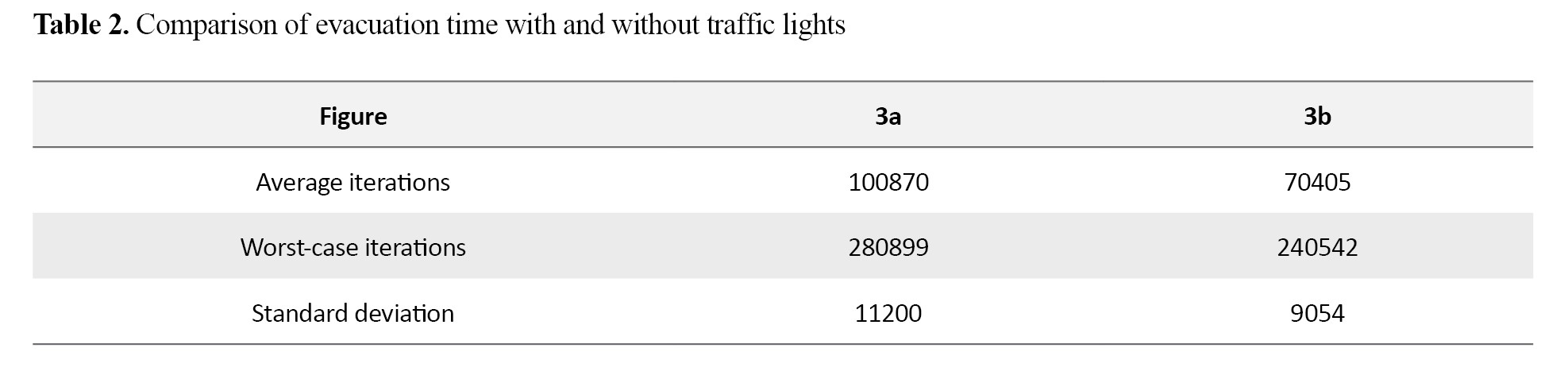
The standard deviation indicates the dispersion of iterations across all simulation rounds and assists in analyzing particle performance. Additionally, the paths generated by each particle during the simulation are shown in
Figure 3. This visualization enables users to identify and improve the weaknesses of the area. The conclusions of these simulations can assist designers and public space administrators in designing and implementing better environments by taking into account the specific needs of individuals with disabilities. Moreover, the ability to record the simulation provides the possibility for a more detailed analysis and examination of particle behavior under various conditions.
Comparison of the impact of exit indicator lights
The simulation framework presented in this research allows for modifications to the internal courtyard obstacles as well as the exit doors. Furthermore, the capability to add exit indicator lights is available within this simulation environment. These lights provide valuable information regarding exit locations to individuals and play an essential role in facilitating the safe evacuation of people from hazardous areas. The indicator lights must be designed to clearly indicate the exit path. However, it is crucial that the placement of these lights is precisely determined; installing lights in locations that are not visible to individuals can render them effectively useless.
Simulation and results in the performed simulation
The location of the lights is modified to investigate their impact on evacuation speed. The indicator light is modeled as a stationary particle with a defined target value. Any particle that enters the indicator light’s field of view moves toward the light by improving its information regarding the best objective value. The simulation results clearly demonstrate the advantages of utilizing indicator lights. The average and worst-case iterations are observable in
Figure 3, requiring approximately 100,000 iterations on average and 280,000 iterations in the worst case. By observing the paths generated during the evacuation process, it is evident that particles are attracted by the indicator lights and evacuate at a higher speed. Particles move toward the nearest light by following the evacuation indicators, which positively impacts the correct exit path. This experiment shows that the proposed framework is capable of simulating the presence of indicator lights without complicating the code structure.
Discussion
Given that validating evacuation maps in the real world is highly difficult and costly, evacuation simulation systems have become an important and irreplaceable tool for evaluating and testing these plans. Numerous studies have been conducted on the development and implementation of various evacuation scenarios, and evolutionary algorithms are typically used to obtain optimal solutions for exits assignment, identify egress routes, and design building interior layouts. Human-behavior simulation, which is a critical topic in all related research, has been widely investigated, and many studies have employed PSO. One of the reasons for using PSO is the algorithm’s ability to simulate human motion and avoid obstacles. However, PSO algorithms in prior research have often been complex and only suitable for specific, non-adaptive conditions without flexibility to accommodate changes in building structures. The research framework proposed in this study is capable of examining all necessary factors for simulating human evacuation scenarios.
These factors include human movement, obstacles, exit signage, and—particularly—individuals with mobility or visual impairments who have lower speed and reduced visibility compared with persons without such limitations. In the field observations conducted, one of the doors had been closed due to construction activities, and a scaffolding structure was installed within the mosque courtyard. The proposed framework in this study is able to account for these specific conditions and can provide appropriate evacuation solutions for users in different scenarios. To demonstrate the framework’s capabilities, the courtyard of the Goharshad Mosque was selected as the case study site. The obtained results indicate the effective performance of this framework under various conditions and its ability to provide evacuation routes for users, thereby improving the evacuation process and enabling appropriate measures to accelerate egress.
It should be noted that the challenges of simulating human behavior due to its high complexity require further research. Human behavior is influenced by various factors, such as psychological and physical stressors. For example, researchers have examined the impact of individuals’ mental states on how they move. Persons with disabilities, injured individuals, or older adults exhibit movement behavior that differs from that of others; therefore, this study employs different PSO variants to achieve a more accurate simulation. Nevertheless, the correct simulation of collective human movement remains a challenging issue and will require further research in the future.
Conclusion
The proposed framework successfully modeled human behavior and the needs of persons with disabilities in the evacuation simulation of the Imam Reza holy shrine. The results demonstrated the significant impact of guidance lamps and the importance of algorithm adaptability in the presence of complex obstacles.
By providing an advanced simulation framework, this study has taken an effective step toward improving safe evacuation management in urban spaces and public buildings. The findings highlight the importance of this research in enhancing the efficiency of evacuation processes and increasing overall public safety. By analyzing the effects of multiple factors, such as exit guidance lamps and potential obstacles, this study enables designers and planners to support greater speed and safety in emergency conditions through the use of appropriate operational solutions.
Paying attention to the specific needs of individuals in crisis conditions, alongside an emphasis on human behavior and the role of psychological factors in decision-making, is another important aspect of this study. Examining the effects of the diversity of needs—particularly for vulnerable groups—can lead to the design of coherent and comprehensive approaches to improve evacuation conditions in public spaces.
Finally, it is recommended that future research focus on more accurate simulations and on validating this framework using real-world data. In addition, considering the role of human and social factors in evacuation processes can result in the development of more effective crisis management solutions. This study can serve not only as a pioneering reference in the field of evacuation simulation, but also as a suitable foundation for future research in urban design and planning.
However, limitations, such as the lack of consideration of the psychological stress experienced by individuals with needs require further research. It is suggested that the effects of human factors such as anxiety and group behavior be examined in future PSO versions.
Research limitations and future recommendations
The limitations of this study include snowball sampling (with the possibility of sample homogeneity), limited access to senior managers of the holy shrine, and self-reporting bias in the questionnaire responses by experts, managers, faculty members, and individuals with disabilities. In addition, the geographic focus on Astan Qods Razavi and the holy shrine of the Eighth Imam requires caution when generalizing these findings to other regions. Future studies can reduce these challenges by using stratified sampling, combining quantitative and qualitative methods, and expanding the geographic scope.
Ethical Considerations
Compliance with ethical guidelines
All ethical principles were observed in this study. Since the research did not include any experiments on human or animal samples, no ethics approval code was required.
Funding
This article was extracted from the PhD dissertation of Shahrooz Soroush, approved by the Department of Management of Sacred and Religious Sites, Imam Reza International University (PBUH), Mashhad, Iran. This research did not receive any specific grant from funding agencies in the public, commercial, or not-for-profit sectors.
Authors' contributions
All authors contributed equally to the conception and design of the study, data collection and analysis, interpretation of the results, and drafting of the manuscript. Each author approved the final version of the manuscript for submission.
Conflicts of interest
The authors declared no conflict of interest.
References
Basouli, M., & Derakhsh, S. (2022). [Investigating the needs of disabled pilgrims in religious places (Case Study: Razavi Shrine) (Persian)]. Journal of Razavi Culture, 9(35), 37-61. [DOI:10.22034/FARZV.2020.236874.1540]
Cheng, W., Bo, Y., Lijun, L., & Hua, H. (2008). A modified particle swarm optimization-based human behavior modeling for emergency evacuation simulation system. Paper presented at 2008 International Conference on Information and Automation, Changsha, 20-23 June 2008. [DOI:10.1109/ICINFA.2008.4607962]
Chen, Y. P., & Lin, Y. Y. (2009). Controlling the movement of crowds in computer graphics by using the mechanism of particle swarm optimization. Applied Soft Computing, 9(3), 1170-1176. [DOI:10.1016/j.asoc.2009.03.004]
Garrett, A., Carnahan, B., Muhdi, R., Davis, J., Dozier, G., & SanSoucie, M. P., et al. (2006). Evacuation planning via evolutionary computation. Paper presented at 2006 IEEE International Conference on Evolutionary Computation, Vancouver, BC, Canada, 16-21 July 2006. [DOI:10.1109/CEC.2006.1688303]
Hosseini, R., & Yazdani, Sh. (2021). The role of pilgrimage to Imam Reza’s shrine in quality of life. Journal of Religious and Cultural Research, 8(2), 105-118.
Kennedy, J., & Eberhart, R. (1995). Particle swarm optimization. Paper presented at Proceedings of ICNN'95 - International Conference on Neural Networks, Perth, WA, Australia, 27 November 1995 - 01 December 1995. [DOI:10.1109/ICNN.1995.488968]
Lin, Y. Y., & Chen, Y. P. (2007). Crowd control with swarm intelligence. Paper presented at 2007 IEEE Congress on Evolutionary Computation, Singapore, 25-28 September 2007. [DOI:10.1109/CEC.2007.4424900]
Qobadian, B. (2016). [The degree of compatibility of Iran’s tourism accommodation facilities with the needs of the physically disabled (Case study: Hotels in Zanjan province) (Persian)]. Applied Studies in Management Sciences and Development, 2(5), 78-92. [Link]
Zong, X., Xiong, S., Fang, Z., & Li, Q. (2010). Multi-ant colony system for evacuation routing problem with mixed traffic flow. Paper presented at IEEE Congress on Evolutionary Computation, Barcelona, Spain, 18-23 July 2010. [DOI:10.1109/CEC.2010.5586326]