Introduction
The Sarpol-e Zahab earthquake in November 2017, as one of the most devastating natural disasters in recent years in Iran, not only caused extensive physical and economic damage but also left deep psychological and social impacts on the lives of people—particularly women. Due to traditional roles and social expectations in local communities, women face unique challenges during crises. These challenges include increased family responsibilities, limited access to health and social services, and reduced educational and employment opportunities. Despite these obstacles, women often serve as the main pillars of the family and community, taking on caregiving and supportive roles for household members. Consequently, post-disaster conditions place women in complex and more vulnerable situations because support systems and social infrastructures are themselves severely weakened. The empowerment of women, especially in the aftermath of crises, can serve as a fundamental strategy for social and economic recovery. Women’s empowerment refers to enhancing access to employment and educational opportunities and strengthening their role in major social decision-making processes. In other words, empowerment not only involves improving their access to resources and opportunities but also creating the conditions for their active participation in community reconstruction and enabling them to assume greater roles in planning and policymaking. Such active participation allows women to contribute effectively to crisis management and to the development of long-term recovery strategies.
In crisis-affected societies, particularly in underprivileged regions, women typically encounter multifaceted roles. On one hand, they bear the responsibility of maintaining and caring for the family as mothers and wives; on the other, they strive to reconstruct their living environment as active community members. In such circumstances, the absence of employment and support opportunities, alongside restricted access to healthcare and educational services, can hinder women from realizing their true potential and emerge as a primary obstacle to returning to normalcy. Concurrently, crises can present opportunities for fundamental shifts in social structures. Women’s empowerment in these contexts, as an integral component of reconstruction and development strategies, can alleviate gender inequalities and foster equal opportunities for all social strata. This process can be bolstered by providing educational programs, creating new job opportunities, improving access to healthcare, and enhancing women’s participation in social decision-making. Consequently, women can be recognized not merely as victims of crises, but as proactive agents in community reconstruction and development. From a sustainable development perspective, the active participation of women in all social and economic dimensions of society—particularly in post-crisis recovery processes—is imperative. Sustainable development maintains a balance between the current and future needs of society; achieving this equilibrium is impossible without the presence and empowerment of half of the population, namely women. By participating in economic, social, and environmental decision-making, women can play a pivotal role in realizing sustainable development goals.
Problem statement and significance of the study
Sustainable development, as a key concept in social and economic domains, refers to meeting the needs of the present generation without compromising the ability of future generations to meet their own needs, and has substantial importance. This concept is not limited to economic or technological dimensions; rather, it emphasizes social and cultural aspects as well as the establishment of social justice. In this context, women’s empowerment and value creation are regarded as fundamental pillars of sustainable development. Women’s empowerment entails providing opportunities and resources that enable them to play an active role in social and economic decision-making processes and to exert influence within societal structures. This notion is considered not only a matter of gender equity, but also a prerequisite for achieving social and economic sustainability (Kabeer, 1999).
This study focuses on the earthquake that occurred on November 12, 2017 in Sarpol-e Zahab County. The earthquake struck at 21:45 local time (3:18 UTC), registering a magnitude of 7 on the Richter scale, with the epicenter located near the region of Ezgeleh—approximately 10 kilometers from this point, 33 kilometers northeast of Qasr-e Shirin County, and 37 kilometers northwest of Sarpol-e Zahab County. According to reports from the Legal Medicine Organization and the Crisis Management authorities, this earthquake resulted in approximately 1,000 fatalities, 10,000 injuries, and left more than 100,000 people homeless (International Institute of Earthquake Engineering and Seismology, 2021).
Beyond the physical and structural damages, the earthquake generated profound psychological, social, and economic consequences for the affected communities. Due to prevailing traditional social structures and existing gender disparities in the region, women faced multiple challenges—many of which were overlooked in post-disaster reconstruction programs and policy-making processes. Despite the considerable body of research conducted on the impacts of this earthquake, most studies have predominantly focused on technical and structural aspects, with insufficient attention given to the role of women in resilience-building and social recovery processes. The Sarpol-e Zahab earthquake not only destroyed residential areas and critical infrastructure but also triggered extensive psychological and social crises. In such situations, women—often categorized as socially vulnerable groups—encounter distinct and intensified challenges. These include increased household responsibilities, reduced employment opportunities, and limited access to social and healthcare services. Moreover, disasters tend to affect social groups unevenly, and women, in particular, face compounded barriers during such crises. The role of women in post-disaster reconstruction and recovery is of exceptional significance because they serve as the primary caregivers responsible for ensuring the basic needs of their families. However, during times of crisis, these responsibilities become considerably more complex due to restricted access to essential resources and services. Furthermore, in many communities, social structures hinder women’s ability to access resources and opportunities on an equal basis with men. Identifying and analyzing these barriers is crucial because it enables the development of effective strategies and interventions to address these challenges.
In this regard, the present study seeks to examine the components of sustainable development and the factors influencing women’s empowerment in Sarpol-e Zahab County in the postearthquake context. The central question of this research is: What factors affect the empowerment and value creation of women in this region, and how can their conditions be improved by employing sustainable development indicators? Additionally, the study analyzes the barriers to women’s empowerment, including cultural and economic deprivation, gender discrimination, unequal access to opportunities, and the shortage of educational and healthcare facilities. These challenges not only impose additional pressure on women, but also hinder their return to normal life and limit their social participation within the crisisstricken community.
Accordingly, this study specifically aims to analyze the determinants of women’s empowerment and value creation in disaster-affected areas through the lens of sustainable development. The novelty of the research lies in addressing this scholarly gap and concurrently examining the economic, social, cultural, and psychological dimensions that influence women’s resilience and social engagement in the aftermath of the earthquake. The significance of this study can be articulated in two dimensions: first, from a scholarly perspective, it contributes to filling the knowledge gap within the literature on postdisaster development in the local Iranian context; and second, from an applied standpoint, the findings can serve as a basis for local policy-making aimed at designing targeted empowerment programs, enhancing women’s resilience, and facilitating sustainable development processes in crisis-affected areas. This study aimed to provide actionable strategies for empowering affected women and to support local policymakers in designing effective and practical programs to improve women’s living conditions. By drawing on past experiences and analyzing existing challenges and opportunities, the study proposes practical recommendations to enhance women’s participation and advance sustainable development.
Theoretical foundations and literature review
Specific characteristics of Sarpol-e Zahab county
Prior to the earthquake in Sarpol-e Zahab, the county was already facing multiple social challenges, the most significant of which included unemployment, poverty, and limited access to health and educational services. These conditions heightened gender inequalities and particularly affected women and families. Studies indicate that in regions suffering from such socio-economic problems, women are disproportionately exposed to various social risks—including domestic violence and poor mental health—due to limited resources and insufficient social support. These factors created additional challenges for post-earthquake reconstruction and empowerment because many residents, particularly women, were still unable to return to normal life due to the lack of adequate social, economic, and infrastructural resources (Alemi et al., 2020). Following the Sarpol-e Zahab earthquake, the local economy experienced severe disruption, leading to the collapse of many businesses and employment opportunities. This economic crisis not only increased unemployment but also significantly reduced women’s ability to meet household livelihood needs. Women, who often play an essential economic role within families, faced heightened difficulties, which further intensified poverty and financial instability among them. In crisis situations, studies show that women’s economic vulnerability increases sharply due to their limited access to resources and social support networks, ultimately reducing their capacity for economic and social participation (Salimi et al., 2020). Women in Sarpol-e Zahab County not only played a significant role in the physical and economic reconstruction process, but also acted as key social agents influencing local recovery and community-based cooperation. Research shows that women, through activating social networks and fostering a sense of collaboration, contributed to strengthening social and cultural cohesion within the community. Their involvement in the reconstruction process improved not only livelihood conditions but also enhanced local cultural identity and elevated the community’s social standing (Khadje-Nouri et al., 2019). These findings indicate that even before the earthquake, Sarpol-e Zahab County was struggling with economic and social challenges and gender inequalities that placed women at greater risk. After the earthquake, the economic crisis and the lack of adequate infrastructure further constrained women’s livelihoods and limited their economic participation. Nevertheless, women have demonstrated the capacity to play a crucial role in both physical reconstruction and social revitalization. Through social networks, they can help reinforce community cohesion and contribute to the preservation and strengthening of local cultural values.
Definition of sustainable development
Sustainable development is defined as a process aimed at meeting the needs of the present generation without compromising the ability of future generations to meet their own needs. This concept originates from the report of the World Commission on Environment and Development (Brundtland, 1985) and emphasizes the balance among economic, social, and environmental dimensions. Since then, sustainable development has been regarded as an operational framework for policymakers, social actors, and researchers seeking to build a more equi and sustainable future (Sachs, 2015; United Nations, 2021). In times of crisis—particularly in regions affected by natural disasters—sustainable development encounters new challenges and opportunities. Natural disasters can destroy infrastructure and communities, leading to increased poverty and inequality. In such contexts, recognizing the gendered impacts of crises and addressing the specific needs of women in reconstruction processes becomes essential (World Bank, 2020; United Nations Office for Disaster Risk Reduction, 2021). These crises may also create opportunities for rebuilding communities in ways that enhance social and economic sustainability. Post-disaster reconstruction, through measures, such as improving infrastructure, creating sustainable employment, and mobilizing local capacities, can not only accelerate recovery but also strengthen community resilience. Such approaches improve the quality of life for affected populations and enhance their capacity to cope with future crises (Jordan et al., 2013). The gender dimension of sustainable development particularly underscores the role of women and the importance of gender equality. Gender equality and women’s empowerment are recognized as key factors in achieving sustainable development. Enhancing gender equality not only increases women’s access to resources and educational and employment opportunities but also significantly reduces poverty and improves the health and well-being of families. These actions can contribute to economic growth and strengthen communities by expanding women’s economic participation (Kabeer, 2005).
Sustainable development encompasses four main dimensions. In the economic dimension, emphasis is placed on sustainable economic growth and job creation. Achieving sustainable development requires optimizing resource use and reducing dependency on non-productive resources. Additionally, the creation of s employment opportunities and the strengthening of local industries are considered key strategies within this dimension (Sachs, 2015; World Bank, 2020). The social dimension of sustainable development involves ensuring social justice, equality, and social empowerment for all individuals. This dimension prioritizes improving access to health, educational, and social services, particularly for vulnerable groups. By doing so, it enhances community participation in decision-making processes and supports the protection of human rights. Amartya Sen (1999) argues that sustainable development is achieved when all individuals—especially marginalized populations—enjoy equal freedoms and opportunities. The environmental–structural dimension of sustainable development includes the external factors and social, economic, and environmental structures that significantly influence development outcomes. Elements, such as government policies, economic and social infrastructure, management systems, and natural environmental conditions, play vital roles within this dimension. For example, efficient infrastructure, such as public transportation systems and strong healthcare services, can facilitate sustainable development while improving quality of life and contributing to the conservation of natural resources (Meadows et al., 2004). Finally, the individual dimension encompasses personal characteristics, attitudes, and behaviors that contribute to sustainable development. Individuals’ awareness of environmental issues, belief in the importance of sustainable consumption, and willingness to participate in social and environmental activities are among these factors. For instance, people with positive environmental attitudes are more likely to engage in activities, such as recycling and supporting environmentally friendly policies (Ajzen, 1991).
Women’s empowerment and value creation
According to Fordham’s research, women play a significant role in the recovery and reconstruction of communities affected by crises, such as natural disasters and armed conflicts. They actively contribute to rebuilding infrastructure, providing social services, and supporting families. During post-crisis reconstruction, women often act as local leaders and coordinators, thereby strengthening social cohesion and aiding in community restoration. Such involvement enables women to draw upon their capabilities and emerge as key actors within their communities (Fordham, 2012). In crisis situations, such as earthquakes, women’s empowerment is accompanied by a set of new challenges and opportunities. Natural disasters typically place disproportionate and often more severe burdens on women, largely due to their limited access to essential resources and services. These conditions can heighten women’s vulnerability; however, they may also create opportunities for women to take on more prominent roles in crisis management and community recovery (Enarson et al., 1998). Despite these challenges, crisis conditions can serve as an opportunity for women’s empowerment. For instance, in post-earthquake reconstruction processes, women can be recognized as key actors in decision-making related to rebuilding efforts and resource distribution. Such involvement can increase women’s representation and enhance their social status (World Bank, 2020; United Nations Office for Disaster Risk Reduction, 2021). These roles allow women to leverage their experiences and capacities, positioning them as essential contributors to community resilience and development. Value creation is defined as a process through which added value is generated via various activities, including the production of goods and services, innovation, and process improvement. This concept is especially significant in economic and social contexts, as it transforms potential capacities into actual, productive outcomes within a community (Porter & Kramer, 2011). Value creation can emerge through individual or collective activities, such as entrepreneurship, innovation, and participation in social development initiatives.
Women’s empowerment is defined as a process through which women gain access to resources, knowledge, skills, and opportunities that enable them to exercise greater control over their lives and participate meaningfully in important decision-making processes. This process not only contributes to improving women’s economic and social status but also enhances their overall quality of life. In other words, women’s empowerment allows them to utilize their rights and opportunities and to play an active role within society (Kabeer, 2001; Malhotra et al., 2002). Aligned with the principles of sustainable development, women’s empowerment encompasses four main dimensions. The economic dimension, as highlighted in Duflo’s (2012) research, focuses on improving women’s access to economic resources, such as employment, income, and ownership of assets. Enhancing women’s economic status—through increased access to job opportunities and skilldevelopment training—can strengthen their financial independence and improve their quality of life. For instance, the establishment of educational and vocational programs designed for women equips them with the necessary skills to enter the labor market and achieve economic selfsufficiency, which directly contributes to sustainable development (Duflo, 2012). For instance, the establishment of vocational and educational programs can enable women to acquire the skills necessary for active participation in the labor market and attain economic self-sufficiency.
Social Dimension: Social empowerment of women in the context of earthquake crises refers to increasing their access to social support systems, mutual aid networks, and livelihood opportunities that enable them to rebuild their lives. Women’s active participation in local institutions and community groups after an earthquake can strengthen social cohesion and reinforce support networks within affected communities (United Nations Department of Economic and Social Affairs, Statistics Division, 2021; UN Women, 2020). For example, women’s participation in postearthquake social programs and support groups can play a significant role in improving family wellbeing and reducing social and economic inequalities under such challenging conditions.
Environmental–Structural Dimension: This dimension refers to strengthening infrastructure and creating safe and sustainable environments for women. Improving access to public services, such as education and healthcare, along with the development of appropriate infrastructure, can contribute significantly to women’s empowerment. Furthermore, women’s participation in reconstruction and environmental protection initiatives, as well as collaboration with nongovernmental organizations, can enhance their position within social environments (Agarwal, 2001; Cornwall, 2016). In other words, creating supportive and secure environments for women and encouraging their involvement in environmental and reconstruction projects can improve their environmental and structural conditions.
Psychological and individual dimension: This dimension involves enhancing women’s selfconfidence, selfefficacy, and sense of agency. Psychological empowerment enables women to confront the challenges and barriers they face in their lives and to play an active role in decisionmaking processes (Rowlands, 1997; Mosdale, 2005). For instance, counseling and support programs can help women develop a stronger belief in their ability to influence their own lives and continue progressing even under difficult circumstances.
Earthquakes and Their Impacts on Women: Earthquakes have profound and multidimensional impacts on women, affecting social, economic, and psychological aspects of their lives. These impacts can manifest in several ways:
Loss of Household Heads: Losing the head of household during an earthquake can have particularly severe consequences for women and may jeopardize the family’s economic stability. Such loss affects not only financial resources but also places significant psychological and social burdens on women, increasing their vulnerability in the postdisaster recovery process (Neumayer et al., 2007).
Physical and Psychological Injuries: Women may experience physical injuries as a result of earthquakes, leading to mobility limitations or longterm health complications. Additionally, psychological disorders, such as anxiety, depression, and stressrelated conditions, commonly occur after natural disasters (Norris et al., 2002).
Increased Workload: During crises, women often assume additional responsibilities. Beyond managing household duties, they must care for children and other family members, which can expose them to heavy psychological and physical burdens (Alam et al., 2018).
Limited Access to Resources: Women frequently face greater barriers to accessing essential resources—such as food, water, and healthcare—during disaster conditions. Such constraints further exacerbate their vulnerability (UN Women, 2020).
Heightened Social Inequalities: Disasters may intensify existing inequalities by limiting women’s access to resources and social services (Enarson, 2000).
Reduction in Income and Financial Resources: Earthquakes can damage livelihoods and financial resources for women, especially in communities reliant on agriculture or local small businesses (Neumayer et al., 2007).
Restricted Access to Assets and Credit: Disasters often limit women’s access to credit, land, and other essential assets. These restrictions weaken their ability to rebuild their lives and meet basic livelihood needs, slowing the recovery process (Enarson, 2000).
Increased Anxiety and Stress: Postearthquake stress and anxiety are common among women. These conditions often stem from trauma, loss of family members, and emotional distress. Studies show that such experiences can lead to heightened levels of anxiety and depression—especially when women face compounded emotional and social challenges (Norris et al., 2002; Schraven, 2020).
Increased Risk of Domestic Violence: Rates of domestic violence typically rise during crises. This issue is especially evident in communities with limited social protection systems and insufficient resources for supporting survivors. Natural disasters, armed conflicts, and economic crises often lead to social and economic instability, increasing stressors that contribute to domestic violence. In such situations, survivors may be particularly vulnerable due to limited access to counseling services, shelters, and necessary information (Enarson, 2000).
Literature review
In recent years, numerous studies have examined the role of women’s empowerment in achieving sustainable development. The “Brundtland Report” (1987), also known as the “Simons Report, 1987,” introduced the concept of sustainable development and emphasized the importance of an integrated approach to economic development, social progress, and environmental protection. This report underscores the necessity of meeting the needs of future generations while balancing natural resource utilization with economic growth to prevent environmental degradation, and it is regarded as a foundational document for global sustainable development policymaking. Another significant report by Clark and Wu (2016) introduced the 17 Sustainable Development Goals, highlighting the importance of global cooperation to end poverty, protect the environment, and ensure public well-being. These goals serve as a roadmap for countries to attain sustainable development, with special attention to gender equality, education, and healthcare. Further, research articles, such as Elson (1999) have analyzed gender inequalities in the labor market and their impact on equality and women’s empowerment. Elson argues that existing disparities in the labor market not only harm women but also reduce overall economic productivity. Elson (1999) argues that changes in labor market policies can play a crucial role in improving women’s status and creating equal opportunities. In the studies related to natural disasters, Enarson (2000) analyzed the role of women in crisis situations and examined the influence of gender inequalities during such events. This study, by presenting evidence from women’s experiences in disaster settings, highlights the necessity of their participation in decisionmaking and reconstruction processes. Similarly, Neumayer et al. (2007) investigated the impact of natural disasters on the gender gap in life expectancy, showing that women—particularly those living in societies with unequal social structures—are more adversely affected by such events. Domestic studies have also contributed to this field. For instance, Nouri SaniAbadi et al. (2021) found that women’s psychological empowerment has a positive effect on sustainable livelihoods and the improvement of their socioeconomic conditions. Niyaghi (2019) emphasized the importance of women’s awareness and social capacity in addressing gender inequalities and enhancing community participation. These findings align closely with global studies, such as Buvinic and O’Donnell (2019), who underscored the impact of women’s empowerment on poverty reduction and improvement of living conditions. Reports by institutions, such as, McKinsey & Company (2020) and the World Bank (2022), further documented that supporting women’s participation in the labor market contributes significantly to economic growth and poverty alleviation. Additionally, Adelkhani et al. (2014) noted that women’s empowerment—across economic, social, and psychological dimensions—not only enhances their participation in postdisaster reconstruction and recovery but also plays a pivotal role in achieving sustainable development. Research has consistently shown that expanding women’s access to employment and economic opportunities fosters selfreliance and strengthens community resilience when facing crises.
In recent years, various studies in Iran have examined people’s behavioral responses to natural disasters, particularly earthquakes. VakilHeidari (2014), in their study on the Varzaghan earthquake, demonstrated that the impacts of earthquakes in rural areas encompass multiple dimensions, including social, economic, psychological, and physical aspects. Research related to the Bam earthquake has also emphasized crisis management and social interactions during disaster situations, highlighting the role of social networks in responding to and managing crises. Similarly, Einali et al. (2014) found that social capital plays a significant role in reducing vulnerability to earthquakes and strengthening community resilience. Urban resilience studies conducted in cities, such as Zanjan (2016) and Tabriz (2013), have likewise stressed the importance of addressing physical, social, and managerial dimensions of resilience in the face of earthquakes. More recent studies, such as the research by Sara Nikmardnamin (2014), indicate that education and social participation have positive effects on enhancing urban resilience against natural disasters. Several studies in Iran have also focused on women’s empowerment and its impact on the resilience of crisisaffected communities. For instance, Nouri SaniAbadi et al. (2023) demonstrated that the psychological and social empowerment of women in earthquakeaffected areas contributes significantly to improving livelihoods and increasing community resilience.
Materials and Methods
This study was conducted to examine the resilience of rural women in Sarpol-e Zahab County following the earthquake. To achieve this objective, a qualitative research approach is employed. The choice of a qualitative method is justified by the complexity and conceptual ambiguity surrounding women’s resilience, as well as the diversity of social, economic, and cultural conditions within this population. Accordingly, the study seeks to identify the challenges, issues, and capacities of rural women, as well as to understand their tolerance thresholds and resilience mechanisms in the post-earthquake context. Data were collected through 27 in-depth interviews with two primary groups of participants. The study population comprised: experts and relevant officials in the domains of women’s affairs and crisis management, including the governor, mayor, representatives of non-governmental organizations, sociologists, and psychologists; and local informants, including rural women directly involved in the earthquake crisis and the subsequent post-disaster period.
The first group consisted of 13 interviews with experts and officials: 5 participants from executive authorities, 5 scientific specialists (e.g., sociologists and psychologists), and 3 representatives from non-governmental organizations. The second group included 14 interviews with local informants in three rural areas: Darbadam Village (5 participants), Galleh Bahadori Village (4 participants), and Bazmirabad Village (5 participants). All interviews were conducted in person at the participants’ places of residence. This was done to enable the researcher to become directly acquainted with participants’ lived experiences and perspectives regarding resilience and post-earthquake conditions. These interviews aimed to gain a deeper understanding of the components of resilience and to explore how rural women cope with the challenges arising after the earthquake.
Data analysis
To analyze the data obtained from the interviews, thematic analysis was employed. The analysis process was conducted in five stages. In the first stage, all interviews were fully transcribed, annotated, and semantically coded. Through careful and repeated reading of the data, the researcher became thoroughly familiar with the collected information, and initial codes were extracted based on key concepts identified within the interview texts. In the second stage, the extracted codes were organized into potential themes, and the summarized data were systematically categorized and arranged according to these themes. In the third stage, the themes were reviewed and refined. From the 144 initial codes identified in the analysis process, 27 sub-themes and 4 main themes were ultimately derived. These themes were as follows:
1) Individual resilience of women (50 meaning units and 8 sub-themes); 2) Socio-cultural influences on women’s empowerment (34 meaning units and 7 sub-themes); 3) Economic contexts and their role in women’s value creation (30 meaning units and 6 sub-themes); 4) Institutional and structural support and their impact on women’s empowerment (30 meaning units and 6 sub-themes)
In the fourth stage, the final themes were clearly defined and appropriately named. In the fifth stage, a comprehensive analytical report was prepared, presenting the interpretation of the data in relation to the research objectives. In this report, the findings were systematically analyzed and presented as a coherent narrative explaining the main results of the study. To assess the reliability and validity of the coding process, two methods were applied. First, test–retest reliability was conducted using four interviews, each coded twice by two different researchers with a 15-day interval. The results indicated a test–retest reliability coefficient of 71.3%. Second, inter-coder reliability was calculated to examine internal consistency between coders, yielding a reliability coefficient of 69.4%. These reliability levels indicate a satisfactory degree of consistency and confirm that the coding and data analysis processes were conducted with adequate rigor and credibility.
Results
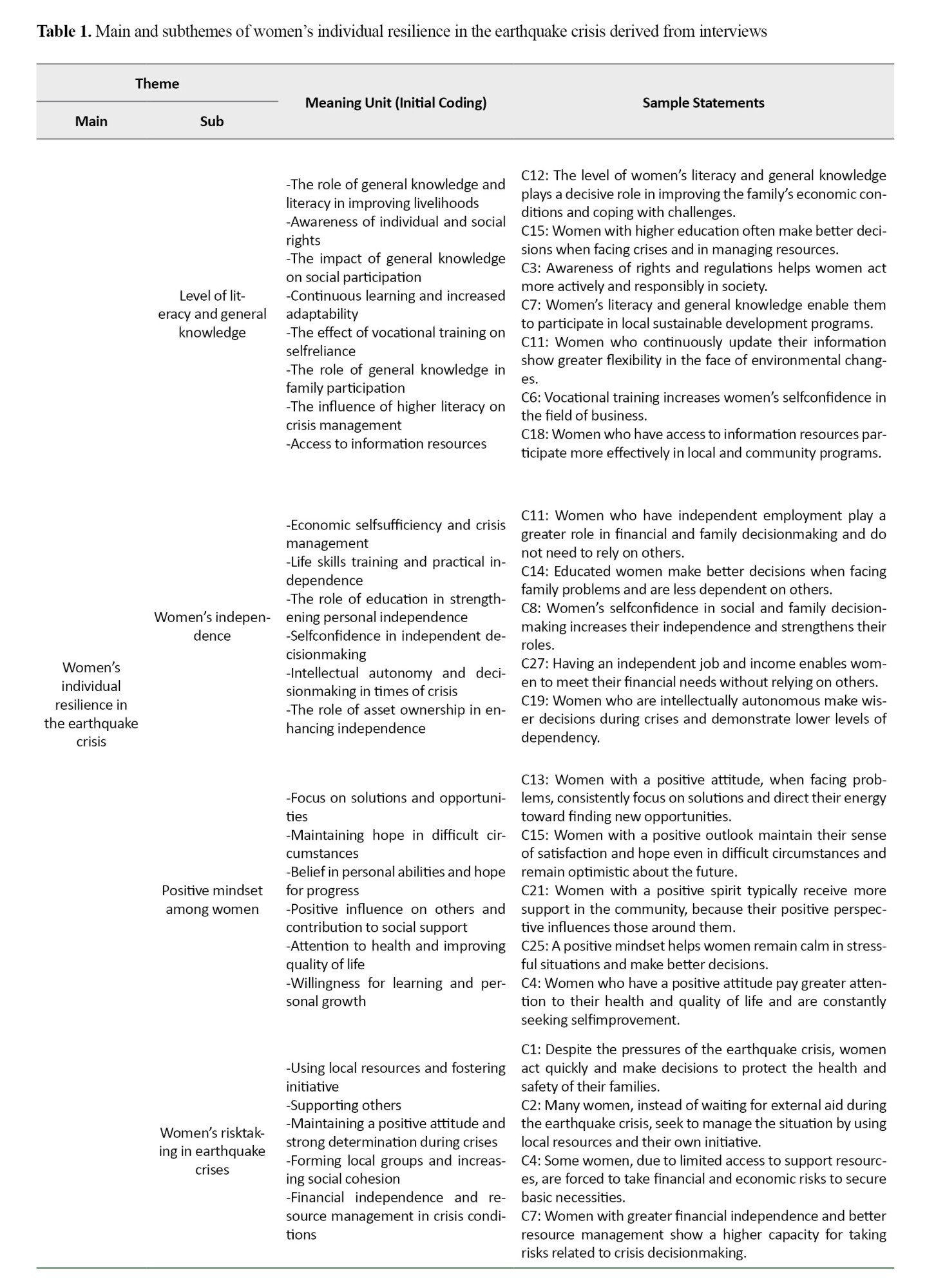
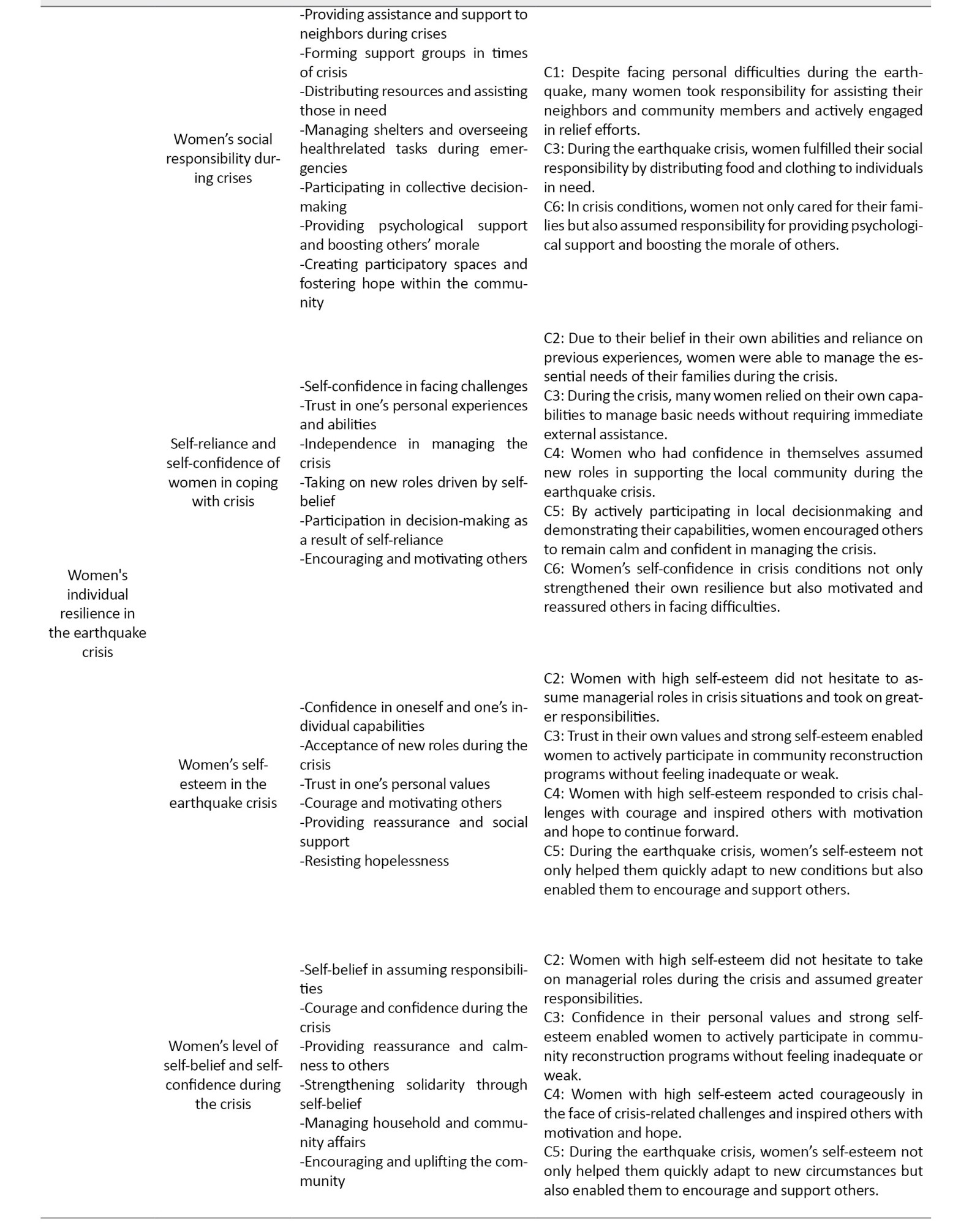
In today’s world, women’s value creation and empowerment—particularly in times of crisis—are critical issues that have attracted the attention of scholars and policymakers. This study aims to analyze the components of sustainable development, empowerment, and value creation among women in earthquakeaffected contexts, particularly in Sarpole Zahab County. The thematic analysis of the interviews led to the identification of four main themes, each addressing a specific dimension of women’s resilience and empowerment. The first theme, “individual resilience of women,” highlights the personal factors that contribute to women’s ability to cope with crises. Elements, such as literacy level, selfconfidence, and a positive mindset strengthen women’s individual capabilities and serve as foundational pillars enabling them to confront challenges and navigate postdisaster conditions (table 1).
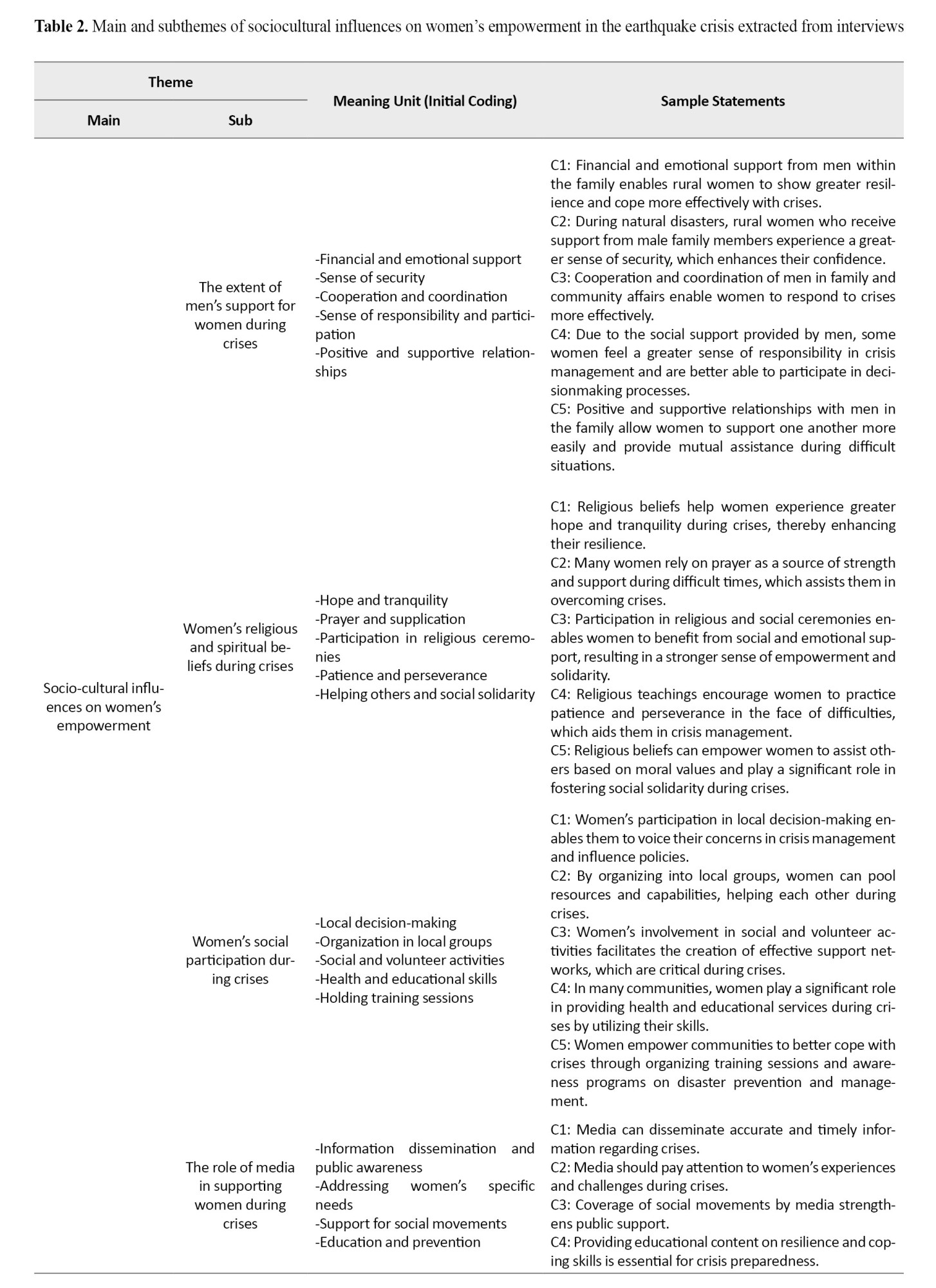
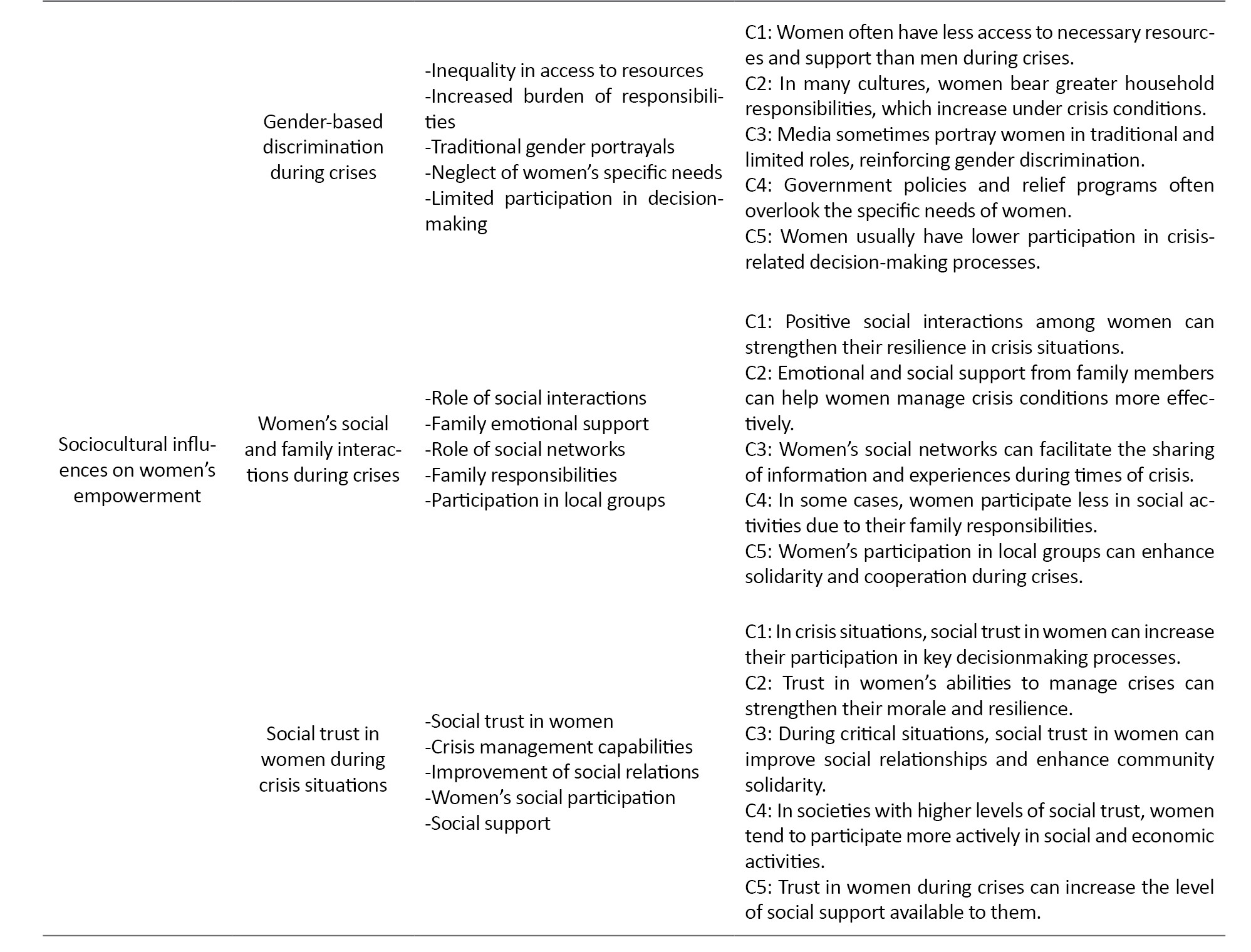
The second theme, "sociocultural influences on women’s empowerment, "examines how social structures and cultural beliefs shape the opportunities and constraints faced by women. Social norms, and community relationships can either facilitate or hinder women’s empowerment and play a crucial role in empowerment process (table 2).
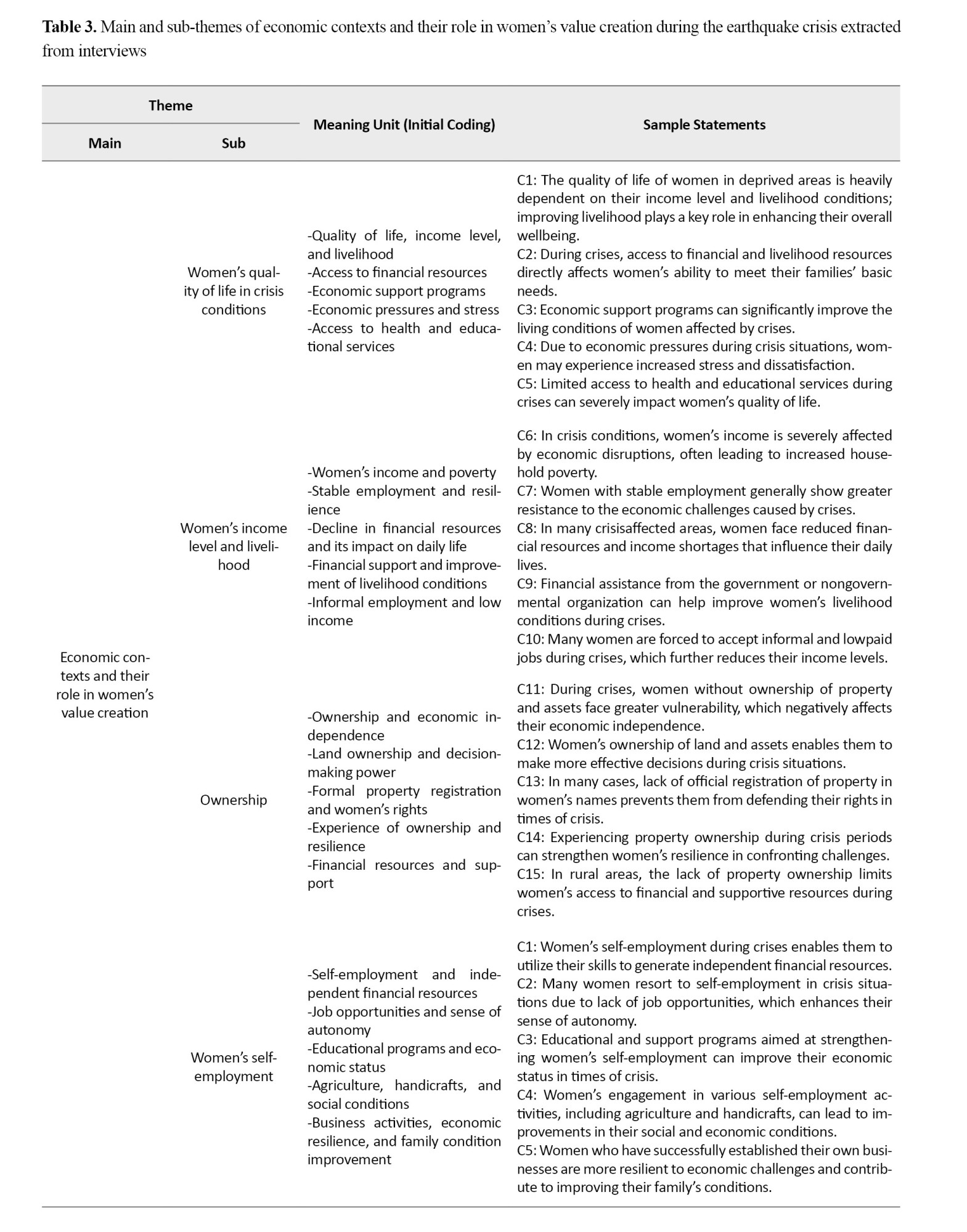
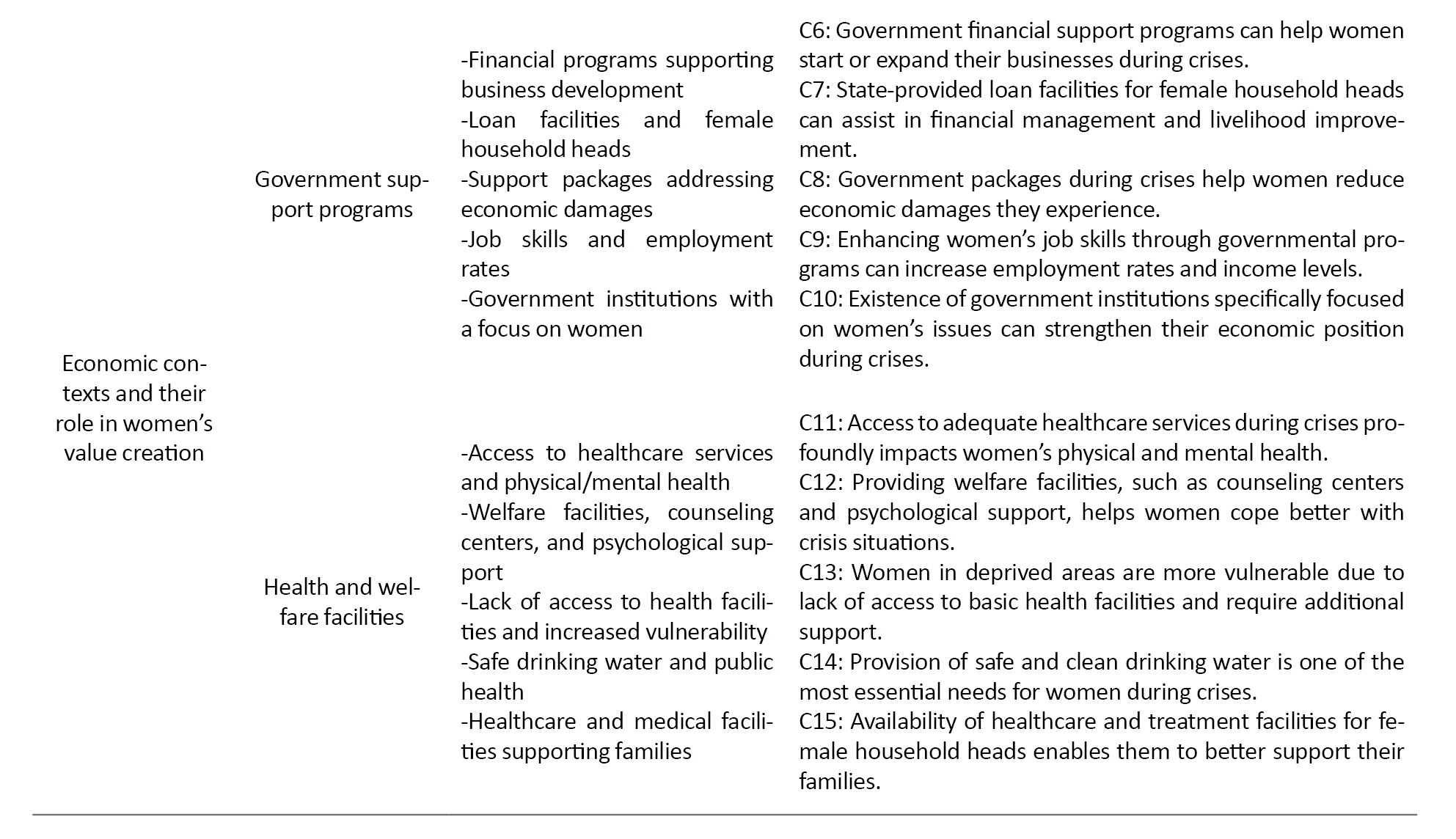
The third theme, "economic contexts and their role in women’s value creation,” focuses on economic factors. Access to economic resources, employment opportunities, and income levels are among the factors that significantly influence women’s selfsufficiency and empowerment (table 3).
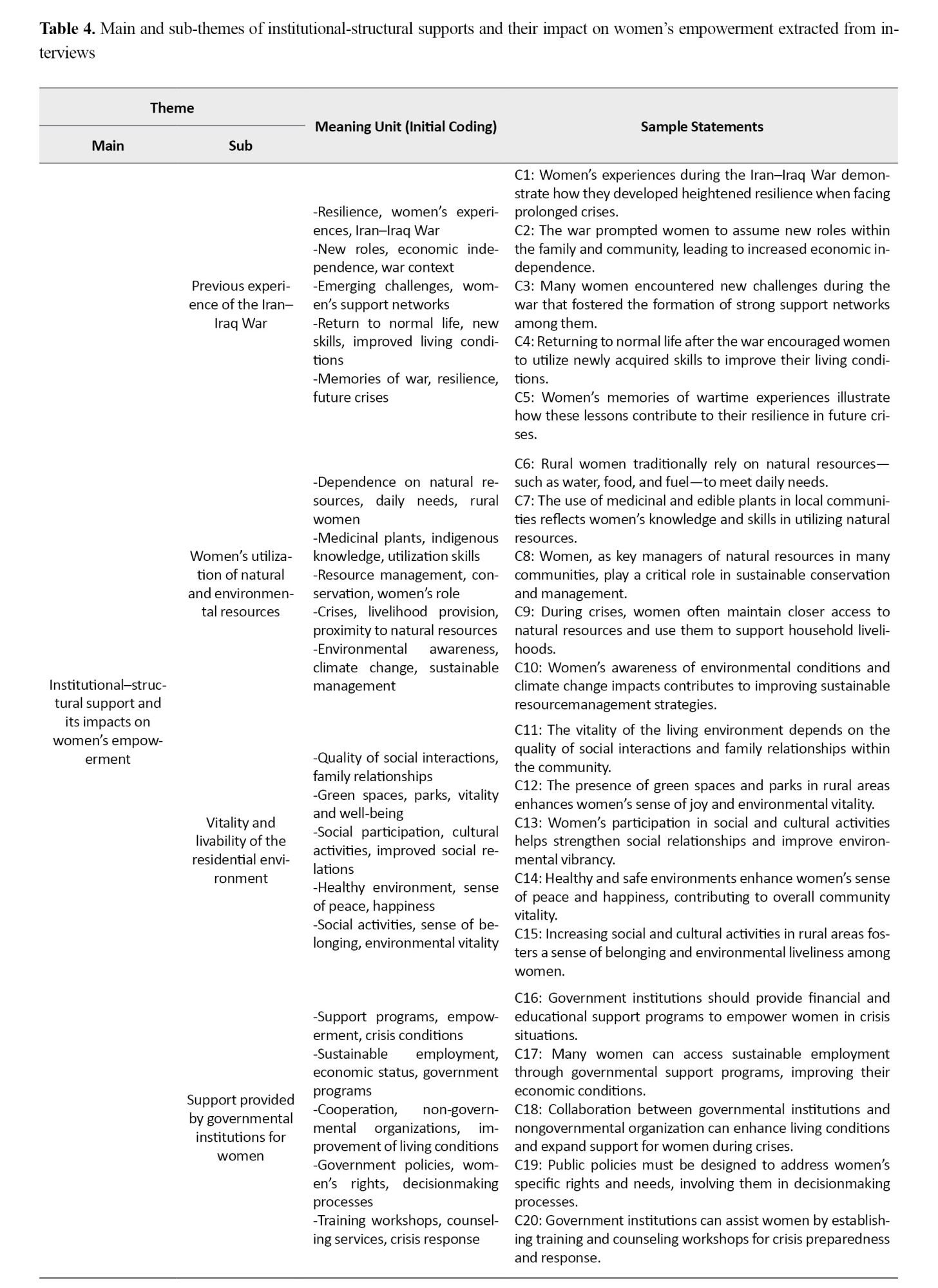
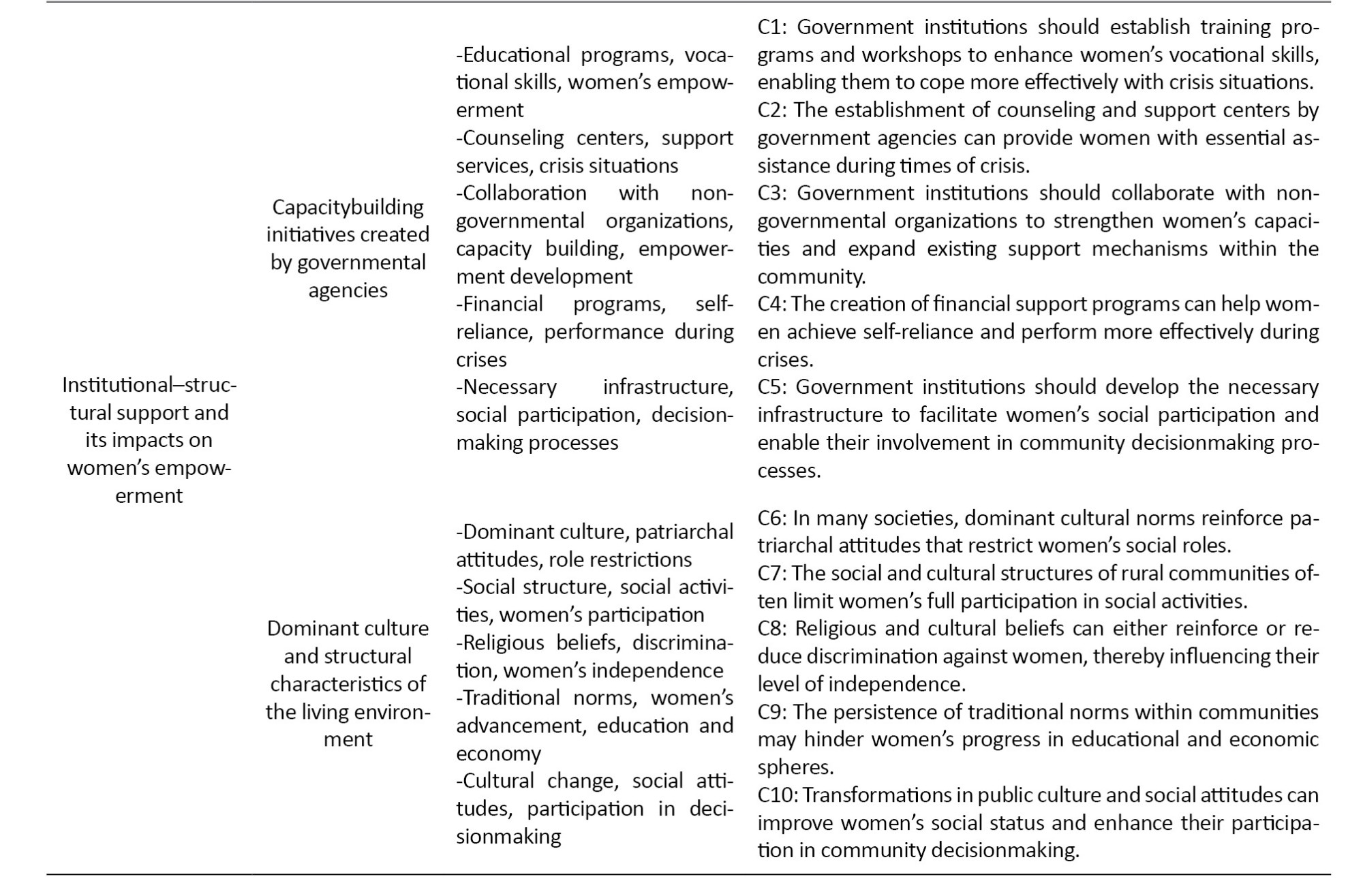
Finally, the fourth theme, “institutional–structural support and its implications for women’s empowerment,” explores the role of government institutions and support programs. This theme highlights the importance of supportive policies, governmental interventions, and institutional mechanisms that can substantially contribute to women’s empowerment and improve their conditions during times of crisis (table 4).
These four themes provide a comprehensive picture of the key factors influencing women’s empowerment and value creation in postearthquake contexts. They can assist policymakers and researchers in designing more effective strategies to support women and enhance their resilience in times of crisis.
Individual resilience of women in earthquake crise
Undoubtedly, individual and contextual factors play a crucial role in shaping women’s resilience in the face of natural disasters. Both theoretical and practical perspectives highlight the influence of multiple variables in this domain. Based on the expert interviews conducted in this study, eight key factors were identified, listed in order of importance. These factors include:
1) Level of literacy and general knowledge; 2) Women’s independence; 3) Positive attitude and mindset; 4) Risktaking ability; 5) Social responsibility; 6) Selfreliance in confronting challenges7) Selfesteem.
Degree of self confidence and self belief
Income level and livelihood status
The analysis of the data and findings related to the main theme of women’s individual resilience during the Sarpol-e Zahab earthquake revealed that education, technical skills, prior experiences, and social support networks played a significant role in empowering women and enhancing their resilience. Specifically, educated women were able to effectively utilize available informational resources, such as firstaid guidelines, emergency shelter instructions, and medical service information. Their access to essential pre and postearthquake information enabled them not only to manage their own circumstances during the crisis but also to actively contribute to rescue operations and social recovery efforts. Furthermore, precrisis training—covering first aid, mental health, and economic empowerment—substantially increased women’s awareness and practical skills, preparing them to cope with the crisis and address daily and psychological needs. Qualitative interview data also indicated that women’s knowledge of their social, economic, and health rights empowered them to advocate for themselves and others during critical moments, generating social pressure for improved living conditions and fostering positive changes within the community. Education—particularly among women with higher levels of schooling—significantly strengthened their sense of selfefficacy, enabling them to make rational and effective decisions during crisis situations. The analysis also shows that women’s technical skills, such as sewing, hairdressing, and cooking, allowed them to establish small businesses, thereby securing financial independence for themselves and their families. This not only contributed to the economic recovery of their households but also served the broader community by providing essential services and goods during the crisis. Findings further revealed that women with constructionrelated skills played an active role in reconstruction projects by participating as supervisors in rebuilding activities. Their involvement not only improved their own livelihoods but also accelerated the reconstruction process, helping the community return to normal life more quickly after the crisis. One of the most significant findings highlighted the importance of training workshops in areas, such as health, nursing, and technical skills. These workshops enabled women to acquire new competencies that could be applied to support others during crises and difficult conditions. Continuous training programs helped women keep their skills up to date and function as valuable sources of information and assistance for other community members whenever needed. The analyses further indicate that women’s prior experiences with crises enabled them to respond quickly and make effective decisions in emergency situations. Social networks—such as local women’s groups—facilitated the exchange of experiences and mutual learning. This sharing of knowledge strengthened social cohesion and cooperation during critical periods, while also providing women with opportunities to receive emotional, financial, and material support from one another. Additionally, the findings reveal that support networks, including family, friends, and local community groups, played an essential role in helping women remain resilient during the earthquake. These networks not only created channels for communication and support but also enabled women to access financial assistance, daily necessities, and participate collectively in community reconstruction and development decisions. The analysis shows that women with a positive outlook and strong morale operated more effectively during crisis conditions. They were able to approach challenges with a constructive mindset, seeking practical solutions rather than succumbing to despair. Emotional support from family and the broader community significantly contributed to strengthening their morale and increasing their motivation to take on effective roles during the crisis. The findings also demonstrate that women who had assumed leadership roles in previous crises were able to encourage cooperation and mutual assistance among community members. They organized support groups and effective social networks and acted as local leaders in decisionmaking processes, relief activities, and reconstruction programs. Overall, the analysis of the data and research findings indicates that a combination of individual factors—such as education, technical skills, positive attitudes, prior experiences, and social support networks—plays a critical role in women’s resilience and empowerment. These capacities not only improved their personal wellbeing but also positively influenced the social and economic development of the community, enabling them to withstand crisisrelated challenges and contribute meaningfully to recovery and reconstruction efforts.
Sociocultural influences on women’s empowerment during the earthquake crisis
One of the most significant factors contributing to the enhancement of resilience among rural women is the set of social and cultural conditions. Based on the qualitative interviews, seven key components were identified as central to assessing the sociocultural determinants of resilience: the level of men’s support for women during the crisis; women’s religious and spiritual beliefs in the aftermath of the earthquake; women’s social participation during the crisis; the role of media in supporting women; genderbased discrimination in crisis situations; women’s social and familial interactions during the crisis; and the degree of social trust placed in women under critical conditions.
The comprehensive analysis of the data and findings from this study indicates that socio-cultural influences—particularly in the form of men’s financial and emotional support—significantly strengthen women’s self-confidence and resilience when facing crises. Such support allows women to approach challenges and emerging difficulties with greater calmness and security, thereby becoming a fundamental element in their empowerment process. Men’s support, including their participation in managing family and social affairs, not only enhances women’s sense of responsibility and confidence but also fosters greater spirit of cooperation and social interaction within the family. This dynamic, in turn, boosts the family’s overall resilience during crises. Findings show that women who receive emotional support are better able to cope with pressures and problems, and more confidently engage in family and social decision-making, playing a more active role in crisis management. The study also highlights the important role of religious beliefs. Spiritual faith provides women with a source of hope and tranquility which empowers them to confront problems and manage crises effectively. Participation in religious ceremonies and adherence to spiritual teachings not only strengthens collective solidarity and belonging but also increases women’s sense of responsibility and willingness to assist others, thereby enabling them to contribute effectively to crisis management. Religious beliefs, through the promotion of ethical values, such as patience and perseverance, equip women to perform better under crisis conditions and even encourage altruistic behavior during difficult times. Data analysis further reveals that women’s participation in local and social decision-making—an essential aspect of social empowerment—positively impacts their resilience and crisis management capacity. Such involvement allows women to make their voices heard in local governance and influence policies and programs related to crisis management. The creation and expansion of local support networks, especially volunteer groups, provide platforms for experience and skill exchanges, enhancing women’s solidarity and mutual trust during crises. These networks significantly increase women’s social participation and strengthen their influence on local decision-making processes, enabling them to benefit from shared resources and support each other cooperatively during emergencies. Moreover, the role of media in enhancing women’s resilience during crises is clearly emphasized by the findings. By providing timely and accurate information, the media helps women make more informed decisions and raises social awareness, playing a crucial role in reducing their vulnerability. Additionally, educational media content on resilience and crisis coping skills equips women with better preparedness and effectiveness in crisis management. At the same time, the analysis acknowledges the challenges and limitations women face during emergencies. Findings indicate that due to traditional roles and heavier domestic responsibilities, many women lack access to necessary support and resources, exacerbating their vulnerability in crises. This situation increases psychological and physical burdens and restricts women’s participation in social engagements and decision-making. Furthermore, social and cultural structures sometimes obstruct women’s involvement in decision-making and crisis management, leading to their marginalization in many crisis-related policies and programs. Limited participation—often caused by cultural and gender-based restrictions—reduces their impact and influence on policymaking and crisis response. The findings also reveal that in certain communities, media portrayals reinforce traditional stereotypes and gender discrimination, which can weaken women’s morale and resilience. Conversely, social trust in women’s crisis management abilities plays a vital role in enhancing their confidence and boosts their active participation in social and economic activities, contributing to sustainable development and social cohesion. Ultimately, this analysis shows that increasing women’s participation in decision-making and recognizing their capacities in crisis management not only improves their resilience and coping abilities but also drives society toward reducing inequalities, strengthening solidarity, and fostering a more sustainable and resilient development.
Economic contexts and their role in women’s value creation during the earthquake crisis
One of the key factors in enhancing the resilience of rural women is economic conditions. Based on qualitative interviews, six components were identified to assess economic determinants affecting resilience: women’s quality of life during crisis, income and livelihood levels, ownership status, women’s self-employment, government support, and availability of health and welfare facilities.
The analysis of data and findings in this study concerning the main theme of economic contexts and their role in women’s value creation during the Sarpol-e Zahab earthquake crisis revealed that economic infrastructures and their functions in women’s value creation can, through a developmental approach, lead to sustainable progress in the post-earthquake community. Economic conditions and their effects on women’s capacity to create value are especially important for women living in deprived and crisisaffected areas. Results show that women’s income and livelihoods in these regions are highly dependent on their access to financial resources. During crises, women face intensified livelihood and economic problems; the absence of s income imposes substantial psychological and physical stresses on them. Improving women’s material conditions can enhance their quality of life because reducing economic pressure directly lowers stress and dissatisfaction. Moreover, access to educational and health facilities that can provide support during crises plays a key role in strengthening women’s capabilities and improving their lives.
Income and livelihood levels are fundamental determinants of women’s economic resilience and sustainability. Findings indicate that s employment during emergencies enables women to better withstand economic shocks and to support their own and their families’ living standards. Conversely, women who—because of income loss and lack of formal job opportunities—turn to informal, lowpaid work experience greater economic strain and have reduced prospects for achieving relative welfare and resilience. Over the long term, these pressures can harm women’s mental and physical health and diminish their capacity to meet family needs.
The results also show that women’s ownership of assets can meaningfully increase their economic independence during crises. In communities where women can own and register property in their names, they can make more effective financial decisions and draw on these assets in times of hardship. Asset ownership allows women to act more autonomously and defend their economic rights. In contrast, the lack of formal registration of property in women’s names in some areas increases their vulnerability and restricts their access to financial supports and state services, depriving them of opportunities to improve livelihoods and economic independence.
Selfemployment is an effective strategy for securing income and fostering economic autonomy. The data reveal that many women—especially during crises—have used their skills in agriculture, handicrafts, and other informal enterprises to generate independent income. Selfemployment enhances women’s sense of independence and strengthens their ability to cope with adversity. Supportive training and capacitybuilding programs, particularly those offering technical and vocational skills, can improve women’s socioeconomic status and increase their resilience against future shocks.
State support plays a crucial role in raising women’s livelihood and economic welfare. Analyzed data indicate that targeted governmental programs and financial packages designed for women have helped improve their living conditions. These supports include concessional loans and microcredit facilities directed to female heads of households or economically vulnerable women, enabling them to manage household finances more independently. Additionally, governmentled skill development and training programs contribute to higher employment and income for women, strengthening their resilience to economic hardship.
Access to health and welfare services is also crucial for women during crises. The analysis shows that the availability of appropriate medical and welfare facilities during emergency periods helps secure women’s physical and mental health and supports their ability to manage crises. Access to health services, welfare provisions, and psychological support enables women to care for their families and face life’s challenges with greater capability and wellbeing. In particular, services, such as counseling centers, psychosocial support, and public health measures, are essential needs for women in crisisaffected areas and can significantly reduce the adverse impacts they face.
Institutionalstructural supports and their effects on women’s empowerment
Findings indicate that the experience of the Iran–Iraq War, as a significant historical crisis, not only affected women’s lives but also contributed to the formation of new identities and capacities among them. During that period, many women confronted serious economic, social, and psychological challenges; these hardships, in turn, propelled processes of increased resilience. Because of the absence of men who had gone to war, women played new roles within households and communities—roles that included providing for the family, managing household affairs, and participating in social and political activities. Shared wartime experiences led to the creation of stronger support networks among women. These networks later functioned as social resources during subsequent crises, enabling women to provide mutual assistance.
The findings revealed that rural women, in particular, depend heavily on natural resources to meet their daily needs. This dependence affects their empowerment and value creation in several ways. Women, as natural resource managers, play a key role in the conservation and sustainable management of these resources. Such management contributes to improving livelihoods and food security during crises. Moreover, women’s awareness of environmental impacts and climate change on natural resources enables them to design effective strategies for sustainable resource use. This not only helps preserve the resources but also leads to women’s economic empowerment. The use of medicinal and edible plants, as a symbol of women’s indigenous knowledge and skills, can foster the formation of supportive networks and social collaborations within local communities.
The quality of the social environment and family interactions also plays a significant role in women’s vitality and resilience. The liveliness of the living environment depends greatly on social interactions and family communication quality. Women’s participation in social and cultural activities can enhance social relationships and create a sense of belonging in the community. The presence of green spaces and healthy environments can promote feelings of calmness and happiness among women. These positive feelings can contribute to women’s social resilience in the face of crises. Increased social and cultural activities in rural areas can help foster a sense of belonging and vitality in women. Active participation of women in such activities not only improves their social status but also acts as a driving force in sustainable development processes. The results also showed that governmental institutions can assist women’s empowerment during crises by offering supportive and educational programs. Financial support programs can help women achieve sustainable employment and improve their economic status. Such programs must be designed to address women’s specific needs. Educational workshops and counseling sessions can enable women to enhance their occupational skills and perform better when facing crises. These initiatives should focus on strengthening women’s self-reliance. Cooperation between governmental bodies and non-governmental organizations can improve living conditions and increase support for women during crises. Such collaborations may involve exchanging information, resources, and experience. The influence of prevailing cultural norms and social attitudes on women’s empowerment was particularly important. In many communities, dominant cultures have led to patriarchal attitudes that restrict women’s social roles. These attitudes may prevent women’s full participation in social and economic activities. Changing social attitudes and public culture can help improve women’s status and increase their participation in community decision-making. Providing the necessary frameworks for cultural transformation can enhance women’s resilience and value creation. Traditional customs in societies can also hinder women’s progress in education and economic areas. Therefore, efforts to transform these traditions and create new cultures that promote gender equality are crucial. Environmental-structural factors have a significant impact on women’s empowerment and value creation during crises. Considering historical experiences, dependency on natural resources, quality of social interactions, the role of government institutions, and prevailing culture are among the factors that can improve women’s conditions. For sustainable development, these factors must be addressed simultaneously, and comprehensive, synergistic programs aimed at enhancing women’s status in diverse communities should be designed and implemented. These programs should not only respond to women’s immediate needs but also strengthen their capabilities over the long term.
Discussion
Data analysis indicates that the individual resilience of women affected by the Sarpol-e Zahab earthquake is influenced by several key factors, including education, technical skills, support networks, and previous experiences. The findings align with the social empowerment theory, which examines factors influencing individuals’ ability to face challenges, particularly stressing the importance of education and access to resources in crisis conditions (Rappaport, 1981). Educated women, using informational resources, such as first aid knowledge, medical services, and emergency shelter, were able not only to manage the crisis effectively but also to actively participate in rescue operations and social reconstruction. This capability helped them meet their daily needs and contribute to community rebuilding.
Additionally, social capital theory teaches us that social networks and local solidarity can enhance women’s resilience (Putnam, 2000). The study’s findings clearly show that women built and strengthened support networks—including family and local groups—that enabled them to withstand the challenges posed by the earthquake crisis. These networks not only allowed women to offer and receive emotional and financial support but also helped them engage in collective decision-making for community reconstruction and development. Moreover, social learning theory explains that individuals acquire necessary skills via observing and learning from others’ experiences (Bandura, 1977). Earthquake-affected women learned from each other within local groups, which fostered enhanced solidarity and social cooperation. This exchange of experiences not only improved women’s awareness and skills but also empowered them to respond rapidly and make effective decisions during crises.
The results demonstrate that women’s resilience after the earthquake resulted from a complex interaction of individual, social, and cultural factors. Educated women with technical skills, positive attitudes, and prior experience handled crises effectively and acted as local leaders in reconstruction and relief efforts. This highlights the critical importance of educational programs during crises. Based on the theories above and findings of this study, investing in women’s education and skill development can facilitate their resilience and improve their quality of life.
Furthermore, social supports, such as family and local support networks, act as vital resources to empower women in crisis. These supports not only improve women’s personal conditions but also positively influence social and economic development within the community. Comprehensive data analysis shows the prominent role of social and cultural factors—especially men’s financial and emotional support—in strengthening the resilience and self-confidence of earthquake-affected women in Sarpol-e Zahab County. These findings align with social cohesion theory, emphasizing the significance of social relationships and human bonds in resilience and empowerment processes (Aldrich & Meyer, 2015). According to this theory, men’s participation in family and social processes strengthens social relations and support networks, leading to increased morale and resilience of women facing challenges and crises. Such support particularly instills a sense of security and calm in women, enabling them to deal more effectively with problems. For example, this research showed that when men engage in family and social processes, women are especially fortified emotionally and psychologically. This enhanced spirit of cooperation and social interaction can lead to the formation of stronger support networks in families and communities.
The role of religious beliefs was also evident. Hope theory suggests that religious beliefs provide women with a source of hope and tranquility that enables greater endurance in adversity (Pargament, 2002). These beliefs not only help women face crises resiliently but also strengthen collective solidarity and a sense of belonging. Participation in religious ceremonies and the application of religious teachings bolster women’s humanitarian spirit and sense of responsibility.
Data analysis also showed that women’s active participation in local and social decision-making—an important component of social empowerment—significantly affects their resilience and crisis management capacity. Social empowerment theory clearly demonstrates that increased women’s involvement in decision-making processes enhances their self-confidence and resilience against crises (Momtaz, 2005). Such participation provides women with opportunities to voice their concerns in policymaking and crisis management plans and influence local decisions.
However, the study also highlighted challenges and limitations women face in participation. Social inequalities and uneven access to resources and supports increase women’s vulnerability in crises. Social inequality theory stresses how social and cultural structures create barriers to effective women’s participation, imposing additional physical and psychological burdens and restricting their social and decision-making roles.
Moreover, media depictions and gender stereotypes can hinder women’s participation, weakening their resilience and morale. On the other hand, increasing social trust in women’s crisis management capabilities is an effective factor boosting women’s spirit and self-efficacy. Trust in women’s abilities may lead to greater engagement in social and economic activities, which in turn can enhance sustainable development and social cohesion. Overall, the analysis suggests that increasing women’s participation in decision-making and recognizing their crisis management capacities can strengthen resilience and reduce vulnerability—ultimately steering communities toward sustainable and resilient development.
Conclusion
Analysis of economic contexts and their role in value creation among Sarpol-e Zahab’s earthquake-affected women shows that these contexts not only help improve women’s livelihoods but also play key roles in their empowerment. Human capital theory specifically points to the fact that investment in education and skill acquisition enhances productivity and economic conditions (Schultz, 1982). Accordingly, women’s economic empowerment is a fundamental approach to reduce gender inequalities and strengthen resilience against crises. Particularly, in the post-earthquake context, improving women’s access to job and entrepreneurial opportunities can not only better their economic status but also foster cooperation and solidarity spirit. Economically empowered women can more effectively participate in social and political decisions and be recognized as principal actors in reconstruction and social development processes. Overall, the results emphasize the importance of investment in women’s education and empowerment. Such investment can increase social, economic, and cultural resilience among Sarpol-e Zahab’s earthquake-affected women and ultimately contribute to sustainable reconstruction and community development.
Recommendations
Given the adverse effects of crises on rural women and the urgent need to enhance their resilience and capacities, the following educational, economic, and policy-oriented recommendations are proposed to support women in crisis, thereby improving their quality of life and independence:
Educational Recommendations: The initial step to improve rural women’s conditions in crises is to develop a comprehensive “rural women’s education framework for crisis conditions,” which can organize specialized and general training for women in earthquake-affected areas. Furthermore, addressing rural women’s issues in academic institutions through the establishment of educational and specialized training programs in this field can increase knowledge and expertise in this field. Additionally, skill-building and psychological training to reinforce rural women’s self-confidence, social interaction, and occupational skills during crises are essential.
Economic Recommendations: Promoting sustainable employment for rural women by drafting a “comprehensive rural women’s sustainable employment plan” can reduce unemployment and create job opportunities in crises. Strengthening rural women cooperatives through financial resources and banking facilities will further aid employment generation and local economic development. Alongside these measures, formulating a “special support charter” to eliminate social and economic discrimination and allocate dedicated resources for rural women in crisis would play a significant role in improving their status.
Policy Recommendations: For successful crisis management, it is crucial to develop a “document on organizational and institutional participation in crisis management programs,” ensuring coordinated cooperation among entities during crises, especially to support women. Additionally, crisis policies must consider the specific needs of rural women and avoid segmented, sectoral approaches in addressing women’s issues. This preventative strategy can reduce problems arising from fragmented policymaking in crises.
Ethical Considerations
Compliance with ethical guidelines
In this study, all ethical principles were observed. Since no experiments on animal or human samples were conducted, no ethical code was obtained.
Funding
This research did not receive any specific grant from funding agencies in the public, commercial, or not-for-profit sectors.
Authors' contributions
Conceptualization, writing-original draft: Maryam Pourkasmaei and Hamid Pouryousefi; Methodology, research, writing-review and editing and sources: Maryam Pourkasmaei; Supervision: Hamid Pouryousefi and Talieh Khademian.
Conflicts of interest
The authors declared no conflict of interest.
References
Adelkhani, G., Pourghafarmaghferti, M. R., Madani, S., & Matlabi Talatepeh, S. (2014). [The role of women’s empowerment in sustainable rural development (Persian)]. Paper presented at National Conference on Women and Sustainable Rural Development, Mashhad, Iran, 15 October, 2014. [Link]
Agarwal, B. (2001). Participatory exclusions, community forestry, and gender: An analysis for South Asia and a conceptual framework. World Development, 29(10), 1623-1648. [DOI:10.1016/S0305-750X(01)00066-3]
Alami Neisi, M., Mirzaei, R., & Sam Aram, P. (1399). [The process of post-disaster housing reconstruction: A qualitative study of challenges and influential factors in Sarpol-e Zahab city (Persian)].Social Welfare and Development Planning, 11(45), 33-79. [DOI:10.22054/qjsd.2021.59905.2151]
Alam, K., & Rahman, M. H. (2018). The role of women in disaster resilience. In Handbook of Disaster Risk Reduction & Management (pp. 697-719). [DOI:10.1142/9789813207950_0029]
Aldrich, D. P., & Meyer, M. A. (2015). Social capital and community resilience. American Behavioral Scientist, 59(2), 254-269. [DOI:10.1177/0002764214550299]
Ajzen, I. (1991). The Theory of planned behavior. Organizational Behavior and Human Decision Processes. [DOI:10.1016/0749-5978(91)90020-T]
Bandura, A. (1977). Social learning theory. New Jersey: Englewood Cliffs. [Link]
United Nations Department of Economic and Social Affairs, Statistics Division. (2021). “The World’s Women 2020: Trends and Statistics.” New York: United Nations. [Link]
Brundtland, G. H. (1985). World commission on environment and development. Environmental Policy and Law, 14(1), 26-30. [DOI:10.1016/S0378-777X(85)80040-8]
Buvinic, M., & O’Donnell, M. (2019). Gender Matters in Economic Empowerment Interventions: A Research Review. The World Bank Research Observer, 34(2), 309-346. [DOI:10.1093/wbro/lky004]
Clark, H., & Hongbo, W. (2016). The sustainable development goals: 17 goals to transform our world. New York: United Nations. [DOI:10.18356/69725e5a-en]
Cornwall, A., & Lindisfarne, N. (2016). Dislocating masculinity: Comparative Ethnographies. London: Routledge. [DOI:10.4324/9781315408309]
Duflo, E. (2012). Women empowerment and economic development. Journal of Economic literature, 50(4), 1051-1079. [DOI:10.1257/jel.50.4.1051]
Elson, D. (1999). Labor markets as gendered institutions: equality, efficiency and empowerment issues. World Development, 27(3), 611-627. [DOI:10.1016/S0305-750X(98)00147-8]
Enarson, E. (2000). Gender issues in natural disasters: Talking points and research needs. InFocus Programme on Crisis Response and Reconstruction Workshop, Geneva, 3-5 May, 2000. [Link]
Enarson, E., & Morrow, B. H. (1998). The gendered terrain of disaster: Through Women's Eyes. Westport, CT: Praeger/Greenwood. [Link]
Eynali, Z., Farrahani, B. V., & Jafari, A. (2014). [Evaluating the role of social capital in reducing the effects of earthquake disaster in Sajassrood village-Khodabendeh county (Persian)]. Journal of Applied Geographical Researches, 14(32), 93-115.
Fordham, M. (2012). Gender, sexuality and disaster. In Handbook of hazards and disaster risk reduction (pp. 424-435). London: Routledge. [DOI:10.4324/9780203844236-46]
Heydari Sarban, B., & Vakil, E. (2014). [Analysis of the effects of earthquake occurrence in rural areas of Varzaghan city (Case study: North Azmodern District) (Persian)]. Journal of Geography and Environmental Hazards, 3(3), 41-60. [DOI:10.22034/GEO.V3I3.31388]
Jordan, E., & Javernick-Will, A. (2013). Indicators of community recovery: content analysis and Delphi approach. Natural hazards Review, 14(1), 21-28. [DOI:10.1061/(ASCE)NH.1527-6996.0000087]
Kabeer, N. (2001). Discussing women’s empowerment: Theory and practice.
Kabeer, N. (2005). Gender equality and women’s empowerment: A critical analysis of the third millennium development goal 1. Gender & Development, 13(1), 13-24. [DOI:10.1080/13552070512331332273]
Khadjeh-Nouri, M., Ahmadi, R., & Zand, P. (2019). The role of women in the reconstruction process after natural disasters: A case study in Iran. International Journal of Disaster Risk Reduction, 37, 101-109. [DOI:10.1016/j.aenj.2015.02.002] [PMID]
Kramer, M. R., & Porter, M. (2011). Creating shared value. Boston, MA, USA: FSG.
Malhotra, A., Schuler, S. R., & Boender, C. (2002). Measuring Women’s Empowerment as a Variable in International Development. World Bank Workshop on Poverty and Gender: New Perspectives. Washington, DC: The World Bank. [Link]
McKinsey & Company. (2020). The power of parity: Advancing women’s equality in the workplace. New York: McKinsey & Company. [Link]
Meadows, D., & Randers, J. (2012). The limits to growth: The 30-year update. London: Routledge. [DOI:10.4324/9781849775861]
Mosedale, S. (2005). Assessing women’s empowerment: towards a conceptual framework. Journal of International Development, 17(2), 243-257. [DOI:10.1002/jid.1212]
Mumtaz, K. (2005). Advocacy for an end to poverty, inequality, and insecurity: Feminist social movements in Pakistan. Gender & Development, 13(3), 63-69. [DOI:10.1080/13552070512331332298]
Neumayer, E., & Plümper, T. (2007). The gendered nature of natural disasters: The impact of catastrophic events on the gender gap in life expectancy, 1981-2002. Annals of The Association of American Geographers, 97(3), 551-566. [DOI:10.1111/j.1467-8306.2007.00563.x]
Nikmard Namin, S., Barakpour, N., & Abdollahi, M. (2014). [Risk Reduction of Earthquake with Emphasis on Social Factors of Resilience (Case Study: District 22 of Tehran) (Persian)]. Urban and Rural Management, 37(13), 19-34. [Link]
Nouri-Sani-Abadi, J., Taj, Sh., & Fallah-Tabaar, N. (2023). [Assessing the impact of mental-psychological and social empowerment of rural female-headed households covered by Imam Khomeini Relief Foundation on sustainable livelihoods in Rey County villages (Persian)]. Journal of Geospatial Engineering, 7(1), 137-154. [DOI:10.22034/jget.2023.160263]
Niaqi, M. (2019). [Investigating the impact of women’s awareness and social capacities on reducing gender inequalities ( Persian)]. Iranian Journal of Social Studies, 22(1), 34–51.
Nikmardnamin, S. (2014). [The role of education and social participation in enhancing urban resilience against natural disasters (Persian)]. Journal of Urban Studies, 4(2), 55–72.
Norris, F. H., Friedman, M. J., Watson, P. J., Byrne, C. M., Diaz, E., & Kaniasty, K. (2002). 60,000 Disaster Victims Speak: Part I. An Empirical Review of the Empirical Literature, 1981-2001. Psychiatry, 65(3), 207-239. [DOI:10.1521/psyc.65.3.207.20173] [PMID]
Pargament, K. I. (2002). The psychology of religion and coping: Theory, research, practice. New York: The Guilford Press. [Link]
Putnam, R. D. (2000). Bowling alone: The collapse and revival of American community. Simon Schuster. [DOI:10.1145/358916.361990]
Rappaport, J. (1981). In praise of paradox: A social policy of empowerment over prevention. American Journal of Community Psychology, 9(1), 1-25. [DOI:10.1007/BF00896357] [PMID]
Salimi, M., & Naderi, A. (2020). [Study of the lived experience of women in Sarpol-e Zahab during the earthquake (Persian)]. Quarterly Journal of Social Sciences, 27(88), 217-251. [DOI:10.22054/qjss.2020.44907.21348]
Sachs, J. D. (2015). The age of sustainable development. Columbia: Columbia University Press. [DOI:10.7312/sach17314-014]
Schraven, J., Gassner, A., & de Waal, J. (2020). Mental health outcomes among survivors of natural disasters: A review of the literature. International Journal of Environmental Research and Public Health, 17(4), 1206. [DOI:10.51773/sssh.v3i1.251]
Schultz, T. W. (1982). Investing In People: The Economics of Population Quality. California: University of California. [DOI:10.1525/9780520318540]
Sen, A. (1999). Development as Freedom. Oxford: Oxford univerisity Press. [Link]
Simon, D. (1987). Our common future: Report of the world commission on environment and development (book review). Third World Planning Review, 9(3), 285. [DOI:10.3828/twpr.9.3.x4k73r2p72w22402]
UN Women. (2020). The Role of Women in Economic Development. New York: UN Women.
United Nations Office for Disaster Risk Reduction. (2021). Sendai Framework for Disaster Risk Reduction 2015-2030. Geneva: United Nations Office for Disaster Risk Reduction. [Link]
United Nations. (2021). Our Common Agenda: Report of the Secretary-General. New York: United Nations. [Link]
VakilHeidari, S. (2014). [Analysis of the effects of earthquake occurrence in rural areas of Varzaghan County: A case study of Azomdel‑e Shomali rural district ( Persian)]. Journal of Geography and Environmental Hazards, 11, 41-60. [Link]
World Bank. (2020). Building Back Better' in Practice: A Science-Policy Framework for a Green Economic Recovery after COVID-19. Washington: World Bank. [Link]
World Bank. (2022). Financial Solutions to Support the Social and Solidarity Economy and the Role of Development Banks. Washington: World Bank. [Link]