Introduction
The expansion of urbanization and the development of urban life have introduced novel challenges for urban management across all sectors, particularly in the management of new towns. “Urban sustainability” is a fundamental assumption that, following environmental shifts since the 1970s (Marchese et al., 2018), has garnered significant attention from international organizations and local management spheres. Today, “sustainability” has become a ubiquitous term, appearing in political platforms, commercial slogans, and even product advertisements. Another frequently used term in recent decades is “resilience,” which has established a foothold across various levels—from international to local arenas. It is no longer strictly limited to its origins in crisis management literature but has pervasively permeated numerous fields of urban management, design, and planning. In general, urban sustainability and urban resilience are not separate categories, neither theoretically nor practically. Accordingly, achieving a level of sustainability in cities requires building urban resilience so that cities can maintain their strength against contemporary global stresses and vulnerabilities across various dimensions, while preserving integration in executive and operational fields. This resilience can, to some extent, be implemented through “good governance”; however, the subsequent path requires a high level of optimal performance in urban sustainability, as good governance alone is no longer sufficient (Sharifi, 2021).
Nevertheless, it must be noted that resilience and sustainability are not synonymous, nor are they interchangeable; rather, they are complementary concepts that can influence one another, ultimately strengthening or weakening their respective effects (Zhang et al., 2019). To understand the differences between resilience and sustainability, it is crucial to define them and identify where they diverge. Resilience is defined as “the capacity of a system, whether an individual, a forest, a city, or an economy, to deal with change and continue to develop.” The widely recognized definition of sustainability is “the ability to meet the needs of the present without compromising the ability of future generations to meet their own needs” (Gharaei et al., 2018). The nexus between resilience and sustainability relates to recognizing the position of each within conservation policies. Although resilience differs from sustainability, sustainability nonetheless contributes to protecting environmental foundations (Sharifi, 2021).
Consequently, adopting both attributes has gained significant attention today, reinforcing flexibility alongside sustainability and resilience (Masnavi et al., 2019). To this end, various studies have been conducted in recent years regarding resilience and sustainability-related issues. In this regard, limited research has examined the relationship between urban sustainability and urban resilience, indicating a research gap in this field. Meanwhile, investigating such research can provide operational strategies for implementing a more sustainable city from a resilience perspective, ultimately establishing the necessary infrastructure for urban managers to stabilize and sustain the city. However, this issue poses greater challenges in newly developed cities than in existing or historic cities, as urban managers must address resilience-related issues at the infrastructural level in order to enable urban development through this pathway. This study aimed to examine the relationship between resilience and sustainability in the new town of Pardis. Accordingly, the principal research question was whether a significant relationship exists between sustainability and urban resilience in new towns. Therefore, the primary objective of this study was to explicate the relationship between urban sustainability and resilience in new towns.
Research questions
This research aimed to answers to the following three questions:
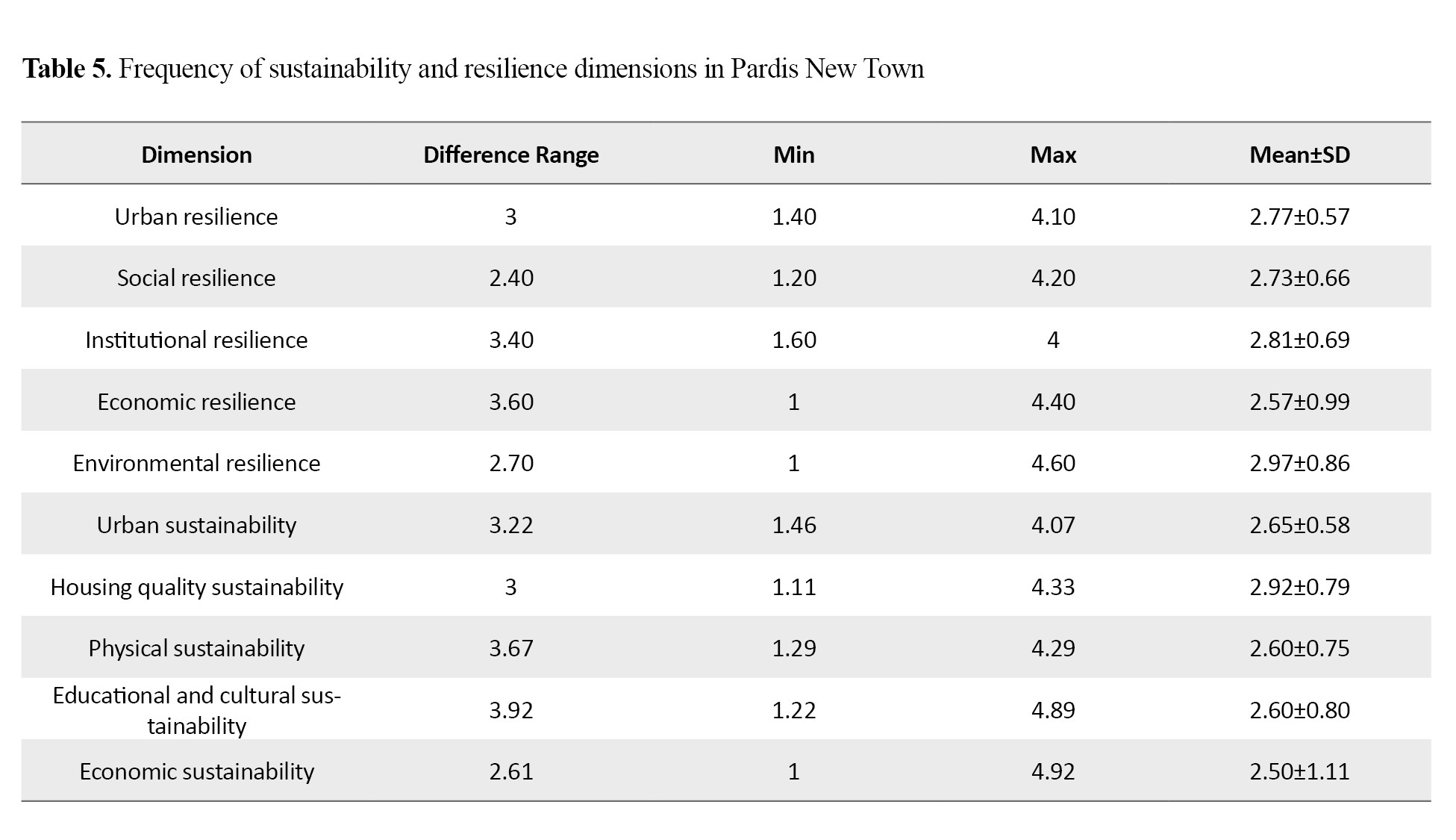
A- What is the status of the urban sustainability component of the new town of Pardis from the perspective of experts in this city?
B- What is the level of the relationship between urban sustainability and resilience in the new town of Pardis?
C- What is the status of the relationship between urban sustainability and resilience at the microscales of social resilience, economic resilience, institutional resilience, and environmental resilience?
Literature review
Parhizgar and Jalili Sadrabad (Parhizgar and Jalili Sadrabad, 2023), in a study titled “Identifying Key Factors of Urban Neighborhood Resilience in Responding to the COVID-19 Virus,” focused on natural and man-made disasters, examining the consequences of these threats, including the COVID-19 pandemic and resilience against it. The study employed a qualitative approach with a future-oriented perspective, based on library research. A total of 61 factors influencing neighborhood resilience against COVID-19 were identified, and analyses were conducted using MicMac software and its derived diagrams. Among the factors influencing neighborhood resilience against COVID-19, the majority fell into independent and dependent categories, with “population density” and “neighborhood crisis response plans” being the primary factors in this field.
Hokmabadi Ghoshouni et al. (2024), in their study titled “Structural analysis of resilience model indicators in new towns with an emphasis on sustainability: case study of Sahand new town,” emphasized the relationship between crisis management and innovative approaches in urban sustainability, including resilience. Their objective was the structural analysis of the resilience model indicators for Sahand new town with an emphasis on sustainability. The research approach was quantitative, and the data collection tool was a questionnaire based on deductive reasoning logic, utilizing expert judgment via the Delphi method, with final analyses conducted using MicMac software. Eighty-four variables were identified across nine domains (physical-spatial, accessibility and infrastructure, social, urban economic, environmental, urban planning/managerial/institutional, urban policy/governance, urban security, and psychological conditions of citizens). The highest influence among the variables, in descending order, corresponds to “quality of urban buildings,” “building age (years),” “inflation rate,” “distance from hazard centers,” and “quality of infrastructure and urban buildings.” Furthermore, the analysis of dependence and direct influence of resilience variables in Sahand New Town, accounting for the strongest direct effects between variables, revealed that the influential variables do not affect a large number of other variables; conversely, the number of variables susceptible to influence from a large number of other variables is very high. This situation, combined with the scarcity of key and strategic influential variables for resilience in Sahand new town, suggests that the future of resilience in Sahand new town will be unstable.
Zhang and Li, (2018), in their study titled “Urban resilience and urban sustainability: what we know and what we don’t know?”, provided a review of the urban resilience literature in the United States. Ultimately, a conceptual framework is proposed to define the distinction between urban resilience and sustainability, and four types of urban development are examined based on this framework. The results indicated that rational urban development is achievable only when it is both resilient and sustainable, concluding that urban planners, policymakers, and researchers must pay equal attention to both urban resilience and sustainability before making any decisions.
Theoretical foundations
Concepts, such as sustainability and resilience each have distinct objective and semantic origins in urban planning literature; addressing and understanding these concepts requires referring to and comprehending their underpinnings. Currently, sustainability is a comprehensive concept that spans multiple disciplines. Sustainable development encompasses interrelated issues—such as water, energy, climate, urbanization, transportation, science, and technology—that comprise the three dimensions of sustainability. To mitigate the negative consequences of urbanization, many international organizations and research institutions have conducted studies on sustainability and sustainable development since the 1970s. They established several key concepts and a set of initiatives to define sustainability and its indicators (Huang et al., 2015). Similar to the triple bottom line of sustainability (economic, social, and environmental), the goal of urban sustainability is to achieve a balance between environmental, economic, and social aspects within the city. Campbell (1996) utilized a simple triangular model to understand the conflicting priorities of sustainable development in urban planning. In this model, sustainable development is depicted at the center of the triangle as the equilibrium of these three goals, aiming to better equip cities to face the challenges of the future global landscape (Hans-Jürgens et al., 2008). These three pillars of sustainability were initially expanded by O’Connor (2006) into four layers, incorporating a “political layer” into sustainability to regulate the social and economic layers. This was later further developed by Ekins et al. (2008) into four types of capital in sustainability, including natural capital (environmental dimension), human and intellectual capital (social dimension), manufactured capital (economic dimension), and social capital (governance dimension).
Other studies have introduced objective dimensions for each of these three components. For example, in the research by Cordova and Vazquez-Moreno, the environmental dimension addresses issues related to air quality, water, soil, and the use and management of natural resources. The benefits of the economic dimension are limited to income, costs, savings, job creation, and market development. On the other hand, the social dimension addresses social relations, employment, housing, and the like, as well as the satisfaction of basic human needs, with an emphasis on respect for humans and the environment (Vázquez-Moreno & Córdoba, 2013). These criteria are generally quantitative and are often derived from economic, social, and environmental statistics (EEA, 2005).
However, it must be noted that conflicts between economic and social development and environmental protection (resource and development conflicts) have been a significant obstacle to sustainable development, especially in cities. Cities, as political, economic, and cultural centers of nations and regions, have played a decisive role in global development. Due to the accumulation of significant resources and the generation of wealth, cities continue to expand rapidly, which has caused severe problems across economic, social, and environmental aspects and threatens urban sustainability (Gao et al, 2013). This situation requires urban planners to reconcile these conflicting interests and to strike a balance among all three goals. However, the differences among these perspectives can inspire the development of strategies for urban sustainability, as they may enrich and diversify the concepts of urban sustainability.
The second important concept is “resilience.” The term “urban resilience” was initially proposed as a metaphor for the “long-term adaptability of a social-ecological system,” particularly with regard to the adaptation of the social, economic, and institutional structures of urban areas in the face of uncertainty and change. From its earliest origins, the resilience perspective emerged in the 1960s and early 1970s from the field of ecology. Ecologist C. S. Holling, in his seminal article on resilience and stability in ecological systems, explained the existence of multiple attraction basins in all natural systems and how they respond to the “heterogeneity of temporal and spatial scales” (Brown, 2014). The increasing complexity and rapid changes in global dynamics have led to a growing interest in “resilience” as a concept for understanding, managing, and governing complex social-ecological systems, as well as for building the capacity to cope with, adapt to, and shape change. COVID-19 is a very clear example in this regard and evidence of the need for urban resilience at a high level.
On the other hand, from the perspective of the attention and imperatives associated with this concept, Newman et al. (2009) illustrate the pressure on cities to endure, respond to crises, and adapt, and how they are forced to reshape themselves and grow in other directions. From this perspective, cities require not only strong physical infrastructure and the built environment, but also their own internal strength and determination. The novelty of this approach lies in the multilevel understanding of the resilience of urban systems and the recognition of the role of metabolic flows in sustaining urban functions, human well-being, and quality of life. In addition, Gleeson (2008) proposes “resilient urbanism” through three main strands: first, acceptance of evolution as inevitable and adaptation as necessary. The aim of urban planning, while navigating the currents of change, is to prevent disorder in the pursuit of urban resilience. The resilient city is the goal. Secondly, planning is a collection of activities (zoning, infrastructure, services, design, etc.) that all converge on the best set of major advancements for urban well-being and efficiency. Good planning is a precondition for urban sustainability and resilience. The third strand of resilient urbanism is equity, meaning fairness, not simple equality. Based on this, the overall resilience approach for sectors related to urban development is rapidly expanding and includes the following: climate change mitigation and adaptation, disaster planning, management and recovery, energy and environmental security, resilience as social-ecological systems, urban resilience, and urban planning.
Levin et al. (1998) argue that resilience is the preferred lens for conceptualizing sustainability in both social and natural systems; thus, they essentially propose an equivalence between resilience and sustainable development. Walker et al. (2004) also demonstrated how a resilient social-ecological system is synonymous with a region that is ecologically, economically, and socially sustainable. In other words, resilience offers a new perspective on understanding sustainability. Long-term sustainability leads to the continuous ability to adapt to changing conditions, as growth and transformation are inevitable in urban systems. Paradoxically, sustainability is based on the fundamental need for stability and security while facing and accepting the necessity of change. Although research on urban resilience has broadened considerably in the 21st century, there is no universally agreed-upon theoretical framework regarding its scope, methods, and indicators. As examples, however, the variables related to these factors define the parameters against which cities must be resilient. Relevant factors include terrorist attacks on various scales, threats to cultural and natural heritage or agricultural land or production, disasters such as drought, earthquakes, and floods, global economic crises, and problems related to urban ecosystem biodiversity (Van Schuerlemer, 2022). The emergence of COVID-19 has effectively and deeply impacted the conceptual and semantic lenses of resilience (Shi et al., 2022), and in this regard, has significantly increased the sustained focus on sustainability and resilience side-by-side, along with intellectual synergy in this field. Accordingly, resilience and sustainability are no longer merely concepts that define our future (McPherson, 2014); rather, an approach that integrates both and utilizes one to achieve the other is a contemporary necessity. Thus, the integration of social-ecological resilience and sustainable development appears more prudent within new paradigms in order to move toward a more desirable transformation of urban life systems.
Materials and Methods
This study adopted a quantitative approach and an applied nature, using a correlational strategy. Data collection in the theoretical section was conducted through library research, aligned with the relevant literature on the two core concepts of sustainability and resilience. In the other part, the data were gathered as expert-identified data through a set of scientific criteria, together with deductive reasoning logic. The sample size consisted of a set of experienced experts and specialists in the New Town of Pardis—66 individuals selected from 80 for the statistical population, based on Morgan’s table as the basis for sampling.
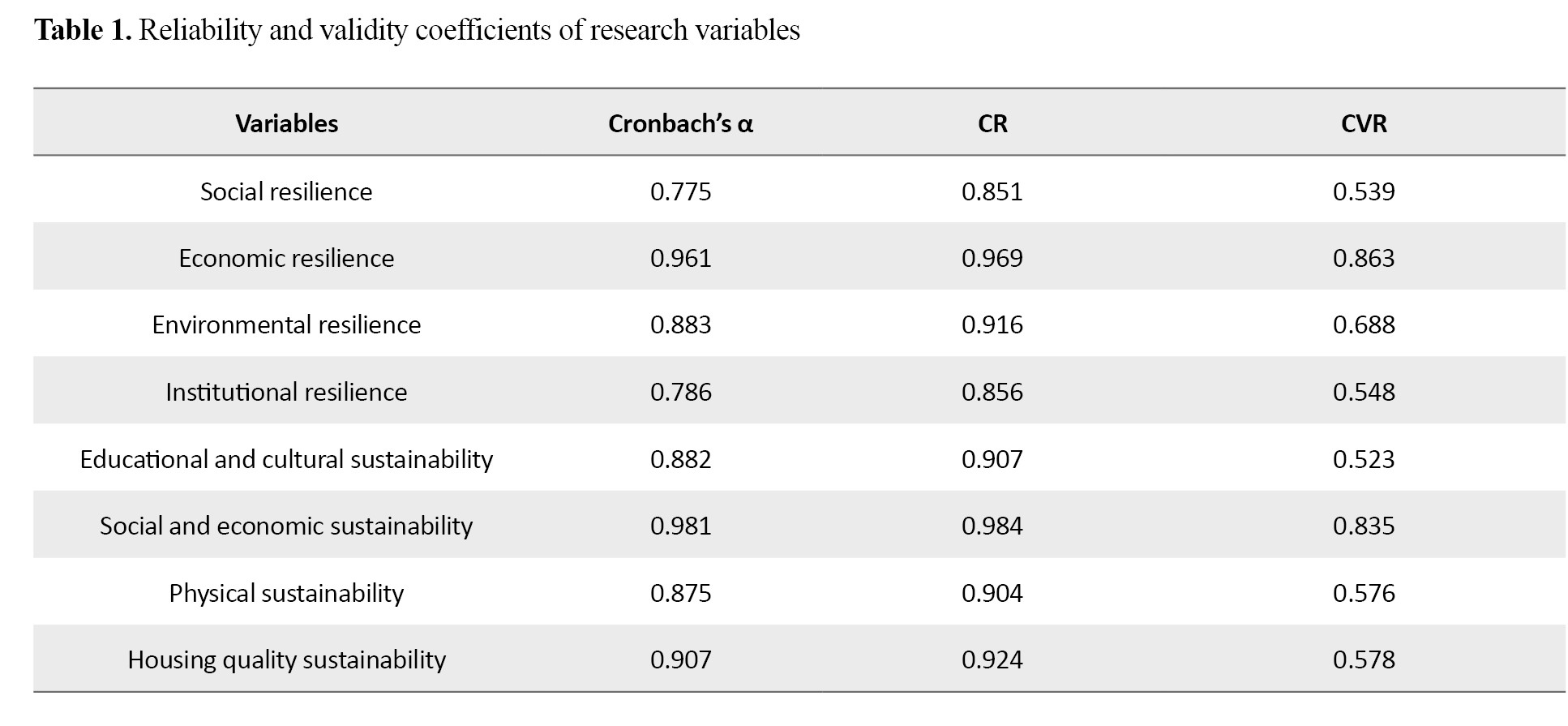
The convergent validity of the questionnaire was assessed using convergent validity (CVR), and its reliability was calculated using Cronbach’s α and composite reliability (CR); the obtained coefficients were, respectively, higher than the minimum acceptable thresholds (0.5 and 0.7) (
Table 1).
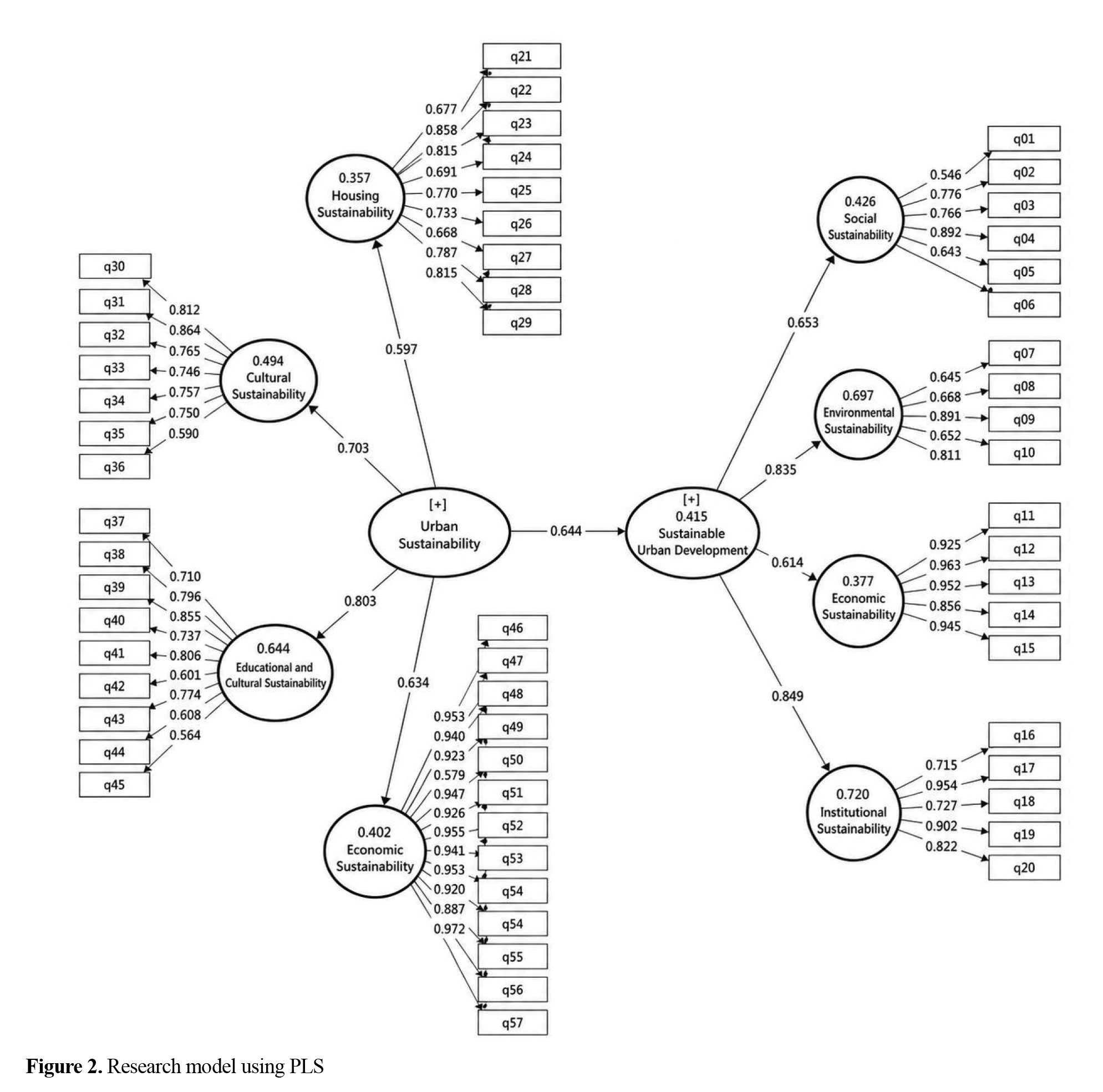
In the section on statistical indicators for explaining relationships, regression relationships were employed in the form of structural equation modeling. Smart Partial Least Squares (PLS) software, version 3.2.9 and SPSS software, version 22 were used for data analysis.
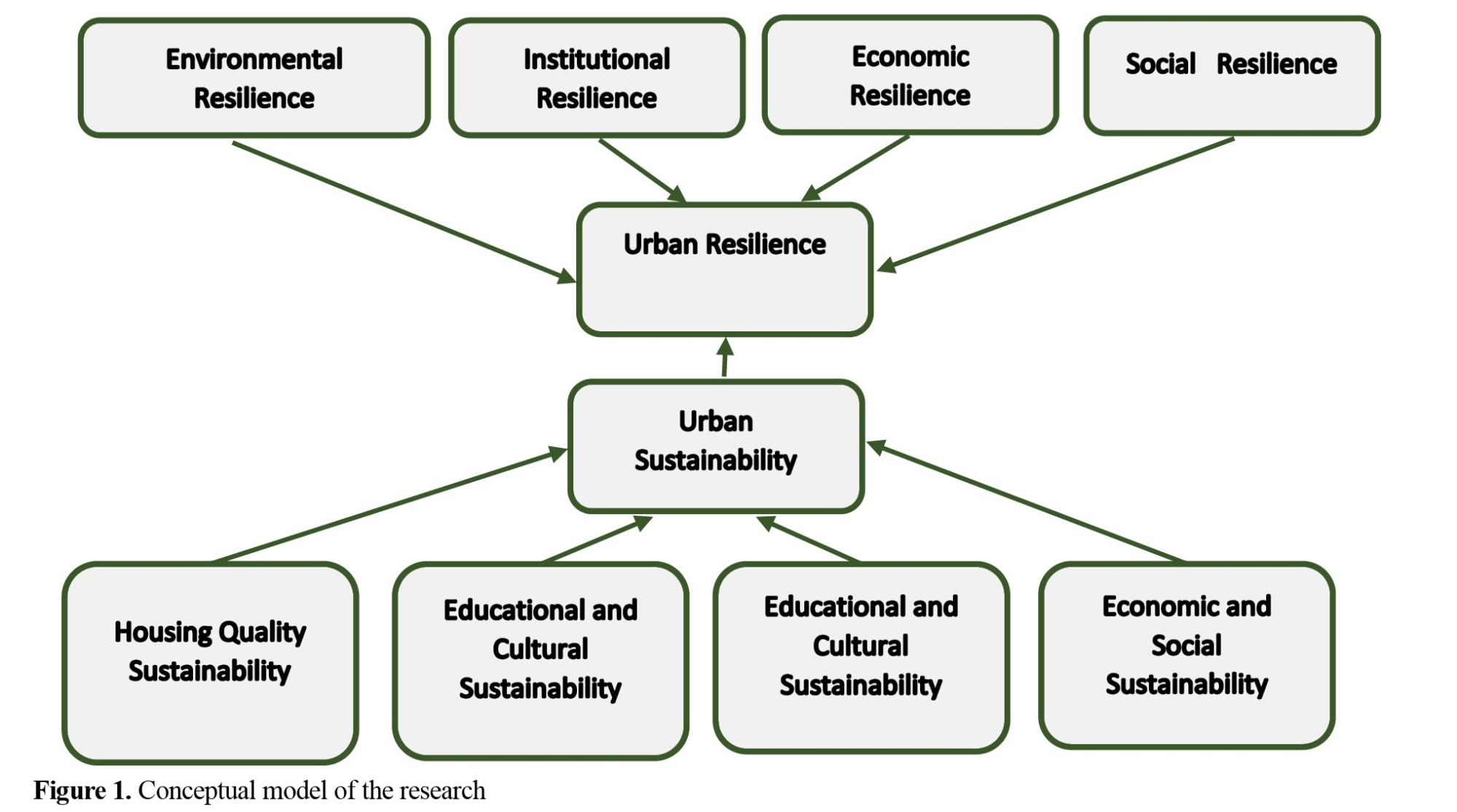
Figure 1 shows conceptual model of the research.
Main question: There is a significant relationship between urban sustainability and urban resilience in Pardis New Town.
The effect size of urban sustainability on urban resilience was calculated as 0.644, and the obtained t-statistic was 3.873, which is greater than the critical t-value of 1.96 at a 5% significance level, indicating that the observed effect was significant (
Table 6).

The P-value was calculated as 0.000, which was less than the 0.05 significance level, further confirming significance. Therefore, with 95% confidence, there was a significant relationship between urban sustainability and urban resilience in Pardis New Town.
First sub-question: There is a significant relationship between urban sustainability and social resilience in Pardis New Town.
The indirect effect of urban sustainability on social resilience was calculated as 0.420, and the obtained t-statistic was 3.336, which is greater than the critical t-value of 1.96 at a 5% significance level, indicating that the observed effect was significant (
Table 7).

The P-value was calculated as 0.001, which was less than the 0.05 significance level, further confirming significance. Therefore, with 95% confidence, there was a significant relationship between urban sustainability and social resilience in Pardis New Town.
Second sub-question: There is a significant relationship between urban sustainability and economic resilience in Pardis New Town.
According to
Table 8, the indirect effect of urban sustainability on economic resilience was calculated as 0.395, and the obtained t-statistic was 3.066, which was greater than the critical t-value of 1.96 at a 5% significance level, indicating that the observed effect was significant.

The P-value was calculated as 0.002, which was less than the 0.05 significance level, further confirming significance. Therefore, with 95% confidence, there was a significant relationship between urban sustainability and economic resilience in Pardis New Town.
Third sub-question: There is a significant relationship between urban sustainability and institutional resilience in Pardis New Town.
The indirect effect of urban sustainability on institutional resilience was calculated as 0.538, and the t-statistic was 3.838, which was greater than the critical t-value of 1.96 at the 5% significance level, indicating that the observed effect was significant. The P-value was calculated as 0.000, which was less than the 0.05 significance level, confirming significance. Therefore, with 95% confidence, there was a significant relationship between urban sustainability and institutional resilience in Pardis New Town.
Fourth sub-question: There is a significant relationship between urban sustainability and environmental resilience in Pardis New Town.
According to
Table 10, the indirect effect of urban sustainability on environmental resilience was calculated as 0.547, and the t-statistic was 3.804, which was greater than the critical t-value of 1.96 at the 5% significance level, indicating that the observed effect was significant.


The P-value was calculated as 0.000, which is less than the 0.05 significance level, confirming significance. Therefore, with 95% confidence, there was a significant relationship between urban sustainability and environmental resilience in Pardis New Town.
Discussion
A review of the literature indicates that, despite their close interrelationship at the urban scale, the concepts of urban sustainability and urban resilience have rarely been considered simultaneously from the perspectives of urban managers (Zhang & Li, 2018). This limitation appears to be more pronounced in new towns than in older cities. The quantitative findings of the present study further substantiate these qualitative observations by providing generalizable empirical evidence of the significant relationship between these two concepts. As expected, the assessment revealed that the level of sustainability in Pardis was below the average level (<3). The analysis examining the relationship between urban sustainability and urban resilience demonstrated that urban sustainability had a substantial positive association with urban resilience, with a standardized path coefficient of 0.644, exceeding the benchmark value of 0.50. The findings of the present study regarding the relationship between urban sustainability and resilience are consistent with those reported in previous national studies (Marvi et al, 2020; Hokmabadi Ghashuni et al, 2024), which showed similar results between the two concepts in Sahand, a new town in Tabriz, and in other new towns across Iran.
Moreover, the results indicated that urban sustainability in Pardis had a low effect on the city's economic resilience. This finding is supported by more recent studies on new towns in Iran (e.g. Darvishi et al, 2025), which attribute this low effect to factors such as the absence of local financial resources and investment funds, financial risk aversion, weak urban branding, etc. Given the multi-level and complex requirements of cities to deal with complex and future urban challenges in the coming decades, urban sustainability of new towns and its impact on urban resilience—particularly through economic resilience—require the attention of new city managers and further field studies in the future.
Conclusion
The expansion of urbanization and the development of urban life have created new challenges for urban management in all aspects. Urban sustainability and urban resilience are two key emerging challenges in the field of sustainable urban management. A review of the theoretical literature on these topics reveals both deep meanings and initial divergences, followed by secondary convergence, between these two concepts at the scale of global cities. This research aims to explore the relationship between these concepts in the context of Iran’s first-generation new cities, using Pardis as a case study. Although significant domestic research has been conducted on resilience and crisis management, this study’s focus on both concepts jointly—within the spatial scope of first-generation new cities and Pardis New Town—represents a research innovation. An examination of the findings from the perspective of the city’s experts revealed that, first, the quantitative levels of “sustainability” and “resilience,” in this city are low and below the average value on the Likert scale.
On the other hand, despite these low levels, the significant effect of the two components on each other suggests that existing sustainability can be leveraged to enhance the city’s resilience. The effect coefficient of urban sustainability on Pardis’s resilience, according to expert estimates, is 0.644, which is higher than the midpoint coefficient of 0.5. However, this coefficient is not evenly distributed among the subcomponents of the city’s resilience. Based on this, environmental resilience (0.547), institutional resilience (0.538), social resilience (0.420), and economic resilience (0.395) show the lowest responsiveness to the current sustainability levels of Pardis.
In fact, the city is currently most vulnerable in terms of economic resilience. These findings align with existing research and the extensive literature on first-generation new cities, including criticisms such as their “dormitory city” nature, dependence on close geographical proximity to the parent city, lack of a distinct spatial identity (such as urban prosperity), and the overall dependence of the city’s economy on that of the parent city (Moravi et al., 2020). Consequently, strengthening the urban economy from a sustainability perspective, with a focus on resilience, must be a primary priority for the city’s officials and managers moving forward. Furthermore, enhancing overall levels of urban sustainability and resilience, along with improving the indicators of these two components, should be part of the city managers’ new vision to transform Pardis into a more sustainable, resilient, and adaptable city in the future.
Ethical Considerations
Compliance with ethical guidelines
All ethical principles were observed in this study. Since the research did not include any experiments on human or animal samples, no ethics approval code was required.
Funding
This article was extracted from the master's thesis of Seyed Mohammad Bagher Mousavian Ahmadabadi, approved by the Department of Urban Management, Faculty of Management and Accounting, Shahr-e-Rey Branch, Islamic Azad University. This research did not receive any specific grant from funding agencies in the public, commercial, or not-for-profit sectors.
Authors' contributions
All authors contributed equally to the conception and design of the study, data collection and analysis, interpretation of the results, and drafting of the manuscript. Each author approved the final version of the manuscript for submission.
Conflicts of interest
The authors declared no conflict of interest.
Acknowledgments
The authors would like to thank all experts who participated in this research.
References
Brown, K. (2014). Global environmental change I: A social turn for resilience? Progress in Human Geography, 38(1), 107-117. [DOI:10.1177/0309132513498837]
Campbell, S. (1996). Green Cities, Growing Cities, Just Cities? Urban Planning and the Contradictions of Sustainable Development. Journal of the American Planning Association, 62(3), 296-312. [DOI:10.1080/01944369608975696]
Darvishi, E., shamsoddini, A., & Hemmati, M. (2026). [Conceptualization of Novel Entrepreneurial-Oriented Models in New Towns with an Emphasis on Sustainable Urban Development (Persian)]. Motaleate Shahri, 15(57): 89-106. [DOI: 10.22034/urbs.2025.144018.5183]
Ekins, P., Dresner, S., & Dahlström, K. (2008). The four‐capital method of sustainable development evaluation. European Environment, 18(2), 63-80. [DOI:10.1002/eet.471]
Eskandari Nodeh, M., Gholipoor, Y., Fallah Heydari, F., & Ahmadpour, A. (2019). [Identifying Resilience Dimensions and its Impact on Urban Sustainability of Rasht City (Persian)]. Geography and Environmental Sustainability, 9(3), 63-77. [DOI:10.22126/ges.2019.3436.1913]
European Environment Agency. (2005). EEA Core Set of Indicators-Guide. EEA Technical Report No 1/2005. Copenhagen: European Environment Agency. [Link]
Gharai, F., Masnavi, M. R., & Hajibandeh, M. (2018). [Urban local-spatial resilience: Developing the key indicators and measures, a brief review of literature (Persian)]. Bagh-e Nazar, 14(57), 19-32. [Link]
Gao, J., Kørnøv, L., & Christensen, P. (2013). The politics of strategic environmental assessment indicators: weak recognition found in Chinese guidelines. Impact Assessment and Project Appraisal, 31(3), 232-237. [DOI:10.1080/14615517.2013.786925]
Gleeson, B. (2008). Critical Commentary. Waking from the Dream: An Australian Perspective on Urban Resilience. Urban Studies, 45(13), 2653-2668. [DOI:10.1177/0042098008098198]
Hansjürgens, B., Heinrichs, D., & Kuhlicke, C. (2008). Mega-urbanization and social vulnerability. Megacities Resilience and Social Vulnerability, 10, 20-28. [Link]
Huang, L., Wu, J., & Yan, L. (2015). Defining and measuring urban sustainability: A review of indicators. Landscape Ecology, 30(7), 1175-1193. [DOI:10.1007/s10980-015-0208-2]
Hokmabadi Ghoshouni, M., Taghavi, E., & Hosseinzadeh Dalir, K. (2024). [Structural Analysis of Indicators of the Model of Resilience of new cities with an emphasis on sustainability (Study Case: Sahand New City) (Persian)]. Journal of Geographical Studies of Mountainous Areas, 5(1), 215-236. [Link]
Levin, S. A., Barrett, S., Aniyar, S., Baumol, W., Bliss, C., & Bolin, B., et al. (1998). Resilience in natural and socioeconomic systems. Environment and Development Economics, 3(2), 221-262. [DOI:10.1017/S1355770X98240125]
Marchese, D., Reynolds, E., Bates, M. E., Morgan, H., Clark, S. S., & Linkov, I. (2018). Resilience and sustainability: Similarities and differences in environmental management applications. The Science of The Total Environment, 613-614, 1275–1283. [DOI:10.1016/j.scitotenv.2017.09.086] [PMID]
Marvi, M., Eghbali, N., & Hatami, H. (2020). [An analysis of the management of Irans first generation new cities based on the good urban governance approach: A perspective on national administration divisions (Persian)]. Journal of Geography and Urban Planning, 10(35), 1-26. [Link]
Masnavi, M. R., Gharai, F., & Hajibandeh, M. (2019). Exploring urban resilience thinking for its application in urban planning: A review of literature. International Journal of Environmental Science and Technology, 16(1), 567-582. [DOI:10.1007/s13762-018-1860-2]
McPhearson, T. (2014). The Rise of Resilience: Linking Resilience and Sustainability in City Planning. Retrieved from: [Link]
Newman, P., Beatley, T., & Boyer, H. (2009). Resilient Cities: Responding to Peak Oil and Climate Change. Australian Planner, 46(1), 59. [DOI:10.1080/07293682.2009.9995295]
Nikpour, A., Malekshahi, Gh., & Razaghi, F. (2015). [Evaluation of sustainable urban development indicators with emphasis on justice in service distribution (Case study: Babol city) (Persian)]. Journal of Urban Research and Planning, 6(22), 125-138. [Link]
O’Connor, M. (2006). The “Four Spheres” framework for sustainability. Ecological Complexity, 3(4), 285-292. [DOI:10.1016/j.ecocom.2007.02.002]
Parhizgar, S., & Jalili Sadrabad, S. (2023). [Identifying the Key Resilience Factors of Urban Areas to Dealing with the COVID-19 Pandemic (Persian)]. Disaster Prevention and Management Knowledge, 12 (4), 393-406. [Link]
Sharifi, A. (2021). Urban sustainability assessment: An overview and bibliometric analysis. Ecological Indicators, 121, 107102. [DOI:10.1016/j.ecolind.2020.107102]
Shi, C., Liao, L., Li, H., & Su, Z. (2022). Which urban communities are susceptible to COVID-19? An empirical study through the lens of community resilience. BMC Public Health, 22(1), 70. [DOI:10.1186/s12889-021-12419-8] [PMID]
Zhang, X., & Li, H. (2018). Urban resilience and urban sustainability: What we know and what do not know? Cities, 72, 141-148. [DOI:10.1016/j.cities.2017.08.009]
Zhang, P., Zhang, L., Chang, Y., Xu, M., Hao, Y., & Liang, S., et al. (2019). Food-energy-water (FEW) nexus for urban sustainability: A comprehensive review. Resources, Conservation and Recycling, 142, 215-224. [DOI:10.1016/j.resconrec.2018.11.018]
Vásquez-Moreno, L., & Córdova, A. (2013). A conceptual framework to assess urban agriculture’s potential contributions to urban sustainability: An application to San Cristobal de Las Casas, Mexico. International Journal of Urban Sustainable Development, 5(2), 200-224. [DOI:10.1080/19463138.2013.780174]
Von Schorlemer, S. (2022). Fighting Terrorist Attacks against World Heritage and Global Cultural Heritage Governance. In J. Cuno & T. WEISS (Eds.), Cultural Heritage and Mass Atrocities (pp. 448-464). Los Angeles: Getty Publications. [DOI:10.2307/jj.6142257.36]
Walker, B., Holling, C. S., Carpenter, S. R., & Kinzig, A. (2004). Resilience, adaptability and transformability in social-ecological systems. Ecology and Society, 9 (2), 5. [DOI:10.5751/ES-00650-090205]