Introduction
The capital of any country is the most important center of political organization and management and sometimes the most important demographic, cultural, economic, political, historical and communication center of that country. Tehran, the capital of Iran, has a unique position among the cities of the country due to its administrative and managerial centrality, economic activities, and extraordinary population concentration, which increase the risk of any type of incidents in this city. Urbanization, inappropriate geographical location, lack of risk zoning, failure to implement regional development plans, unbalanced growth of regions, and increased population density create serious challenges during natural disasters (Minnery, 2018).
Earthquakes, landslides, dilapidated buildings, unstable urban textures, the location of oil and gas refineries around and even within the city, and the lack of an integrated urban electricity system, especially in the southern regions, are some of the dangers that threaten Tehran. Located in the southern part of the Zagros mountain range, Tehran is surrounded by several active faults. The high seismic hazard combined with the dense population distribution and several vulnerability factors has made Tehran one of the top 20 metropolises in the world at high risk of earthquakes (Kamranzad et al., 2020).
The results of a study conducted to compile a flood risk map in Tehran province showed that the capital of Iran is at risk of floods due to rainfall. Anticipating and implementing measures for the safety of urban centers and existing facilities and constructions through combating floods and technical implementation in accordance with regulations also requires studying and understanding flood risk, but most constructions are done without paying attention to these risks, resulting in many human and financial losses. Policies and planning in the field of allocating land use along rivers should be based on hazard maps, considering the risks and damages caused by floods (Aslani & Mehdipour, 2015).
Given the geographical location, population density, and the presence of important and vital centers and organizations in this province, Tehran’s hospitals face a wide range of emergencies, natural disasters, epidemics, mass casualties, and chemical/biological/radiological/nuclear incidents, which pose many challenges to the health system. In the event of such incidents, hospitals are expected to provide a safe environment for patients and staff, maintain their operational performance, and be able to deliver the necessary medical services to the injured. However, studies in various fields have shown that the preparedness of Tehran’s hospitals is not in a desirable state (Rahmanian et al., 2020; Bazyar et al., 2020).
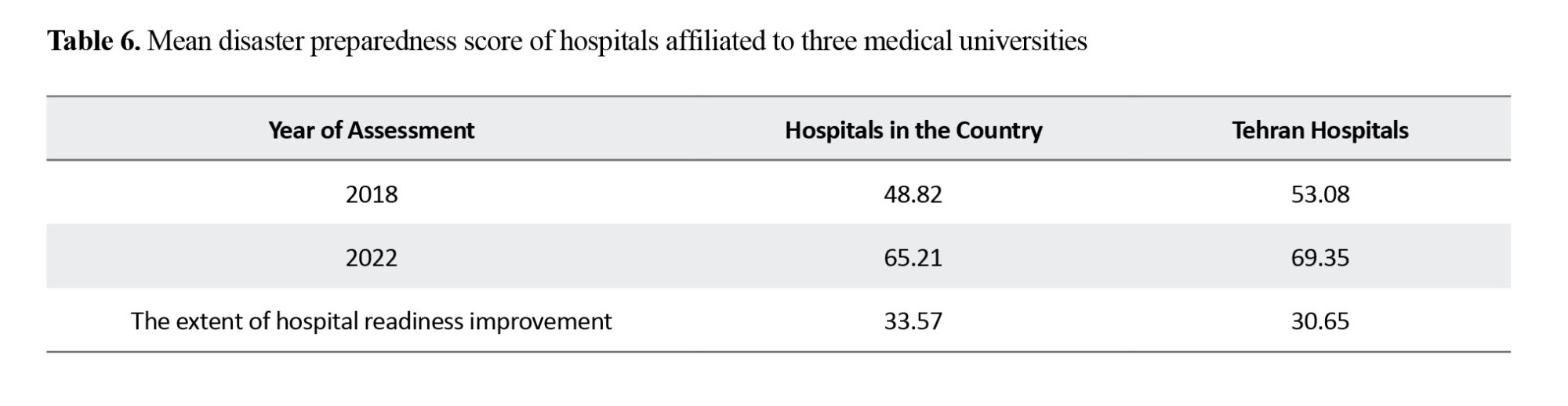
In a study conducted based on the hospital safety index (HSI) tool, the score of Tehran’s hospitals in the three areas of structural, non-structural, and functional safety was 66.33, indicating a moderate level of safety and that they would not be able to provide uninterrupted services in the event of an accident (Abbasabadi et al. 2023). A study on hospitals in Tehran during the COVID-19 pandemic found that military hospitals had the highest level of preparedness (53.3%), while the Ministry of Health hospitals had the lowest level of preparedness (28.3%) (Heidaranlu et al., 2022). In a study by Jafari Pouyan et al. in 2012, the level of preparedness of Tehran’s hospitals to deal with COVID-19 was reported as moderate (Jaafaripooyan et al., 2022). Another study on the preparedness of Tehran’s hospitals for traffic accidents with many casualties showed that the level of preparedness of hospitals was moderate (65.25%), and the training and practice of hospitals were poor (Yousefian et al., 2022). The results of the accreditation of disaster risk management in 2022 showed that the overall score of hospitals in the country was 65.21% and the average score of hospitals in Tehran province was 69.35%, which is higher than the national level, but the hospitals still do not have the desired level of preparedness (Abbasabadi, 2023).
This study aimed to investigate the level of disaster risk management among hospitals in Tehran province to identify strengths and weaknesses and provide practical solutions to increase the preparedness of hospitals. The results of this study can be utilized by policymakers in the Ministry of Health and Medical Education, as well as accreditation managers in Iran, to develop infrastructure, enhance processes, implement corrective actions, and refine comprehensive standards for disaster and accident risk management in hospitals.
Materials and Methods
This is a descriptive-analytical study. We used the data from the accreditation study (fifth round) of hospitals in Tehran Province, conducted by the accreditation assessors of the Ministry of Health in 2022. They used the Farsi version of the HSI checklist, including 5 standards (subscales) and 26 items (Asgari et al., 2016). The scoring was from 0 to 10, and the assessors scored based on the extent to which each measure was implemented. The sum of points earned by the hospital divided by the total points earned in this field determined the final score of each hospital in the field of disaster risk management. The data were extracted from the Ministry of Health accreditation system and entered into SPSS. Hospital scores were ranked as good (>71%), moderate (51-70%), poor (41-50%), and very poor (<40%). Descriptive statistics (mean, standard deviation, and percentage) were used to analyze the data, and regression analysis was employed to examine the association between disaster risk management components and hospital characteristics.
Results
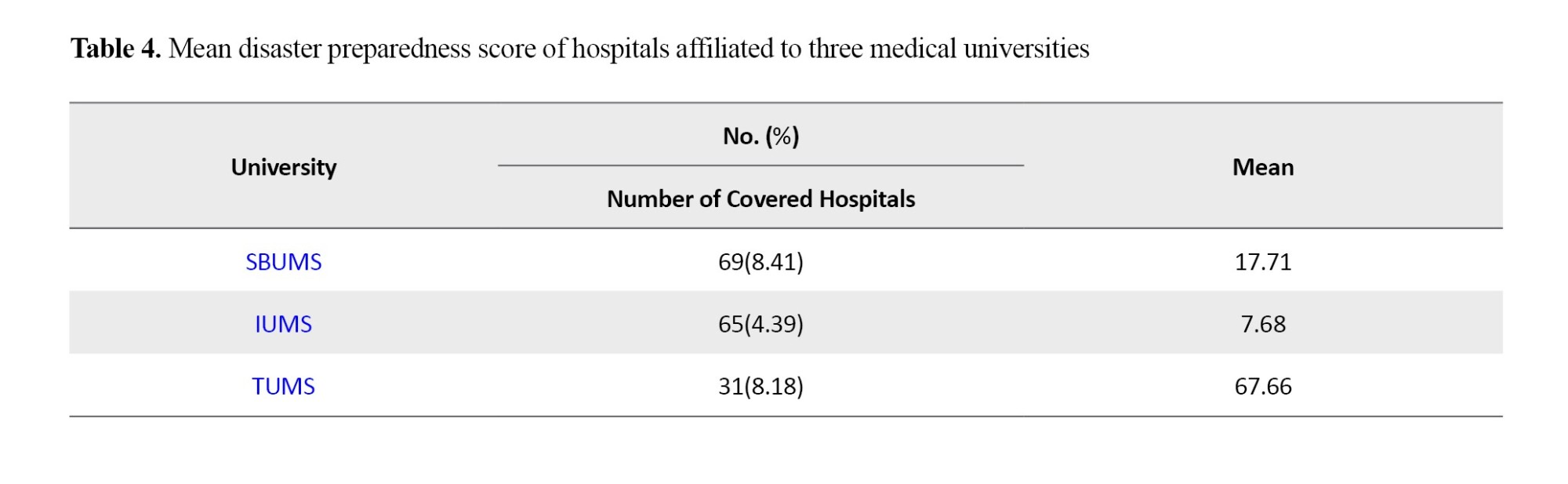
One hundred sixty-five hospitals were evaluated in the fifth round of accreditation assessment in Tehran province. These hospitals were affiliated with three medical universities: Tehran University of Medical Sciences (TUMS) with 31 hospitals, Shahid Beheshti University of Medical Sciences (SBUMS) with 69 hospitals, and Iran University of Medical Sciences (IUMS) with 65 hospitals. Most hospitals (35%) were private, with fewer than 100 beds (38.8%), were general hospitals (77%). Tables 1, 2 and, 3 show the status of hospitals in Tehran province in terms of the number of beds, the type of services provided, and the type of affiliation.
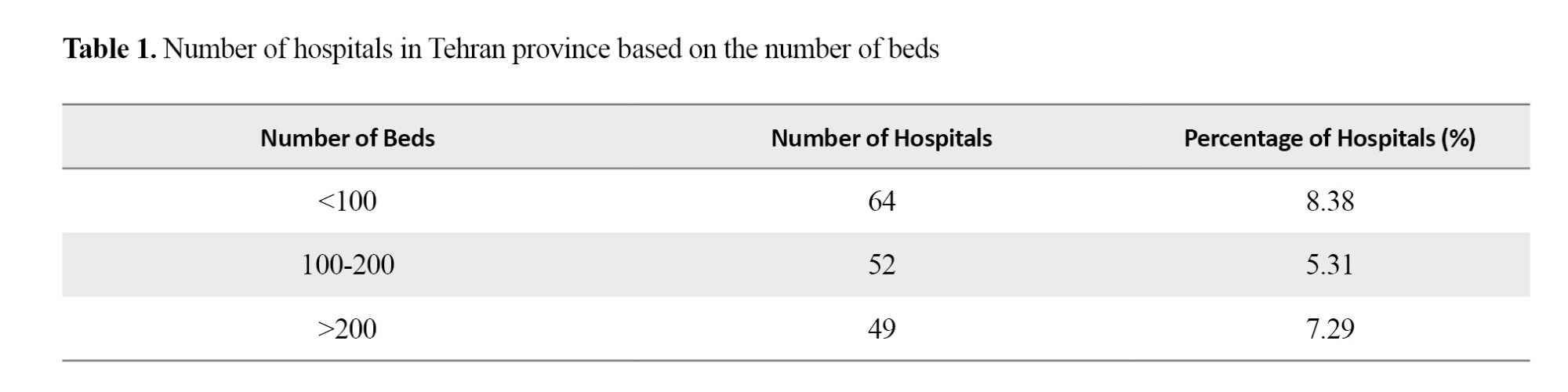
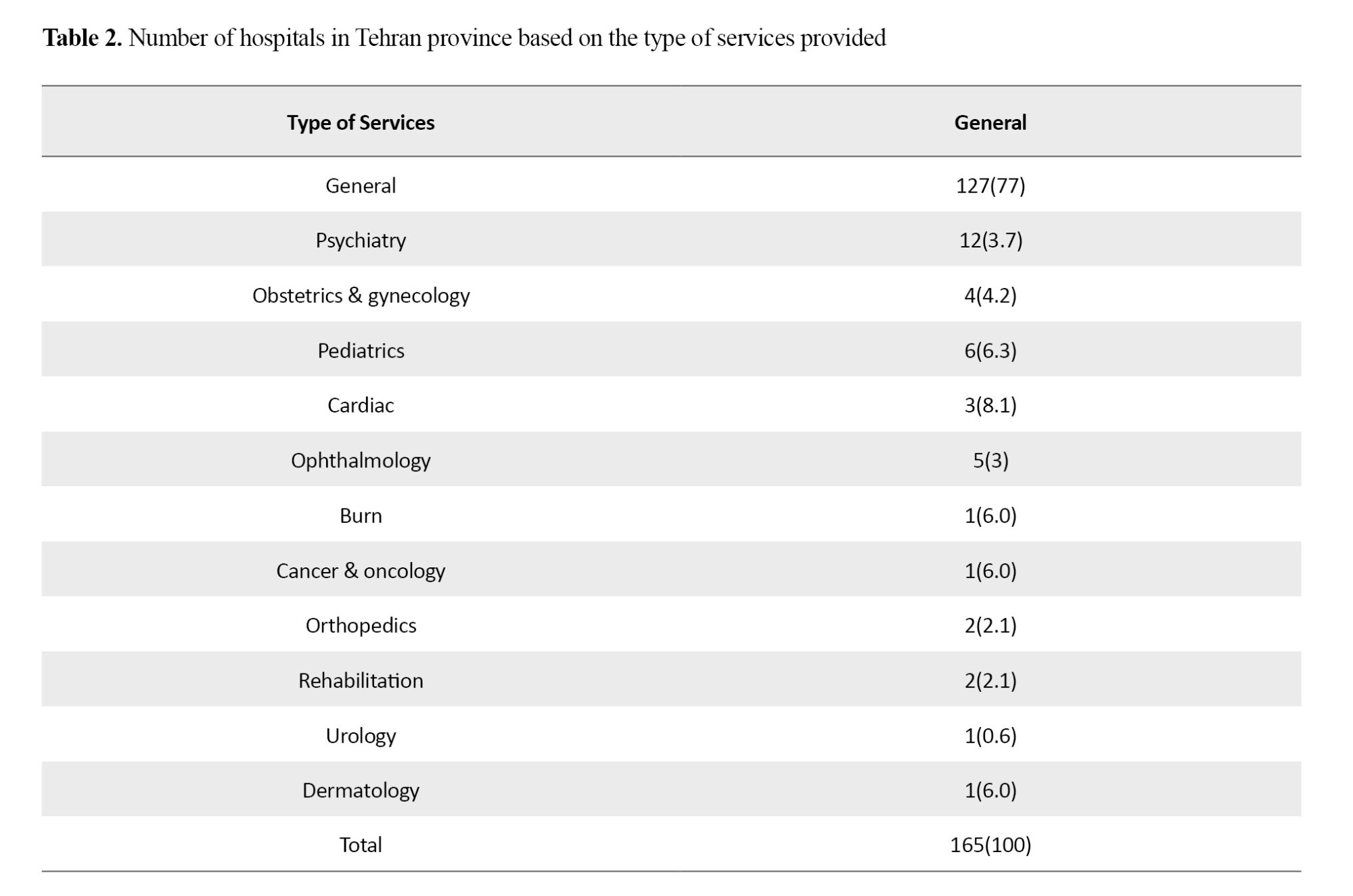
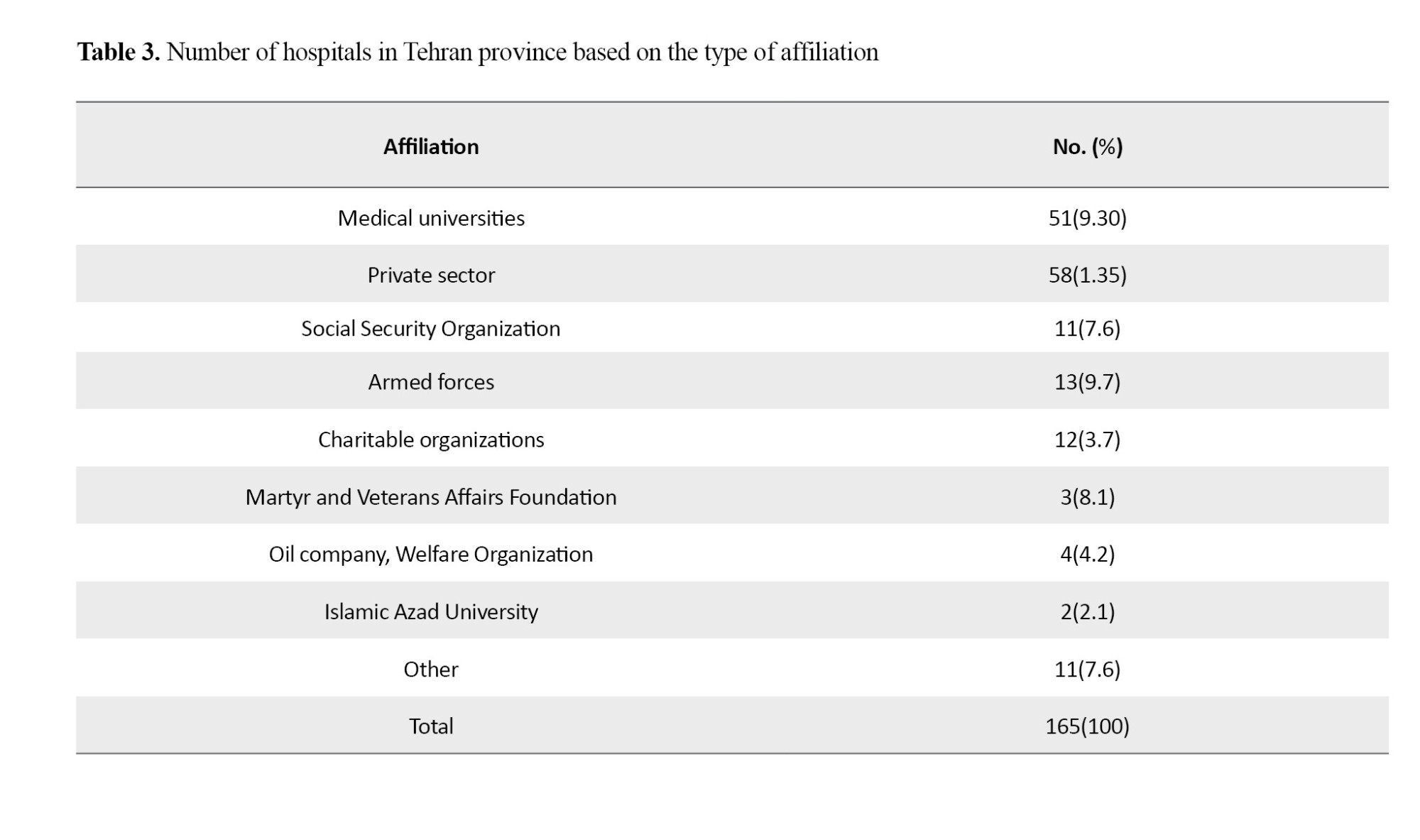
Figure 1 shows the mean scores of hospitals in Tehran province, based on the standards of disaster risk management.
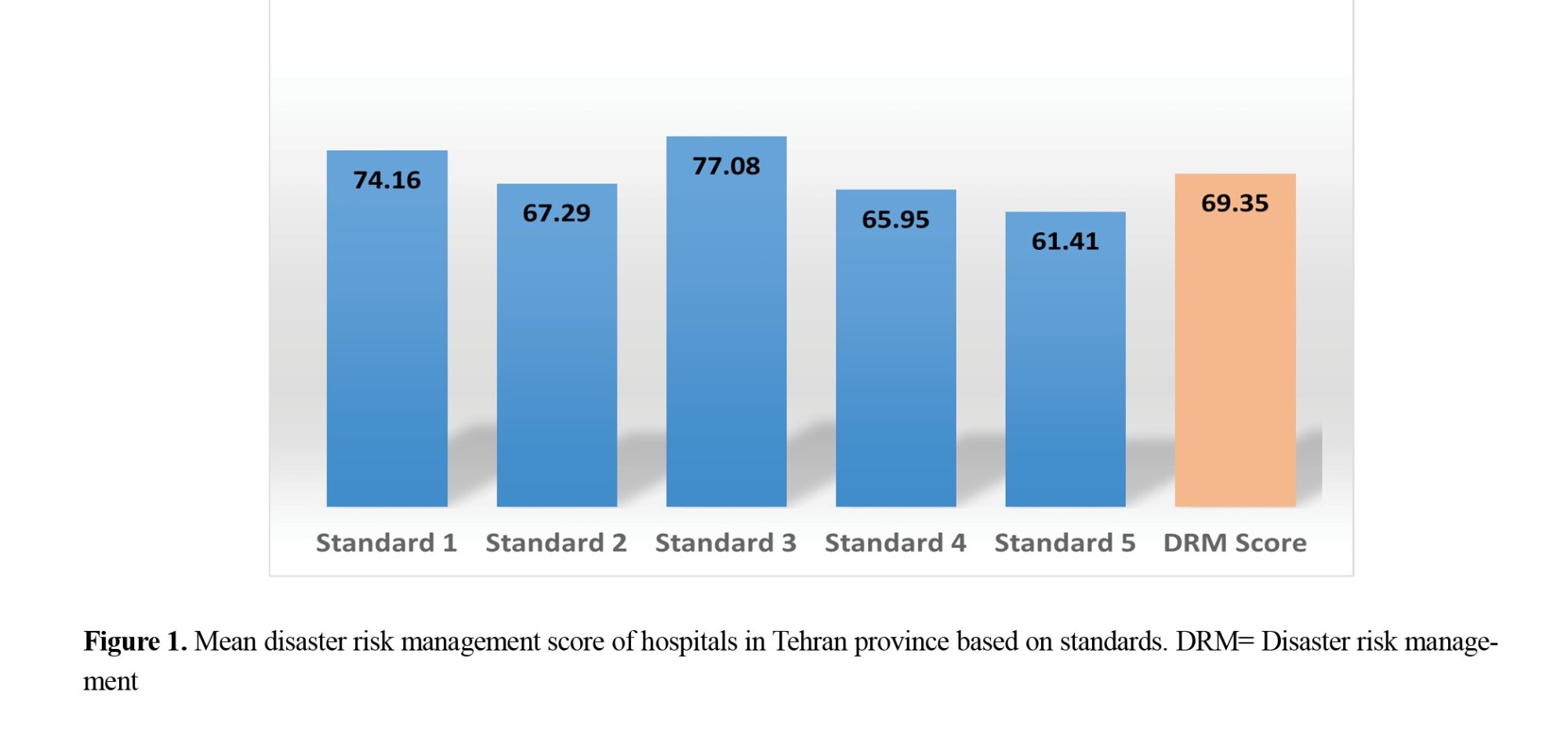
The mean total score was 69.35%. The highest score was related to the third standard (electrical systems assessment, maintenance, and security) with 77.08%, and the lowest score was related to the fifth standard (continuity of critical services and recovery plan) with 61.41%.
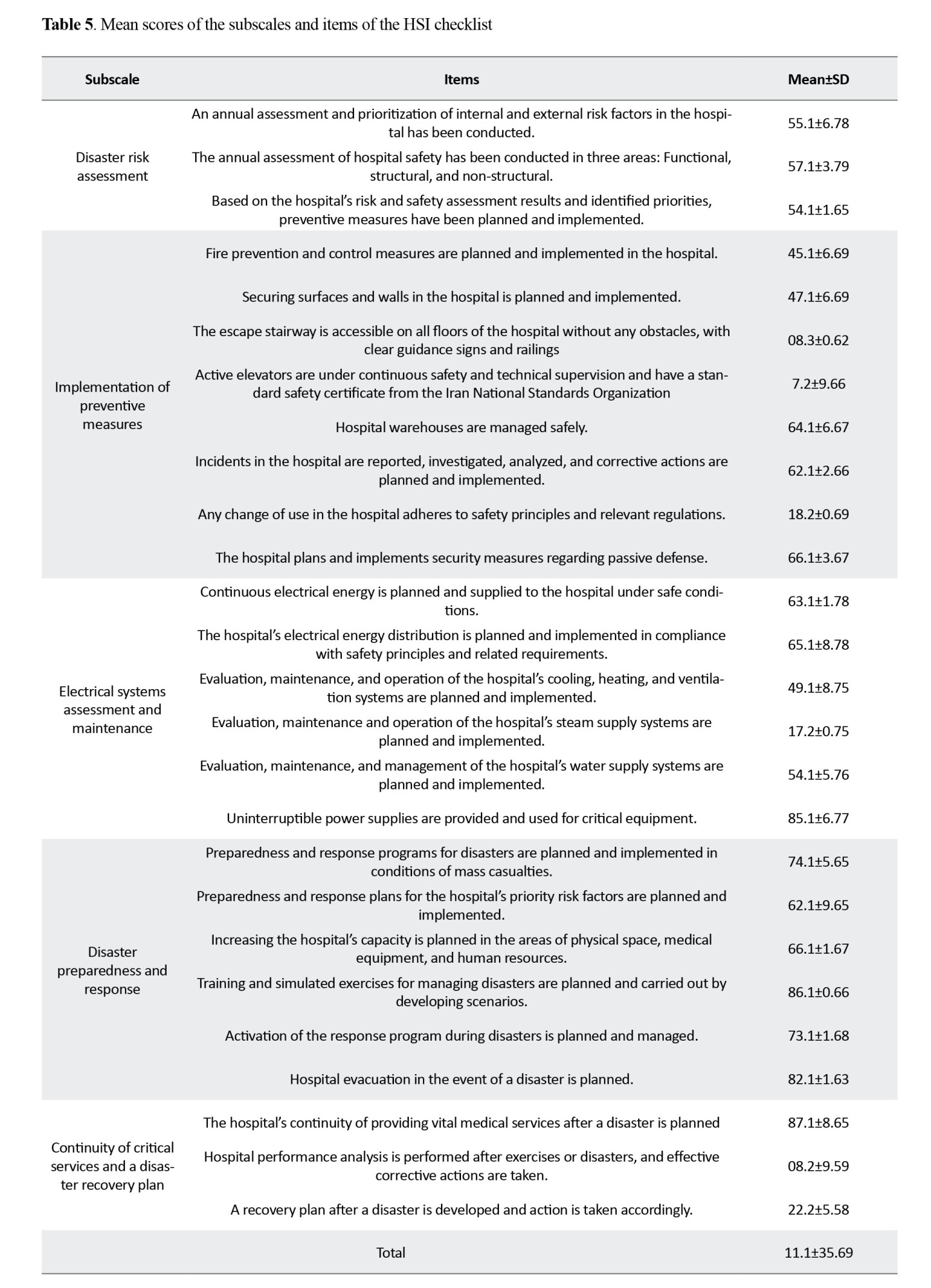
The results of the assessment of disaster preparedness in hospitals showed that hospitals were in different levels (from desirable to very poor). The lowest score was 49.17, and the highest score was 94.50. Military hospitals, teaching hospitals, and those for the Social Security Organization had the highest scores. Private hospitals had lower scores. Table 4 show the mean disaster preparedness score of hospitals affiliated to three medical universities, and Table 5 presents the mean scores for each subscale and items of the HSI checklist.
The results of the regression analysis showed that the affiliation of hospitals had a significant association with disaster risk preparedness, response, and recovery. Newly established teaching hospitals, military hospitals, and social security hospitals had higher average scores.
 Discussion
This study aimed to investigate the extent of compliance with disaster risk management standards in hospitals of Tehran province. The average score of hospitals was 69.35%, which is consistent with the results of other studies (Ghanizadeh et al. 2020; Abbasabadi et al. 2023; Heidaranlu et al. 2022; Jaafaripooyan et al. 2022; Yousefian et al. 2022). In a similar study in 2017 on hospitals across the country, the overall average score of hospitals was 48.82% and the average score of hospitals in Tehran was 53.08% (Abbasabadi et al. 2022). According to the national accreditation report of hospitals in 2022, the disaster preparedness level of hospitals across the country was 65.21% and the preparedness level of hospitals in Tehran was estimated at 69.25% (Abbasabadi 2023). This indicates that between 2017 and 2022, the disaster preparedness level of hospitals in Tehran increased by about 30.65%. Tehran Province has had a higher score than the national score in both years, but its level of preparedness improvement is lower than the national level (Table 6).
Among the items of the HSI checklist, the highest score (79.3%) was related to the annual hospital safety assessment (structural, non-structural, and functional). The reason can be the hospitals’ requirement for annual safety assessments using the HSI since 2012 and the institutionalization of assessment in hospitals. The hospitals in Tehran had the lowest scores in developing a recovery plan after a disaster (58.5%) and performing hospital performance analysis after exercises or disasters (59.9%). The weakness of hospitals in developing recovery plans and analyzing performance has also been mentioned in other studies (Abbasabadi et al., 2021). Despite the importance of disaster preparedness and response, the hospitals’ compliance with these standards were not at a good level. Disaster preparedness and response planning is a scientific process and requires training and empowerment of disaster risk managers and staff. Disaster planning begins with risk assessment and continues throughout the disaster risk management cycle (Ciottone et al., 2015). In addition to planning based on risk assessment, all-hazards planning is among the main disaster risk management programs in leading countries (Abbasabadi et al., 2021). This approach does not mean that the hospital must be prepared for all hazards, but rather, it indicates that in the event of any incident, hospitals will face a mass of casualties and must have a plan to control it. A health center can continue to provide services during disasters if it can increase its capacity in three components: human resources, equipment/facilities, and physical structures/spaces, based on a pre-developed and practiced plan (Ciottone et al., 2015).
The affiliation of hospitals had significant association with disaster risk preparedness, response, and recovery. Newly established teaching hospitals, military hospitals, and social security hospitals had higher average scores. A study that compared the earthquake preparedness of military and non-military hospitals in Tehran in 2020 also showed that the average preparedness of military hospitals was higher (Ghanizadeh et al., 2020). A study of Tehran hospitals during the COVID pandemic showed that the highest preparedness (53.3%) was in military hospitals and the lowest preparedness (28.3%) was in the Ministry of Health hospitals (Heidaranlu et al., 2022). Also, the results of a study that examined the disasters preparedness of hospitals in Mazandaran in 2017 showed that the average scores of social security hospitals were higher than those of teaching hospitals (Parsaei et al., 2017). These are consistent with our results. Military hospitals should be prepared and increase their capacity for crises. On the other hand, social security hospitals hold documented training programs for crisis management, which are effective in the preparation of hospital personnel and managers. The results of this study showed that private hospitals had lower scores than other hospitals in compliance with disaster risk management standards (preparedness, response, and recovery). In a study that evaluated the components of crisis management in private and public hospitals in Tehran, the results showed that the level of resilience to crises in public hospitals was higher than in private hospitals, and recommended that the preparedness of these hospitals should be improved with a comprehensive risk management plan (Ghiyasi et al., 2022). Improving the preparedness of Tehran’s hospitals requires a multifaceted approach and is not only about the improvement of the internal environment of the hospital. At a macro level, we need to modify policies, laws, and guidelines (Abdollahzadeh et al., 2022).
The most important threat to hospitals in Tehran during a crisis is their inappropriate geographical location. Nearly half of Tehran’s hospitals are located in inappropriate areas, which, if not reinforced, cannot be able to play their vital role in event of a disaster (Kolivand et al., 2020). Therefore, in selecting the location of new hospitals, attention should be paid to the geographical hazards of the region and laws in this regard should be approved by the Ministry of Health. Location selection, land use planning, and equitable access to health services should be considered in granting permits and building new hospitals. Also, attention should be paid to risk assessment before granting permits for building hospitals (Ghanbaran et al., 2019).
Another challenge is the unfair distribution of hospital beds in different regions of Tehran province. A study in 2016 on the equity of hospital bed distribution in Tehran showed that there were 2.8 hospital beds per 1000 people in Tehran, which is better than the average number of hospital beds per population in the Eastern Mediterranean countries and the world. However, there is no equity in the distribution of hospital beds among the urban areas of Tehran. District 6 in the center of Tehran accounts for about 23% of the hospitals and 24% of the hospital beds in Tehran, while it makes up 2.9% of Tehran’ population. Districts 19, 8, and 15 had the lowest number of hospital beds per population (Mosadeghrad et al., 2021). The unfair distribution of hospital beds across different areas of Tehran will make it challenging to provide relief during disasters. Most of Tehran’s public hospitals are located in the central area, making access to them difficult during disasters. Also, in recent years, public hospitals have not been built in Tehran, and private hospitals have been built more in the west of Tehran. In the event of a disaster in the east of Tehran, people’s access to medical services will be limited, and they will be forced to transfer the injured to other areas, which will increase mortality due to the delay in providing medical services.
Approximately three-quarters of hospitals in Tehran are more than 20 years old, and about a quarter are over 50 years old (Mosadeghrad et al., 2021). The age of hospitals increases their vulnerability in the event of a disaster. A significant percentage of crisis management weaknesses in Iranian public hospitals are related to the inappropriateness of hospital infrastructure and the inadequacy of the physical space. National and international studies have emphasized the necessity of structural and non-structural safety of hospitals to increase their resilience to disasters (Ghanbaran et al., 2019; Zhong et al., 2014; Maher et al., 2014). A systematic review study (Bazyar et al., 2020) showed that Iranian hospitals were at a poor level of structural safety (49%) and at a moderate level of non-structural safety (57%). Therefore, planning to increase hospital safety in both structural and non-structural areas is crucial and should be a priority for hospital managers.
About 69% of hospitals in Tehran are non-governmental hospitals, which indicates that they bear most of the hospital costs in Tehran. The trend of building hospitals in Tehran indicates that, in most years, the construction of private hospitals has been higher (Mosadeghrad et al., 2021). However, currently, there are no plans for using the capacity of private hospitals in the country during crises (Abbasabadi et al., 2022). Developing guidelines and laws for using the capacity of private hospitals in crises and their participation can create appropriate capacity for accepting the injured and providing services to the community.
Effective communication and information systems are crucial for disaster response. A study conducted in 2022 on the preparedness of hospitals in Tehran revealed that the level of preparedness was moderate, and a direct correlation was found between the strength of the communication system and overall preparedness (Hosseini, 2022). Strengthening the technical infrastructure of communication systems and fostering a culture of their use during unexpected events is recommended. Upgrading these systems can enhance coordination and response in emergencies within hospitals.
Staff training is a critical but often overlooked area in improving hospital resilience. Hospital managers and staff require training in emergency response, triage, and casualty management. A 2016 study on the disaster preparedness of Italian hospital staff showed that staff did not have sufficient information about their responsibilities and duties during disasters, and did not have correct and acceptable performance when a disaster occurred (IngrassiaIn et al., 2016). Another study on traffic accident preparedness found that hospitals were weak in training and practice, scoring 48.46% (Yousefian et al., 2022). To address these gaps, systematic training programs and simulated exercises are essential. A resilience model with an emphasis on human resource management and specialized training can significantly improve hospital preparedness and response. Simulated exercises are more effective in enhancing the disaster preparedness of hospitals and its staff because they put the individuals in a real situation (Jung, 2022). Holding effective training courses for managers and staff plays a crucial role in enhancing their preparedness and hospitals’ ability to respond appropriately to disasters (Rahmati et al., 2018).
A disaster-resilient hospital requires support from top-down policies, laws, funding for hospital safety, careful planning and provision of equipment and facilities, training and exercise, and financial resources, as well as a strong management and leadership system to provide quality and equitable services during disasters. Therefore, improving the disaster risk management and preparedness of hospitals in Tehran requires changes and reforms at different levels.
Conclusion
This study is the first study to evaluate the disaster risk management and preparedness of hospitals in Tehran province. Based on the findings, hospitals in Tehran province has a moderate level of disaster risk management. Hospitals require fundamental measures to enhance their management systems and mitigate disaster risk within the healthcare system. The greatest weaknesses of hospitals in Tehran are related to planning for safety and accident prevention, the vulnerability of hospital infrastructure, the scientific formulation of preparedness, response, and recovery plans, the lack of training and practice, and the post-disaster performance analysis. Improving the disaster preparedness of Tehran’s hospitals requires a multifaceted approach. This involves reviewing policies, laws, and guidelines for hospital construction and use, accurately selecting locations, ensuring fairness in the distribution of hospital beds, monitoring hospital construction, and securing existing hospital infrastructure. In addition, policymakers and managers of the Ministry of Health should focus on strengthening communication and coordination systems, and improving training and skill programs for hospital managers and staff. Also, by learning from past disasters and implementing targeted strategies, hospitals in Tehran can increase their ability to respond effectively to natural and man-made disasters.
Ethical Considerations
Compliance with ethical guidelines
This research was conducted in compliance with the Ethical principles. Since there was no experiment on humans or animal samples, the need for an ethical code wasWaived.
Funding
This research did not receive any specific grant from funding agencies in the public, commercial, or non-for-profit sectors.
Authors' contributions
Conceptualization and methodology: Masoumeh Abbasabadi-Arab and Ali Mohammad Mosadeghrad; Investigation and writing: Masoumeh Abbasabadi-Arab; Data analysis: Ali Meshkini and leila Goudarzi.
Conflicts of interest
The authors declared no conflict of interest.
Acknowledgments
The authors would like to thank the Supervision and Accreditation Department of the Ministry of Health and Medical Education and the accreditation assessors who cooperated in collecting hospital information.
Refrences
Abbasabadi-Arab, M., Miadfar, J., Yousefian, S., Mobini, A., & Mehran Amin, S. (2023). Assessing Hospital Safety Index in the Iranian Hospitals. Health in Emergencies and Disasters Quarterly, 8(4), 243-252. [DOI:10.32598/hdq.8.4.208.2]
Abbasabadi-Arab, M. Mosadeghrad, A. M., & Asgari, N. (2022). [Comprehensive Evaluation of Disaster Risk Management Standards in the Iranian Hospitals (Persian)] Journal of Military Medicine, 24(4), 1231-1240. [DOI:10.30491/JMM.24.4.1231]
Abbasabadi-Arab, M., Mosadeghrad, A. M., Khankeh, H., & Biglarian A. (2021). [Development of hospital disaster risk management accreditation standards (Persian)]. Tehran University Medical Journal, 79(7), 533-545. [Link]
Abbasabadi-Arab, M. (2023). [Disaster base hospitals: A model for the military hospitals (Persian)]. Journal of Marine Medicine, 5(2), 66-67. [DOI: 10.30491/5.2.66]
Abbasabadi-Arab, M., Khankeh, H. R., & Mosadeghrad, A. M. (2022). [Disaster risk management in the Iranian hospitals: Challenges and solutions (Persian)]. Journal of Military Medicine, 24(3), 1150-1165. [DOI:10.30491/JMM.24.3.1150]
Abdollahzadeh, M. M., Bali, A., & Soltani, I. (2022). [The presentation of strategies for the security of hospitals in metropolises in critical situations with the passive defense approach (Persian)]. Passive Defense, 12(4), 81-93. [Link]
Asgari, N. (2016). [National Accreditation Standards of Iranian Hospitals (Persian)]. Tehran: Aftab Andisheh Publications ; 2016. [Link]
Aslani, F., & Mehdipour, H. (2015). [Planning for Flood risk reduction by using GIS Technique in Tehran Province (Persian)]. Disaster Prevention and Management Knowledge, 5 (3), 173-185. [Link]
Bazyar, J., Pourvakhshoori, N., Safarpour, H., Farrokhi, M., Khankeh, H. R., & Daliri, S., et al. (2020). Hospital Disaster Preparedness in Iran: A systematic review and meta-analysis. Iranian Journal of Public Health, 49(5), 837–850. [DOI:10.18502/ijph.v49i5.3201] [PMID]
Ciottone, G. R., Biddinger, P. D., Darling, R. G., Fares, S., Keim, M. E., & Molloy, M. S., et al. (2015). Ciottone's disaster medicine. Amsterdam: Elsevier Health Sciences. [Link]
Ghanizadeh, Gh., Bahadori, M. K., & Hosseini-Shokouh, S. M. (2020). [Comparison of Earthquake Disaster Preparedness in Tehran Military and Non-military Hospitals (Persian)]. Journal of Military Health Promotion, 1(3), 135-146. [Link]
Ghanbaran, A., Hosseinali, F., Hosseini, S. B., & Bahrami Doost, P. (2019). [Locating hospital centers by focusing on natural disasters using the ANP Model (A Case Study of District 5 of Tehran) (Persian)]. Environmental Based Territorial Planning, 12(44), 127-156. [Link]
Ghiyasi, S., Verdi Baghdadi, F., Hashemzadeh, F., & Soltanzadeh, A. (2022). Assessing the components of crisis management: a comparative study in private and public Hospitals. Occupational Hygiene and Health Promotion, 5(4), 285-294. [DOI:10.18502/ohhp.v5i4.8456]
Heidaranlu, E., Tavan, A., & Aminizadeh, M. (2022). Investigating the level of functional preparedness of selected Tehran hospitals in the face of biological events: A focus on COVID-19. International Journal of Disaster Resilience in the Built Environment, 13(2), 150-62. [DOI:10.1108/IJDRBE-08-2021-0088]
Hosseini, S. H. (2022). Preparedness for dealing with disasters and its relationship with information-communication systems in hospitals of Tehran University of Medical Sciences. Archives of Hygiene Sciences, 11(1), 53-62. [DOI:10.32598/AHS.11.1.372.1]
Ingrassia, P. L., Mangini, M., Azzaretto, M., Ciaramitaro, I., Costa, L., & Burkle Jr, F. M., et al. (2016). Hospital Disaster Preparedness in Italy: A preliminary study utilizing the World Health Organization Hospital Emergency Response Evaluation Toolkit. Minerva anestesiologica, 82(12), 1259-1266. [PMID]
Jaafaripooyan, E., Sajadi, H. S., Tajvar, M., Ehsani Chimeh, E., Falah, I., & Habibi, F. (2022). [Assessment of TUMS affiliated hospitals’ preparedness for dealing with Covid_19 (Persian)]. Tehran University of Medical Sciences Journal, 80 (6), 485-492. [Link]
Jung, Y. (2022). Virtual reality simulation for disaster preparedness training in hospitals: Integrated Review. Journal of Medical Internet Research, 24(1), e30600. [DOI:10.2196/30600] [PMID]
Kamranzad, F., Memarian, H., & Zare M. (2020). Earthquake risk assessment for Tehran, Iran. ISPRS International Journal of Geo-Information, 9(7), 430. [DOI:10.3390/ijgi9070430]
Kolivand, P., Motlagh, M. E., Ashrafian, A. H., Jalali, S. F., Yousefi, K. H., & Nasrollahpour, S. S. D., et al. (2020). [Strengths, weaknesses, opportunities, and threats of crisis and disaster management in Iranian public hospitals (Persian)]. Hakim Journal, 23(3), 270-281. [Link]
Maher, A., Yeganeh, S. M., Lari, M. A., & Sayedin, S. H. (2014). The study of the quality and capacity of equipments’ functionality and non-structural vulnerability in selected Tehran general hospitals during an earthquake. International Journal of Health System and Disaster Management, 2(2), 93-97. [Link]
Minnery, A. (2018). Urban Planning for Disaster Recovery. Urban Policy and Research, 36(4), 527-529. [DOI:10.1080/08111146.2018.1443560]
Mosadeghrad, A. M., Dehnavi, H., & Darrudi, A. (2021). Equity of hospital bed distribution in Tehran city: Brief report. Tehran University Medical Journal, 79(2), 156-162. [Link]
Parsaei, M., Khankeh, H., HabibiSaravi, R., & Hosseini, S. H. (2019). [Hospital disaster preparedness in Mazandaran province, Iran 2017 (Persian)]. Journal of Mazandaran University of Medical Sciences, 28(168), 108-117. [Link]
Rahmanian, F., Abbasi, B., Bolvardi, E., Maleki, F., Habibzadeh, S. R., & Foroughian, M., et al. (2021). The level of disaster preparedness of Iranian Hospitals; A Systematic Review. Journal of Practical Emergency Medicine, 8(1), 13. [DOI:10.22037/ijem.v8i1.34424]
Rahmati, H., Rambod, M., Zare, M., & Moradian, M. J. (2018). [The effect of crisis management training in traffic accidents with a high rate of mortality using simulated training on knowledge and attitude of nursing personnel (Persian)]. Iranian Journal of Emergency Medicine, 5, e18. [Link]
Yousefian, S., Sohrabizadeh, S., Safi-Keykaleh, M., Eskandari, Z., Faghisolouk, F., & Safarpour, H. (2022). Assessment of hospitAls prepAredness in roAd trAffic crAshes with mAss cAsuAlty: The cAse of irAn. Disaster and Emergency Medicine Journal, 7(1), 21-29. [DOI:10.5603/DEMJ.a2022.0003]
Zhong, S., Clark, M., Hou, X. Y., Zang, Y., & FitzGerald, G. (2014). Progress and challenges of disaster health management in China: A scoping review. Global Health Action, 7, 24986. [DOI:10.3402/gha.v7.24986] [PMID]